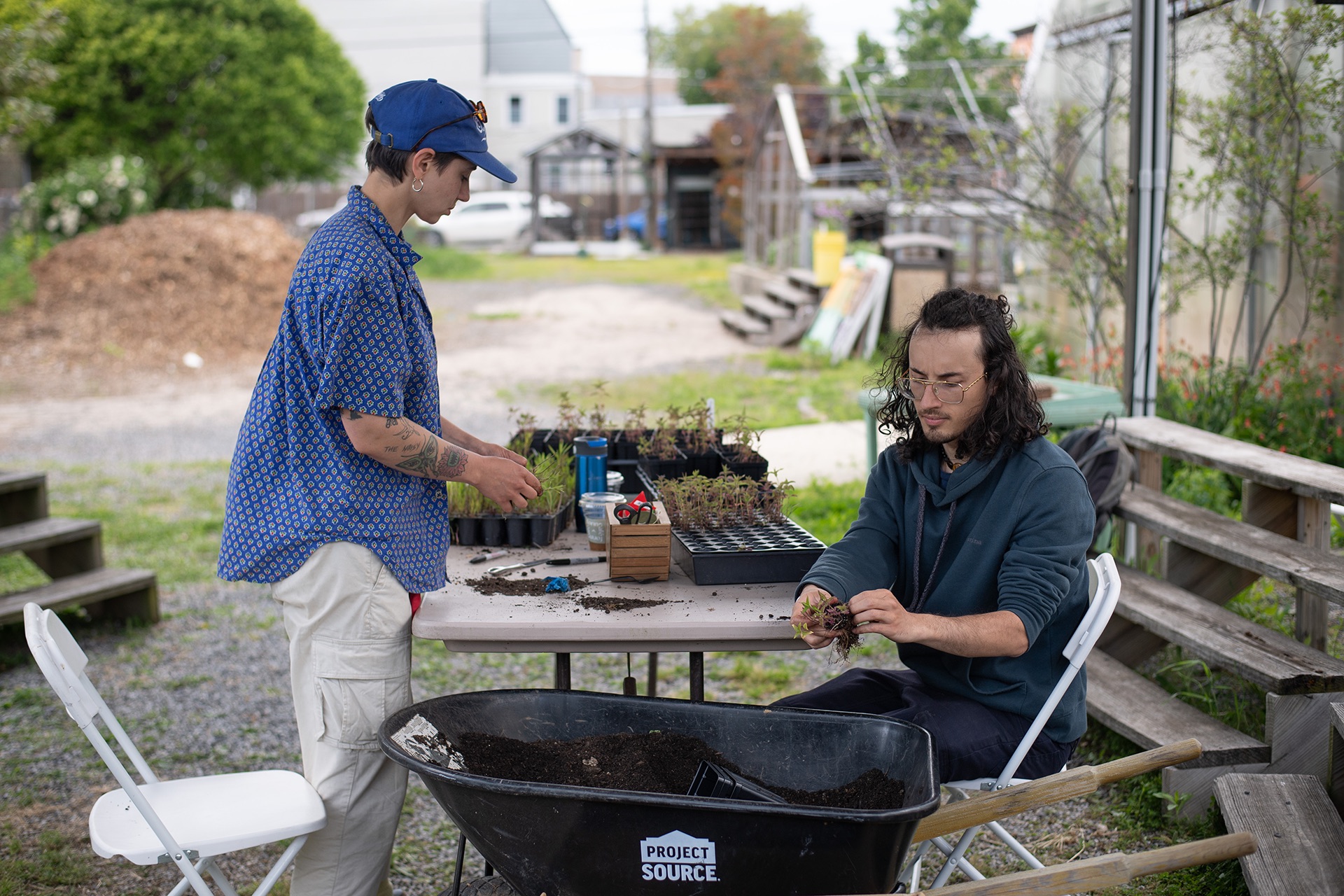
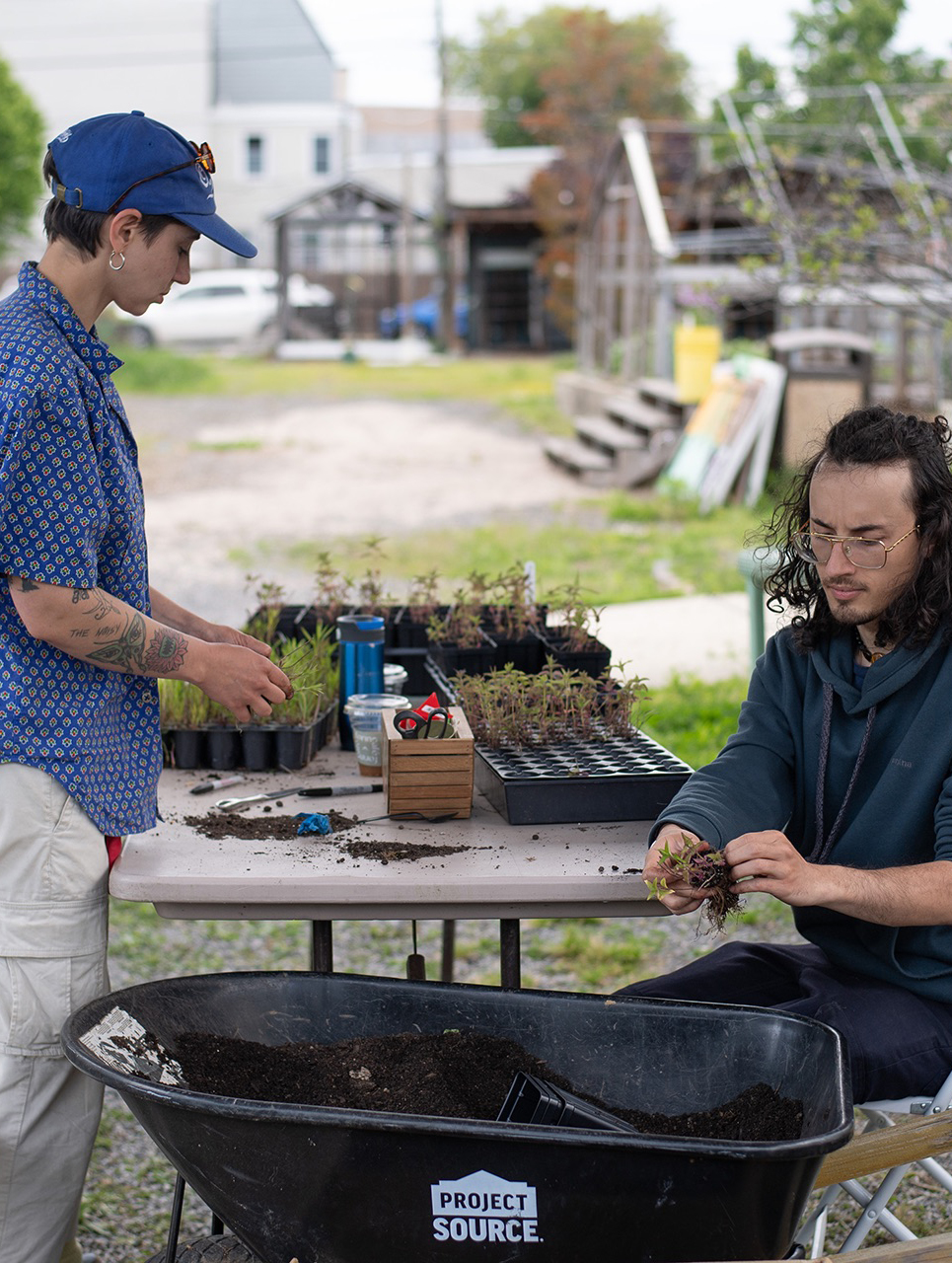
When Grid visited the LandHealth Institute (LHI) nursery in May, community nursery operations lead Sara Mae Henke and native plant nursery associate Marcelino Smith were repotting hundreds of tiny bee balm plants from flats into pots to prepare them for sale. Behind them rose the arching end of a high tunnel greenhouse sheathed in plastic sheeting. In front of them, on the other side of a fence, stretched the endless rowhouse blocks of the River Wards.
LHI was still settling in after moving from its previous nursery site in West Philadelphia’s Parkside neighborhood, which it had occupied since 2018. The Philadelphia Industrial Development Corporation, which owned the property, sold it earlier this year.
The new LHI community nursery sits on part of the former Greensgrow Farm site, which closed in 2022, and is owned by New Kensington Community Development Corporation (NKCDC). The closure of Greensgrow, which leased the site from NKCDC, left a big blank spot on the map and in the life of the community. Catherine Reuter, NKCDC’s urban agriculture and community garden program manager, says the organization is still planning the property’s long-term future. “We’ve been in this reimagining period,” Reuter says. “We’re committed to making it stay urban agriculture- and community garden-focused, but still really dreaming and scheming around what the next 20, 40, 60 years should look like for the site and what investments we need to make.”
NKCDC has hosted pop-up plant sales, and the property serves as a community compost site in partnership with Bennett Compost. LHI also shares it with Star Apple Nursery, which produces seeds for Caribbean and Southeast Asian crops. NKCDC also grows vegetables there to support nutrition education programs, Reuter says.
Everyone should have an equal say at the table in a community. That’s what we’re going for.”
— Scott Quitel, founder and executive director, LandHealth Institute
LHI officially opened April 12, raising and selling native plants. Henke is happy to help activate the space for the surrounding community. “People just want it open,” they say. “People miss having this green spot. You could wander around a little bit, and then maybe buy one little thing.”
“Beyond just growing plants for retail, we’re having as many programs and workshops as possible so that people can learn here,” Henke says.
Scott Quitel, founder and executive director of LHI, sees growing native plants as a way to live in community with the natural world. “Community includes not just humans,” he says. “It includes the plants, it includes the bugs, and everyone should have an equal say at the table in a community. That’s what we’re going for.”
He also sees how plants can build urbanites’ connection to the natural world: “A milkweed can literally turn a kid into a scientist or an advocate.” A child can see the milkweed’s pink flowers and watch a monarch butterfly develop through its life cycle. “If they come back in the fall or late summer, they can take the seed pods, and they can open them up. The seeds blow all over. Meanwhile, they’re planting milkweed. So the plant itself is cool, but that could get a kid or an adult tied to nature,” Quitel says. “Education can make people become restoration people.”