
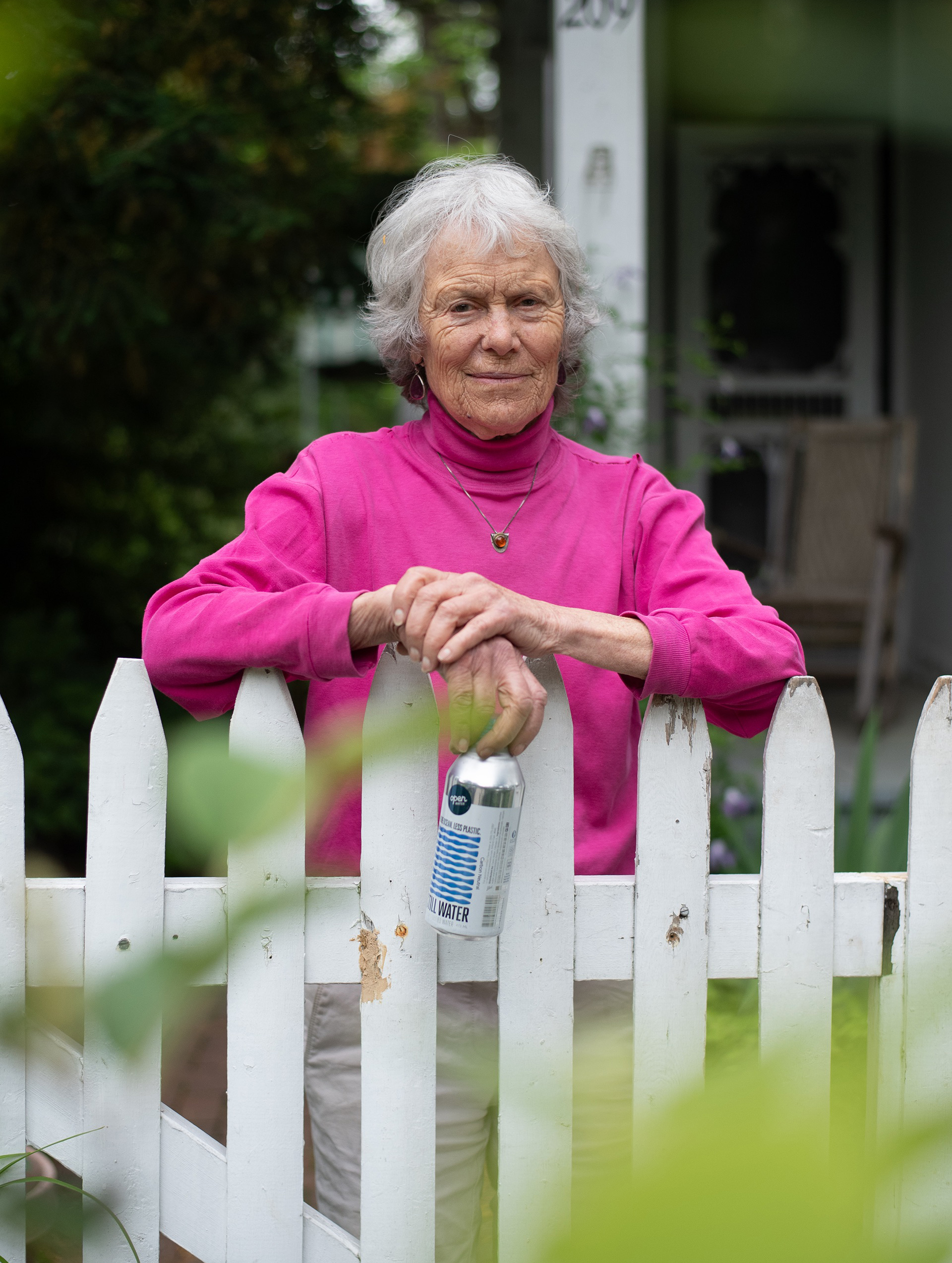
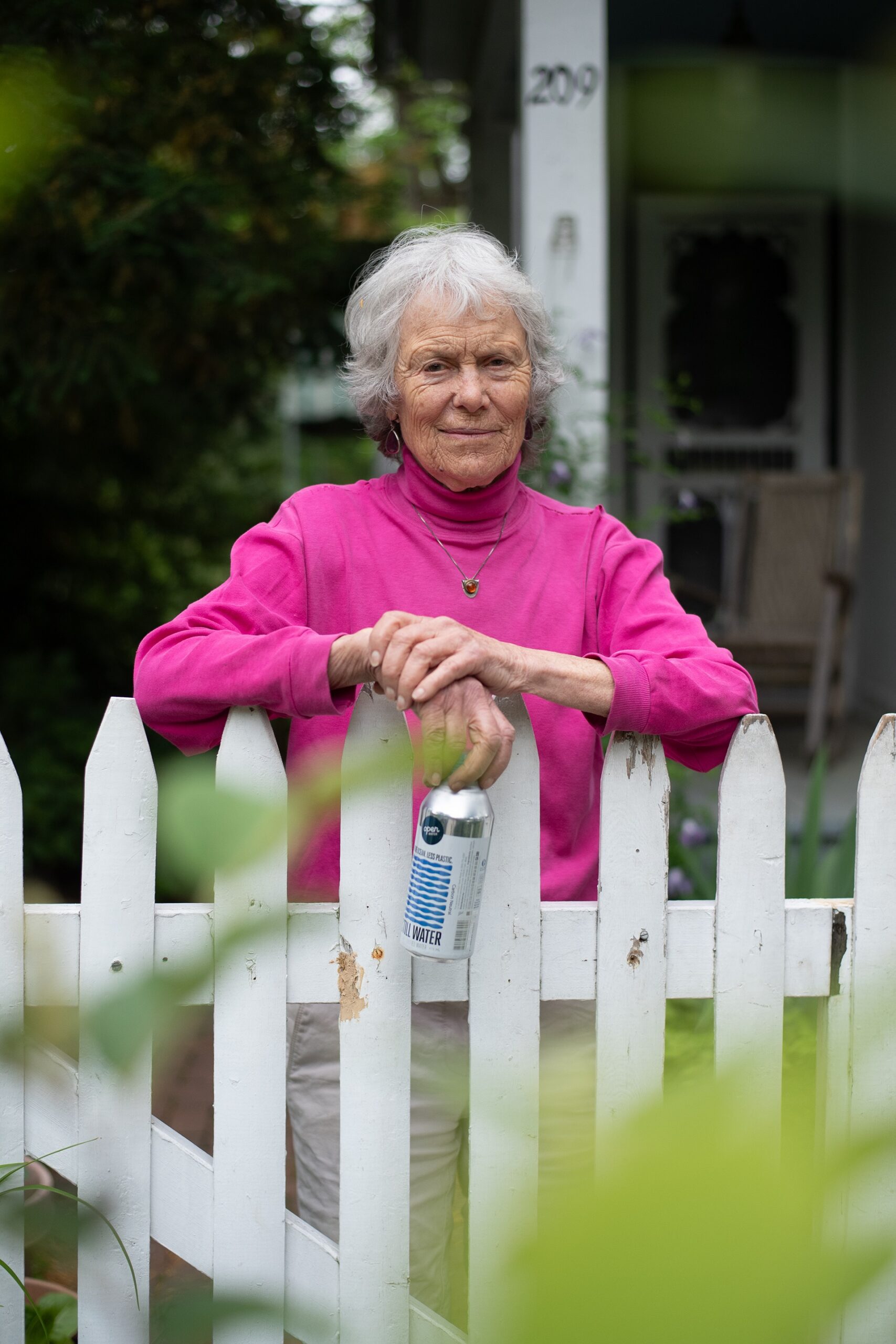
At 86, Chestnut Hill resident Sandra Folzer regularly smashes running world records, but her pursuit of physical excellence is secondary to her environmental goal: to remove single-use plastics from racing.
In 2024, Folzer, a breast cancer survivor, shaved an astonishing 30 minutes off the 12K record in the women’s masters 85-89 age category. The next year, she set new world records in the Rothman 8K (50:39), where she finished 702nd out of 2,114 women and set a record for the indoor mile. This January, she broke that record, and then did it again in March, when she also set an 800-meter record. Folzer just keeps getting faster.
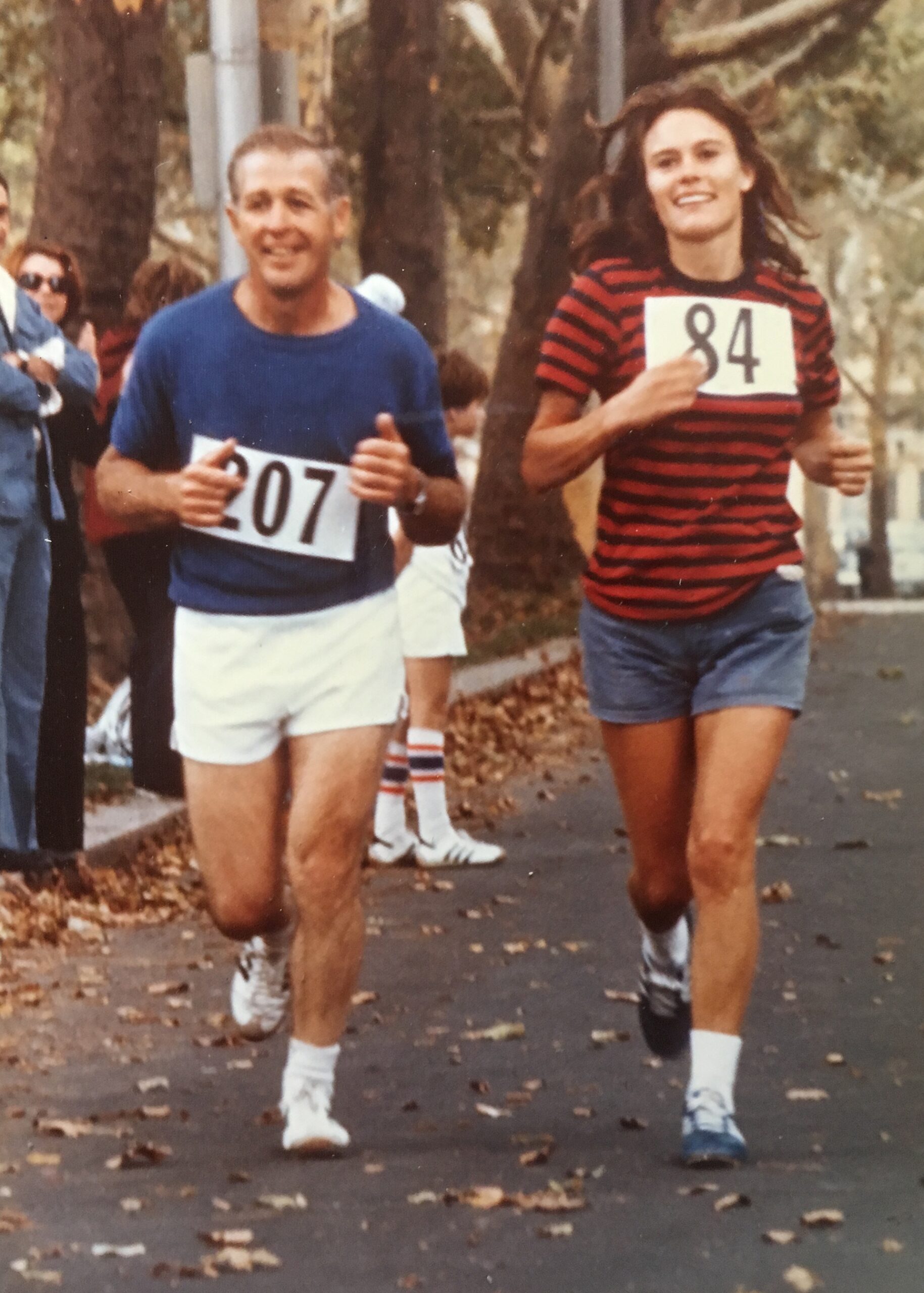
It started in 1976, when a friend told her that if she could run the Schuylkill River loop twice, she could run a marathon. She tried it and then ran the Philadelphia Marathon, finishing fifth. Three years later, she ran a 50-mile ultramarathon in Maryland and has run various distances ever since, incorporating training alongside her career as a licensed psychologist and raising her three daughters, Amma, Laura (a running partner) and Victoria, all of whom live nearby.
When she isn’t blazing a trail with her feet, she is advocating for social change. She frequently prints flyers and pens letters to the editor, getting published locally and near Mansfield, Tioga County, where she owns a farm. Among several causes, her fight against single-use plastics has been a constant that she speaks out against at every race she attends.
“Because they don’t recycle them, that’s been an ongoing campaign for me,” Folzer says.
According to statistics from 2018 published by the Environmental Protection Agency, 8.7% of plastics were recycled in the U.S., 15.8% incinerated with energy recovery and 75.6% sent to landfill.
“The prevalence of single-use water bottles at road races is troubling,” David Velinsky, professor and senior scientist at Drexel University’s Academy of Natural Sciences, wrote in an email. “The plastic bottles that are disposed of will accumulate in landfills (and other areas) and eventually break down into smaller and smaller pieces into microplastics. The smaller particles tend to accumulate various contaminants like PCBs and heavy metals that can be ingested by fish or birds,” which, when consumed, also endanger humans.
It would be nice to work with some kind of environmental group to back me up, but if not, I’m just going to go ahead.”
— Sandra Folzer
Folzer wants a widely adopted green certification program for races, which would include the eradication of single-use plastics, giveaway T-shirts and plastic prizes. “It would be nice to work with some kind of environmental group to back me up, but if not, I’m just going to go ahead, because what I’d love to do is have some kind of standard,” she says.
Alan Braverman, a longtime friend and fellow runner, recalls a group run in Wissahickon Valley Park years ago where Folzer kept stopping everyone to pull invasive weeds. Braverman, the president of the Ambler Area Running Club, plans races like the Phil’s Tavern 5K charity run and gets compliments for asking racers to bring refillable water bottles and for not giving away T-shirts. Just to make sure they don’t forget, Folzer sends reminders each year. Last month, she spoke to his group about sustainable running.
The Broad Street Run, which attracted approximately 40,000 in May, piloted WaterMonsters, large water containers for refilling bottles.
Broad Street Run organizers offered paper and compostable cups at water stations, and 50 volunteers and additional staff served as waste watchers, helping people separate trash, recycling and compost. Discarded clothing and leftover food were donated to local charities. Organizers also continue to collect plastic ponchos and heat blankets at the finish line, and Acme Markets, a race partner, recycles them into plastic lumber. In 2025, the diversion rate for race waste was 25%, beating the residential rate, says Natalie Walker, sustainability director for Philadelphia Parks & Recreation.
Folzer says there’s room for improvement and expressed disappointment that many plastic bottles still littered the pavement after the race. She suggests a water station at the race’s end.
The City is listening. “We are exploring the feasibility of adding a water stop at the finish line,” Walker says. They are planning for more disposal stations and improved signage. She added that they expect to see a “10% increase in overall waste diversion compared to last year,” based on post-race data.
Since Folzer says that some races run green one year and then backslide the next, she continues her campaign.
“It’s rare that we hear from someone like Sandra,” Walker says. “She really has been very outspoken and has reached out to us every year. I think that’s very unique.”



Nice article – I would hope some smart Enviormental group would pick this up and join the party.
Dc
When my son race the CCC in France, I was impressed by the policy that runners had to carry their own water bottle for the ultramarathon. Runners had to bring their own containers for soup or whatever they wanted at the stations along the 100 km race. No trash could be left anywhere on the mountain. It made sense because who wants to clean up 100 km of trash up and down the Alps.? I often think of how beautiful the whole path was because people were thoughtful enough to carry their own trash as opposed to people who can’t be bothered to carry their trash to the nearest trash, can a block or so away.