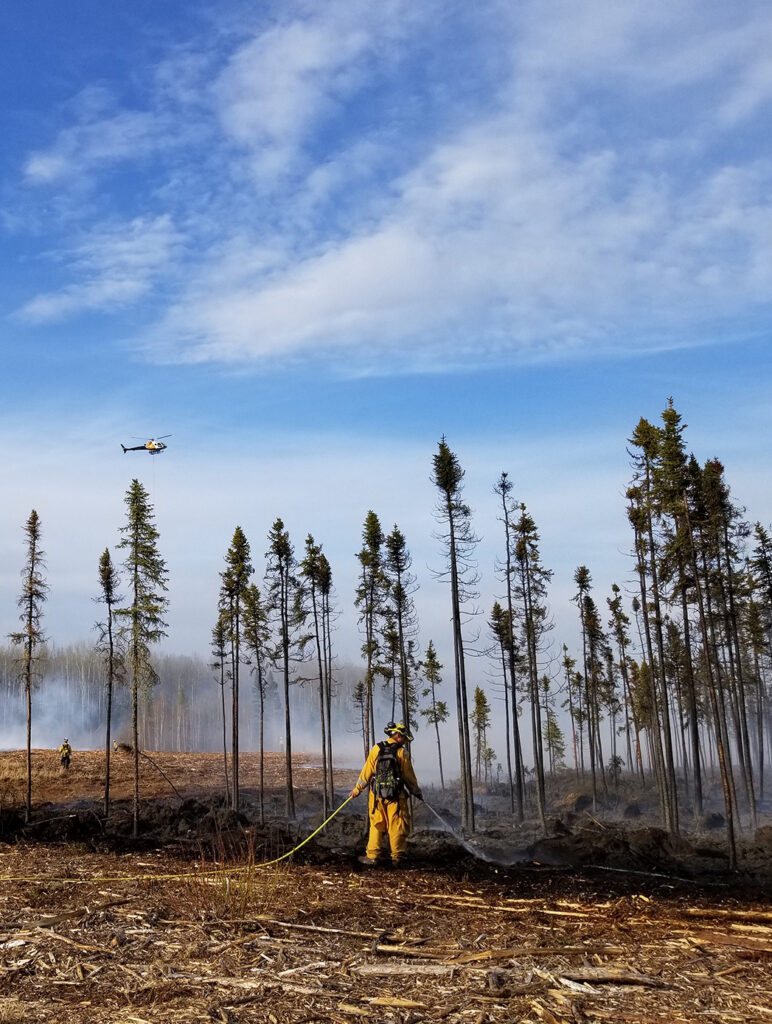
The helicopter was worth a shot, Dave Fahnestock thought. The owner of Hands on the Earth Orchard in Lititz, Lancaster County, which sells apples and peaches at farmers markets in Clark Park, Rittenhouse Square and Bala Cynwyd, hoped the downdraft from the propellers would mix warmer air with the freezing air hugging the ground across his 15 acres of fruit trees. In the days leading up to April 20, he had watched the forecast for the overnight low temperature go from worrisome to disastrous. “What could I do?” Fahnestock says. He and his crew lit fires around the orchard to show the pilot where to fly, and from 3–8 a.m., the helicopter went around in circles as Fahnestock kept an eye on a thermometer. “When he went over top, I could see it jump up 4 degrees, but till he circled back, it was cold again.”
In spite of the helicopter, only the peach trees near the signal fires emerged with some healthy flowers; they should produce just enough fruit for Fahnestock’s family to enjoy — “Literally just a handful.”
This year’s cold snap means that orchards across a wide swath from Ohio to southern New York will produce very little fruit this year. The tough question farmers are facing is how to prepare for a future of difficult spring weather.
It is cliché to talk about the temperature roller coaster of spring. As February thaws into March, everyone takes to their porches for the first warm, sunny day, only to retreat inside as the next day brings a chilly rain. But the highs and lows in March and April 2026 were downright violent. In Philadelphia, April 4 reached a high of 83 degrees, with lows dropping to 32 degrees on April 8. Temperatures bounced back to 91 degrees on April 16 before dropping again, with a low of 35 degrees on April 21. At Hands on the Earth, the mercury fell into the low 20s.
The early warm weather triggered apple, peach and other fruit trees to blossom, opening flowers to greet bees and other pollinators. Pollinated flowers began to develop into fruit, only to have the nighttime freezes kill the flowers and tiny fruitlets.
A spring freeze that kills some flowers is not rare. Indeed, a fruit tree has flowers to spare. “We only need 15% to 20% of buds to set to get a full crop,” says Shanthanu Krishna Kumar, a Penn State University assistant professor of tree fruit. It is also not rare for a spring freeze to be locally severe; it might hit one county and spare others. It might strike one orchard but not its neighbors, and it might kill flowers in low-lying areas within an orchard, but not higher up on a hill.
This magnitude and scope, I’ve never seen anything like this.”
— Greg Stamm, manager, Mariner Farms
“It’s a fact of life,” says Greg Stamm, manager of Mariner Farms near Downingtown. “Most of the time, if you do have problems, it’s not a complete wipeout, just a reduction in that variety or that field.” But the 2026 freeze was uncommonly thorough. It affected trees throughout orchards, and it hit orchards across a wide geographic area. Stamm has worked in agriculture almost his entire career — over 50 years. “This magnitude and scope, I’ve never seen anything like this,” he says.
In Pennsylvania, the state Department of Agriculture estimates that revenue losses for growers could reach $200 million. Statewide, “estimated losses range from 70% to 90% for apples; 90% to 100% for peaches, nectarines and apricots; 60% to 80% for European pears; and as high as 95% to 100% for cherries and plums,” according to an article published on Penn State’s website.
The USDA declared a natural disaster for 17 Pennsylvania counties and “is reviewing disaster designations for the remaining counties” in the state, according to a press release.
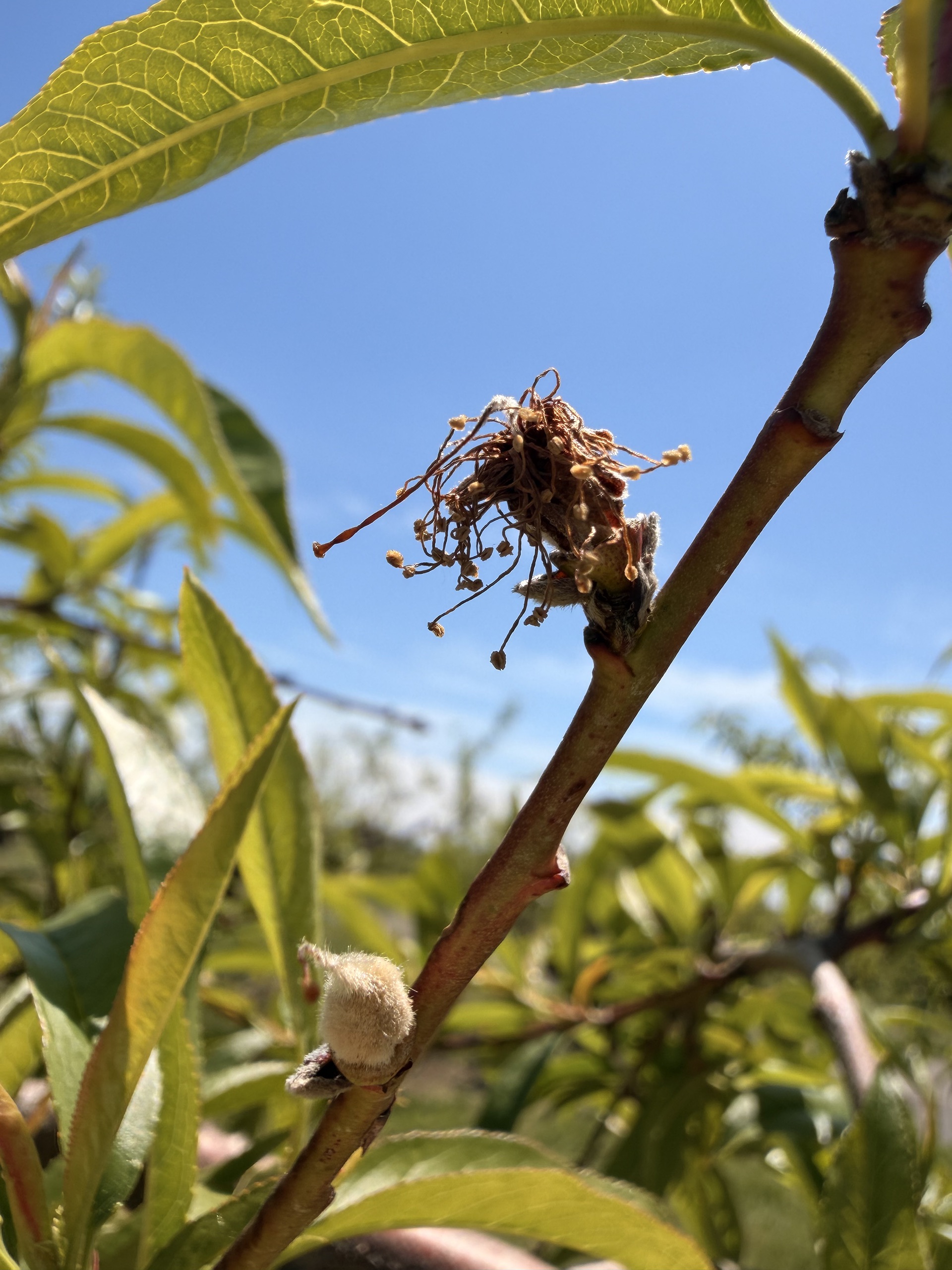
It takes temperatures 30 degrees or below to kill flowers and immature fruit, Kumar says. Fruit growers who see low temperatures in the forecast can take some steps to warm their trees. This might entail generating extra heat, say, by lighting propane burners. If they have access to water, they can spray the trees so that a thin shell of ice somewhat insulates the flowers from the cold air. They can also try to circulate higher, warmer air with the cold air settling around their trees. These tricks can work to boost temperatures by a few degrees, but when they dip into the low 20s for several hours, little can be done. The April freeze damage was compounded by particularly dry air, Kumar says.
Steep terrain might have helped Frecon Farms in Boyertown, Berks County, avoid a complete wipeout, says owner Steve Frecon. “We’re looking at at least 50% or more of a crop loss,” for stone fruit, he said when Grid reached him in May, though he wouldn’t be able to fully assess the damage until the end of June. Even if fruit survives, much of it might be damaged so that it can’t retail as whole fruit, and instead will be sold for juice or other products. “It’s both the crop loss due to fruit just not being there, but then it’s also going to be crop loss based on fruit that doesn’t make USDA grading standards,” Frecon says.
Because of the warm temperatures we had, there was a rapid progression from dormancy.”
— Shanthanu Krishna Kumar, assistant professor of tree fruit, Penn State University
The damage from the freeze was particularly severe because it followed extraordinarily warm weather. “Because of the warm temperatures we had, there was a rapid progression from dormancy,” Kumar says. Flowers and fruit were 10 days further along than on the same date in 2025, and “last year, we were telling people that we are approximately five days earlier … as compared to the year before.”
The climate has changed in ways that make growing apples more difficult, according to research published by Washington State University scientists in 2024 examining trends, including warmer temperatures, that make fruit more vulnerable to spring freezes. “What we found is that generally across most of the United States, there is an increase in … the risk of spring frost events over the last five decades,” says Lee Kalcsits, an environmental physiologist who co-authored the paper.
He says research increasingly focuses on how to adapt to the changing climate. There is a lot of genetic variation among apple varieties, as well as among the rootstock to which farmers graft cloned apple shoots. “There is a lot of variation there, and we want to understand the why and how that happens. Then we can develop a strategy for breeders to develop new varieties that do well.”
“I think we’re all going to have to prepare ourselves and our food system to brace for more extreme weather,” Frecon says. “I grew up in this orchard with no irrigation systems. Water was always plentiful and available. We have seen more springtime droughts when we should be getting lots of rain.” He says he installed an orchard irrigation system last year and is considering buying fans to help with future spring freezes.
Fahnestock says that his orchard doesn’t currently plan to invest in additional freeze protections, since protecting against an event of this severity would be prohibitively expensive. The helicopter was a cheaper alternative to buying propane heaters. “You need them every 10 feet, so we’re talking over $100,000 for something most years we won’t need, and you don’t know ahead of time what you need,” he says. “It’s not easy to protect a crop, long and short of it.”
With so many local orchards losing some or all of their crops, consumers will see the impact when they pick or buy fruit. Frecon urges shoppers to be flexible when they go to the farmers market. “This is not the year to be fussy about cosmetic deficiency,” he says.
Fahnestock says Hands on the Earth is considering selling peaches grown elsewhere. “This is something we’ve never done before, hope to never do it again, but that’s the reality of where we’re at.”
“Supporting local farms and producers this season may be more important than ever,” says Bridget Palombo, director of healthy food access for The Food Trust (TFT). “TFT is working with farmers to help shoppers understand that the peaches on the table, for example, may have traveled hundreds or even thousands of miles because our local orchards were hit so hard.”
Farmers diversify their products to weather shocks like the spring freeze. “Supporting local may not mean buying local peaches. It might mean buying the honey or the baked goods that they sell at that farm stand,” Frecon says. “I know a lot of fruit growers who have lost so much, they are scrambling to plant some vegetables so they can still have something to sell.” Frecon says that crop insurance doesn’t pay enough to make up for the lost retail sales from freeze-damaged crops. His orchard only carries catastrophic insurance on the peaches, not the apples or other crops.
“People ask us if we have insurance for this,” Fahnestock says, “You guys are our insurance for this, because we can buy [apples and peaches] and resell them. That gives us some income and helps us get through the year.”