Roughly half of the Swarthmore College field hockey team’s away games last season were played on “field hockey turf,” a water-based artificial turf standard for the sport. But because the college’s Clothier Field Stadium is “field turf” — which head coach Hannah Harris says varies widely from location to location and can affect player performance — the team had to travel up to 17 miles to other colleges’ fields so they could have some practice time on the surface ahead of the game.
“This is what our sport is supposed to be played on,” Harris says of field hockey turf. “It’s something that every field hockey player wants to play on. It just completely changes the style of play in the game.”
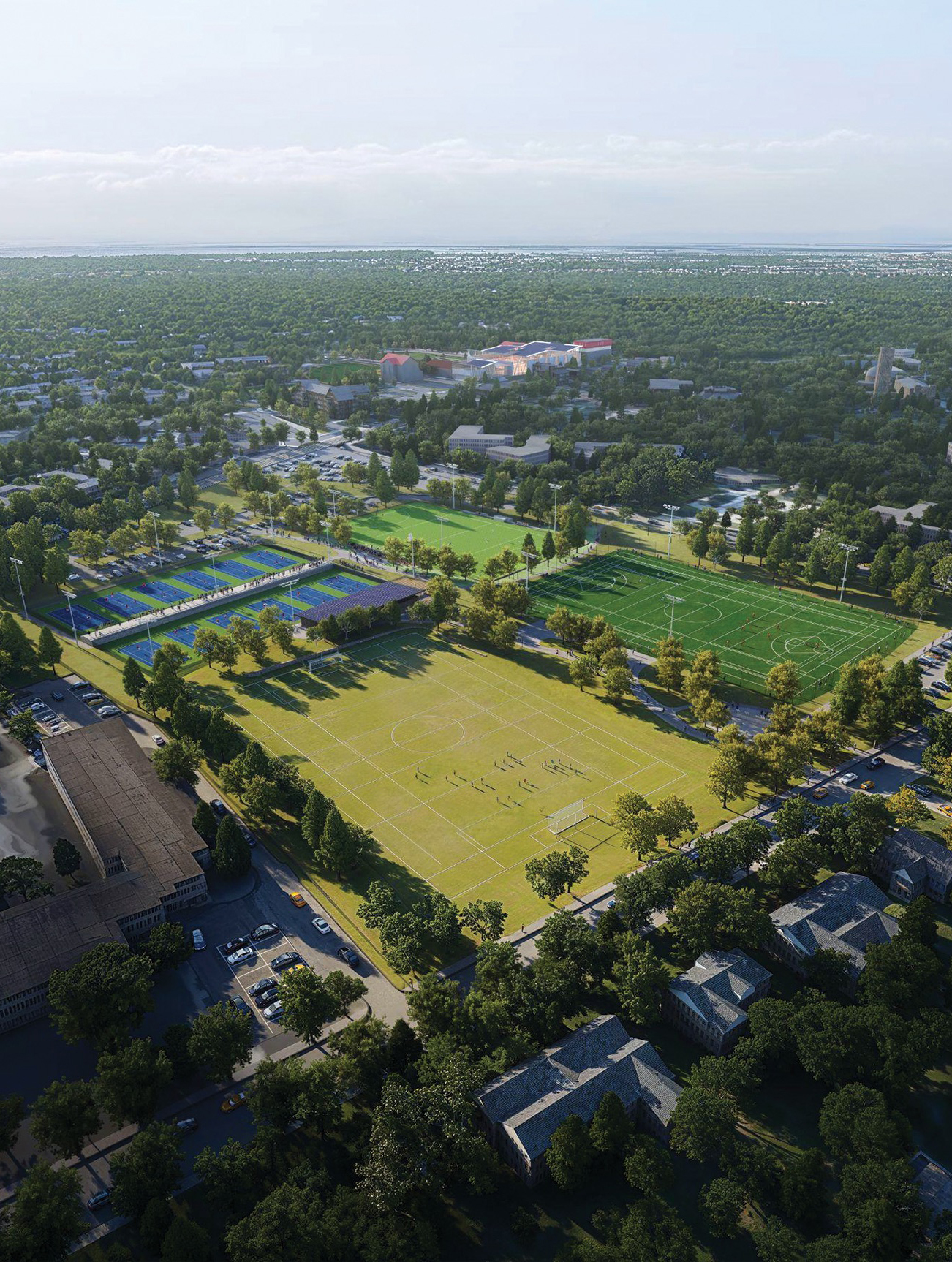
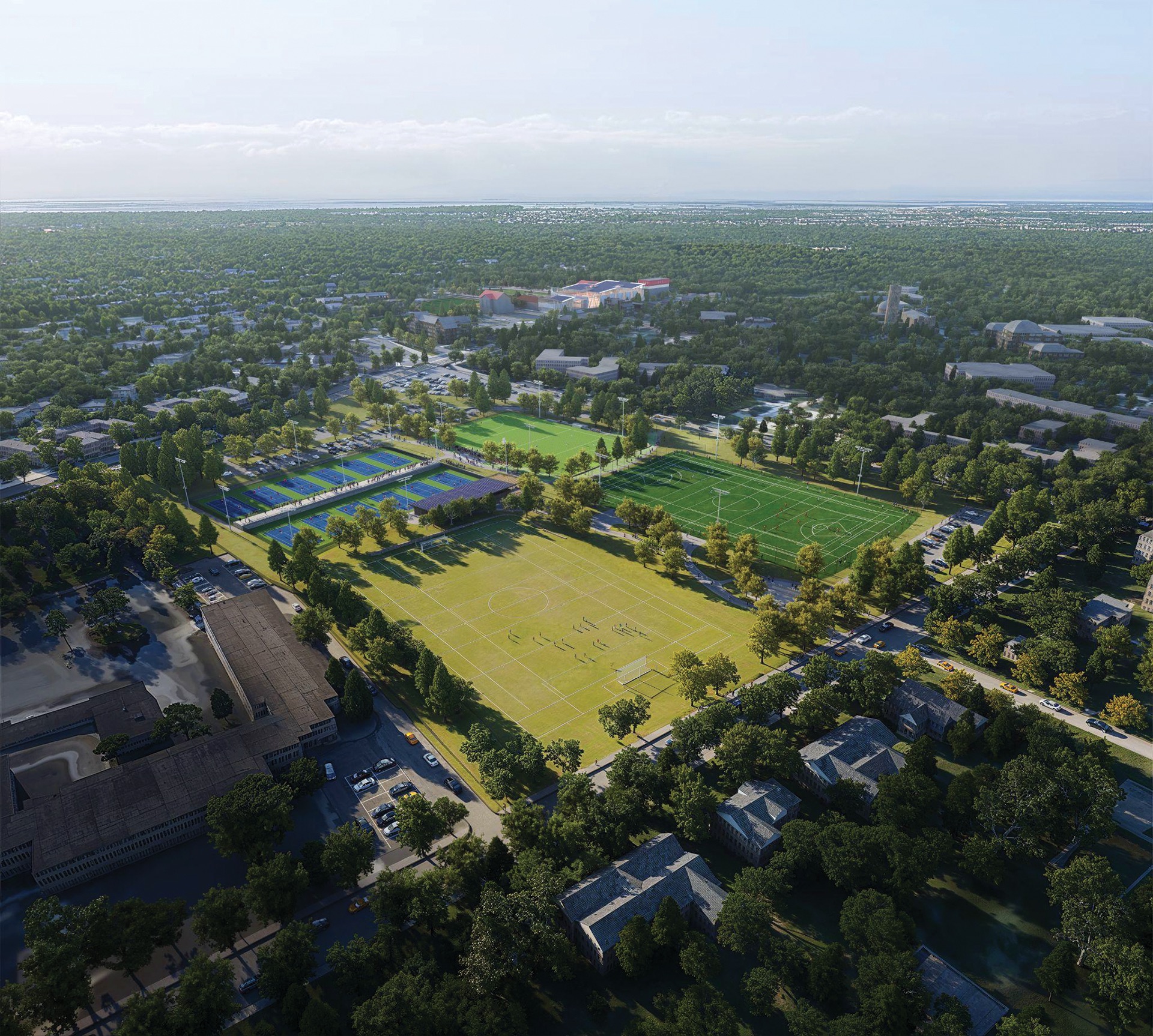
The team’s practice hardships would be alleviated by Swarthmore’s plans to upgrade the outdoor Cunningham Field by installing two synthetic fields, including one that’s field hockey turf. Then, the team would no longer need to head off campus to play on the artificial turf that’s been a mainstay in the practice conditions of the last two decades of NCAA champions, or share the turf field with other teams.
But while college officials say the “reimagining” of Cunningham Field would additionally allow for increased year-round practice and reduced maintenance and injuries, neighbors are concerned about possible chemicals in the artificial turf, including PFAS and microplastics, as well as increased ground temperatures.
Last March, when the college requested that Swarthmore Borough approve the new complex with the two synthetic turf fields, plus a natural grass field and 12 tennis courts, debates started between administrators and residents over who should decide the fate of Cunningham Field in a conversation that’s ongoing.
Field goals
Cunningham Field is an 18.5-acre grass field owned and primarily used by Swarthmore College for athletic practices, kept as grass and six tennis courts. Brad Koch, outgoing athletics and recreation director, says the fields require significant maintenance, and poor drainage frequently renders them unusable.
He and other administrators also say the college’s singular turf field, Clothier Field, is inadequate for the volume of practice schedules. Harris says that throughout their season, her team and the men’s and women’s soccer teams rotate between three practice time slots, the latest of which is 8:30-10:30 p.m.
“Because of their class schedule, that’s what we have to do, and it’s not ideal for their recovery, it’s not ideal for planning meals, it’s not ideal for getting work done,” Harris says.
Building more turf fields, officials say, will reduce late-night practices and light use. Athletic rosters at Swarthmore have grown roughly 20% since 2013. And on top of that, Koch says, the current tennis courts have drainage issues and lack spectator seating and adequate spacing between courts to meet NCAA standards.
During planning, the college weighed the benefits of increased recreation time on all-weather turf for students and community members against environmental impacts, according to Andy Feick, Swarthmore’s associate vice president for sustainable facilities operations and capital planning. He says the college commissioned an impact report to evaluate turf composition options, maintenance needs and potential effects on the environment, heat and injuries.
Yet some residents argue that the environmental impacts examined in the report far outweigh any benefits.
According to Genoa Warner, an assistant professor at the New Jersey Institute of Technology and environmental toxicologist, there are very few available studies attempting to establish the health impacts of artificial turf. She hopes for long-term investigations following humans and animals after turf contact. However, studies are expensive and less feasible after President Donald Trump’s research cuts. Her general takeaway is that more plastic is bad, and turf installations result in “a big soup of plastic and chemicals.”
“We know a lot about what chemicals are there, and we know that a lot of the chemicals in them are implicated in lots of health conditions,” Warner says. “There’s a good reason to be cautious.”
Feick says the college is committed to adhering to the highest sustainability standards. However, sustainable labels in turf can be misleading. Due to the language of regulatory laws, Warner says, companies can call turf PFAS-free when it is below a legal threshold, even if still easily detectable. For example, AstroTurf references a California threshold of 100 parts per million, despite water contamination having different thresholds. Initial plans include natural materials such as wood and sugarcane, designed specifically for field hockey. Harris says this material removes the need to water the field, a common practice for other types of turf to alter the ball’s friction on the playing surface.
“We do things here sustainability-wise that most institutions are not doing,” Feick says. “We’re leaders, and people come to us looking for how to do things. With our energy plan, with our Zero Waste Plan, with our all-electric dining facility and composting operations, the way we procure energy.”
The college facilities team committed to environmentally conscious construction through the Living Building Challenge and is working towards on-campus carbon neutrality. Over a year ago, Swarthmore commissioned a toxicology consultant from Haley & Aldrich to produce the impact report, outlining how the college could reduce environmental impact and athletic injury risk, including sand drainage and frequent cooling irrigation. Feick says about 170 more trees would be planted on the development, without a significant increase in water usage for irrigation.
Borough government and zoning decisions are occurring amid rising costs for EMS services and county taxes, as in many surrounding municipalities. Swarthmore College is the borough’s largest landowner and last year paid the borough $638,000 to bridge a budget shortfall, averting the introduction of an earned income tax.
A question of neighborliness
At meetings of the Swarthmore Planning Commission, which handles technical zoning code changes, residents have raised concerns about artificial turf’s impact on water runoff into nearby Crum Creek, climate warming, heat-related athlete injuries, wildlife, microplastics and toxic waste if turf is removed or replaced.
Meetings now stretch late into the night. Andy Hirsch, the college’s vice president of communications and marketing, says some public comments have been factually supported, but “there’s a lot of emotion and things that are said that have no basis in any kind of scientific research or factual findings.”
Planning Commission Chair James Levine says that as the commission focuses on its comprehensive plan for the borough’s future, its challenge is to identify the best outcome for the borough while meeting long-term goals.
“You have to balance what’s best for the entire community,” Levine says. “Certainly the concerns of the nearest neighbors are definitely considered, but you have to look at what’s best overall for the borough as a whole.”
In March, Swarthmore College withdrew the zoning text code amendments it was pursuing and is now starting a process of longer conversations and engagement. The college also hired a community liaison. Hirsch emphasized the college’s hope to be good neighbors in the borough and sees opportunities for this in the longer approval process, including in-person conversations. He says the college wants to hear from residents and reach a mutually beneficial endpoint.
“This is a good faith effort by the college,” Hirsch says. “We are really invested in making this work to meet the programmatic needs of our students and our campus community, while also bringing value and a benefit to our neighbors in the ville.”
Certainly the concerns of the nearest neighbors are definitely considered, but you have to look at what’s best overall for the borough … ”
— James Levine, Swarthmore Planning Commission Chair
Alison Manaker moved from Philadelphia to Swarthmore 28 years ago, and says she chose her house largely because of Cunningham Field, which she saw as “a beautiful lawn we didn’t have to mow.” She started Fight for the Fields, the oppositional campaign to the plan, because she is concerned about neighborhood tranquility and daily nuisance. Other residents, she says, are more worried about the potential health and environmental impacts.
Across Swarthmore, lawn signs beg the borough to “Keep Cunningham Field Dark.” Specifically, stopping the lighting and sound systems in the proposed development. “The whole point of lighting is to turn night into day,” she said. “We actually don’t want to live next to something that turns night into day.”
Swarthmore College administration promised no lighting spillover due to taller, focused lights and limited nighttime practices and games. Manaker has heard from residents near Clothier Field that they felt betrayed by constant lights when the college promised limited hours during construction. Maybe it was a matter of time before all residents felt that way, she says.
Manaker agrees with the college’s adjustments to the plan already — removing light from a field and shifting noisier fields to the side adjacent to the train tracks — but her overall perception of the college has shifted. She says the planned steps seem good, but worries they are performative.
“I think it was arrogant, and the process was very closed-minded by the people who were running it over at the college,” Manaker says. “They just put forward a proposal, which would have a massive effect on hundreds of families… It lacked a real empathy for what it means to live here in Swarthmore. Like they’re the big player, and only their concerns matter.
Gabriel Donahue contributed reporting.