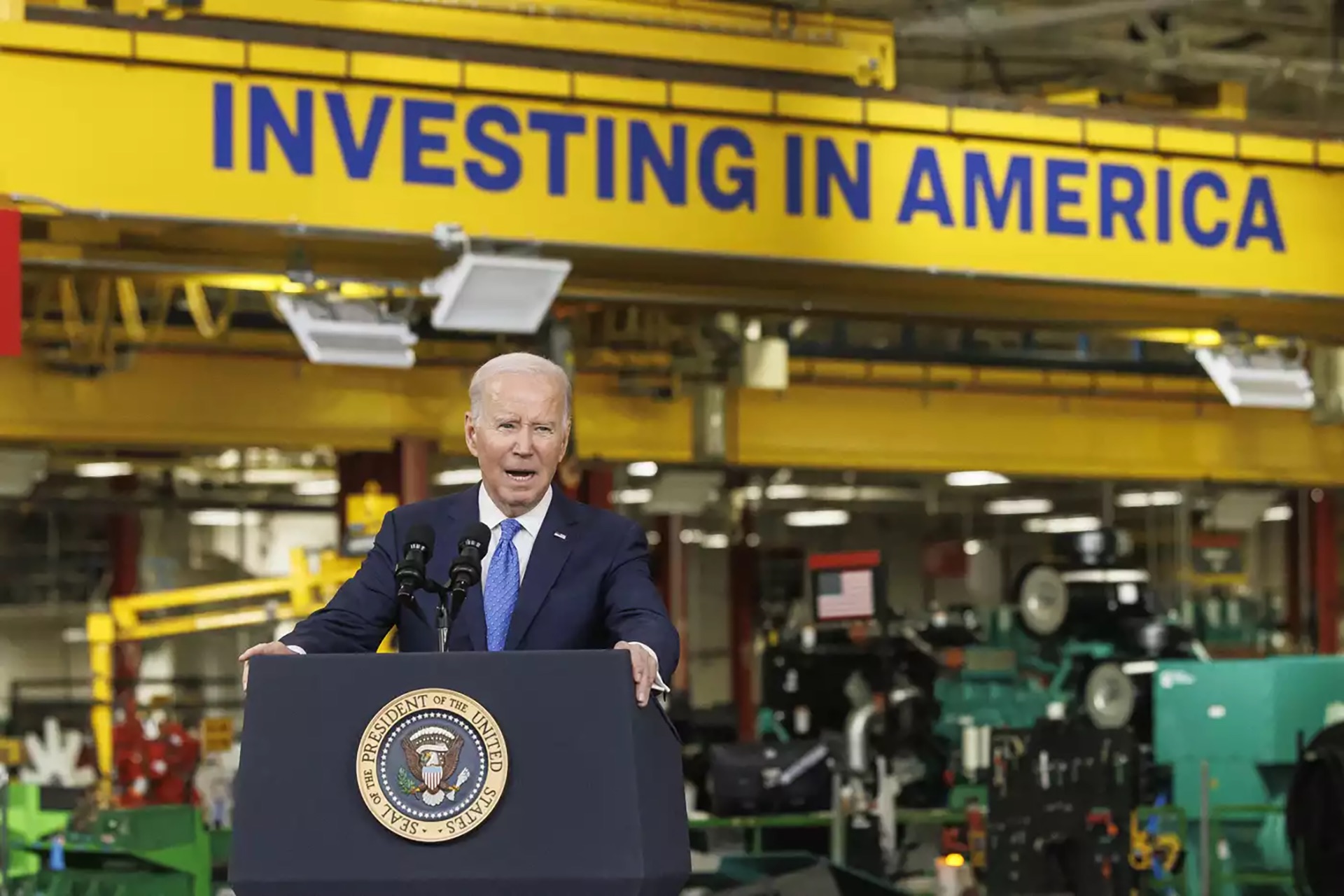
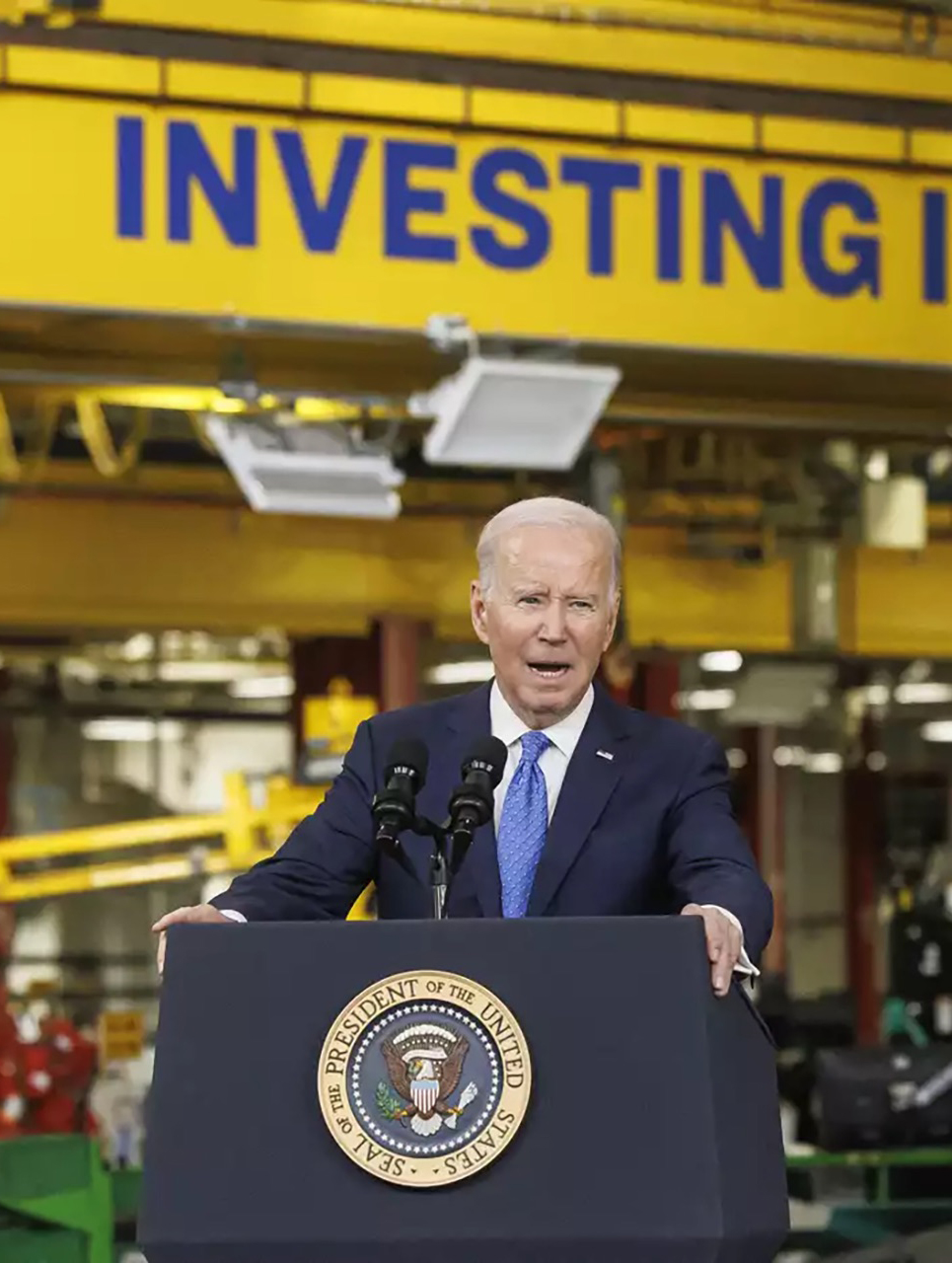
President Joe Biden visited Philadelphia in 2023 to make a big energy announcement: the Philadelphia area would be home to MACH2, a new hydrogen hub, one of seven nationwide. But a year and a half into the second Trump administration, the project’s future is uncertain.
The Biden administration planned to pump $7 billion into regional centers for hydrogen production, taking advantage of a gas that, when combusted or run through a fuel cell, produces only water and energy. As Grid reported at the time, labor unions and industry representatives lined up behind the initiative, along with some environmental organizations such as the National Wildlife Federation. But not everyone else was on board.
Critics questioned whether it would be feasible to produce hydrogen using renewable energy, given how little wind and solar are currently generated in the Mid-Atlantic. Environmental justice advocates such as Chester Residents Concerned for Quality Living found themselves excluded from the planning process, prompting them to send a joint letter saying MACH2 had failed to engage the community.
The Trump administration hasn’t completely trashed the hydrogen hubs, but “rather than do a blanket elimination of all of the programs and projects, it has chosen instead to treat the individual projects as separate entities,” says Sean O’Leary, a senior researcher at the Ohio River Valley Institute. O’Leary says the administration also dismissed the staff of the Energy Department’s Office of Clean Energy Demonstrations, which had coordinated the hub rollout.
MACH2 did not respond to requests for comment. Based on information on its website, the scale of the hub has shrunk considerably. Biden initially said it would produce 100,000 tons of hydrogen per year. The MACH2 website currently lists one request for information seeking a producer that could provide 50 metric tons per day (18,250 per year).
But even if the federal government ends up funding the hubs, they might still flounder due to the fundamental economics of hydrogen. “They will not be able to find significant numbers of offtakers for this,” O’Leary says. “And it’s because virtually all of the uses for which they projected hydrogen to be used could frankly be performed more cost-effectively by other means.”