Data center development in Pennsylvania is booming. Last year, U.S. Sen. Dave McCormick and President Donald Trump announced $90 billion in private investments for artificial intelligence (AI) infrastructure, data centers and energy projects across the state. Today, according to the Data Center Proposal Tracker, Pennsylvania has 52 data centers, and there are at least 53 more currently proposed. Gov. Josh Shapiro wants developers to pick up the pace. In February, he announced a path to faster permitting for developers who follow stricter environmental and transparency standards.
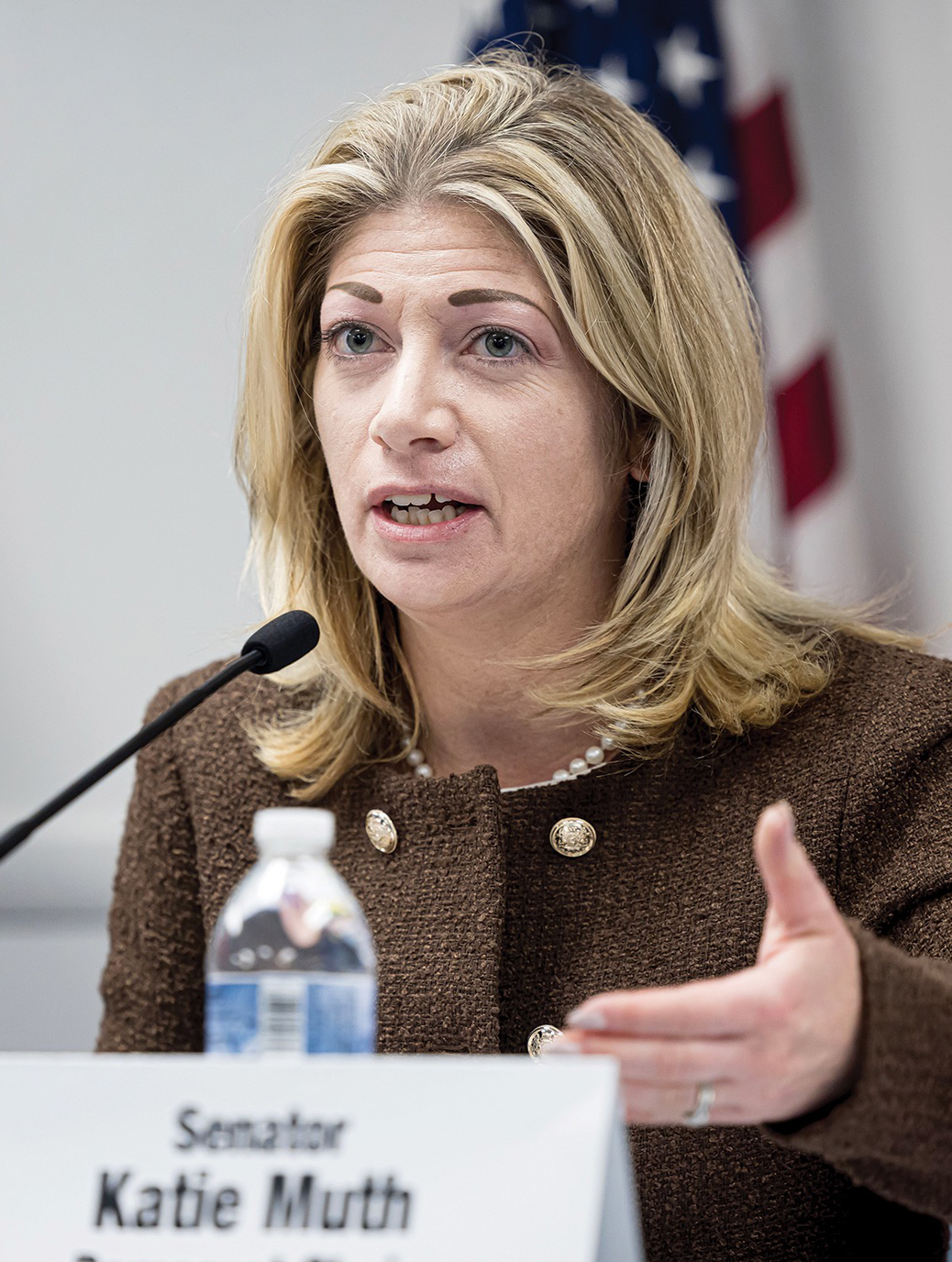
State Sen. Katie Muth, however, wants to slow things down. Muth, who represents parts of Chester, Montgomery and Berks counties, is seeing data center proposals in her district, and she’s concerned about how the structures impact human health, the environment and electricity costs. Soon, she plans to introduce legislation that would put a three-year moratorium on data center development.
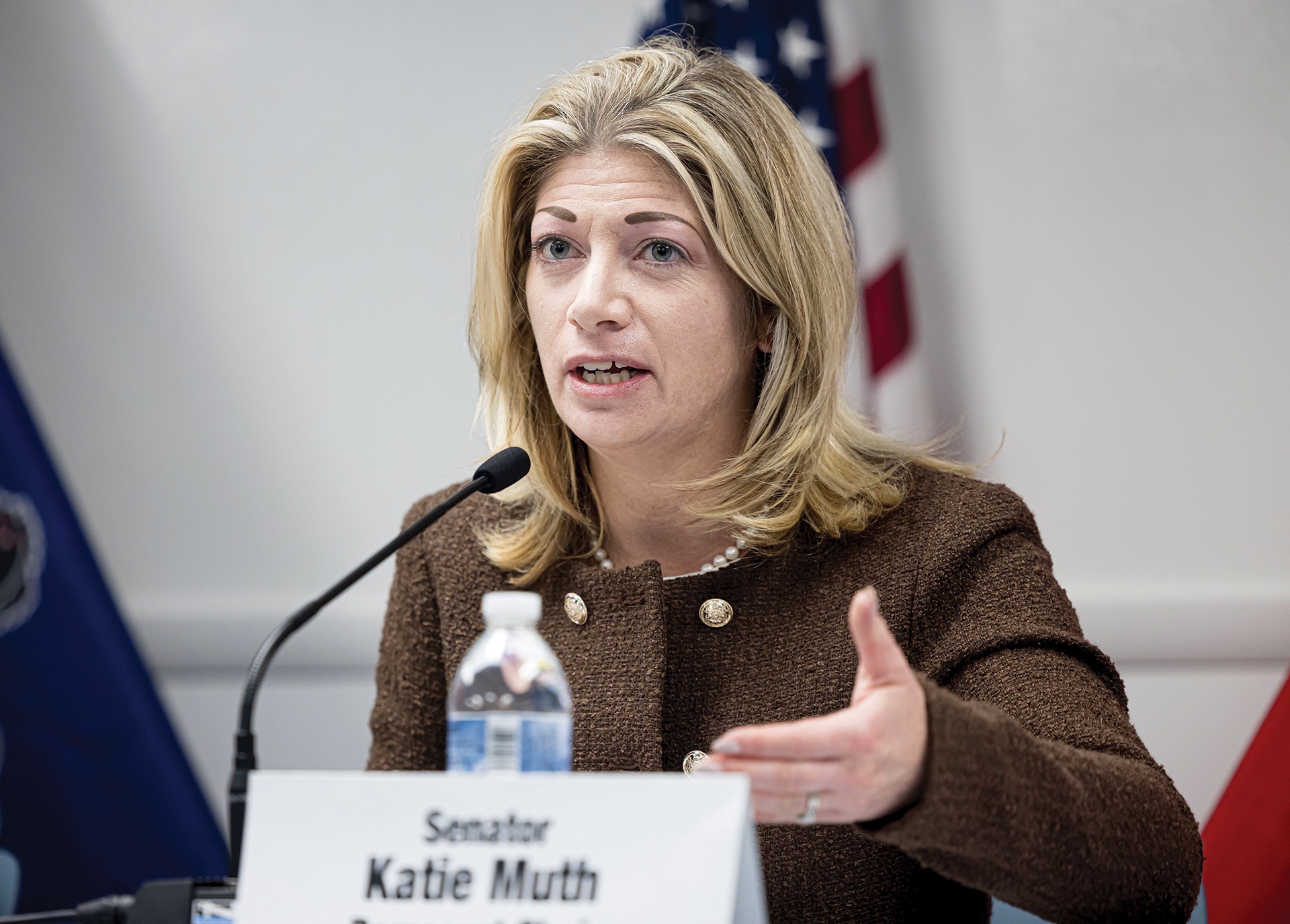
Grid’s interview with Muth has been edited for length and clarity.
What inspired you to draft this legislation? There is a race to get these projects approved. So we have places that are getting bombarded with applications, like Archbald Borough in Lackawanna County. It’s really leaving local governments scattered and spending a lot of resources trying to find experts to analyze this stuff. So if the state really wanted to do this in a thoughtful, purposeful way, then would it be this mad-dash s***show of just unregulated development of one of the most impactful things the state will ever see?
Pennsylvania is a corporate-loyal state, and that’s why we have the most Superfund sites in the country. I just realized that if this isn’t stopped and done in a thoughtful way that there will be irreversible harm to our health and finances that all Pennsylvanians will suffer from.
Are there data center proposals in your district that concern you and your constituents? There’s one in East Whiteland Township in Chester County. Before East Whiteland Township was in my Senate district, there had been an application for a data center, and it was approved kind of incorrectly and that developer has yet to build it. He’s come back to the township with a new plan, and the people that live there are now just finding out that this was already approved. It’s relieving to see people come together and fight for the right things together, but it’s also just disappointing that people have to sit in anxiety and worry about this massive monstrosity being built on an unremediated brownfield.
The other proposal is in East Vincent Township where I live. That site is right next to the Southeastern Veterans’ Center, and that’s a long-term care facility. This proposal would have a hyperscale data center with power generation, substation and battery storage within 420-some feet of the Center. And this is also another unremediated brownfield.
Part of the reason for a moratorium, you write, is that it will “allow state regulators to use this thoughtful pause as an opportunity to update policies and regulations to protect our Commonwealth.” In March, the PA House passed H.B. 1834, legislation that would create the first-ever regulatory framework for data centers in Pennsylvania. To what extent would this legislation, if signed into law, address the concerns you have about data center development? I worry that it’s more performative than impactful. It still allows for like 90% of fossil fuel generation. And I have concerns about prolonging the world’s dependence on these forms of energy that are literally melting the Earth. So that does give me pause. I think that the ratepayer protection parts are okay. My understanding of 1834 is that it was created to assist independent data center developers against the big dogs of Amazon and Microsoft.
I have concerns about prolonging the world’s dependence on these forms of energy that are literally melting the Earth.”
— Katie Muth, Pennsylvania state senator
State data center moratorium bills have been introduced in 11 states this year, but none have passed their originating chamber. What are the odds that your legislation passes? It’s a bill with my name on it, so the chances of it passing decrease dramatically. But I just don’t introduce weak s***. I purposely made it a three-year moratorium, knowing that maybe it could be entertained and amended down to someone else’s shorter timeframe. I have two unsolicited Republican co-sponsors — Rosemary Brown and Elder Vogel — and I have one other Democratic co-sponsor.
The rage about electricity prices is not partisan. People are pissed. I think the public putting the pressure on those in power will be key to making this happen. And if it doesn’t happen, at bare minimum, I think it will drive real protections and not just bare bones, performative measures.
You write that data centers are responsible for “constant noise, degrading air quality, draining our electricity supply, and depleting our local drinking water resources.” Won’t that still be the case in three years? Why not propose a ban on data center development entirely? I think that when you try to ban something outright, that becomes a non-starter in the legislature. But do I think we need hyperscale data centers? Do I think we need generative AI? Does everybody have to make every f***ing graphic on ChatGPT now? No.
I do think that there’s a corporate, exploitive angle to this in so many ways. I just know the reality of Pennsylvania. This isn’t Katie’s dream world. After the moratorium, I would hope, the thought is that you have these standards in place that if we’re going to have data centers, that they have the most minimal amount of human and economic impact, that we’re not, you know, putting 20 of these things together in a big pile in the middle of a community