
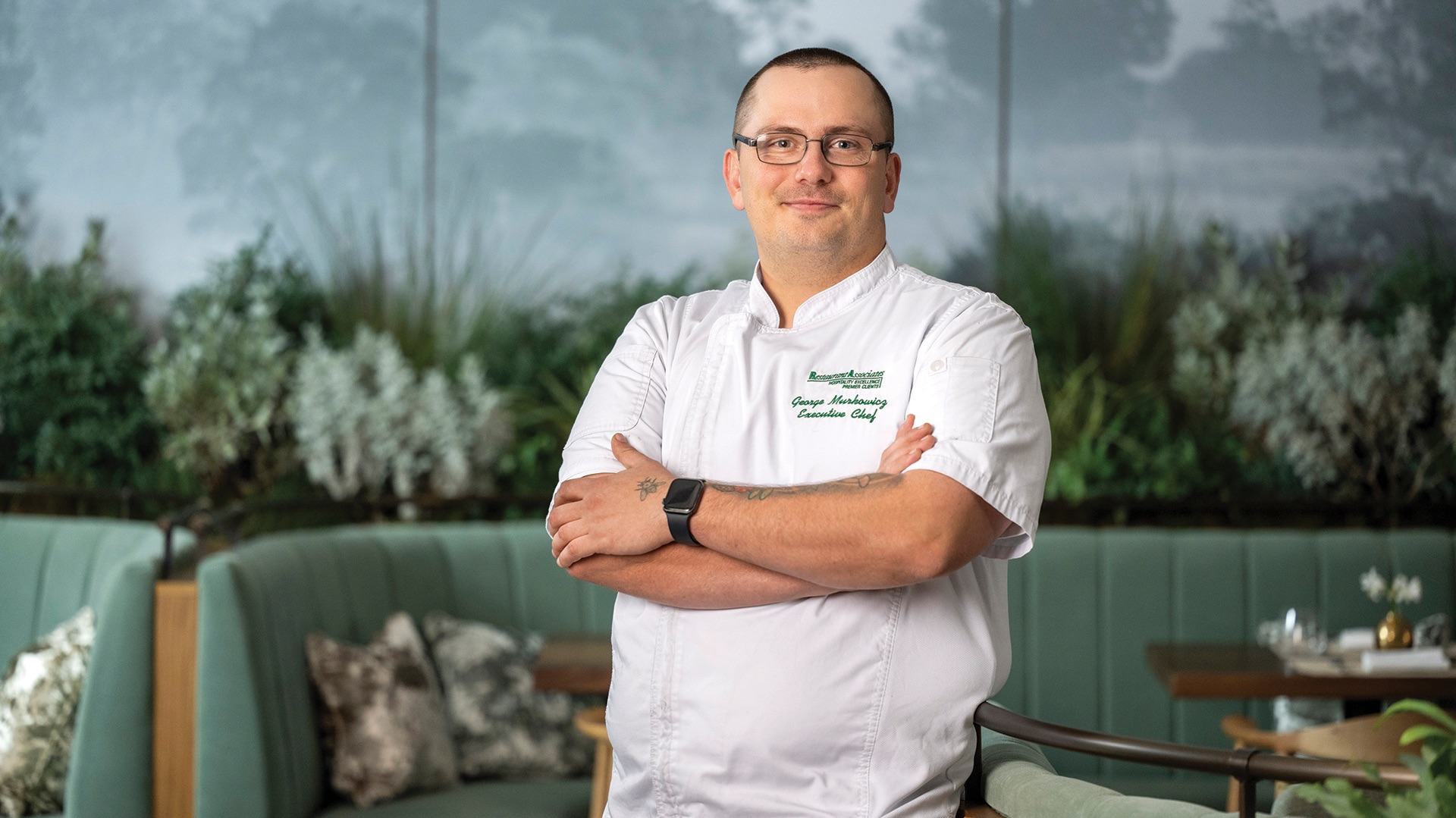
Every Friday afternoon from May to October, Alex Correia and George Murkowicz meet for lunch. Correia, a senior horticulturist at Longwood Gardens in Kennett Square, and Murkowicz, executive chef at its on-site garden-to-table restaurant, 1906, taste-test dishes that result from the horticultural-culinary partnership at the center of it.
Correia, Murkowicz and volunteers work together, balancing dynamics such as flavor versus beauty, yield versus rarity and on-site planting versus farm-sourced ingredients. Today, 1906 is Philadelphia’s only full-service restaurant connected to an arboretum.
“George and Will [Brown, the culinary director] are both so excited about the garden and really committed to figuring out how to use what we’re growing,” says Correia. “They are connected to the space, coming out every week, seeing what’s growing and planning menus around that. I think that’s what has made all of the difference.”
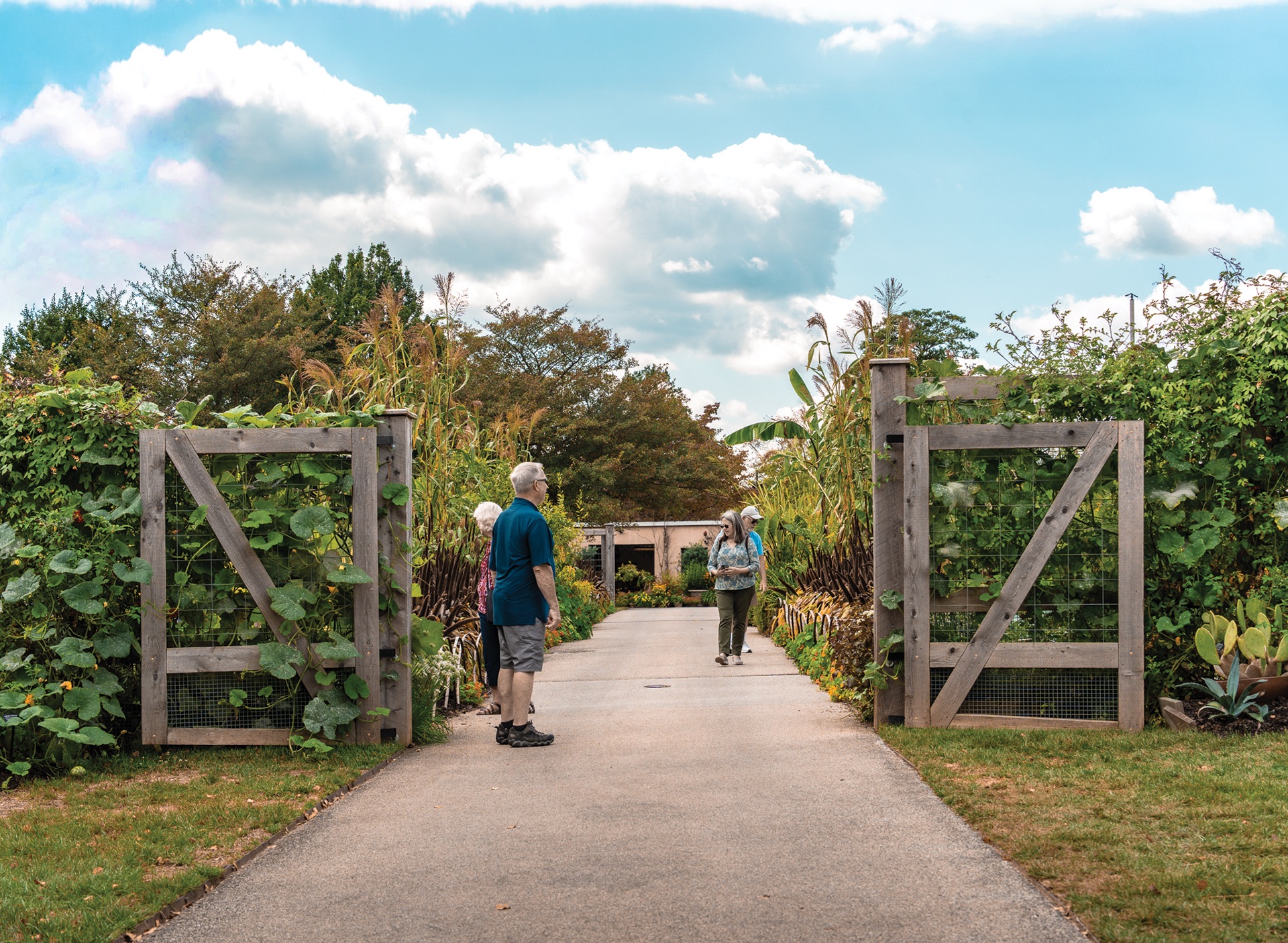
The ornamental kitchen garden — where ripening tomatoes hang overhead from 12-foot bamboo trellises, red and green chiles are nestled between lavender bushes, and yellow and orange gourds sit stacked beside clusters of fragrant sage leaves — occupies a little more than half an acre, slightly east of Longwood’s world-renowned fountains.
The “Idea Garden,” as Longwood calls it, serves multiple purposes: to educate visitors on the plants’ culinary applications and home-growing tips, and to supply ingredients for 1906. Ninety percent of the plants in the ornamental kitchen garden are grown from seed each year in Longwood’s greenhouses or by direct sowing, says Correia, and are harvested a few steps away from the restaurant. Correia and Murkowicz regularly walk the grounds, inspecting plant growth, tasting crops, tweaking the menu and determining what’s ready for harvest.
Correia and Murkowicz select plant varieties from a 330-seed list, curated by Correia, to create seasonally fresh dishes. And the intentional close proximity doesn’t begin and end with the short walk from harvesting in the garden to cooking in the restaurant. Heirloom seeds are sourced from nearby partners such as Philadelphia’s Truelove Seeds, Pennsylvania’s Roughwood Seed Collection, and Row 7 in New York’s Hudson Valley, which supply rare varieties with a local or cultural connection. According to Correia, this curation lends to a more dynamic crop rotation, “a genetically and ecologically diverse garden,” and hyper-seasonal menu planning that begins months in advance.
“We try to cover all the bases for display and for education, making sure beds are full, but we’re also keeping in mind things that the chefs are excited about,” she says.
Every bite, you get to taste a different vegetable that’s growing.”
— George Murkowicz, executive chef, 1906
While other seasonal restaurant menus may flip every quarter, 1906, where prices start at $65 for a two-course meal, updates its menu about every six weeks. This flexibility and the collaborative nature of the process allow the restaurant team to make additional planting requests, create variations of a dish based on availability and freshness, and execute a “root-to-bloom” philosophy that minimizes waste.
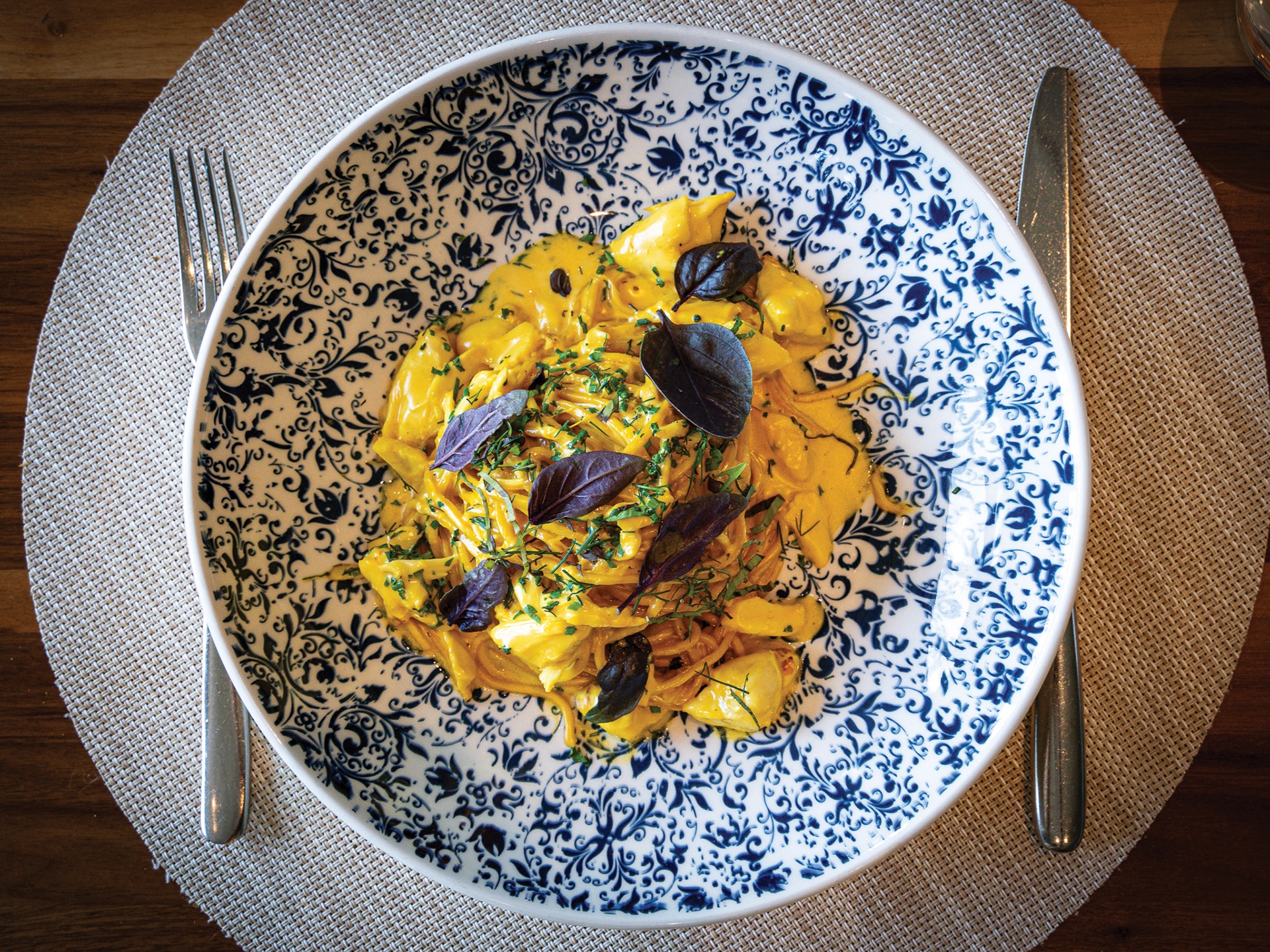
“Cucamelons were really amazing for the bread-and-butter pickled cucumbers we made with our fried chicken,” recalls Murkowicz, which is served with hot sauce made from garden-grown peppers. “We were getting wheelbarrows full of the brightest, most purple, crispiest opal basil you’ve ever seen” for the saffron-infused spaghetti alla chitarra with Maryland blue crab, he says. It was also a great year for their beets and heirloom tomatoes, which both starred in seasonal salads in winter and summer, respectively.
Correia helps Murkowicz’s team learn from the garden cycle, providing insights on everything from soil considerations to food storage, continuously optimizing what is grown and how it can be used in the restaurant. She appreciates that the kitchen doesn’t shy away from using damaged or imperfect produce either.
For example, the tri-color garden risotto is a signature dish that uses vegetable scraps to fortify a viscous stock. Individual vegetable risottos are cooked using that stock, and the final version is plated like a mosaic — three adjacent scoops, each with its own signature color (most recently green, yellow and white) — and dusted with a powder made from dehydrating excess edible flowers (marigold and shiso in the fall).
“Every bite, you get to taste a different vegetable that’s growing,” says Murkowicz.
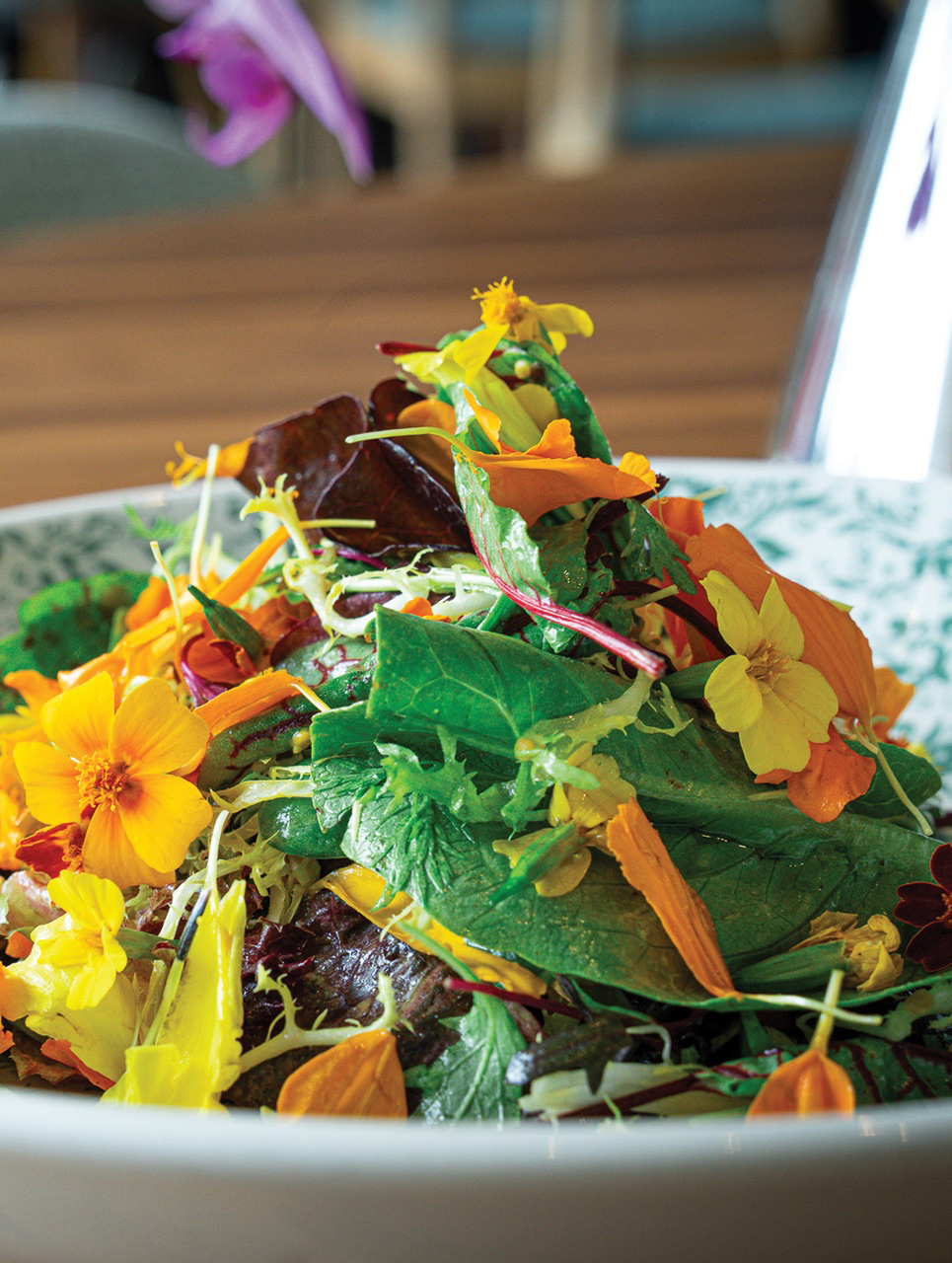
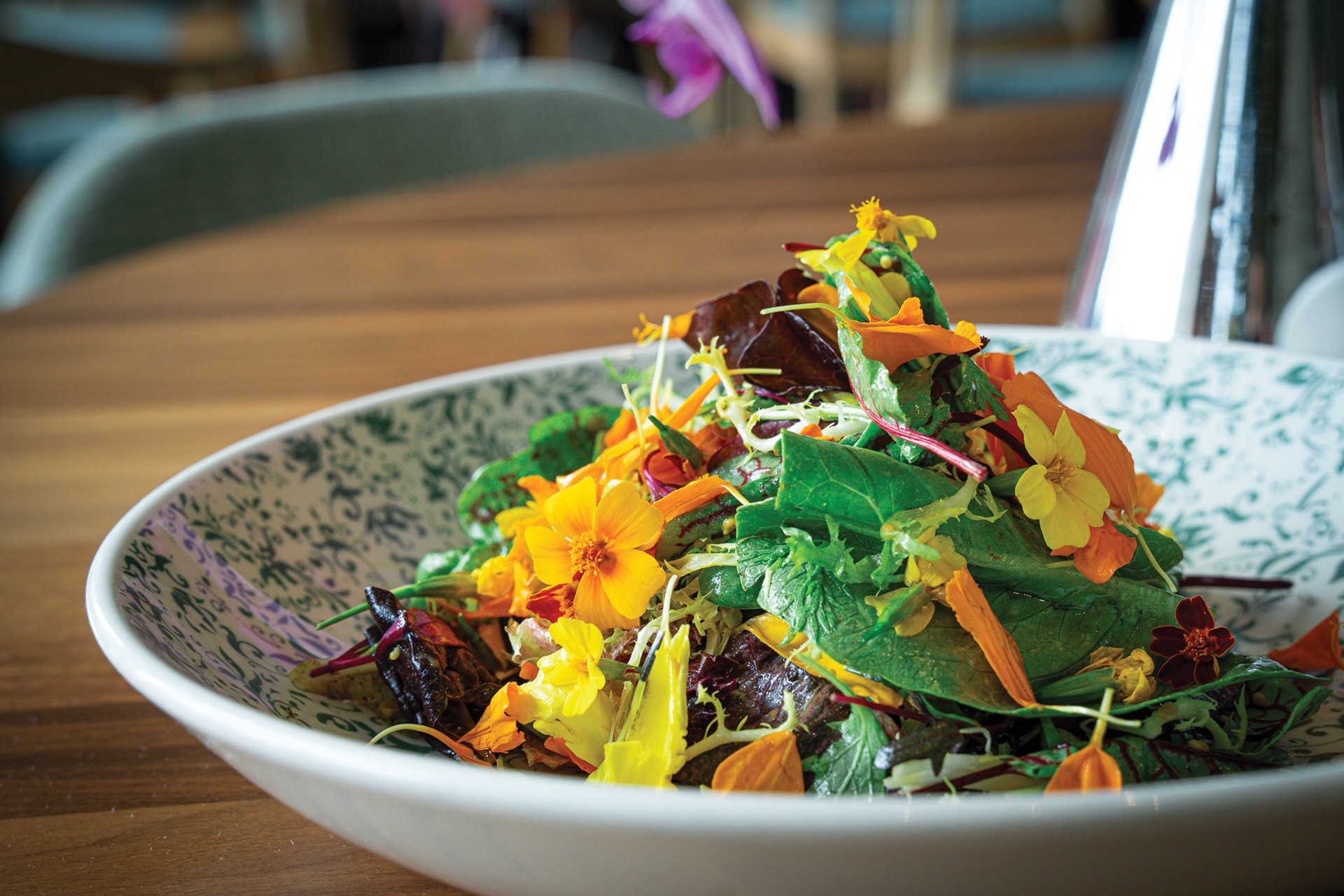
Other popular dishes include the flower salad with garden greens, edible blooms, bee pollen harvested from Chester County hives, honey vinegar and “the greenest, spikiest, creamiest when braised” romanesco, according to Murkowicz. The cauliflower heads are first simmered in stock, sliced and seared, then plated with a medley of garden brassicas, Meyer lemon and Spanish Iberico ham.
At the end of each growing season, the culinary and horticultural teams meet to review which crops performed well, which ones to repeat and what new crop varieties to try — like any of the eight varieties of squash that they grow. “If we can dream it, they’ll make it happen,” Murkowicz says.
Bartenders stretch their scopes with culinary knowledge through access to the kitchen garden— non-alcoholic drinks are often made from botanicals, roots, herbs and blooms harvested on-site.
Garden-to-table dining isn’t limited to savory courses. Pastry chefs also gather inspiration from garden picks to craft seasonal desserts like vegan strawberry panna cotta or apple mint sorbet. The practice extends to the bar team, too. Consulting beverage director Gareth Tootell says 1906’s chefs and bartenders share a philosophy of creating “a sense of place.” Bartenders stretch their scopes with culinary knowledge through access to the kitchen garden — non-alcoholic drinks are often made from botanicals, roots, herbs and blooms harvested on-site. They also collaborate on production prep, like chefs roasting harvested sweet potatoes for a sweet potato chai-infused old fashioned.
“We taste all the cocktails, talk about why they fit and make little adjustments, just like we would with the food,” says Murkowicz. “That’s an opportunity to say, ‘We can’t use 50 pounds of ginger, but can we make a syrup or fat wash something to make a ginger whiskey?’”
Per Tootell, 1906’s garden ideology is reflected in the drinks list, too. In winter, beverages have more restrained “look and feel and flavor profiles,” while spring and summer feature a “celebration of the garden coming alive,” as in the housemade tonic water that leans into florals and botanical spice. He also encourages his team to do “a half-season mini change.” Tootell says he’s been surprised by how much guests have resonated with classic cocktails since relaunching the beverage program.
“One of the cocktails we made this past season was gin infused with Mrs. Robinson’s Tea from here in Kennett Square, with a house-made non-alcoholic lemon cordial, honey and Licor 43 Gold,” Tootell says.
Other popular drinks include the White Tail pear martini. Originally a seasonal special, it became the most-ordered cocktail and returned later as a signature drink, Tootell says. Fresh pears are blended with vodka and pear brandy, then strained slowly through 10 layers of cheesecloth overnight. It’s finished with simple syrup and lime juice. The tropical Frosted Violet also recently returned for multiple seasons and is made with Tequila reposado, mezcal and a house-made pineapple gum syrup, then shaken and poured over crushed ice and topped with a float of crème de violette. The Nevergreen has remained on the menu as a riff on a Bamboo-very wet martini hybrid, with a half-ounce of gin and a blend of dry vermouth and dry sherry.
More recently, Correia and Murkowicz have been experimenting with canning and fermentation to help extend product availability and lifespan through the harsher cold seasons. Correia is also working towards a more proactive crop schedule, dialing in her intuition and anticipating the kitchen’s wishlist, and providing consistently available produce all year long.
“I think there’s a lot of untapped potential that we’re just starting to figure out,” says Correia.



Challenge – Keto dessert option