• Race and Equity
  • Environment
  • Food
  • Circular Economy
  • Events
  • Advertise
  • SUPPORT

The Latest

#195 August 2025/Water

Philadelphians speak on what high summer temperatures mean to them

It’s a Wednesday afternoon in late June, and Philadelphia is on its fifth day of the first heat wave of the summer. As temperatures climb to 95 degrees, residents of Mill Creek flock to the best place in the neighborhood to cool down: Fletcher Pool. Public spaces like Fletcher Pool are essential in a city

More
August 1, 2025
2 mins read
#195 August 2025/Air/Urban Nature

The Fresh Air Issue

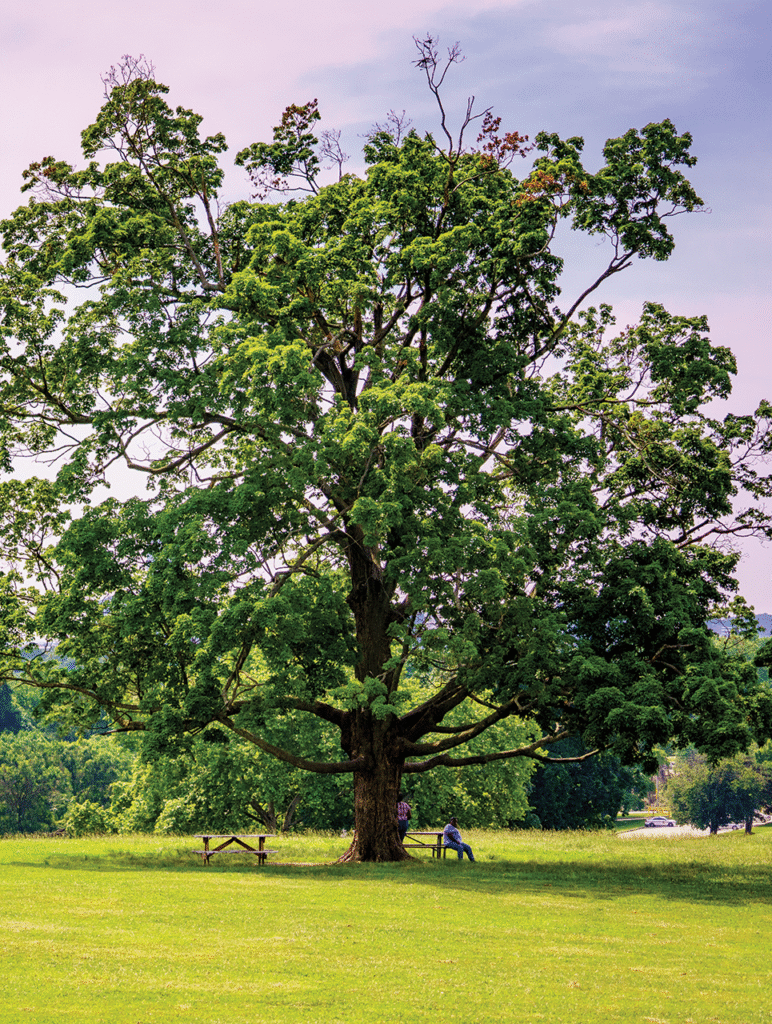
The concrete jungle isn’t for everyone, or welcoming to anyone, really. Especially in the summer, a landscape of asphalt, concrete, metal and glass doesn’t meet all of our needs. Nor do the indoor spaces — all stale air and artificial lighting — where we spend most of our sleeping and waking hours. But being outside

More
August 1, 2025
1 min read
Philly Unwrapped working group members, including Alisa Shargorodsky (front left), developed a sustainable packaging toolkit for businesses.
#195 August 2025/Circular Economy/Food

A new initiative is helping food service establishments think beyond single-use plastics

Ordering takeout from your favorite neighborhood spot is a treat. What’s not a treat? The disposable packaging that’s used for pretty much every to-go order. Whether you’re digging into a burger and fries or summer rolls and pad see ew, what you’re left with is a heap of unrecyclable trash that’s problematic for both the

More
August 1, 2025
2 mins read
#195 August 2025/#196 September 2025/Public Health/Urban Nature/Water

Advocates believe Philadelphia’s waterways could be the next great playground — if the City prioritizes it

On an unseasonably cool Saturday during one of this spring’s stretches of wet weather, Yazmine Acosta, a 14-year-old from South Philadelphia, greeted visitors at a lakeside dock at Franklin Delano Roosevelt Park, just across Broad Street from the Wells Fargo Center. Her slender arms outstretched, she demonstrated how to swoop a paddle’s ends in and

More
August 1, 2025
23 mins read
#195 August 2025/Cooking/Food/Shop Local/Sponsored Content

How Merzbacher’s built a community — one loaf at a time

When Peter Merzbacher first started delivering loaves of bread around the city on his bicycle, he had no five-year plan to grow his small baking project into a wholesale business. But today, Merzbacher’s processes 12,000 pounds of dough into bread every week out of its Germantown warehouse. And still, the mission remains the same: nourish

More
August 1, 2025
3 mins read
Alex Bomstein, executive director of the Clean Air Council.
#195 August 2025/Air/Public Health

Philly’s air quality is bad and getting worse

The American Lung Association has released its latest annual report on the state of the nation’s air — and the news isn’t good for Philadelphia. In last year’s report, the Philadelphia-Reading-Camden metro area had the 65th worst air quality in the country; now it has the 26th worst. Based on data collected between 2021 and

More
August 1, 2025
3 mins read
#195 August 2025/gardening

Mini-grants beautify and improve accessibility to gardens and commercial corridors

Amid the typical concrete of the cityscape, the Cecil Street Community Garden offers a place for Southwest Philadelphia residents to enjoy green space, something often absent from dense, urban areas. “Even though it’s in the middle of the city, it kind of gives you an escape,” says Unique Fields, executive assistant at the community nonprofit

More
August 1, 2025
2 mins read
#194 July 2025/Climate-Change

The Climate Change Issue

It’s easy to feel hopeless. A global disaster-in-progress can do that to you. There are 8.2 billion of us humans on this planet, and we are each so tiny, and, on our own, we each have so little we can do to fight climate change and adapt, when adaptation so clearly requires large-scale action. In

More
July 1, 2025
1 min read
#194 July 2025/Bicycling/Bike Talk/Politics/transportation

Since 2012, Circuit Trails has made strides connecting the region. Local governments and residents are on board, but will the Trump admin stymie its progress?

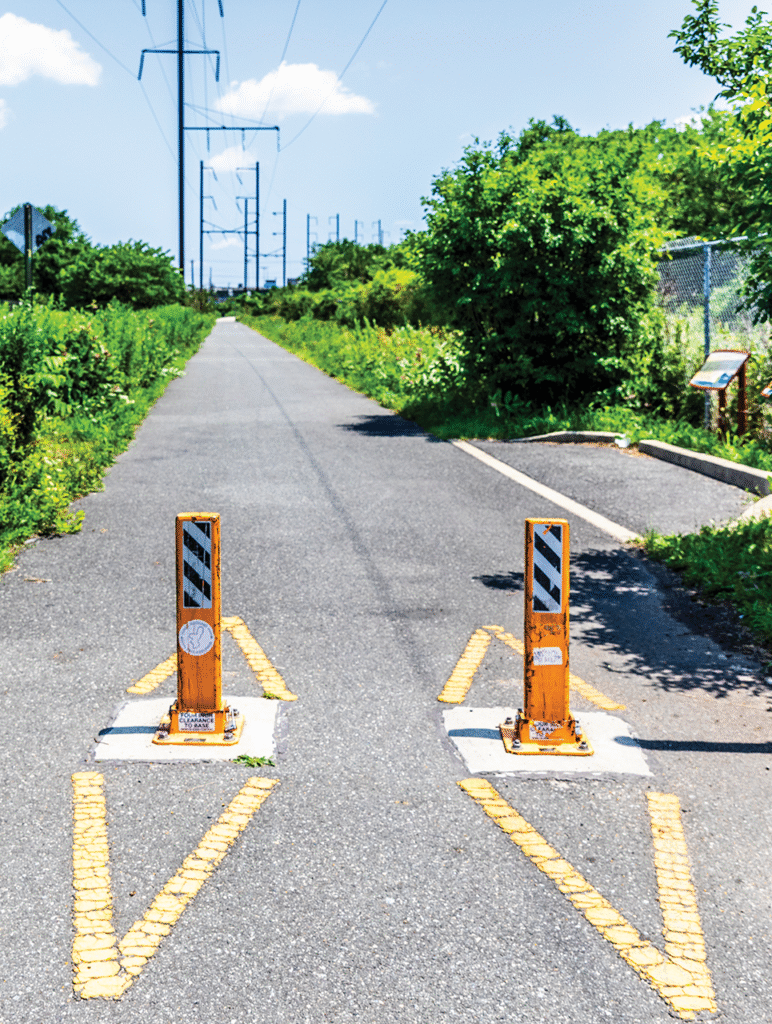
Almost any cyclist or pedestrian knows the pleasure of cruising down a trail without a car in sight. Usually, the open-road vibe only lasts for a limited time before the reality of near ubiquitous traffic reasserts itself. The mission of the Circuit Trails, one of the nation’s most ambitious multiuse trail networks — right here

More
July 1, 2025
4 mins read
#194 July 2025/Energy

Home electrification and increased production of renewables are the goals, but challenges with infrastructure, policy and markets complicate the green transition

“Now — the water is boiling,” says Jen Hamilton, calling attention to the pot on her stove. She lifts the pot and places her other hand flat on the cooking surface. She remains uninjured. “It’s safer!” she exclaims, explaining that her cats used to inadvertently turn on the gas on her old stove by bumping

More
July 1, 2025
9 mins read
Previous 1 … 17 18 19 20 21 … 412 Next

Recent Comments

  1. Raquel Moreno on City circumambulation group celebrates ten years of walks
  2. Suzanne Ryan on Once billions strong, the passenger pigeon survives in a fading Academy diorama
  3. Publius on Publisher’s Notes: It’s A Crime
  4. Julia Lowe on South Philly Librarian Teaches People “How to Not Use AI”
  5. Julia Lowe on South Philly Librarian Teaches People “How to Not Use AI”

gridmagazine

The Sunday following Philadelphia’s apocalyptic mi The Sunday following Philadelphia’s apocalyptic microburst storm, the Garden Court gardeners gathered late in the day to honor our fallen fruit trees. They sat around the apple stump and shared stories of the shade the tree had offered on hot July days and the roost the branches had made for birds and squirrels. Of the apples the wind sometimes threw down — always more sour than we’d like — or the cherries hung a ladder’s reach above our heads — always sweeter than the low-growing fruit. Then they shared silence and offered gifts: a scattering of cornmeal, a ripe tomato, a splash of water.

This was climate grief, moving through a community.

The Garden Court Community Garden is a natural respite on a busy street. In midsummer, when the squash and collards were in full flush and the central apple tree had leafed out into a wonderful umbrella of shade, the garden became a cool, green oasis. But when I returned from traveling just one week after the storm in early July, I was warned by a friend: “It looks really different.”

Our oasis had been disrupted. The apple tree, along with our cherry and one peach, had been toppled. In place of green shade, only stumps and sweltering sunshine.

➡️ Read the full story at gridphilly.com

✍️ Sarah Ruiz
📸 Brook Layne

#philadelphia #climategrief #microburst #fallentrees #communitygarden
“1854,” says Jacques-Jean “JJ” Tiziou, with author “1854,” says Jacques-Jean “JJ” Tiziou, with authority, when asked about the origins of Philadelphia’s borders. “That’s when the Consolidation was signed: February 2, 1854.” Good luck finding another Philadelphian who could, on the spot, provide the exact date on which the Consolidation Act transformed the neat rectangle of William Penn’s colonial city — from Vine Street to South Street, Schuylkill to Delaware — into the considerably less tidy shape of the city today. But to be fair to the rest of us, Tiziou has good reason to know this obscure bit of trivia: He has walked the city’s odd, jutting perimeter no less than 17 times.

Tiziou completed his first walk in 2016 as part of an artist residency, to which he’d applied as a photographer. (In 2011, he photographed and designed Philadelphia’s largest piece of public art: “How Philly Moves,” a mural on the side of a parking garage at the Philadelphia International Airport.) Over the next few years, he made the 100-mile trek an annual ritual. He’d set off clockwise from 61st and Baltimore and complete the walk in segments over five or six days.

“I thought I knew Philly pretty well before I walked it,” says Tiziou. “It was a humbling, humbling experience. The city is vast and unknowable and magical.”

In 2020, hoping to share that magic, Tiziou began accommodating larger groups through his organization, the Walk Around Philadelphia. He talks about “gifting people places”: showing them parts of their city they wouldn’t encounter otherwise. “We took a group of high school kids from the Kensington Health Sciences Academy out on a spring break walk,” he says, “and these youngsters had never been on the banks of the Delaware.”

➡️ Read the full story at gridphilly.com

✍️ + 📸 Tasso Hartzog

#philadelphia #philly #walkaroundphiladelphia #walkinggroup #urbannature
It was a muggy morning in mid-August and parents w It was a muggy morning in mid-August and parents were gathered inside The Academy at Palumbo High School’s cafeteria, chatting animatedly over coffee and biscuits. The occasion was the First-Year Student Breakfast, an annual event the school’s Home and School Association (HSA) hosts to connect new families with school staff and parent volunteers. The meeting had been running for nearly two hours when parents began asking about Palumbo’s tech policy. Edwin Mayorga, a Palumbo parent and HSA member, saw an opportunity to ask a question that had been on his mind — what, exactly, was the school’s stance on AI?

“I knew I was kind of opening Pandora’s box right at the end of the meeting,” said Mayorga, acknowledging that AI is a thorny topic for schools looking to strike a balance between preparing students for the future and protecting them from technology’s potential harms. He said the school staff members present at the meeting provided a brief answer to his question, but added that the school’s AI policy is “still very vague to me, which I don’t think is usually a good recipe for good education.”

Proponents say artificial intelligence has the potential to transform education by saving teachers time and personalizing curriculum, but research shows that AI tools can undermine student learning and stunt cognitive development. A recent report published by the Brookings Institution found that the risks of incorporating AI into classrooms currently outweigh the benefits. The School District of Philadelphia has taken steps to restrict student access to AI by limiting student use to ninth through 12th grade classrooms and publishing a set of AI guidelines, but some parents say they still lack information about how their children are engaging with AI at school.

➡️ Read the full story at gridphilly.com

✍️ Kathryn Rice
📸 Tasso Hartzog

#philadelphia #aiineducation #aiinschools #ailiteracy #digitalliteracy
Nicole Pepe’s house on the 5100 block of Catharine Nicole Pepe’s house on the 5100 block of Catharine Street shook as the tree hit it. She had been watching through a window as the fierce winds of the July 11 microburst whipped leaves and bits of roofing shingles in a vortex behind her house. “My husband said, ‘Get in the middle of the house,’” just before the century-old London plane tree fell over. “You’d think it’d be like a thunderous crash, but it hit a car first, so it was like this weird kind of metallic sound.”

When the storm finally passed and the winds died down, Pepe and her husband went outside to find the tree wedged against their porch. And it turned out it had actually crushed two cars when it fell across the street.

“One of them happens to be mine,” says Liz Beard. Beard had been watching the torrential downpour from a second-floor window. “My house was like literally going through a car wash,” she says. After the storm, “I come outside to see what’s up, and there’s one of the huge London planes across two cars on our street.”

Trees bring a lot to a neighborhood. Their shade makes hot days bearable, which is especially important as cities bake in a rapidly warming climate. They help soak up rain, which makes it easier to manage urban stormwater. But they also carry costs, especially when storms knock them over. As tree-toppling storms, amplified by a warmer, wetter climate, become more common, will property owners decide the canopy isn’t worth it?

➡️ Read the full story at gridphilly.com

✍️ Bernard Brown
📸 Liz Beard

#philadelphia #microburst #climatechange #treecanopy #treedown
A flock of passenger pigeons rests frozen in time A flock of passenger pigeons rests frozen in time on the third floor of the Academy of Natural Sciences of Drexel University. The birds feed on the ground, rest on twigs and raise their wings to take to the air in a beech forest whose colonnade of gray trunks recedes into the diorama’s painted background. The mounted skeletons in Dinosaur Hall help visitors picture a T. rex treading the earth, a predator with no contemporary counterpart. The same is true of this display for the extinct passenger pigeons that once flew in the billions.

“The Pidgeons in such numbers we see fly, that like a cloud they do make dark the sky; and in such multitudes are sometimes found, as that they cover both trees and ground,” says Keith Russell, program manager for urban conservation at Audubon Mid-Atlantic, quoting early Pennsylvania settler and poet John Holme. Russell says that thanks to centuries of written accounts, as well as Philadelphia’s role as a hub for natural history exploration, “there is a longer timeline of records for Philadelphia than there is for any other place.”

Hannah Michelle Brower and Aspen Simone of Philly Pigeon Tours highlighted that connection in a special program they offered for the nation’s 250th. The tours usually focus on urban pigeons (aka rock doves), free-flying members of a domesticated Eurasian species. “We talked about the rock pigeon and the history with them, but focused more on passenger pigeons because they were native to America,” Brower says. “We talked about the whole history of early colonist records of their abundance and how people caused their decline and extinction.”

➡️ Read the full story at gridphilly.com

✍️ Bernard Brown
📸 Tasso Hartzog

#philadelphia #ornithology #pigeons #passengerpigeon #academyofnaturalsciences
With the closing of the Academy of Natural Science With the closing of the Academy of Natural Sciences, Drexel University has blundered into a spectacular public relations disaster. I could almost feel sorry for them, had their actions not been so cruel and heartless.

When the news first broke, the reaction was a stunned grief. According to Drexel, this beloved museum, the public-facing side of an irreplaceable scientific institution, just didn’t make financial sense anymore. They listed some facts. Attendance was down, and had never recovered from COVID-19. The building at 19th Street and the Parkway required major work. It just couldn’t go on.

Two of the three divisions of the Academy would be spared. Drexel would maintain the Academy’s collection of 19 million(!) specimens and scientific research would continue. To make it financially stable, they would sell the building.

It was a tidy narrative, a problem and a solution presented simultaneously.

After the initial shock and sadness of hearing the news, people started asking questions: How much work does the building need? Why does it need to close so quickly? Has every effort been made to save the museum?

Supporters began to organize, politicians expressed dismay. And then the William Penn Foundation, usually a behind-the-scenes player, made a public offer to fund the museum for a year. It was a bold intervention, effectively calling Drexel’s bluff.

The closest Drexel has come to acknowledging that offer was when they told NBC 10 they hadn’t received a “formal proposal.” Their response speaks volumes.

The museum has closed quickly because Drexel has no interest in keeping it open.

Drexel did not just fail to make every effort to save the museum — they made no effort.

➡️ Read the full note from our publisher at gridphilly.com

✍️ Alex Mulcahy

#philadelphia #savetheacademy #saveacadnatsci #savetheacademyofnaturalsciences #academyofnaturalsciences
One in 10 Philadelphia public schools had high lea One in 10 Philadelphia public schools had high lead levels in water sources used for food preparation, according to tests conducted by the School District of Philadelphia (SDP) over the past three years.

The dangerously high levels of lead, a potent neurotoxin linked to stunted development and learning difficulties, were found by the district during routine water testing, the results of which were posted to its website. Grid then analyzed the results and the potential exposures to district students, which has not been previously performed by other media.

The high lead results were predominantly taken from water taps found in kitchens or food prep areas, affecting 21 schools out of the 219 tested. In an additional seven schools, high lead results were discovered in several nurses’ offices, a pre-K room and a special needs room. In some cases, the lead levels were more than 10 times higher than the district’s safety level of 10 parts per billion (ppb).

In one high school kitchen, lead was found at 6,200 ppb.

School district officials and documents indicate that contaminated water sources were immediately taken offline until filters could be installed and the water retested. But health and environmental advocates say the data reveals the latest vulnerability in an ongoing districtwide plan to address lead-in-water risks that dates to 2017.

➡️ Read the full story at gridphilly.com

✍️ Kyle Bagenstose

#philadelphia #phillypublicschools #cleandrinkingwater #safedrinkingwater #leadcontamination
Grid is transitioning to an all-digital publicatio Grid is transitioning to an all-digital publication. We need 500 new subscribers to make it possible.

Grid’s December issue, 211, will be its last in print. Our business model is no longer working, and we’re making a change to keep our journalism going.

Our mission isn’t changing: sustainability news and stories that inspire, educate and hold the powerful to account. What is changing is the pace: We’re moving from monthly to weekly publishing online so we can respond to breaking news stories faster and reach more people – including online audiences. One of our recent videos was viewed almost 40,000 times, four times our print run.

To make it work, we need 500 new monthly supporters. If we get there, Grid continues.

→ Give to Grid at store.gridphilly.com

→ Read the full letter from publisher Alex Mulcahy at gridphilly.com

#philadelphia #phillynews #sustainability #environmentalnews #independentjournalism
Just before 10 a.m. on Sunday, Sept. 27, dozens of Just before 10 a.m. on Sunday, Sept. 27, dozens of people stood in line outside the Academy of Natural Sciences of Drexel University, waiting in the spitting rain for the museum to open its doors to the public for the final time.

Artie Cohen, 6, who’d been going to the Academy since he was 2 years old, looked forward to seeing the dinosaurs. And how did he feel about the museum’s closure?

“Sad.”

“There’s a lot of other great natural history museums that we can visit,” said Lauren Zalut, Artie’s mother. “But to not have this one, the first one in the country, is pretty disappointing.”

“We’d have to go to New York to see something like this,” she said.

On Sept. 1, Drexel University and the Academy announced that the museum would close permanently at the end of the month, citing declining attendance that never rebounded after the pandemic. But, in 2025 at least, the Academy’s revenue outpaced its expenses. The greatest obstacle to the museum’s continued operation seems to have been a staggering $150 million in deferred maintenance costs for its 150-year-old building on the Ben Franklin Parkway, according to the Philadelphia Inquirer editorial board.

Though there had been indications, earlier than September, that the Academy was not in good fiscal health — a significant reduction in hours last fall, an accompanying round of layoffs — there were no public statements about a potential closure until the Sept. 1 announcement.

➡️ Read the full story at gridphilly.com

✍️ + 📸 Tasso Hartzog

#philadelphia #savetheacademy #saveacadnatsci #savetheacademyofnaturalsciences #academyofnaturalsciences
Sometimes Linde Lauff sees a pile of construction Sometimes Linde Lauff sees a pile of construction waste in Pennypack Park and thinks, that shouldn’t be there.

Not just in a general way in which, ideally, no litter should ever pollute a natural space, much less the enraging detritus left behind by short dumping. For her, the frustration is much more specific. A little over six years ago, Lauff was the president of the Friends of Pennypack Park, a nonprofit that regularly organized cleanups and otherwise cared for the 1,600-acre park that winds through Northeast Philadelphia. But after the families of two park users who suffered accidents sued the organization, the Friends group was left uninsurable in 2020 and dissolved.

Overnight, gone were the monthly cleanups during which volunteers spent nearly 1,000 hours a year hauling 4,000 bags of trash out of the park. Gone was the Tree and Trails committee, which planted over 2,000 trees in the park. And gone was a community of like-minded individuals who cared deeply for their local natural space and formed close bonds in the process.

Those people haven’t actually gone anywhere, Lauff says. She talks to many of them regularly, and some still perform smaller, informal cleanups. But what has disappeared is their sense of agency and ability to effect positive change in a substantial way.

“It’s hard to believe it’s been six years,” Lauff says. “People are still very much concerned about what happens in the park. And what will happen to the park in the future.”

➡️ Read the full story at gridphilly.com

✍️ Kyle Bagenstose
📸 Tracie Van Auken

#philadelphia #phillyparks #phillyparksandrec #urbannature #urbangreenspace
On September 27th, 2026, @acadnatsci closed its do On September 27th, 2026, @acadnatsci closed its doors after 214 years of natural science education and research. Hear from organizers, visitors, and staff about the impact the closure will have on the community.

#philadelphia #savetheacademy #saveacadnatsci #savetheacademyofnaturalsciences #academyofnaturalsciences
From outside of @acadnatsci earlier today. #phila From outside of @acadnatsci earlier today.

#philadelphia #savetheacademy #saveacadnatsci #savetheacademyofnaturalsciences #academyofnaturalsciences
On a June Monday evening, the loudest sound in the On a June Monday evening, the loudest sound in the South Philadelphia Library was the clicking of computer keyboards. Behind the busy island of computers, another group of people filtered into a classroom filled with green plastic chairs and soft ambient music: a space of quiet resistance.

“I’m tired of AI being shoved down my throat,” one woman said, puncturing the stillness.

She’d come to the right place: a workshop called “How to Not Use AI” led by librarian Charlie Bailey.

The Free Library of Philadelphia hosts hundreds of free workshops each year, many of which focus on digital literacy. Until now, those workshops have taught participants how to use programs such as Microsoft Excel and Quickbooks. Bailey’s workshops are the first to teach people how not to use technology. This may sound counterintuitive, but Bailey believes that showing people how to disable artificial intelligence features from common apps and websites aligns with the library’s mission of advancing digital literacy.

“We’re constantly helping people navigate technology,” he says, “I see this as part of that in that it’s helping people reclaim their autonomy over the technology they use and decide if they want to use certain tools.”

➡️ Read the full story at gridphilly.com

✍️ + 📸 Kathryn Rice

#philadelphia #antiai #libraryresources #digitalliteracy #freeworkshop
Anou Vongbandith, 51, the chef at Germantown’s Das Anou Vongbandith, 51, the chef at Germantown’s Das Good Café, was driving to work on the sweltering morning of July 26, 2025, when masked men from Immigration and Customs Enforcement (ICE) boxed in his car, then abducted him. They soon sent Vongbandith to the Moshannon Valley Processing Center in Philipsburg, Pennsylvania, a facility equipped with the barbed wire and other features of the federal prison it once was.

Detainees have sickened and died at Moshannon, and the clock was ticking for Vongbandith. Due to a bout with COVID-19, “[his] heart pumps only 27 percent of the normal volume of blood, and he didn’t have his medications,” says Anh Vongbandith, his wife of 25 years and owner of Das Good. “Also, ICE aims to deport people within 30 days of detaining them.” There was talk of returning Anou to Laos, his birthplace, though he has lived in the U.S. since the age of 5.

Anou’s arrest incensed many Northwest Philly residents. The Vongbandiths have become beloved members of that community, first through Tipsy Café and Catering, a takeout spot at 5227 Germantown Ave., then with Das Good, a spacious café on the West Chelten Avenue corridor that offers breakfast and brunch classics, often with an Asian twist.

“Anh never says no,” says Michael Lazrus, a longtime Germantown peace activist. “She provides food and a meeting place, even after ICE detained Anou,” he says, adding that the Vongbandiths give their food overages to nearby pantries. The family also serves up hundreds of free Thanksgiving dinners each year, Lazrus says.

Anh’s community involvement extends even further. “I can’t see animals put to sleep,” she says. “Right now we’re fostering four kittens and one puppy at home.”

People took Anou’s arrest personally, Anh believes. “It was as if they said, ‘No way are you going to keep our chef!’”

➡️ Read the full story at gridphilly.com

✍️ Constance Garcia-Barrio
📸 Taylor Ecker

#philadelphia #ice #deportation #immigration #immigrantjustice
In retrospect, it’s possible to reconstruct a reci In retrospect, it’s possible to reconstruct a recipe that enabled Catie Gainor to create her South Philly cookbook store, Binding Agents. Start with a family connection to the food business and a mother who loved cooking for friends and family. Add a high school summer spent working at a bookstore, early exposure to classic TV cooking shows hosted by Julia Child and Lidia Bastianich and nostalgia for the camaraderie of restaurant work. Fold in a desire to honor her mother’s legacy, a growing realization that Gainor wanted more from her career in public relations and a 2018 move to the Italian Market neighborhood. An idea that formed in 2022 became, by the fall of 2024, Binding Agents: a welcoming shop Gainor describes as “the size of a sardine can.”

With millions of recipes and cooking videos available online, opening a brick-and-mortar store selling cookbooks and fiction and nonfiction books about food and eating might seem foolhardy. But Gainor found reassurance in the fact that similar stores were thriving in cities across the U.S. She sees Philly as a great food city where interest in cooking and eating runs strong. Since the Cook Book Stall in the Reading Terminal Market closed in 2017, she says the city has lacked a hub for food authors, cooks and eaters to gather.

➡️ Read the full story at gridphilly.com

✍️ Marilyn Anthony
📸 Taylor Ecker

#philadelphia #phillybookstore #cookbooks #phillyfoodie #shopphilly
Throughout July 18 and 19, visitors arrived at Sou Throughout July 18 and 19, visitors arrived at South Philadelphia’s Franklin Delano Roosevelt Park with a unique task — to perform for a tree.

The production, “Arborlogues,” is a touring piece developed by Other Forms Of (OFO) Theater, a company led by set designer Dan Daly that emphasizes theatrical experimentation through unorthodox sets. Billed as a “botanical recital,” “Arborlogues” was born during the COVID-19 lockdown, when companies like OFO were forced to reimagine the definitions of theater under quarantine.

“I came with this idea of a play you perform for yourself ... and it developed into the idea of performing for a tree, using the tree as a mirror for the self,” Daly says.

The result is a 15-minute monologue performed from the confines of a thick velvet curtain that encircles a tree’s trunk. Within the intimate space, theatergoers address their arboreal audience through a personalized script composed by playwright Lee LeBreton.

➡️ Read the full story at gridphilly.com

✍️ Sophie Aanerud
📸 Tracie Van Auken

#philadelphia #phillyparks #urbannature #fdrpark #urbangreenspace
On May 4, following the unanimous passing of the “ On May 4, following the unanimous passing of the “ICE Out” legislative package by Philadelphia City Council, a series of letters were sent by the federal government to City officials demanding they turn over years worth of materials concerning “far-left” immigrant activist groups. Among the groups singled out was Asian Americans United (AAU), a community outreach group supporting people of Asian ancestry in the Philadelphia area with leadership development and immigrant justice action.

Vivian Chang, AAU’s executive director, spoke with Grid about the aftermath of the “ICE Out” ruling and the coalition of more than 60 organizations that it recently joined, urging Mayor Cherelle Parker’s administration to implement the legislation.

➡️ Read the full interview at gridphilly.com

✍️ Elijah Fischer
📸 Photo courtesy of Vivian Chang

#philadelphia #immigration #immigrantsupport #immigrantjustice #immigrantactivism
How much do you love your park? Maybe enough to o How much do you love your park?

Maybe enough to organize or participate in a cleanup, raise or donate money to make an improvement, or lead an educational walk. Or maybe you don’t have the time or money to donate, but simply find your local park to be a refuge — and appreciate the work other people are doing to keep it that way.

But no matter how deep your affection goes for your favorite park, it’s unlikely you’d want to get sued for it.

That, unfortunately, is the fork in the road that the people behind the Friends of Pennypack Park confronted in 2020. In early 2021, Bernard Brown reported on how their organization — which conducted park cleanups and educational walks — was forced to disband because, despite having no connection to two tragic deaths that occurred at Pennypack, the group was named in lawsuits.

Kyle Bagenstose returns to that topic this month, but only to say that nothing has been done yet to protect groups like this. And they are afraid.

➡️ Read the full note from our publisher at gridphilly.com

✍️ Alex Mulcahy

#philadelphia #phillyparks #phillyparksandrec #urbannature #urbangreenspace
There is a surprising truth about the affordabilit There is a surprising truth about the affordability of solar panels that few people understand: despite all the headlines, solar has never been more affordable.

It’s easy to see why people might think otherwise. If you’ve been following the news about cuts to solar incentives — and to just about anything perceived as “green” — you might reasonably assume that the marketplace has turned against solar. You might also think it’s best to wait a few years on your solar plans and see what the next administration brings.

But from where I sit, the reality is almost exactly the opposite. Despite the political climate, there has never been a better time to go solar.

➡️ Read the full story at gridphilly.com

✍️ Micah Gold-Markel

#philadelphia #solarenergy #solarpower #solarpowered #solarstates
Will Ryan faces a half-dead (yet half-alive) ash t Will Ryan faces a half-dead (yet half-alive) ash tree deep in the woods of Tyler Arboretum and ties a plastic pill bottle around its trunk. Inside is a folded white paper dotted with tiny black specks that look like poppy seeds. He ties the bottle to the tree and takes off the cap. Those tiny specks are emerald ash borer (EAB) eggs containing parasitoid wasp pupae.

The invasive bright green beetles have devastated the region’s ash trees. Scientists have pinned their hopes on what they’ve dubbed “Oobinators,” pill bottles containing miniscule, stingless wasps (Oobius agrili). Once the wasps emerge from the Oobinators and find their beetle hosts, they could kill enough of them to save this ash tree and the next generation sprouting from seeds left behind.

“They have to be placed near where emerald ash borers likely will be, which means they’re no good after all the trees are dead,” says Ryan, the arboretum’s director of horticulture and land stewardship. The arboretum has cut down about 1,600 dead and dying ash trees in Tyler’s 550 acres of natural areas. Ryan’s team flagged about 25 of the dying trees to serve as release sites for the tiny, stingless wasps.

➡️ Read the full story at gridphilly.com

✍️ Bernard Brown
📸 Tracie Van Auken

#philadelphia #tylerarboretum #ashtree #parasitoidwasp #invasivespecies
Follow on Instagram

© 2026 - All rights reservedGrid Magazine

Subscribe To Our Newsletter

* = required field
  • Race and Equity
  • Environment
  • Food
  • Circular Economy
  • Events
  • Advertise
  • SUPPORT
  • About
  • Advertise
  • Online Store
  • Donate
  • Distribution
  • Magazine
  • Contact
  • Race and Equity
  • Environment
  • Food
  • Circular Economy
  • Events
  • Advertise
  • SUPPORT