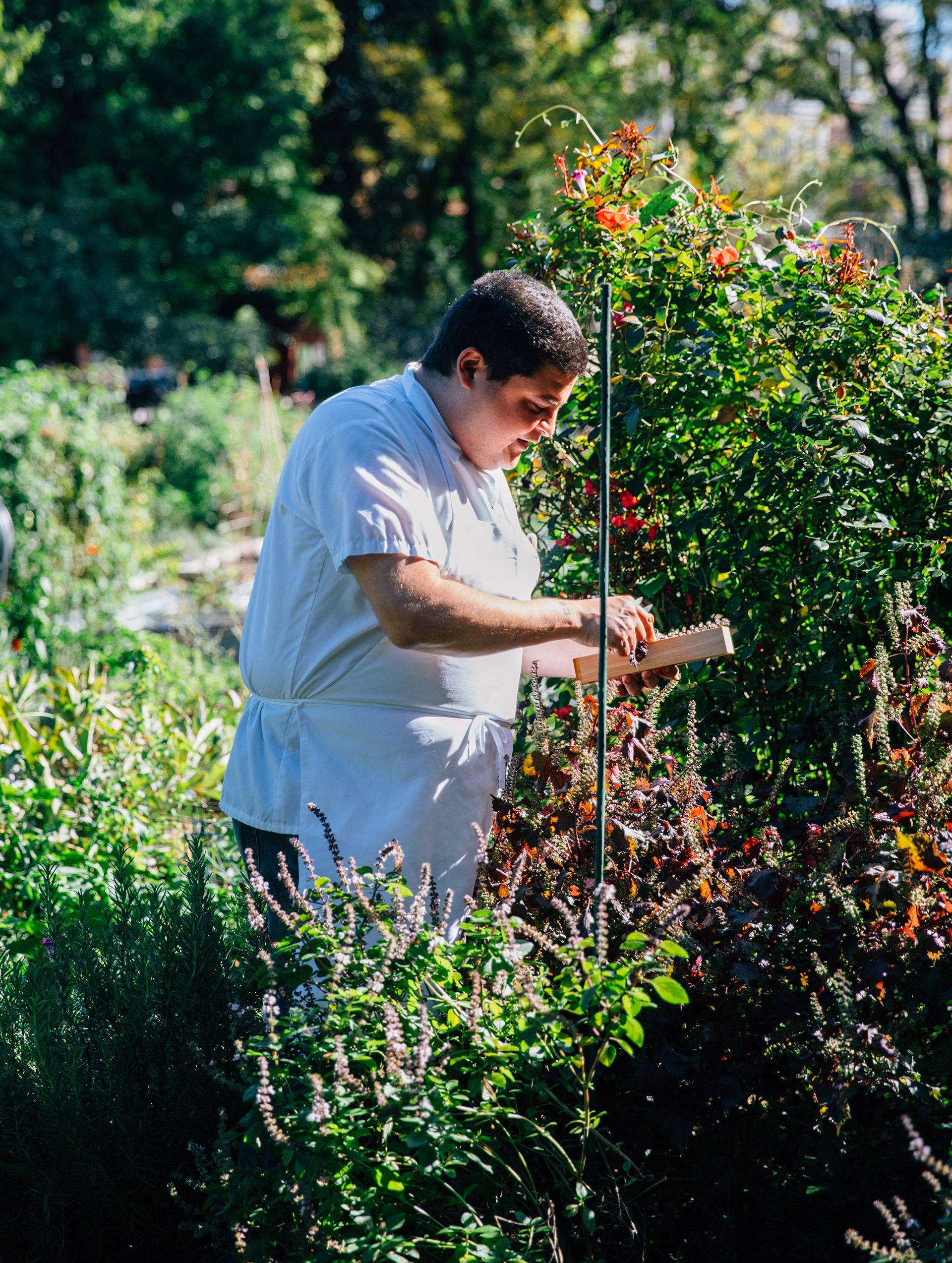
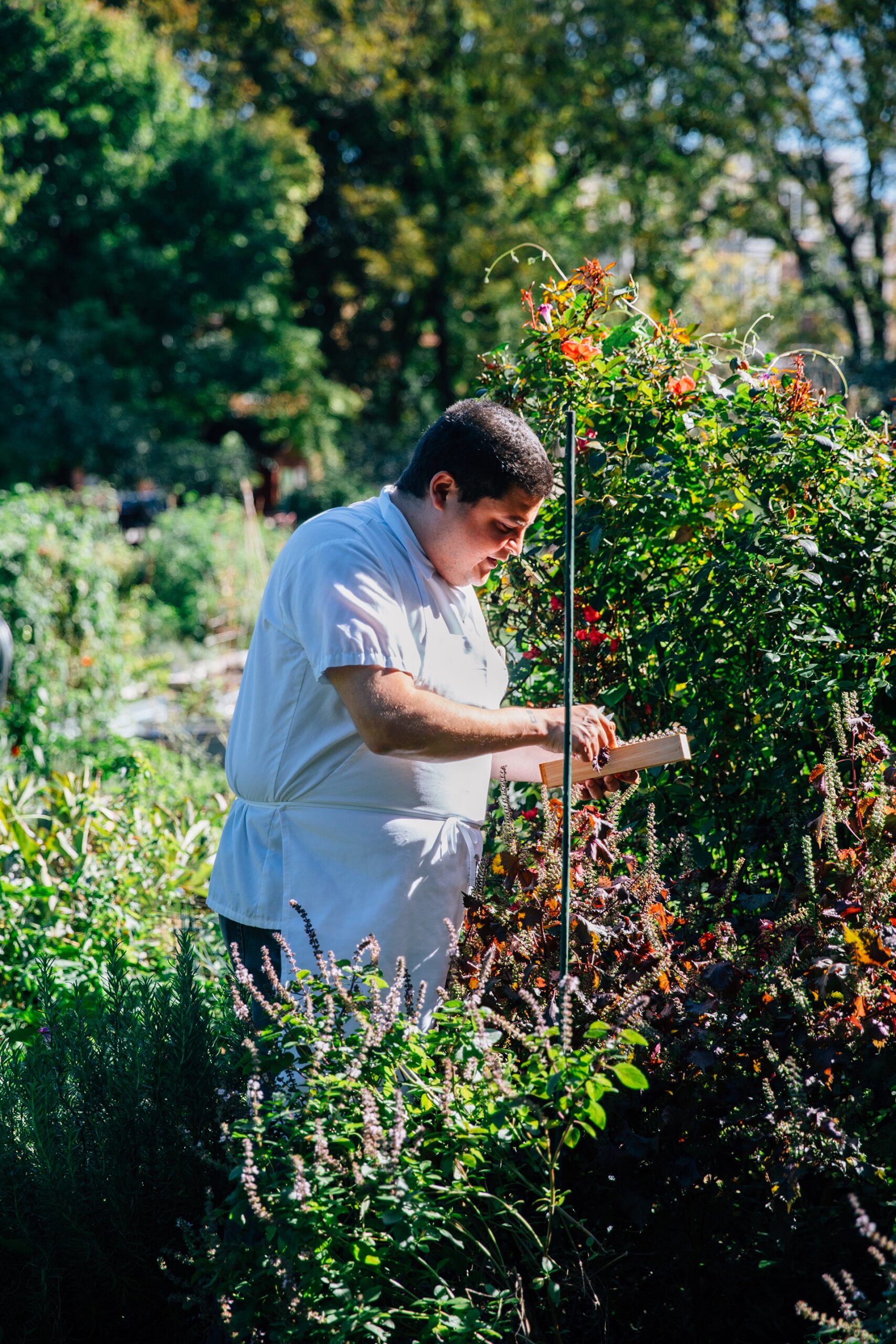
Ian Graye, in his crisp white chef shirt and apron, is not the likeliest image of a gardener. But the chef of Northern Liberties vegan restaurant Pietramala stalks around a plot in Liberty Lands Community Garden, snipping at herb bushes and tucking the sprigs neatly into a small wooden box.
He plucks at rosemary sprigs and fennel blossoms, tossing out names for plant parts and their flavor before he moves on to the next bush: a marigold leaf that’s zesty like a citrus peel, the berry of a sansho plant that tingles like a Sichuan peppercorn, a sour clover-shaped leaf of wild sorrel.
Pietramala sources ingredients only from nearby farms and from plants growing just three blocks away in Liberty Lands. Last November, the now 4-year-old restaurant became the first in Philadelphia to receive the Michelin Guide’s Green Star, honoring Pietramala as an industry leader for sustainable practices.
Just six months later, Michelin began phasing out its Green Star program. But for Graye, sustainability was never about the badge — cooking any other way “was never really an option.”
“I’m vegan. The restaurant’s vegan. We view the world in a certain way, and this is just how we live our lives and how we operate. So it was never like, ‘Hey, we’re going to open a sustainably minded restaurant,’” Graye says. “That’s already built into the ethos from the inception.”
Graye says the restaurant’s main sustainable practice is its sourcing. Instead of writing a menu and acquiring the ingredients that fit, Pietramala builds its dishes around what’s available at local farms. Inscribed to the left of each dish listed on the menu is the name of the farm that provided its central ingredients.
Every single day of the week that we’re open, Tuesday to Saturday, we’re getting something through the door from a different farm. We’re utilizing that from root to leaf, top to bottom.”
— Ian Graye, Pietramala
“Every single day of the week that we’re open, Tuesday to Saturday, we’re getting something through the door from a different farm. We’re utilizing that from root to leaf, top to bottom,” Graye says.
Using the entire ingredient often means getting creative with food scraps: “We take any of that trim, we’re fermenting, preserving it, we’re pickling it. We’re using it in a beverage, infusing it into a vinegar, figuring out all of these different ways that we can not waste something that was so lovingly grown by someone that we know.”
Those close relationships with farmers mean the restaurant shares in its providers’ hardships: if a local crop fails during a season, Graye won’t seek to source the same crop from farther away. The menu will adapt to feature something else — these minor changes are common with seasonality.
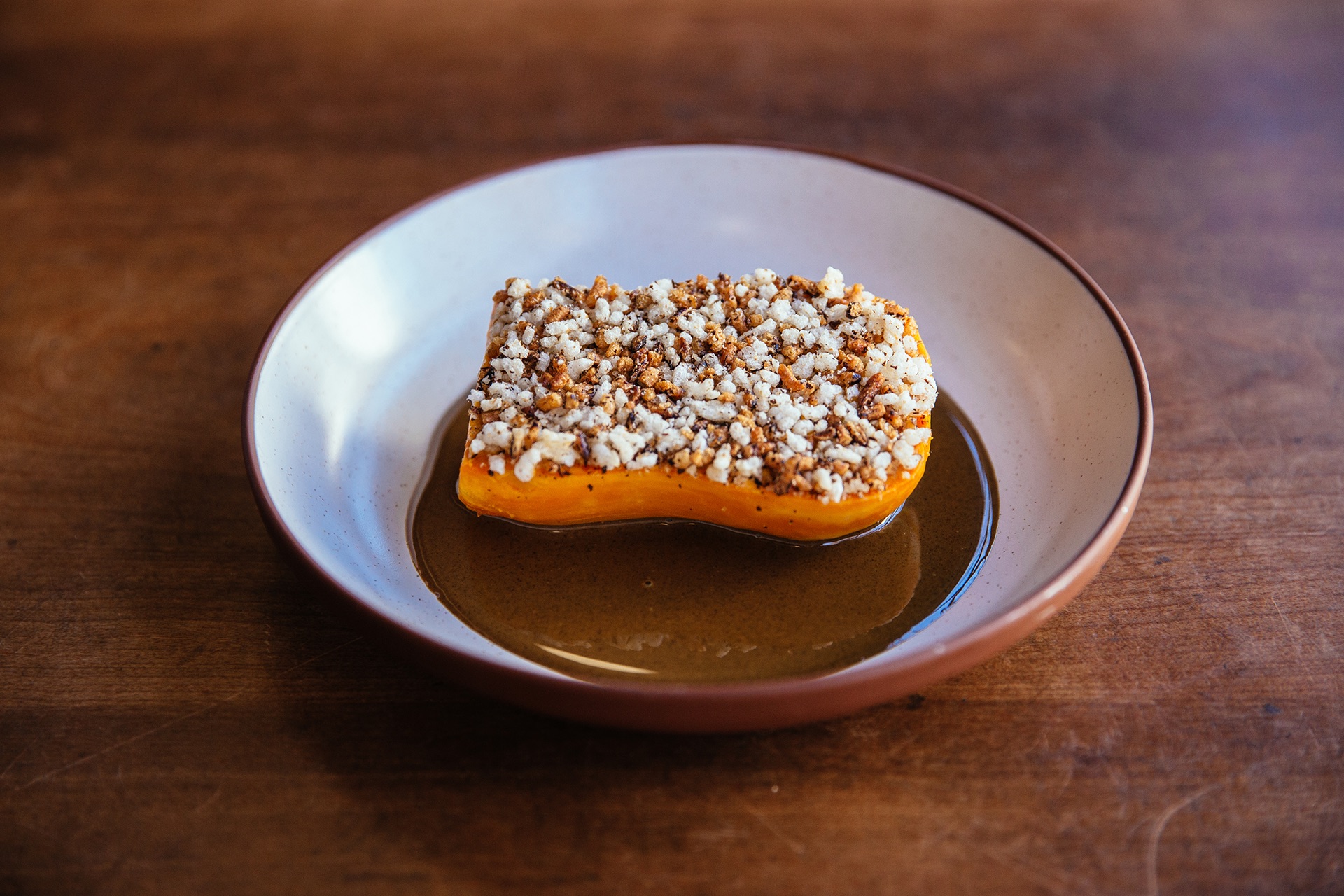
A late spring frost delayed the peak of pepper season this year, creating a culinary “microseason” that inspired pairings of chilies and sweet peppers with autumn ingredients just beginning to flourish. One dish features roasted honeynut squash from Lancaster Farm Fresh Cooperative, piped with a puree of both habanero and habanada peppers (“habaneros that have been bred to have no spice,” Graye says) as well as preserved local husk cherries. The squash is encrusted with puffed grains and laid on a dark pool of tahini made only with roasted pumpkin seeds.
The occasional habanada pepper in the dish grew on the plant in the restaurant’s plot at Liberty Lands Community Garden. Neither the plant nor the plot is big enough to supply all of the key ingredient for any dish, but restaurant staff use the plot to grow herbs and garnishes for beverages, as well as other produce to supplement their main supply.
Liberty Lands is a privately owned, volunteer-run park in Northern Liberties. Its community garden has 37 plots, each of which is privately managed and gardened for an annual fee of $90 for a full plot or $45 for a half, plus additional required service duties, says Francesca Yepikhina, president of the Northern Liberties Neighbors Association.
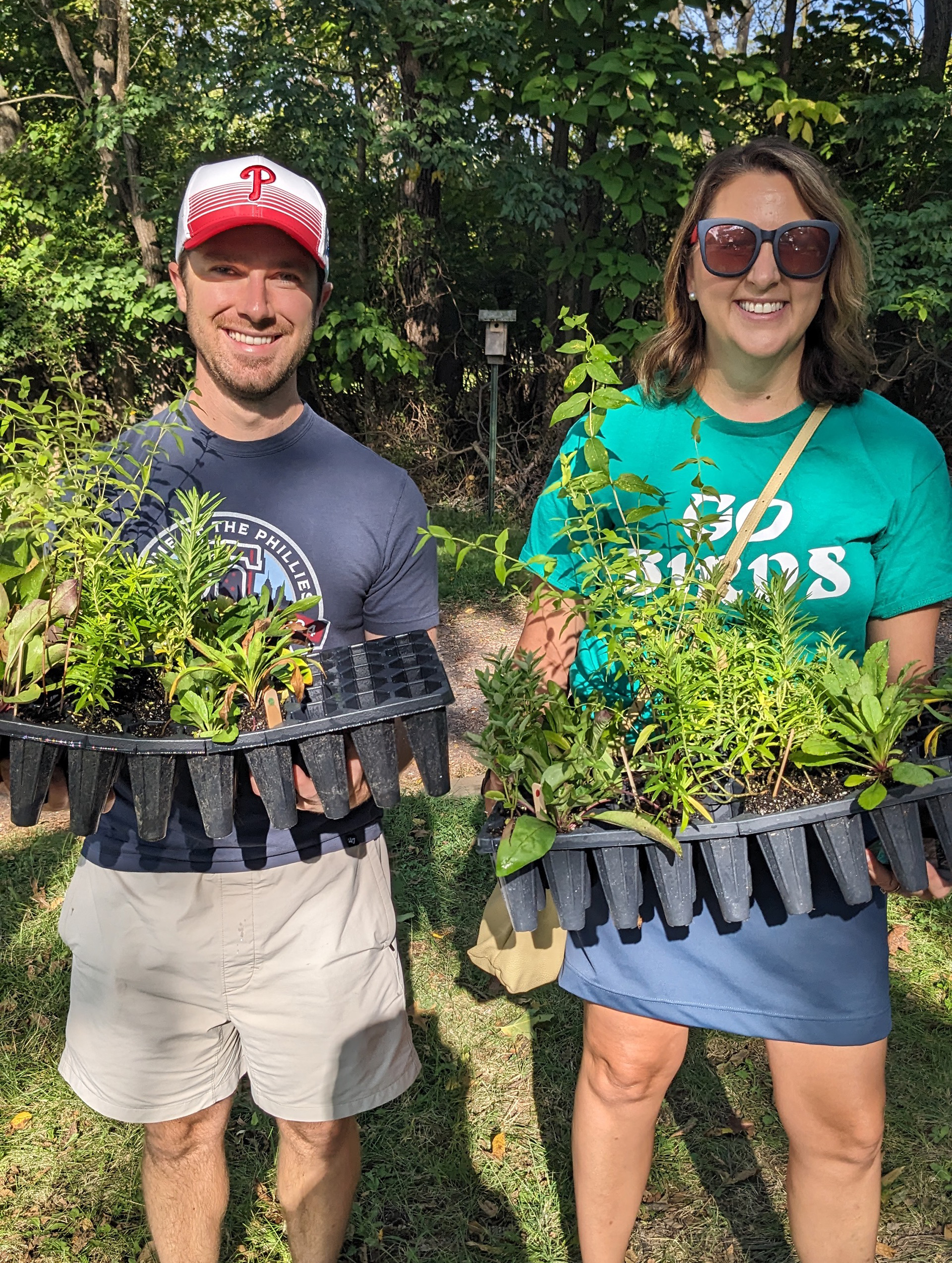
Pietramala is currently the only business at the garden with a plot; household gardeners plant the rest. Max Gordon, Pietramala’s forager and garden manager, mainly maintains the restaurant’s plot. Early on, Graye says, he wanted a location close to the restaurant where they could grow herbs, and tasked Gordon with finding a space. When Gordon applied for a Liberty Lands plot on behalf of the restaurant in late 2022, Yepikhina was interested in their idea of growing food there that would then be served in the neighborhood. But there were no plots available at the time.
“Right now, we have like 50 people on the waitlist,” Yepikhina says. “It takes anywhere from two to five years to come off the waitlist for a plot.”
Graye and Gordon asked if, while on the waitlist, they could plant along the garden’s perimeter on the Bodine Street side of the garden. Yepikhina says the walkway space had previously only been used to get around her plot and a neighbor’s, so they offered up the roughly 1-foot-wide strip to the restaurant to grow herbs.
“They had every right to just say no,” Graye says. “And they were like, ‘Yeah, come on in. No one’s ever asked us that before.’”
The following year, a gardener with a full plot decided to leave, creating two vacant half-plots. “We were able to bring in a new person off the waitlist, as we wanted to do, and gave the other half to the restaurant,” Yepikhina says. Now, the restaurant’s sage, thyme, lavender, bronze fennel, basil and shiso plants cover its surface.
Gordon says that a culinary benefit of the garden is “having access to flowering things, which have a different kind of flavor because they push a lot of their energy into that.” It allows staff to capture those brief moments of taste by minimizing distance and time between harvest and plate.
Gordon and Graye also connect with other gardeners, who sometimes stop by the restaurant to drop off some of their harvests. “People are always sharing things with us, and then, in turn, asking what we would do with things or how we would use things. And we get to share the food knowledge that we have,” Graye says.
When Pietramala was announced as the recipient of the Michelin Green Star last fall, it was a “total game changer” for the restaurant, Graye says. “Within minutes, we were sold out for the rest of the year. And to be honest, at that point, we were probably on the verge of closing. So that award really pulled us out of the fire and really made people more aware of us.”
But Graye had been skeptical of how the star was awarded in the first place. He recalls completing a questionnaire for the Guide that essentially asked him to summarize the restaurant’s sustainability efforts in a few sentences. “I remember I got cut off very quickly because there was a word count on it, and I was like, I can’t even write all the things that we do because it’s not enough space.”
It was basically an honor system, Graye says. “There was no audit. The anonymity of the Guide prevents them from doing that,” he says. Michelin said in an emailed statement that Green Star restaurants completed a questionnaire about restaurants’ mindful practices in addition to the anonymous visit conducted as part of standard Star selections. “It’s hard to bite the hand that feeds, because it did save us. But it was always something that I was skeptical of, and I feel like with them discontinuing it, I don’t really find the Guide to be legitimate anymore.”
With or without the Guide, or other accolades, Graye says Pietramala will stay true to its values. “This just comes naturally to us. It’s not something that we really are preaching loudly. If you pay attention, it’s there.”
Closing the gate to the community garden behind him, the still apron-clad Graye cradles his box of garnish for the evening’s plates. He walks through the school-pickup crowd back to the restaurant, past its windowed facade and under the green globe lamp at the doorway. With hours until dinner service, he sets the box on the kitchen pass, in full view of Second Street.