
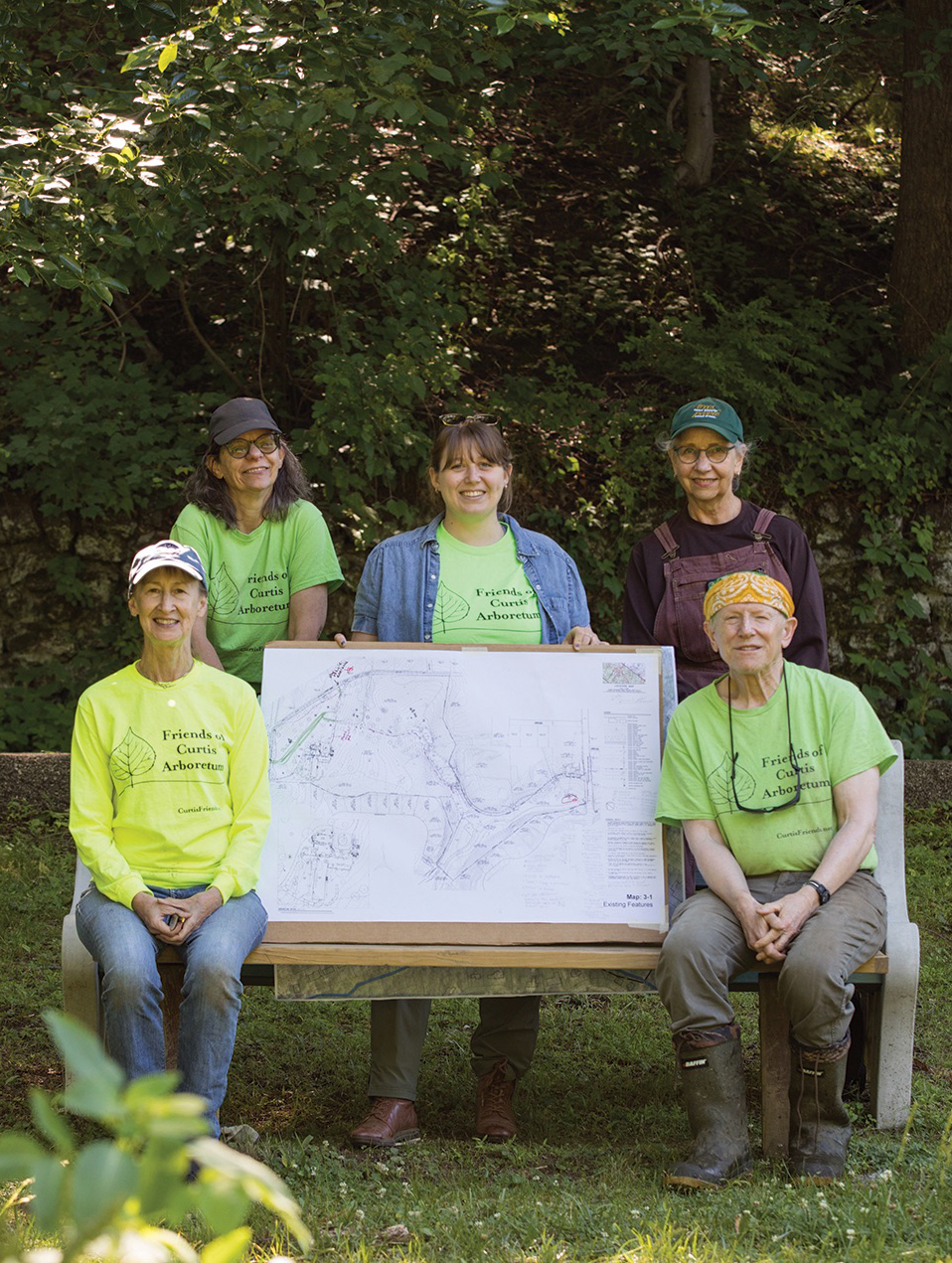
Cheltenham Township’s 48-acre Curtis Arboretum certainly looks like an arboretum. The park’s southern edge is dominated by a lush forest of sycamore, maple and ash that gradually opens onto a series of rolling hills featuring more than 50 tree species.
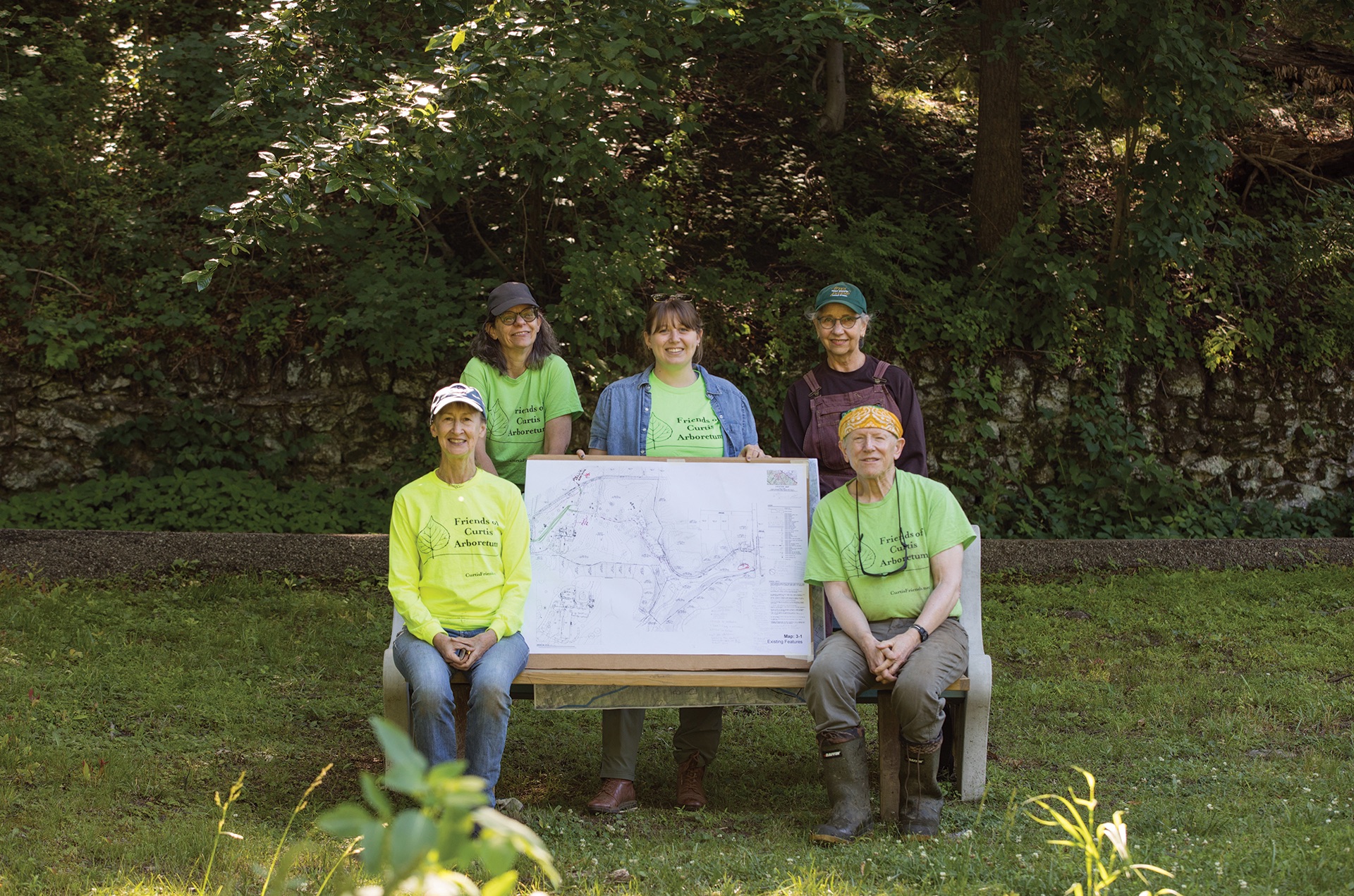
Despite its name and expansive tree catalogue, Curtis is officially designated as a township park, not an arboretum. But this may change: The nonprofit Friends of Curtis Arboretum (FOCA) is preparing to apply for arboretum accreditation at the end of 2026.
“It’s sort of like museum accreditation,” FOCA vice president Mindy Lemoine says. “Museums have to have a standard of cataloguing and planning and an exhibition strategy — what is our special place? What is our mission?”
Though arboretums as institutions extend back centuries, the first comprehensive database of arboretums, ArbNet, was established in 2011. ArbNet accredits arboretums at four levels based on self-assessment and documentation showing they meet specific standards.
Because of Curtis’s relatively small size and scale, the FOCA board plans to pursue Level 1 accreditation, which requires a governing body, an arboretum plan, volunteers and at least 25 labeled tree species.
Once owned by publishing magnate Cyrus Curtis, the Cheltenham estate was redesigned in the 1930s by Curtis’s daughter, Mary Louise Curtis Bok, who enlisted the Olmsted Brothers landscape architecture firm to transform the space into a functioning arboretum. Bok went on to donate much of the property to the township.
Over the years, the park’s forested portion suffered from neglect, prompting Cheltenham Township to craft a master plan in 2016 to revitalize the area. This included the establishment of Friends of Curtis Arboretum in 2018.
Lemoine and FOCA president Donna Wray recall the state of the park when they first joined the board — hillsides were choked by invasive plants as massive trees died beneath the weight of vines. The organization launched a “buffer brigade” of volunteers who worked year-round to revive the ecosystem, planting a new generation of native flora. “This was once all knotweed and vines,” Wray observes, walking through a restoration zone now vibrant with recently planted eastern redbud trees and rye grass.
The habitat restoration process nourished FOCA’s aspirations of turning Curtis into an accredited arboretum. “We’ve been digging in the dirt, pulling out weeds, pulling up roots, cutting down vines, and now we’re going, ‘Where do we go now? What comes next for Curtis Arboretum?’” Lemoine says.
Wray and Lemoine believe that Curtis, with its rich historic and communal significance, fills a niche within Pennsylvania’s ecosystem of arboretums. “Morris Arboretum is not far and we’re never going to be that,” Wray says. “But we can be a free oasis for our community.”
In 2025, FOCA enlisted Temple University’s landscape architecture program for assistance with planning, and ultimately hired graduate student Leisl Barkman as an intern. In May, Barkman held a community visioning meeting where she unveiled conceptual designs.
“[We asked people,] ‘Is this the kind of thing that you would like to see in Curtis?’” Barkman says. “I think we got some strong ideas from that and I got to see generally a good path forward.”
Crafting a plan that maintains the park’s historical elements (which include Curtis Music Hall, a WWII memorial and the original trees planted by the Olmsted Brothers) while supporting ecological health and the needs of the surrounding community is not without its challenges. But the team considers this balancing act part of what makes the work so rewarding.
As the planning process commences, FOCA is also working to draw more visitors to Curtis by hosting educational events. “We had a mushroom walk this weekend, we have bird walks, we had a tree walk,” Lemoine says. “My personal real goal is to help Curtis be the nexus of tree activity in the township.”


Great work keep it up. My wife and I have been walking our dogs there for close to 15 years. Currently we walk “Little Dipper” We don’t spend much time in the fenced dog park, but mostly out and about in the rest of the park, creeks and fields.
Will there be continued support for our four pawed friends?
Sincerely David Kirpich
Yay, Curtis!!