Along the sandy banks of the New Jersey Pine Barrens’ meandering streams, a small grasslike plant with clusters of white, star-shaped flowers bloomed unnoticed for millennia until botanist and Temple University professor Sasha Eisenman made a surprising discovery. This rare and endangered plant, previously unknown to science, is found nowhere else in the world but New Jersey.
The plant was long assumed to simply be the northernmost population of a species called the coastal false asphodel. Eisenman set out to test that assumption after other botanists noted morphological differences in the New Jersey population. Using historical herbarium records to guide him, Eisenman went hunting for the plant among the rare wetland savanna habitats of the Pine Barrens. He collected and examined specimens and conducted a genetic analysis to compare them to false asphodel species present to the north and south. He concluded that the New Jersey false asphodel was in fact a unique, endemic species. In March, Eisenman published a paper announcing the discovery, dubbing it Triantha × novacaesariensis, after Nova Caesarea, the Latin name for New Jersey.
Eisenman’s research showed that two different species of false asphodel coexisting in New Jersey many thousands of years ago hybridized. As the two parent species eventually disappeared from the state, the hybrid plant was left to evolve on its own.
“It is not in any contact with any populations from either other species, which are separated by hundreds of miles, and it’s been basically in isolation on its own evolutionary trajectory probably since near the end of the last ice age,” says Eisenman.

If New Jersey seems like an unlikely place to find a brand-new species, that’s because it is. According to Lena Struwe, director of the Chrysler Herbarium at Rutgers University, although more than 2,000 new species of plant are described every year, virtually none of them are in such a densely settled and well documented region as New Jersey.
“We find species that show up in New Jersey that are known from Pennsylvania, Delaware, New York or from Europe or Africa, but that you find a brand-new species that was not known to botanists anywhere before is not something that is common in the United States,” says Struwe.
Eisenman’s discovery immediately vaulted the plant to the attention of conservation bodies. The southern species of false asphodel is considered critically imperiled in New Jersey, but globally stable because larger populations exist in other states. Because T. novacaesariensis can only be found in rare numbers in New Jersey, it is now considered critically imperiled on the global level.
I wish people realized we have so much biodiversity right outside our doors.”
— Lena Struwe, director of the Chrysler Herbarium at Rutgers University
“Conserving a rare endemic plant like Triantha × novacaesariensis in the Pinelands will require that the species’ habitat and ecological processes that support the plant also be conserved, including the globally rare Pine Barrens riverside savanna, Atlantic white cedar swamp, and pitch pine lowlands ecological communities,” Caryn Shinske, a press officer for the New Jersey Department of Environmental Protection, wrote in a statement.
According to Russel Juelg, a senior land steward with the New Jersey Conservation Foundation, the fact that T. novacaesariensis was able to survive long enough to be found despite challenges from encroaching human development, motor vehicles and climate change, is a testament to the success of Pine Barrens conservation efforts.
“The fact that we’re preserving these areas gives us the opportunity to make discoveries like this,” says Juelg. “If the Pine Barrens had been obliterated and developed, those are things that obviously we would never even have known.”
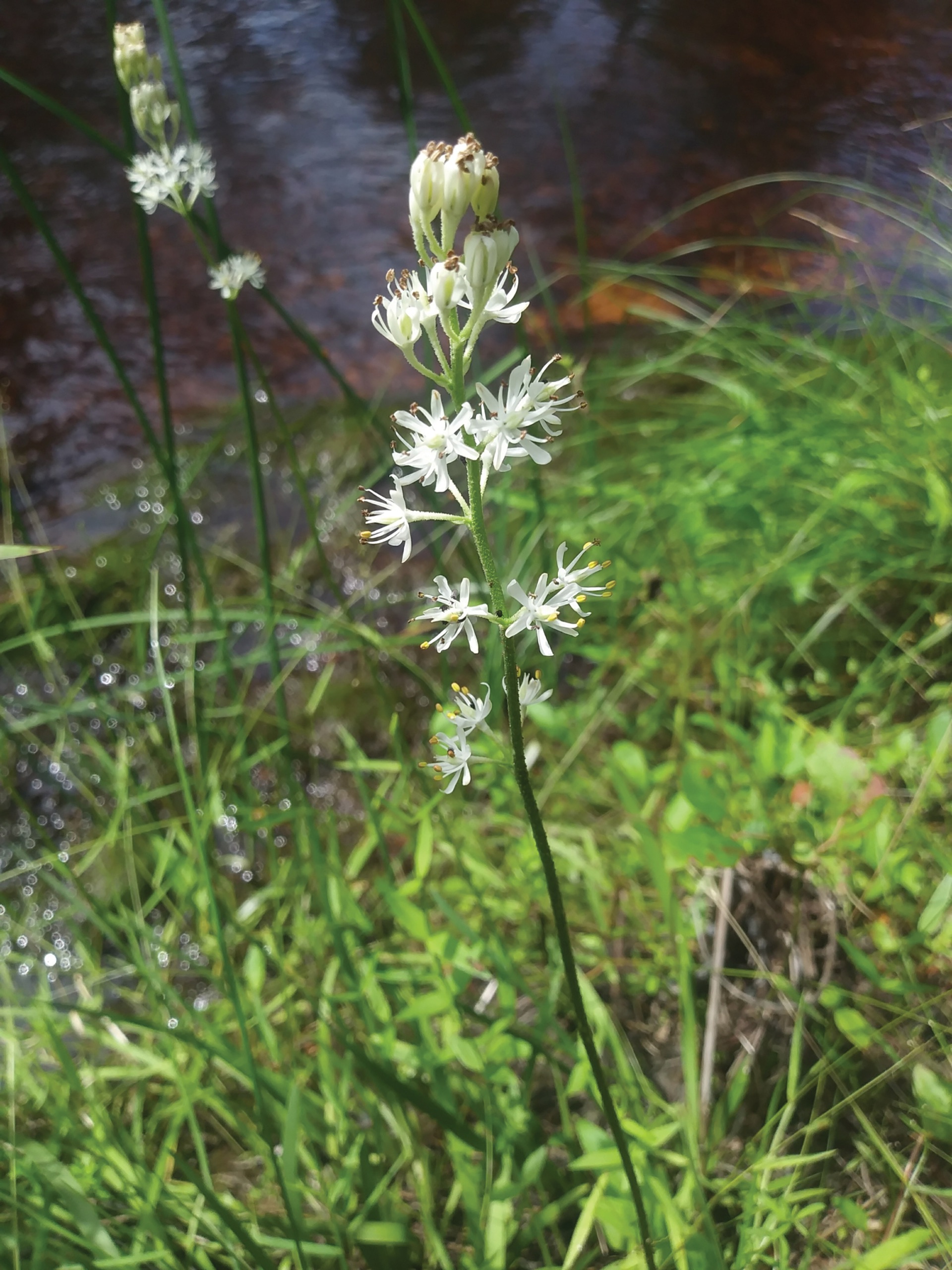
The New Jersey Pine Barrens is designated as a UNESCO Biosphere Reserve for its ecological uniqueness. There are at least 850 plant species present in the region, including 92 endangered or threatened species. Struwe says people often overlook the remarkable diversity so close to home, seeing only a “wall of green.”
“I wish people realized we have so much biodiversity right outside our doors,” says Struwe.
Could there be more undiscovered species hiding among New Jersey’s pitch pines and white cedars? Juelg says it’s likely, though the amount of focused effort required to describe even one new species means some of the Pine Barrens’ rich biodiversity might go unappreciated a while longer. For Eisenman, the mystery is part of the excitement.
“The fact that extensive inventories of plants and studies of plants have been done for centuries, and yet there are still discoveries to be made is really exciting,” says Eisenman. “It just shows that even in front of us there are amazing natural systems at play that we have yet to fully understand.”
Academy of Natural Sciences exhibit showcases indigenous plants in Parkway gardens
Herbarium specimens, collected and pressed for preservation by botanists, play a critical role in the discovery and study of plant species. Struwe says they act like a “snapshot in time,” recording the existence of plants that might have lived decades or centuries ago. The herbarium at the Academy of Natural Sciences is considered the oldest in North America, with specimens stretching back over 400 years, representing some of the first descriptions of North American plants by Western scientists.
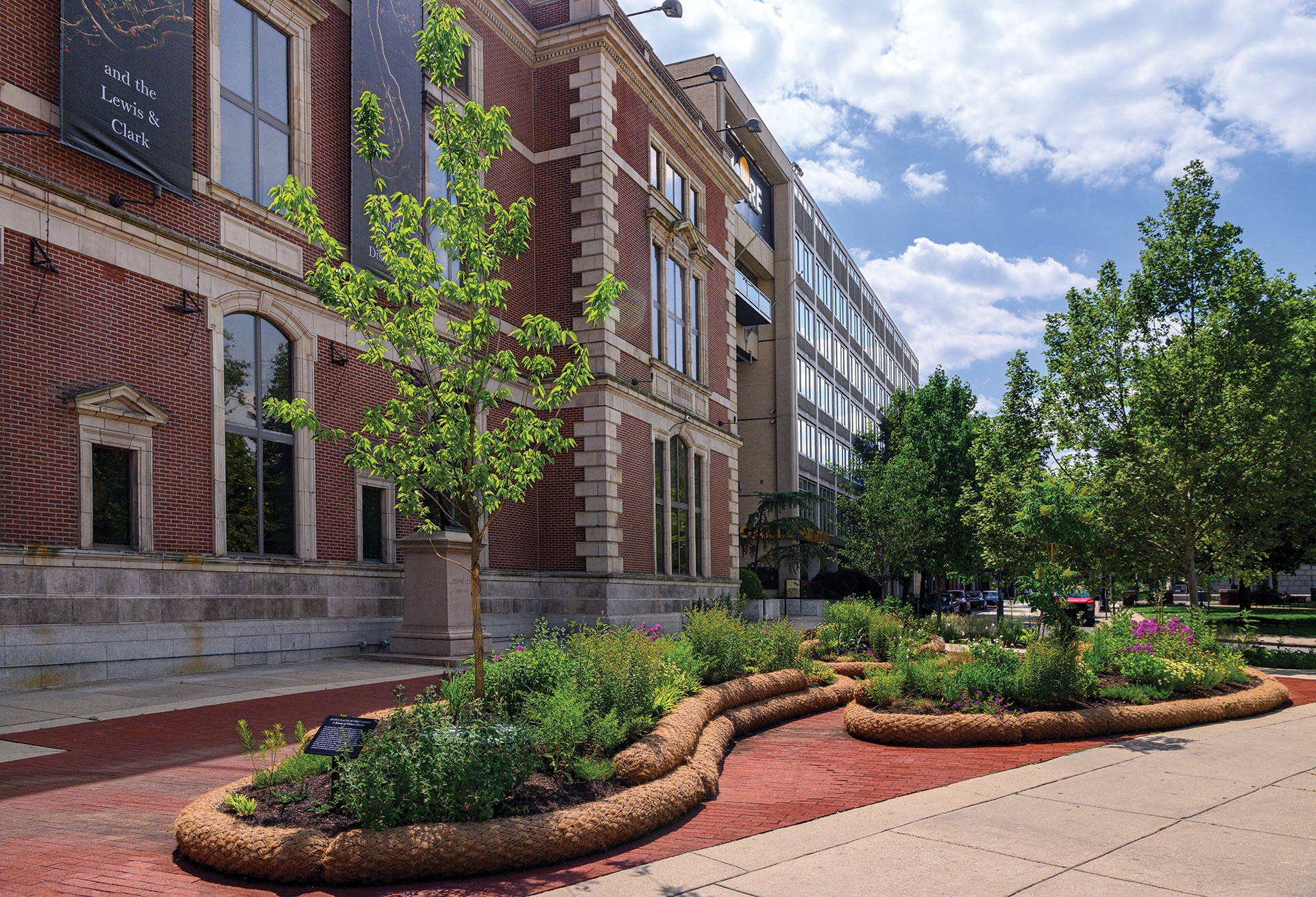
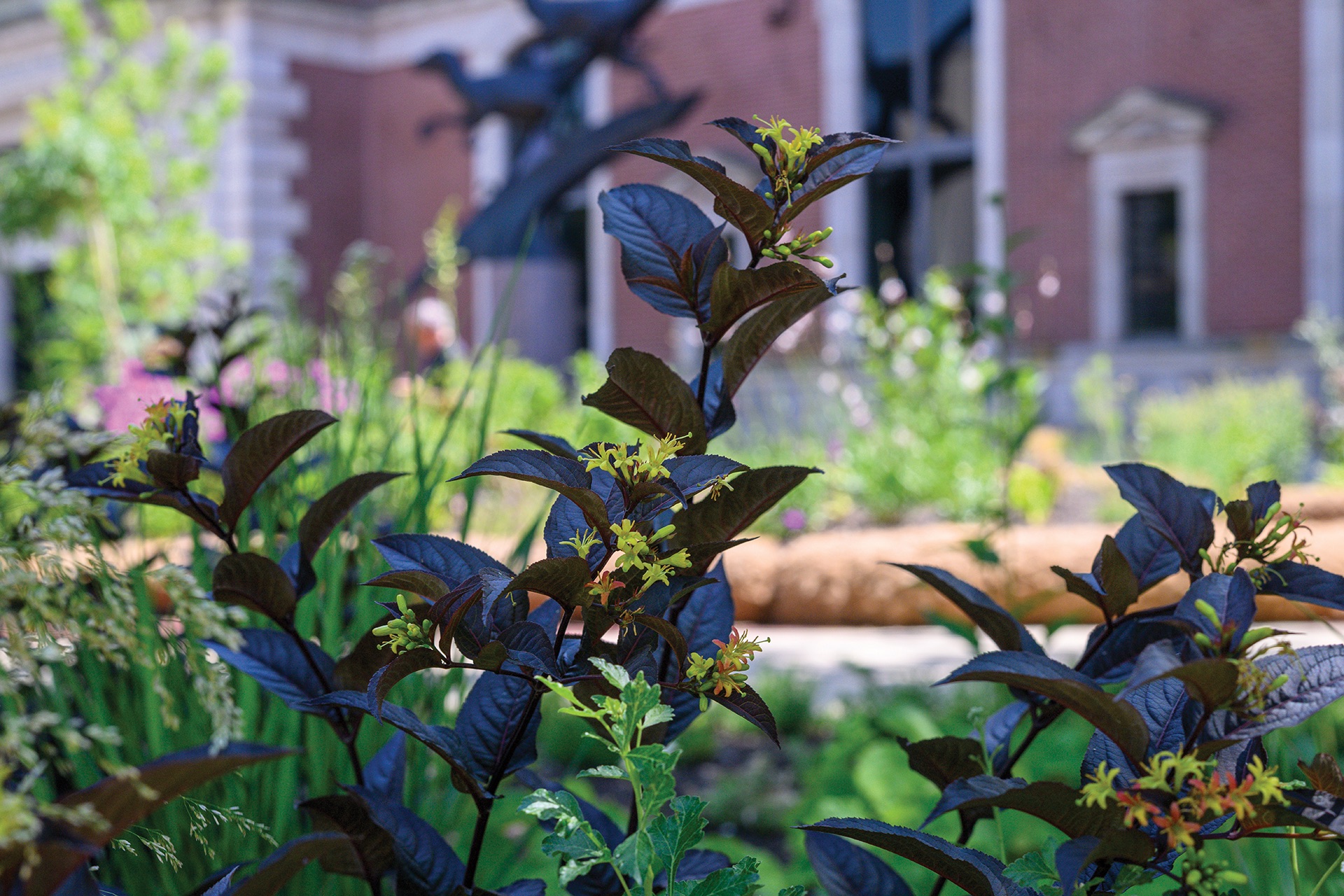
However, long before the arrival of colonial scientists, the Indigenous peoples of North America were studying, using, cultivating and forming deep cultural ties to the continent’s plants. A new exhibit titled Botany of Nations, on display at the Academy of Natural Sciences until February 2027, elevates this Indigenous scientific knowledge, centering Native perspectives on the plant specimens “discovered” by Meriwether Lewis and William Clark during their 1804 expedition. Curated by indigenous plant expert Enrique Salmón, the exhibit offers displays, workshops on Indigenous cultural practices, and a native plant garden on the Benjamin Franklin Parkway. The exhibit invites visitors to consider the connection between plants and culture. As Struwe says: “The history of the plants and the history of the people are all interconnected.”