
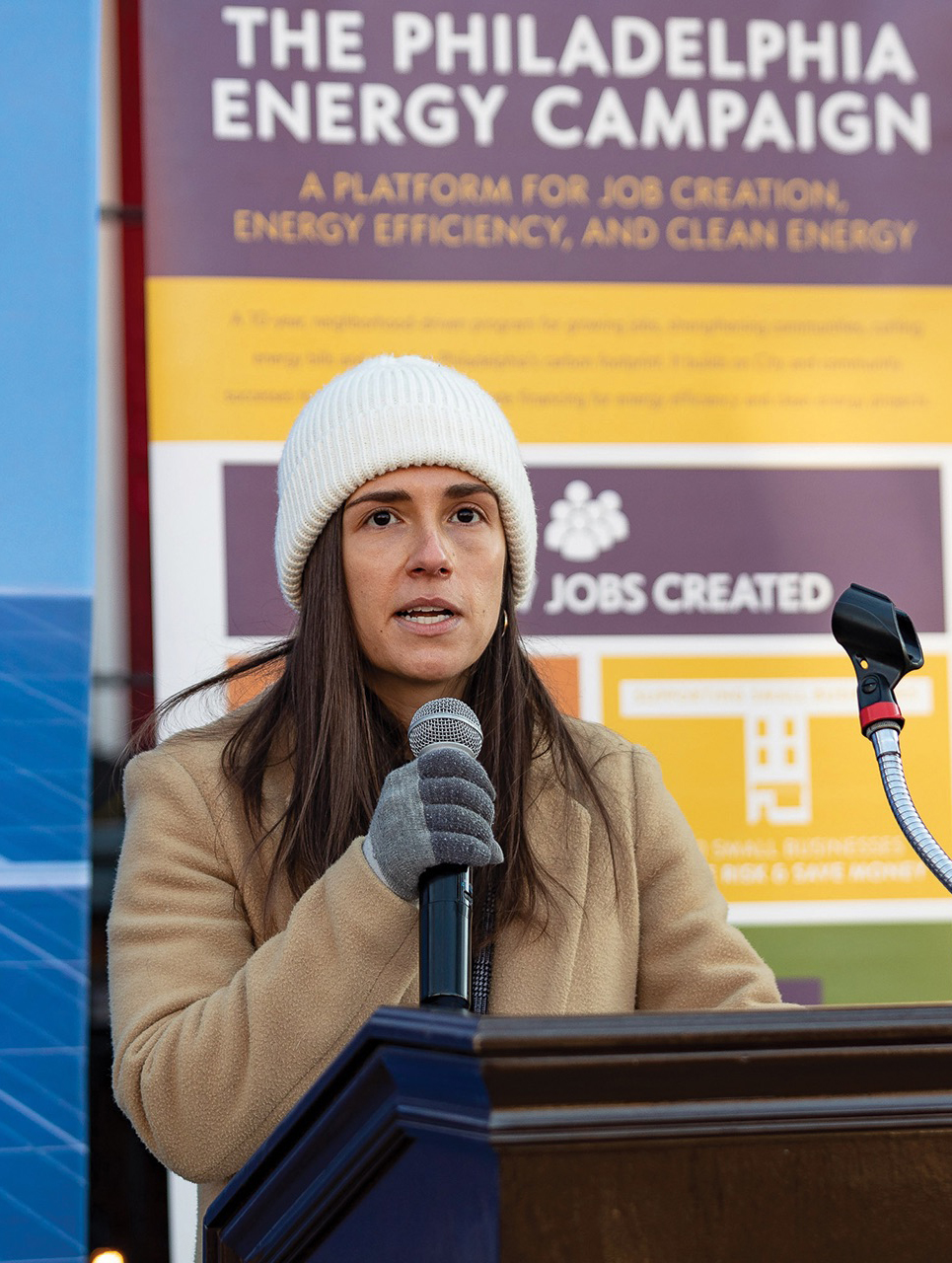
The Philadelphia Energy Authority (PEA) manages green energy projects for the City and raises the money to make investments that will save electricity in the long run. The PEA is celebrating its first 10 years and looking forward to the next energy wins. Katie Bartolotta, the PEA’s vice president of policy and strategic partnerships, spoke with Grid about the PEA’s wins and its path forward. This interview has been edited for clarity and length.
What PEA accomplishments are you particularly proud of? My pet project here was the Philly street light improvement project. It was our biggest bond issuance to date and the first bond issuance for the PEA specifically on behalf of the City. So there were a lot of firsts baked in there. It was a citywide project, so it touched just every single neighborhood.
We were actually able to partner with University of Pennsylvania’s Crime and Justice Policy Lab to do a contemporaneous study of the project. We found that where new lights had been installed, there was a 21% decrease in outdoor nighttime gun crimes.
Cities issue bonds to borrow money all the time, and green bonds (the money to pay back the bonds comes from the savings generated by the project) are becoming more popular. What was special about the financing for this project? Because of all of the impact that we knew we could measure in neighborhoods throughout the city, we were able to get the sustainability bond designation for this project. A sustainability bond needs to meet all of the environmental benefits of a green bond, but it has social benefits as well that are measurable and trackable.
Right now, we are in the midst of issuing another bond for a 14-building retrofit project that includes City Hall and three other large office buildings. It also includes health centers and three homeless services facilities. That one is a green bond to the tune of about $30 million.
The clean energy policy landscape has changed a lot in the past couple years, and it seems like that’s the pattern: It flips every four years with presidential administrations. How do you invest for the long term in this kind of political environment? Energy savings, long-term affordability and price stability are always good ideas.
We’re still moving ahead with all of the projects that were on deck to lock in long-term pricing. The Adams County solar project is completed at 70 megawatts, but we have another one in Clearfield County for 20 MW that is under construction… Airport, a 1.5-MW project.
These projects deal with City government infrastructure. What about the future of programs focused on energy savings for residents such as Built to Last, which helps low-income home owners make energy-saving repairs and improvements? With Built to Last, our goal has always been to hit 10,000 households. And we’re getting close to about 500 completed homes right now, so we’re still on that trajectory. We’ve got funding from the mayor’s H.O.M.E. initiative, so we can serve additional households.
Solarize, which vets solar installers so that homeowners know what they’re getting into, fills an information gap for people who make this kind of purchase extremely rarely. Are there any other ways that PEA could help with other kinds of big, energy-saving purchases? We’re looking to do this, too, with heat pumps and other basic efficiency measures. It’s important to build a program with consumer protections and a market for installers to operate in. If you come to Philly, there’s going to be this place of pooled interest with folks who are looking to do this work.


It’s really nice to hear about something done right and successfully.