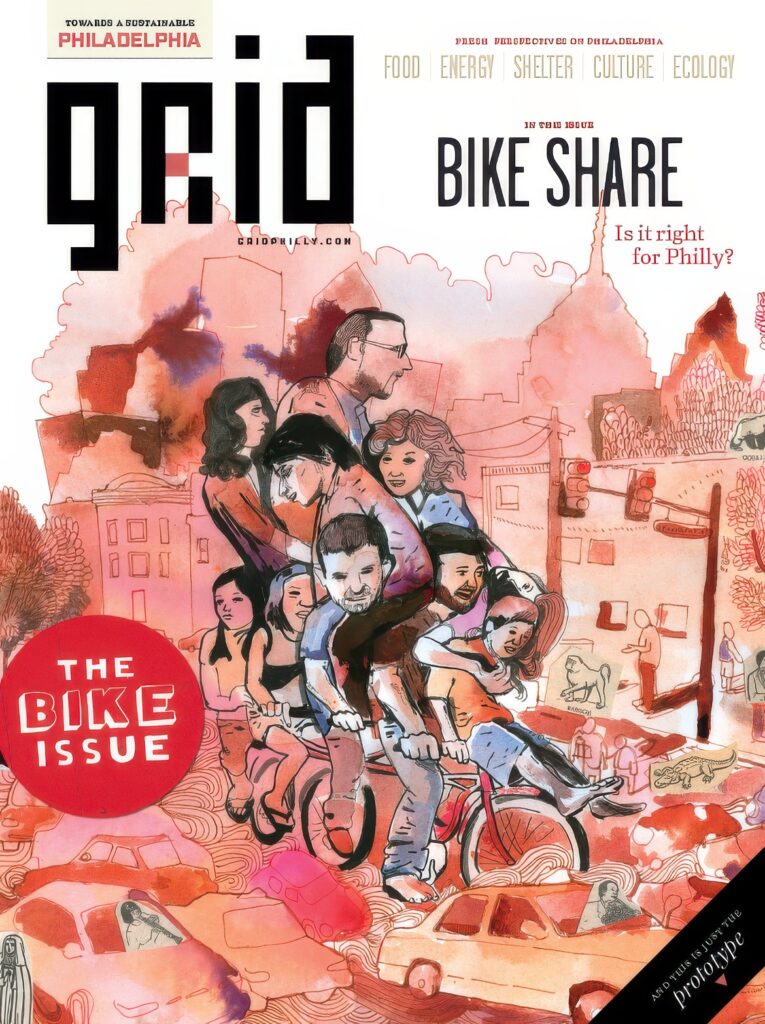

In September 2008, George W. Bush was president, the dominant fuel source for U.S. electricity generation was coal, and the Paris Agreement was seven years away.
Much has changed in the commonwealth and the country since Grid spoke with The Energy Co-op for our first issue. Founded in 1979 by members of Weavers Way Food Co-op to lower heating costs through collective buying power, the member-owned nonprofit is smaller today than it was in 2008. It faces a more competitive renewable energy marketplace, and it operates under a federal administration that is openly hostile to climate action.
The Energy Co-op executive director Divya Desai, who joined the organization in 2016, is clear-eyed about the challenges facing renewable energy at this moment. But she’s optimistic about the path ahead. Grid spoke with her about the nonprofit’s development over the last 17 years and its plans for the future. The interview has been edited for length and clarity.

How does The Energy Co-op see its mission today? We’re more deeply committed to a renewable energy future. And I think that while that commitment hasn’t wavered, we’ve made some major changes in how we achieve our mission. We’ve gotten a lot more involved in policy and advocacy. This administration has given us the opportunity to talk more about why clean energy is so important and impress on the public and private spheres how critical of a role individuals and businesses play. The federal government, even state and local government, is not the only way to get things done.
In 2008, The Energy Co-op was the only available supplier to offer 100% renewable energy from wind, solar, and hydroelectric sources in the area. Has the competitive landscape changed? The market has changed dramatically. Today, The Energy Co-op operates as a sort of a boutique renewable energy supplier, and we operate in a very competitive market. Competitors are a dime a dozen. The challenge is that many of those are — to use the typical phrase — greenwashed. There are a lot of consumer trust issues with retail energy suppliers because of this. And then you layer into that aggressive and misleading tactics, like sending mail that seems like it’s like a bill from PECO. It makes operating in this space difficult.
In 2008, the co-op had 6,500 members. What does membership look like now? The Energy Co-op membership has actually shrunk. We have about 4,500 members now. As renewable energy becomes more expensive, it’s harder for consumers to justify spending the money at the end of the day. We’re considered a premium product. The fact that we’ve shrunk makes it even more challenging because we aren’t operating at a threshold to take advantage of economies of scale to gain that true cooperative bulk buying power.
It is pretty bleak at the federal level right now for renewable energy progress. What gives you hope that things might change for the better? It’s a really awful environment. And it can feel like there’s no end in sight. But the fact of the matter is, administrations change and people turn over. Things can change overnight. We saw that, unfortunately, in these first 12 months. But they can also change in the opposite direction. And despite how awful the environment is now, there are avenues to make progress. The only way we will achieve the future that we’re looking for is to stay motivated.
A Look Back
Notes from Publisher Alex Mulcahy
There was no real story about The Energy Co-op in 2008 — no anniversary that ended in a zero, no new products to report on. We just wanted to identify the pillars of the sustainability community and direct people’s attention to a great organization. Forty-six years after their launch, they continue to be a vital member of the community.