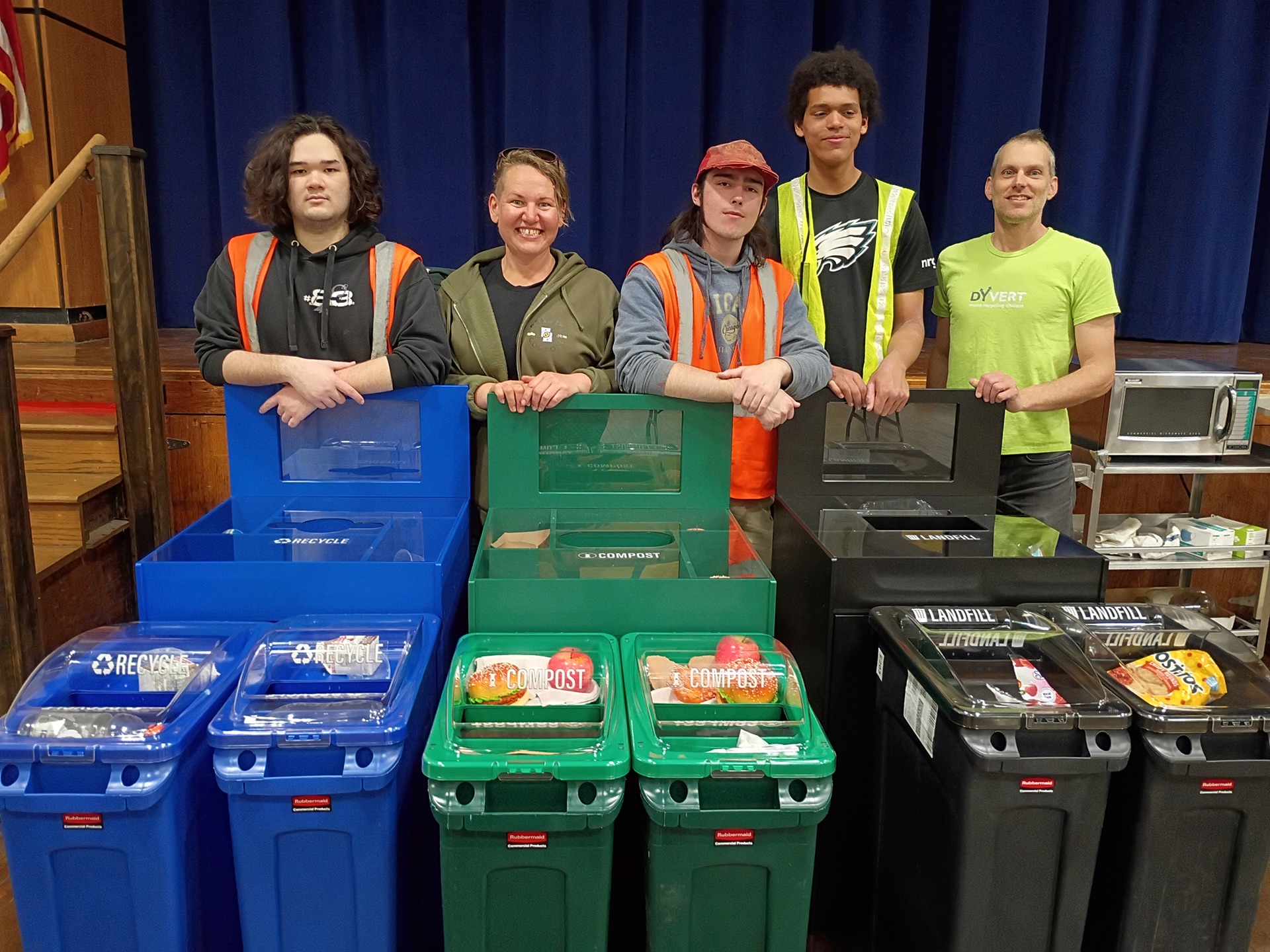
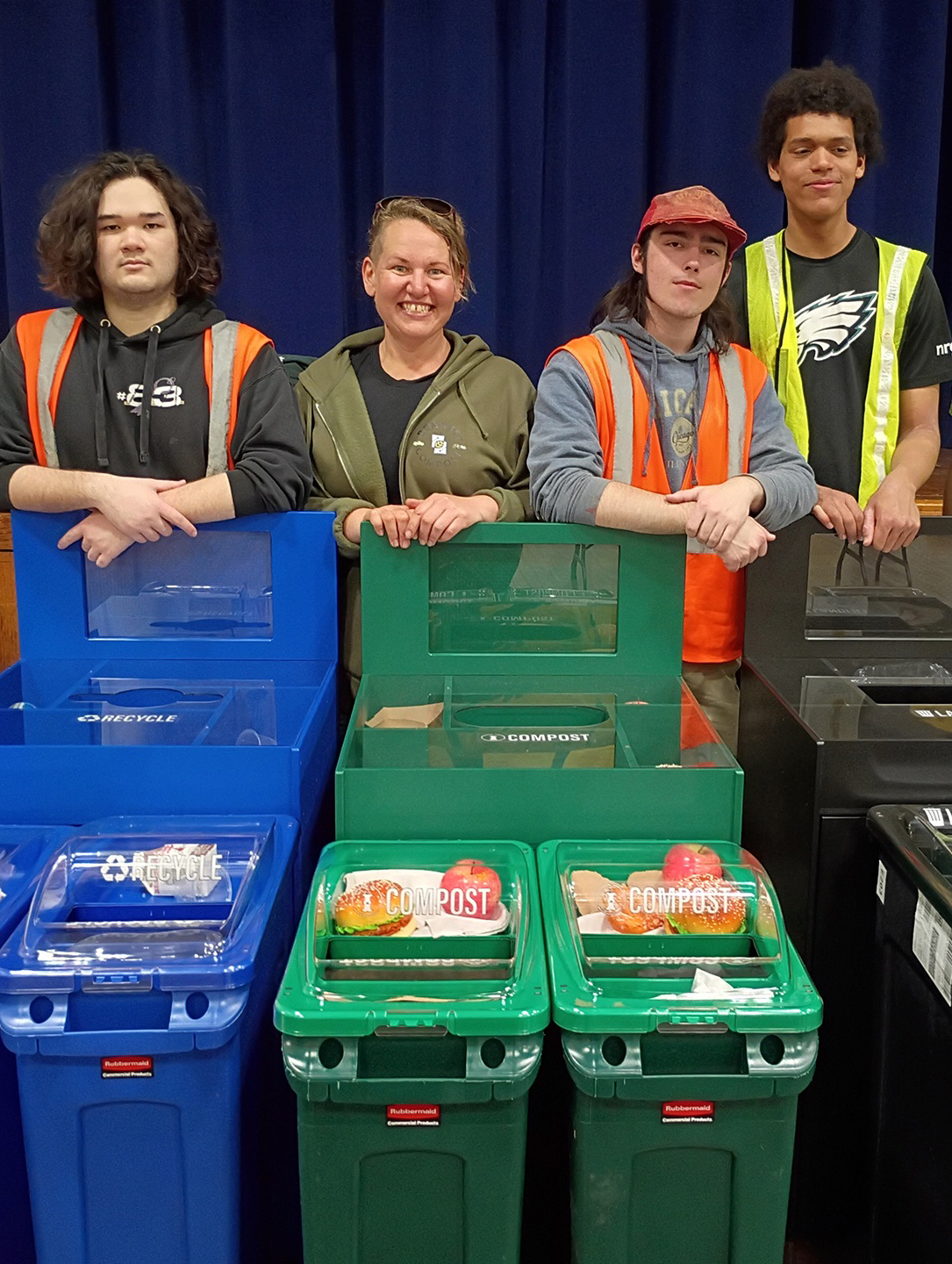
When you were in high school, did you eat everything that got plopped onto your tray in the cafeteria? Some things never change, but W.B. Saul High School, an agriculture-focused high school in Northwest Philadelphia, has taken advantage of funding from the Green Schools program to help compost the leftovers (and the compostable trays).
Saul is one of 32 schools (13 private, seven charter, and 12 from the School District of Philadelphia) that received more than $75,000 in total funding in the 2026 competition to improve sustainability, according to a City website.
The high school had a cafeteria composting program, but it was disrupted by the COVID-19 pandemic and staff turnover. When Jennifer Mastalerz, an owner of Bennett Compost, saw the Green Schools grant announcement, she recognized an opportunity to revive the composting program, this time with new receptacles to make it as easy as possible for the students to use.
“We partner a lot with W.B. Saul High School to help the school in a broad sense with their composting program,” Mastalerz says. The high school composts livestock waste on campus. “What we proposed along with one of the environmental science/horticulture teachers was to increase the infrastructure for that program. So, we got new cans that live inside the cafeteria.” They got the new bins from local company Dyvert, which uses visual guides to show people which items to throw into which receptacle: composting, recycling or landfill.
Nothing hits home like actually doing it for yourself and seeing how something works.”
— Carrie Pacini, teacher, James Logan Elementary School
At the James Logan Elementary School, a Green Schools grant will go toward a weather station that they expect to be built this fall, part of a broader effort to revitalize the grounds. The school has been working with the Trust for Public Land to install a green schoolyard and plant trees in what had been two acres of asphalt, says Eli Prosper, Logan’s community school coordinator.
Fifth grade teacher Carrie Pacini has been working with the Philadelphia Water Department’s Fairmount Water Works for four years to develop an environmental curriculum. The weather station will help make abstract climate and weather concepts concrete for students. “They have to learn about weather and they have to learn about the instruments needed to analyze weather. What better way for them to learn than to have hands-on activities?” Pacini says. “Nothing hits home like actually doing it for yourself and seeing how something works.”
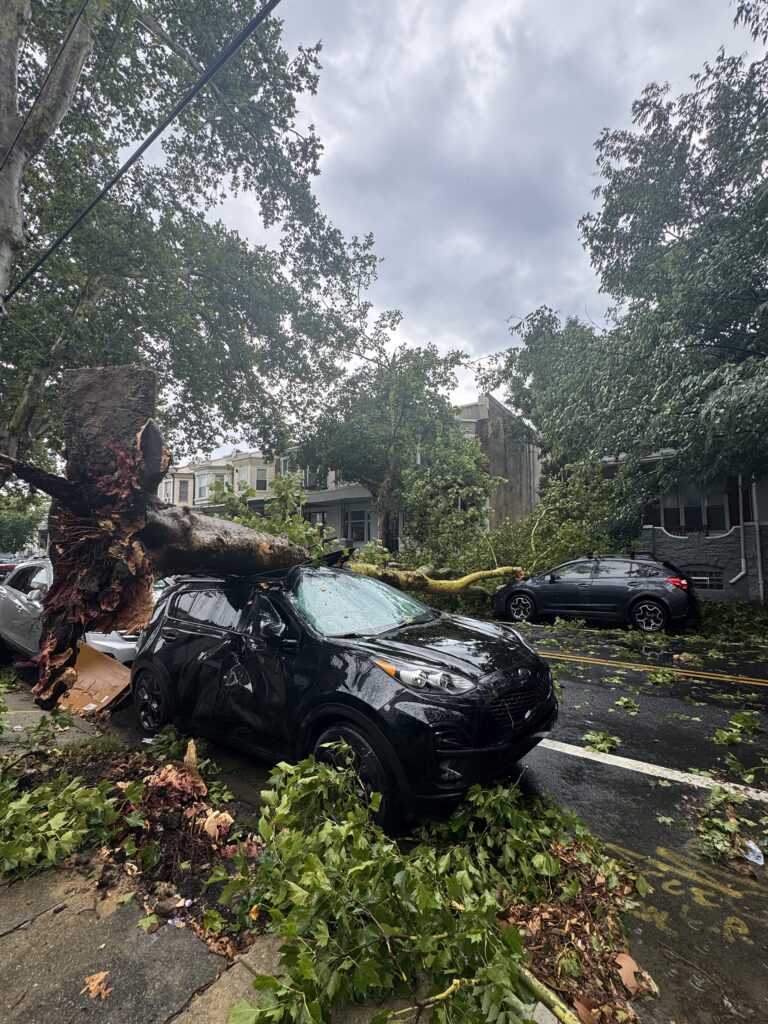
Prosper says the weather station will also help engage students in studying climate change. “You look at all the record storms, floods, things like that that are happening in real time,” he says. “The students are probably the ones who come up with a solution or two.”
Saul got its new bins at the end of the last school year, so it’s too soon to tell how much waste they are diverting. But Mastalerz says they made a big impression. “It was so beautiful to see the reaction from the teachers and the lunch staff, who were just like, ‘Are these ours? Do we get to keep these?’ Having something so nice was just really, really special and exciting.”