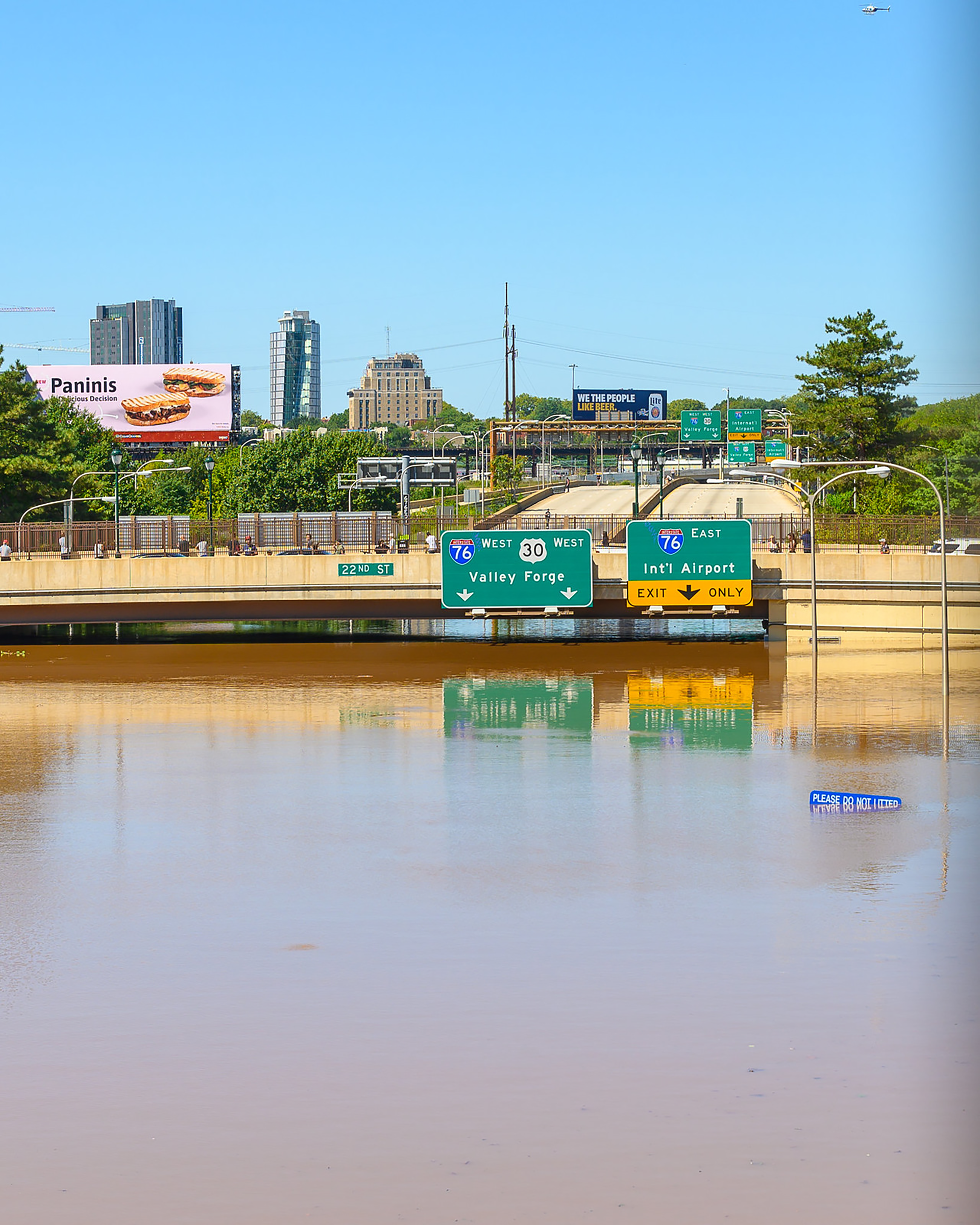
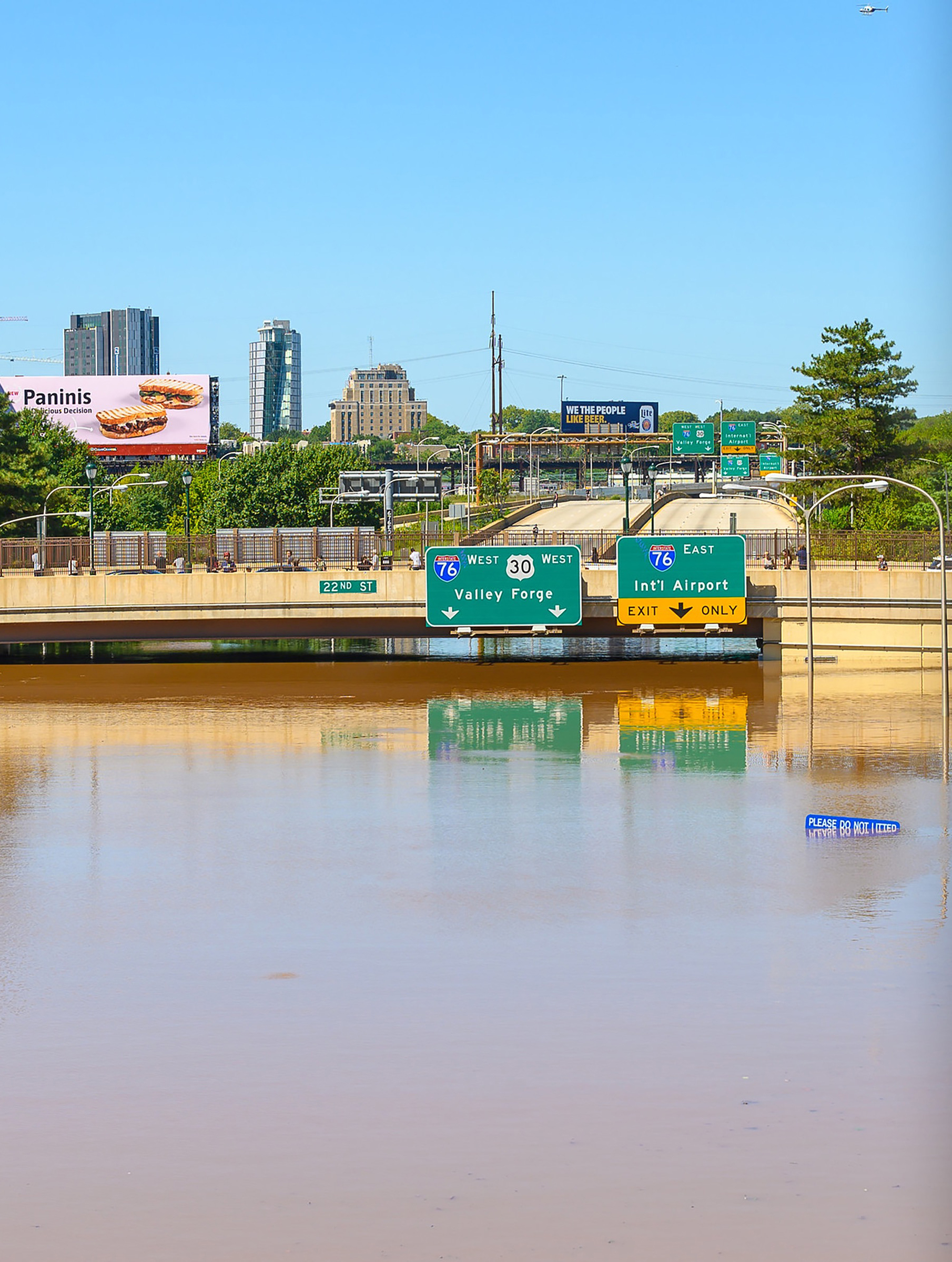
Philadelphia, a city wedged between two rivers, has a long history of getting swamped by dangerous floods. Its future, which is forecast to bring increasingly climate-fueled deluges, doesn’t appear any brighter. That leaves a pertinent question for the present day: What are city officials going to do about it?
As chronicled previously in Grid, the answer all too often has been: not much. But in a stroke of good news this spring, the City of Philadelphia helped its residents by joining the Federal Emergency Management Agency’s (FEMA) Community Rating System, a federal designation that essentially amounts to a rewards program for good flood-planning behavior by cities and townships across the country.
The primary benefit is that most property owners — residents and business owners — who hold a flood insurance policy will now automatically receive a 15% discount when their annual policy renews. With policies averaging about $800, that would mean typical savings of about $130 a year — a measurable difference for households squeezed by increasing costs of living, according to Chris Miller, principal agent of Miller Insurance, a FEMA-preferred flood insurance provider in Philadelphia.
“For a lot of families, that’s a big deal,” says Miller, who travels annually to Washington to hear from lawmakers about flood insurance. “Every single year, flood insurance affordability is at the top of the list.”
Now for the fine print. If you’re a Philadelphia homeowner wondering if you have flood insurance, you probably don’t. Very few standard policies cover flood damages, meaning a homeowner needs to go out of their way to obtain one. In Philadelphia, only a few thousand homeowners have taken that step, according to FEMA.
By joining the Community Rating System (CRS), Philadelphia is also only getting credit for policies it has already had in place. Joseph Sullivan, flood resilience program manager for the City’s Office of Sustainability, says among FEMA’s requirements were an existing hazard mitigation plan and a zoning requirement to elevate the bottom floor of new developments constructed in floodplains. That was enough to enable Philadelphia to join the Community Rating System as a Class 7 community. But that’s third-lowest on a nine-class ladder in which Class 1 — the gold standard — yields a 45% discount on flood insurance.
“Our tactic was we didn’t want to initiate any new activity during the initial application, because we didn’t want to bite off more than we could chew,” Sullivan says.
Still, a win’s a win, says Carolyn Kousky, a nationally renowned flood expert and founder of the nonprofit Insurance for Good.
“I think it’s great Philly joined the CRS,” Kousky says. “With intense rainfall increasing in the region as the planet warms, flooding is going to be a worsening problem, so any measures to help manage that growing risk would deliver real economic and social benefits.”
Plus, Kousky says, this could mark an important inflection point for Philadelphia, the fourth-largest U.S. city to join the CRS, to continue to advance through the program and secure bigger discounts. Sullivan was noncommittal, saying the City wants to ensure that any new initiatives they develop are fiscally and politically sustainable. But, he says the Office of Sustainability recently hired a new staffer to manage the program and could very well seek a higher classification during the next CRS cycle, which accepts applications every five years.
“We see our entry into the program … as a recognition of efforts that have been in place for a long time,” Sullivan says. “It’s kind of like the floor, and that’s where we’re going to be working off from here.”