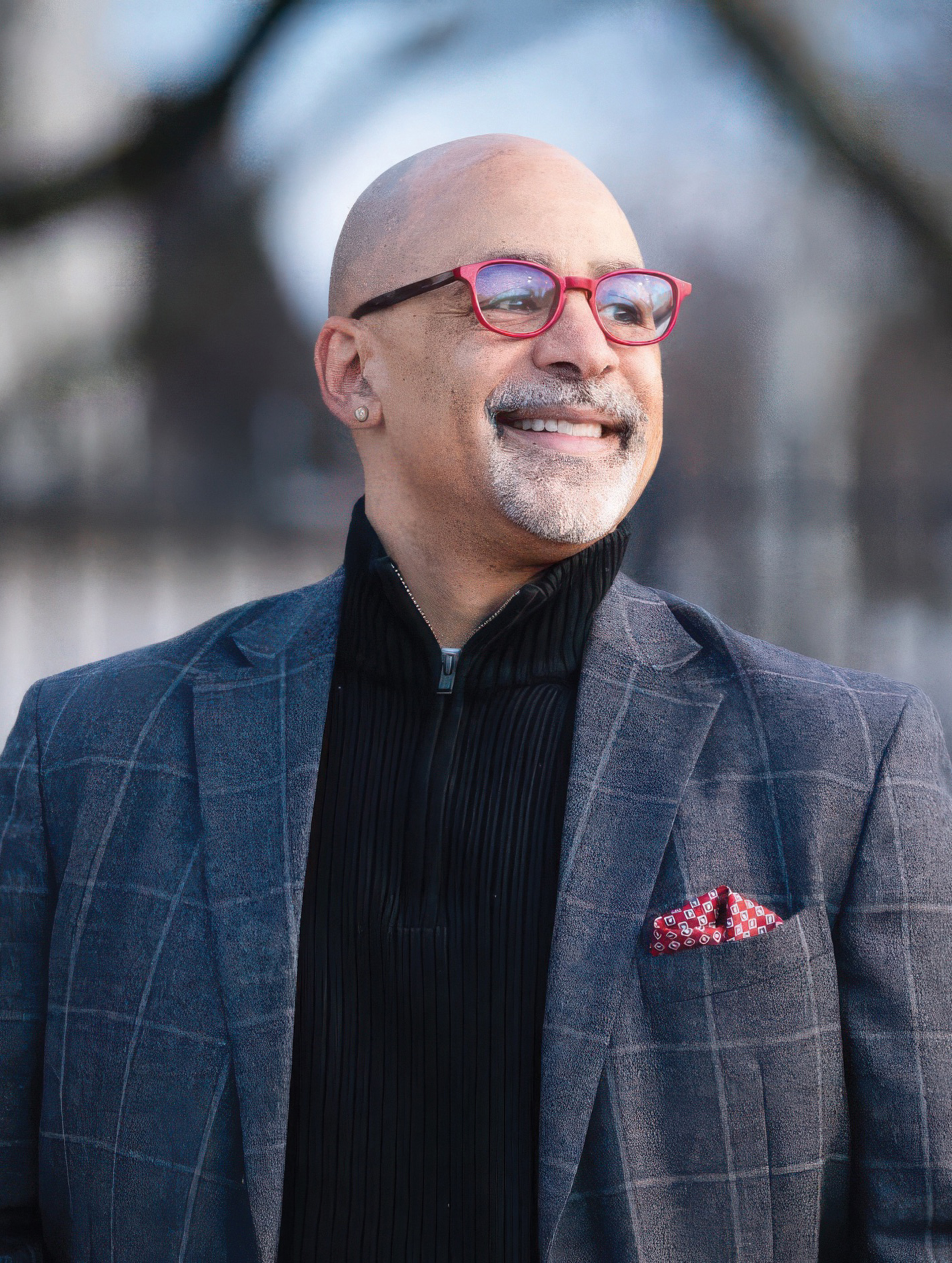
State Rep. Chris Rabb, a five-term lawmaker for Pennsylvania’s 200th legislative district, is one of eight Democratic candidates running for the chance to take Congressman Dwight Evans’ vacant seat in the U.S. House of Representatives next year. Rabb has emerged as a progressive option in the lead-up to the Democratic primary in May, with positions on immigration, climate change and election reform that resonate with a diverse array of voters. Here, we talk with Rabb about why he’s running and his vision for the work ahead, if elected.
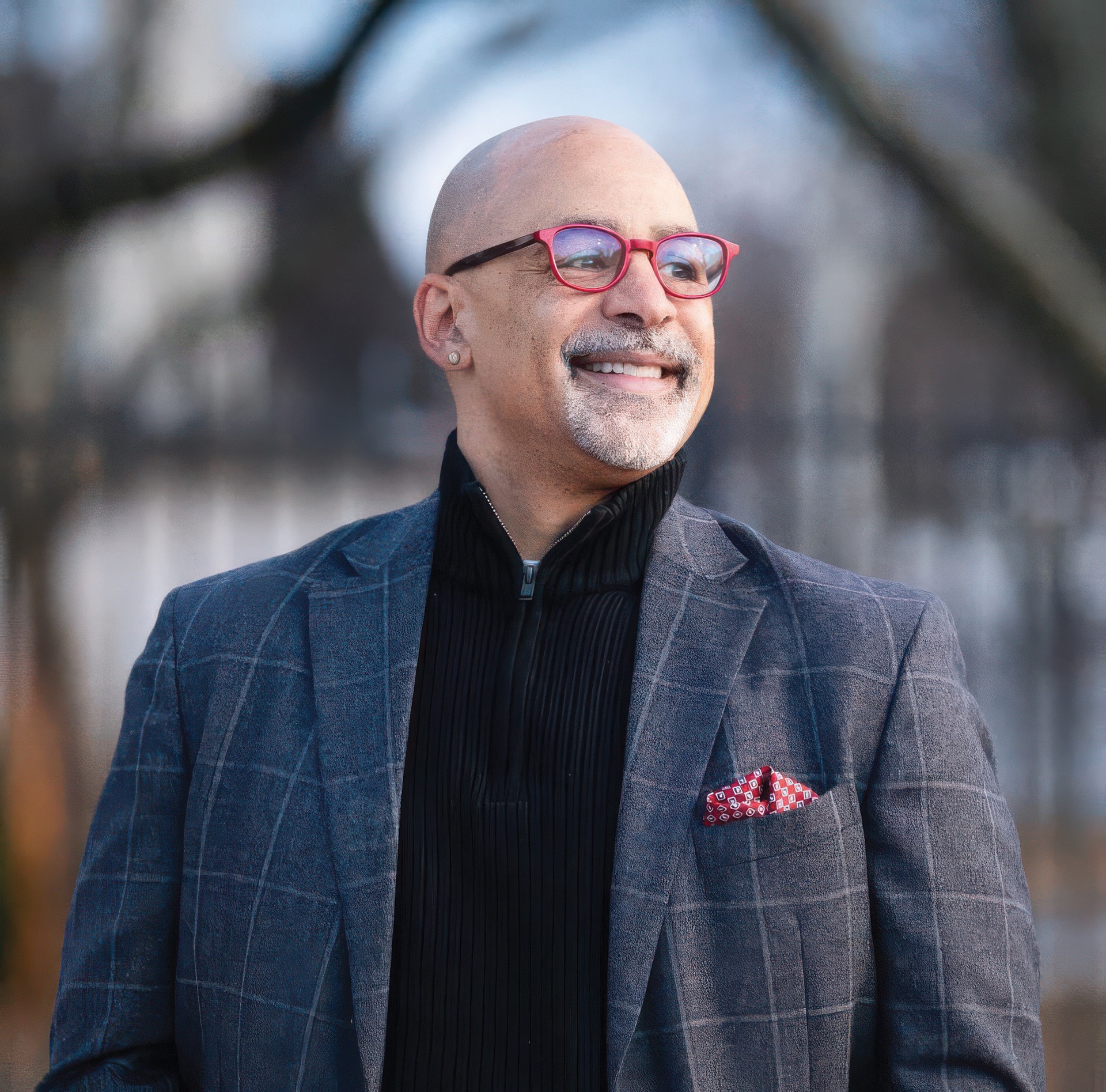
What motivated you to run for Representative Dwight Evans’ open seat? Well, this is the first time in 35 years that there’s an open seat, which means that folks who are non-incumbents in Congress actually have a chance to win. I’m fond of winning elections. It’s my preference. So not having to unseat a long-standing incumbent is a real significant factor. But more broadly, this is an opportunity to send someone in who is not tied to corporate interests. Someone whose fealty is not to the party, but to the people. And someone who has a bold vision for the seat, this district, this city and the nation, at a time when democratic institutions and norms are being challenged, destroyed, distorted.
I am going to Congress because we need more public servants and fewer politicians. And that’s a very important distinction within the elected class, because politicians serve themselves and moneyed interests, and public servants serve the people. They’re accountable to the folks who put them in office and to the much bigger population of folks who they are duty-bound to represent.
Some of the reporting around this primary has positioned you as the “anti-establishment” Democratic candidate. Would you describe yourself that way? I do. The Democratic Party brand is at an all-time low, and that’s for good reason, because they have not led with integrity and vision. And the reality is, we can’t keep doing the same thing and expect a different result. If we take for granted Black voters, if we take for granted young voters, we lose. We lose not so much because folks are bailing to the Republican Party, it’s that they’re staying at home. One thing I learned some time ago is that bad politicians are elected by people who don’t vote.
In Philadelphia, where it’s a one-party town and the bluest congressional district in the entire nation, the only time you have an opportunity to determine who’s going to represent you is in Democratic primaries. It’s not in the general because normally, there’s not even a Republican on the ballot in the general election. There are more raccoons in Philadelphia than there are Republicans. So if you abdicate your responsibility to vote in the primary, you have no voice. But here’s the other piece, because a lot of people like to come at voters and say, “Well, you didn’t do your job, and you didn’t come out to vote.” If you don’t have a reason to vote because you only have one candidate on the ballot, or you have candidates who do not reflect your lived experiences, your interests, your priorities, why would you vote? Why would they come out and support someone who’s running for the wrong reasons, or who’s taking money from the very industries that are extractive, that are predatory, that are exploitative? And as someone who doesn’t take corporate PAC money, that stands out to people.
What else stands out to folks about your stances? I’m one of the few Democrats that is openly and consistently anti-fracking, and that’s a very unpopular view, even among Philadelphia Democrats, because there are a lot of trade associations who rely on construction jobs that involve fossil fuel extraction. And while I’m a strong supporter of organized labor, we have to find a way to strengthen worker rights and strengthen collective bargaining, while also creating a path to 100% renewable energy, which is my bill. I introduced it in 2017 and three times after that. I’m a founding member of the Pennsylvania Climate Caucus. I’m on the board of the National Caucus of Environmental Legislators. I have a bill that goes after corporate greenwashing. So I have a clear record on these issues.
Say more on that renewable energy bill. Why is renewable energy critical to Pennsylvania? [The bill] said the Commonwealth of Pennsylvania needed to be free of fossil fuel production by 2050. There were clear benchmarks that we needed to set along the way and an infrastructure we needed to create through intergovernmental collaboration. When I introduced it, it was in a Republican majority, so my bill never saw the light of day. After taking back the House, the governor had versions of it that went to 30% renewable energy, and you know, that’s some progress, but ultimately, this idea that fracked gas is a bridge to renewable energy is a very problematic analogy. Because how long is this bridge? If it’s going to be a bridge, that bridge has to have an end, and that bridge should be as short as humanly possible.
What are some of the policies you plan to prioritize if elected? There’s so many things we need to address, particularly given the tyranny of the Trump administration and MAGA extremism. Not so much things that we need to restore, although that’s a good starting point, but there’s whole things that we need to overhaul. We need to abolish ICE. We need to dismantle the immigrant concentration camps. We need to entirely restructure our immigration system so it’s fair, efficient and humane — that’s critical. We need to address the Supreme Court: expand it, have term limits, and have ethical standards that are maintained. We need to have significant electoral and voting rights reforms so that we can no longer have a continued era of legal voter suppression. We need to have universal health care, Medicare for all.
Sounds like a lot of big structural changes. A lot of people who saw the ascent of Zohran Mamdani didn’t realize two of the things that helped his candidacy were ranked-choice voting, which is a bill I’ve introduced multiple times in the state legislature, and also public financing of elections so that the wealthy are not disproportionately represented.
We need to have real choices, and [they] should not be affected by some of the largest businesses in the world, and that is something that makes me distinct in this race, because I’m the only person in this race who has never taken corporate PAC money. It’s one thing to say I won’t do it when I’m in Congress, it’s quite another to say, in the 10 years I’ve been in elective office in one of the most legally corrupt legislatures in the country, I’ve never taken a dime of corporate PAC money. My track record — whether it’s regarding the environment, or electoral reform, or criminal legal reform, or sustainable agriculture — is going to be consistent with how I lead in Congress.
When it comes to the environment, aside from fracking, what are some of the biggest issues facing Pennsylvania right now? We have to modernize our grid. Electrification is coming, and that is a good thing, but only if we have the infrastructure to support it and the political will to fast-track and promote further renewable energy production. That’s huge because until we have that infrastructure, nothing’s really going to change on the ground. It puts our health in danger. It puts the health of our environment in danger, and it also hurts our public infrastructure, including the homes we live in.
And obviously, we have to rein in corporate polluters. They are not paying their fair share. Corporations pay fewer taxes than working families. That is unacceptable. Any issue someone cares about, whatever it is, there’s a direct link to progressive tax policy.
What is one question you wish more people asked you in interviews like these? On the campaign trail, not enough people talk about environmental justice and climate action.
I’ve been to [over a dozen] candidate forums, and the issue of climate action has never come up. And I think that’s a real problem, because how can you not talk about the biggest existential threat? People are talking about Iran and their nuclear capabilities, which are non-existent, as a bigger threat than extreme weather, which is directly related to how we’re driving our economy and our politics. And that’s very concerning, particularly in this city where we have such different health outcomes based on zip code and race, and in a place that had one of the biggest refinery explosions in U.S. history.
So I try to bring it up, even though it’s not explicitly mentioned in any forum that I’ve been a part of, and I’ve been in this race since July. I find that deeply disturbing, and I think a lot of that has to do with Wall Street and corporate media. This is not something that corporate media wants to talk about because they are complicit.
And what is the antidote to that? We have to educate ourselves and make sure that the people we send to Congress are literate about these things and connect the dots for very busy, distracted and concerned people who are just trying to make it day-to-day. The best public servants connect the dots. They don’t condescend. They meet people where they are, and they say, “This is what you need to know. This is how you hold us to account, and this is how we can transform a society together.”