As a parent of a 13-year-old and a 10-year-old who play baseball in West Philly’s Philadelphia Athletics Youth Sports Association (PAYSA), I know firsthand how hard it can be to find space to play organized sports. The league has grown from 170 kids in 2014 to around 300 today, with a waiting list of 20. The demand keeps growing, but the field space remains the same.
On a typical night, my daughter shares practice time with two other teams. Three teams rotate across one proper baseball field and two “open space” areas where drills can be run. That means each team gets about 30 minutes per week of practice on an actual field. Adding to the field stress, our makeshift batting cage recently fell apart and is now unusable.
And yet, everyone associated with PAYSA would tell you how lucky we are.
Our league is entirely volunteer-run, powered by parents who coach, line fields, cut grass, organize and purchase equipment and uniforms, manage schedules, get clearances for coaches, etc. It holds together because a handful of people donate extraordinary amounts of time and energy to keep it going.
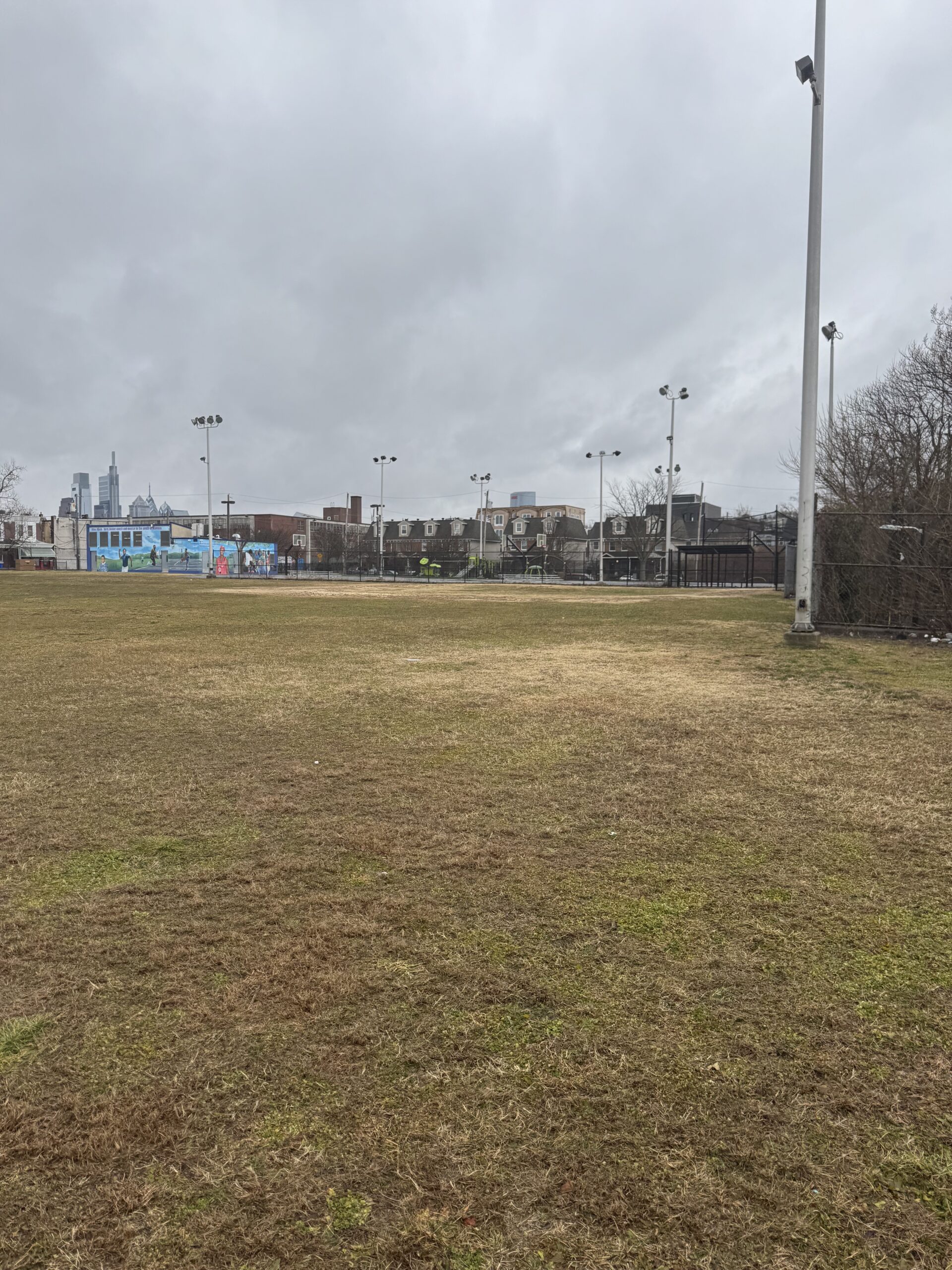
But just 2.3 miles away, at Miles Mack Playground in Mantua, there’s a different situation: a beautiful baseball field, renovated with public funds, complete with covered dugouts, a grass infield, and a dirt mound, sits largely unused. Not because there’s something wrong with it, but because it hasn’t been maintained. A day’s work with some sand, silt and clay, and basic upkeep could make it playable.
This is the frustration at the heart of Philadelphia’s youth sports system.
City officials often point to a recent Temple University study as evidence that we need more, and better, fields. But the report tells a different story if you read it closely. It found that 60% of facilities are rated “below” or “far below” average. That doesn’t describe a lack of fields; it describes a lack of maintenance.
The same report notes that facilities improved through the City’s Rebuild program were rated 18% higher in quality. In other words, when we invest in existing infrastructure, people benefit.
The problem isn’t scarcity of fields; it’s the City’s almost allergic response to maintenance.
The report also highlights something even more basic: many sites lack signage. Only 24% include contact information. That means most fields don’t even provide a clear way for leagues or families to access them. We are not just under-maintaining our fields — we are under-managing them.
All of which makes the logic of the city’s approach at FDR Park crumble.
There, a landscape that evolved into a natural refuge — providing habitat, absorbing stormwater, and offering open, informal space for park goers — is being cleared to make way for new synthetic turf fields. These fields are often justified as cost-effective, but that calculation ignores huge tradeoffs: higher surface temperatures, environmental and health concerns tied to PFAS chemicals, and the long-term cost of replacement and disposal.
And it ignores the larger question: why are we building new fields while so many existing ones sit underused or unusable?
Philadelphia has a youth sports crisis, but it’s not because we lack space. It’s because we have failed to take care of what we already have — and to make it accessible to all communities.
The city chooses capital projects over maintenance, and new construction over stewardship — and it’s costing us (and wildlife) green spaces in the process.
Before we clear more land to build new facilities, we should ask: what would it take to make the fields we already have playable again? And how can we make the process of gaining access to the fields simple and transparent?
Because the answer to those questions might be far less costly, far less destructive and far more equitable, than starting over.