At the turn of the 20th century, Philadelphia was one of the largest textile manufacturing cities in the country. Since the 1950s, the region’s ongoing deindustrialization has led to a sharp decline in textile mills, as well as in the number of farmers and artisans supporting the textile industry. Knowledge of how the industry operates has also faded.
Leslie Davidson and Rachel Higgins, co-founders of Pennsylvania Fibershed, are part of an ongoing effort to re-weave some of those threads.
“We’re losing this generational knowledge as the last generation of people are dying or selling their mills or businesses, and this is the last opportunity to pass along this knowledge to the younger generation,” says Davidson. “We also need a lot of innovation in this industry to make it more of a circular economy.”
Pennsylvania Fibershed was once wrapped into a coalition-based nonprofit, All Together Now PA, which was founded in 2021 by White Dog Cafe founder and locavorism doyenne Judy Wicks. The organization worked to unite Pennsylvania’s rural and urban communities and advocate for local artisan economies, including food, building materials, plant medicine and clothing and textiles. After Wicks’ retirement in 2023, Higgins, the clothing coalition leader, and Davidson, director of operations, rebranded as Pennsylvania Fibershed, part of Fibershed, an international movement with close to 80 affiliates.
From there, they focused on education.
“We kept hearing that consumers need to learn why it’s important to support local, use and wear natural fibers and buy secondhand,” Davidson says. “There’s also a need for education for producers, manufacturers and students.”
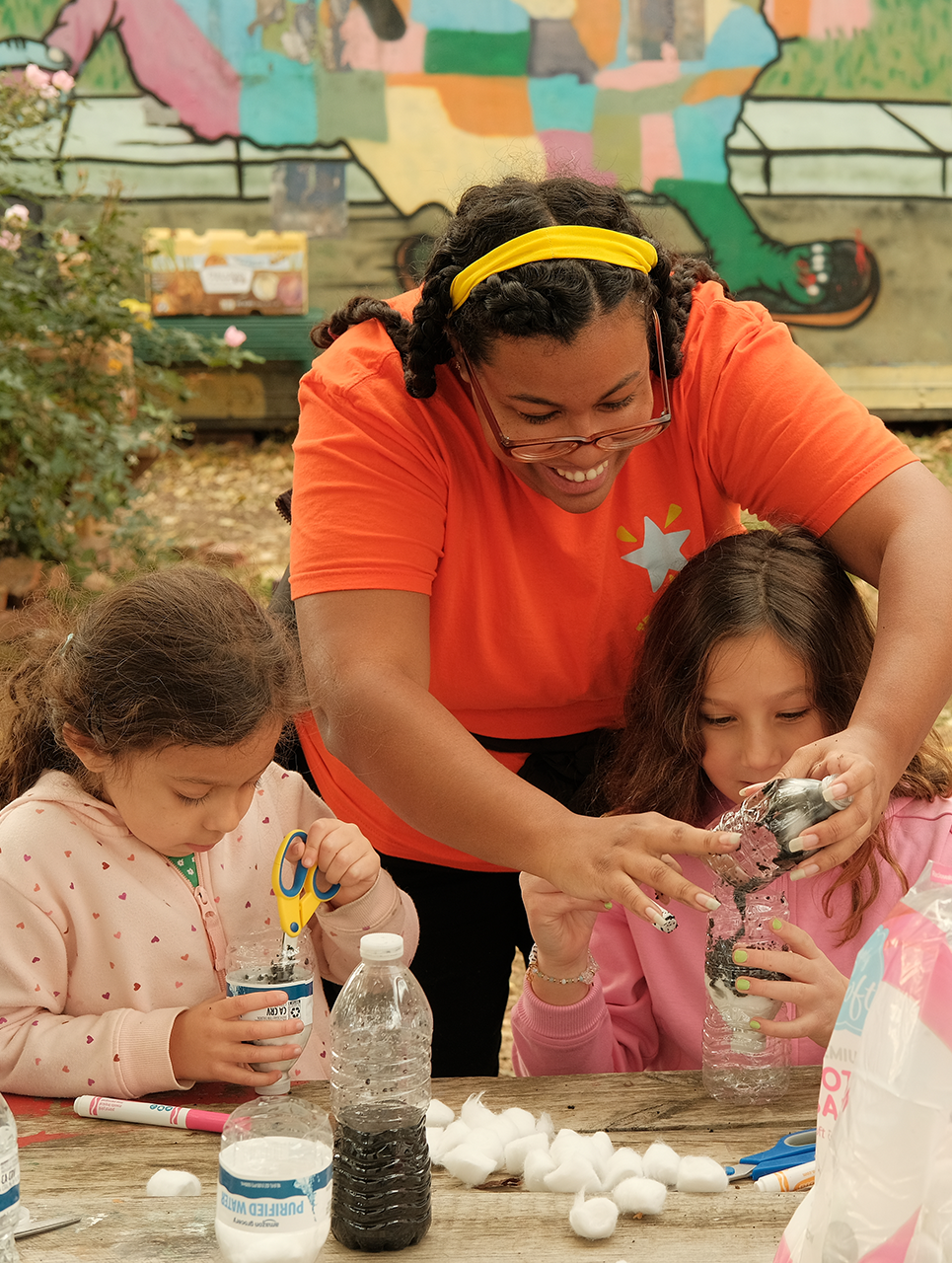
Davidson and Higgins started by establishing student ambassador programs at Thomas Jefferson University and at Higgins’ alma mater, Drexel University.
“We have cohorts of six students from each university educating their peers about fast fashion, overconsumption and supporting local,” Higgins says.
“We both went to school for fashion design and didn’t learn where our fiber came from; we’d just go somewhere and get the fabric,” Davidson says. “No one taught us about the effects of the textile industry on the climate, or how resource-intensive and depleting it is.”
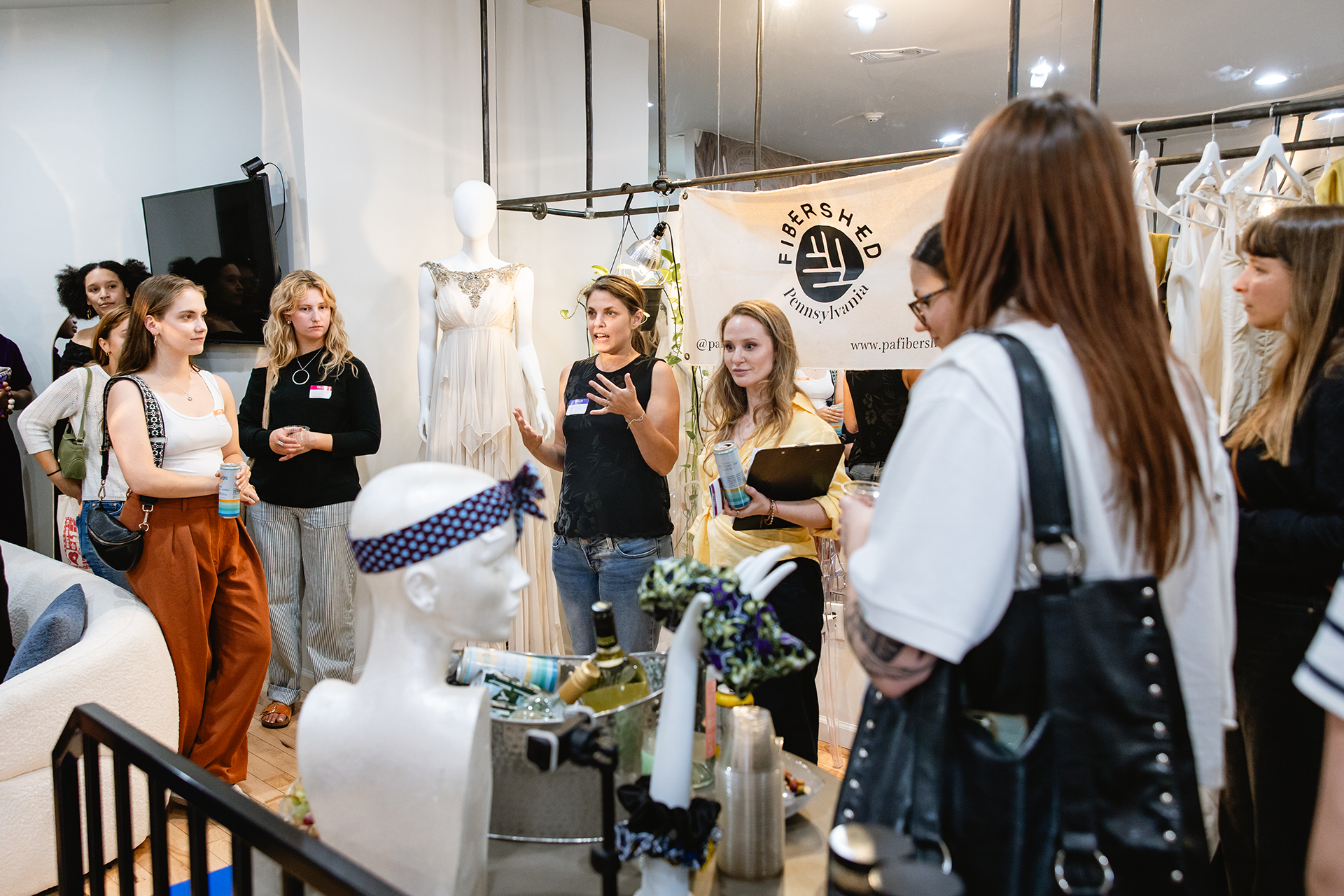
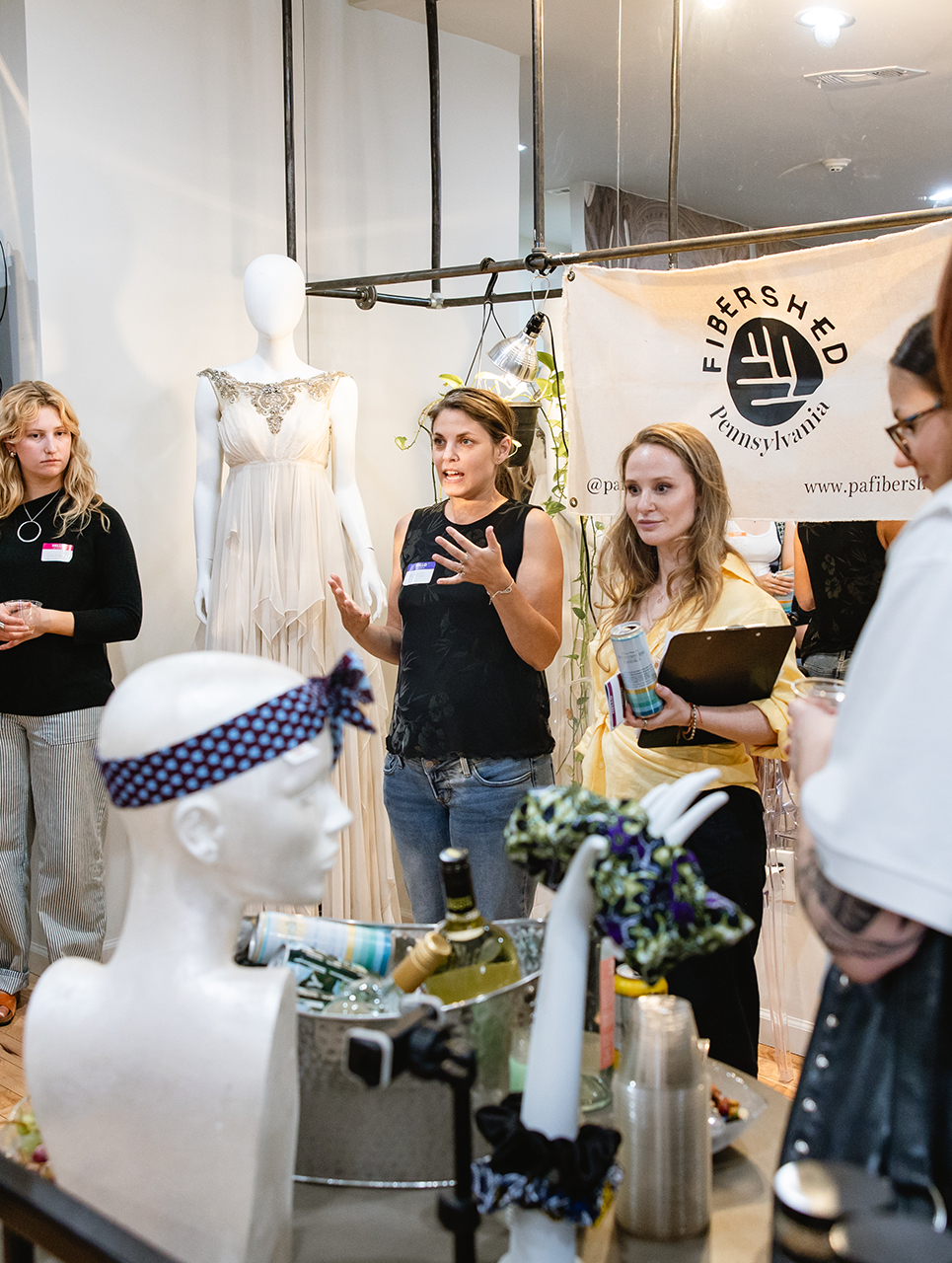
Pennsylvania Fibershed is in the process of developing an online course geared toward both consumers and industry professionals. They also organize tours of manufacturing facilities and host events geared toward producers. A recent gathering, Fleece to Fabric, brought together producers, a shearer and representatives from a yarn mill and a knitting mill.
“Sheep farmers got to understand what happens to their wool after they’re done with it, as well as what condition it needs to be in, how to best prep their fibers and what are the markets they can sell it in,” notes Davidson. “We build bridges with people from all along the value chain.”
Building connections within the industry is at the heart of Pennsylvania Fibershed’s mission. It offers memberships for farmers, manufacturers, spinners, weavers, dyers, hobbyists, students, advocates, designers and consumers. The member hub includes resources for grant and collaboration opportunities, and a sourcing map that allows anyone to identify local businesses, like yarn and wool mills, where fiber can be sourced directly.
“A lot of the fashion industry is secretive about the whole manufacturing side — the supply chain is completely disconnected and you’d be amazed how people don’t find each other,” says Higgins. “That’s the support we want to provide: If they don’t have the time and expertise, we can fill in that gap.”