
I am a 15-year-old resident of Chestnut Hill, and I live near Wissahickon Valley Park. In 2022, I started the group Monarch Defenders, which aims to plant native pocket meadows in Philadelphia and beyond to support endangered monarch butterflies and other pollinators.
One of our local meadow restoration projects was done in partnership with Friends of the Wissahickon. Over two years, we revitalized a degraded lot in the Cresheim woods section of Wissahickon Valley Park, around the ruins of Buttercup Cottage, transforming the site — just under an acre — from a wasteland of invasive porcelain berry into a community nature oasis. We planted a native pocket meadow and pollinator garden, removed invasive species, cleaned up trash, created trails and sitting areas, and installed wildlife boxes and community nature art. I found that even a small, forgotten space like this, once restored, can support so much life.
Our project began at the end of spring 2023. It was a warm morning in mid-May when we brought our shovels to the site and started to dig. We couldn’t restore the entire field of porcelain berry and Japanese stiltgrass all at once, so we started with a tiny plot, maybe 100 square feet. Over the spring we had grown several native wildflowers from seed, and didn’t have another great place for them, so we transplanted them here. We also threw seed bombs — clay balls full of wildflower seeds — around the site in a helter-skelter attempt to bring back pollinators and wildlife to this land taken over by invasives and filled with litter.
Buttercup Cottage is a 19th-century farmhouse and barn at the edge of the park. (Visitors can access the ruin from the trail entrance at the intersection of Emlen Street and Cresheim Road.) Buttercup Cottage was built in the mid-1800s by local landowner Henry Houston as a summer retreat for working-class women who lived in the polluted city. After the land was incorporated into Wissahickon Valley Park, it was used as a center for the Philadelphia Parks Commission throughout the mid-1900s, until the original cottage was dismantled and its adjacent barn was burned in the 1980s, likely the result of arson. Since then, its ruins have lain abandoned. They became a ground for spray painting, illegal trash dumping and other ne’er-do-well activities, and the land around them became choked in invasive vines. How do we make this place better? we thought to ourselves as we began what would become a multiyear project.
The first summer, our site really didn’t look like much. Our seeds were coming up but were being outcompeted by the invasive Japanese stiltgrass and porcelain berry. And whenever we weeded, the invasives just seemed to come right back. Worse was the trash problem — seemingly every time we went to the site, we found beer cans, spray-paint containers and other litter. When we recruited a few volunteers to help us clean up, we collected enough litter to fill five garbage bags.
Yet, every week we worked, things started to get a little bit better — less trash, fewer invasive plants. By the end of our first summer, many of our plants were blooming — blue mistflower, coreopsis, blazing star, goldenrod. And when our wildflowers began to bloom, the pollinators came: In our tiny plot of native meadow amidst the sea of invasives, the bees and butterflies were returning. We saw bumblebees, a few solitary bees, some swallowtails and cabbage whites. Not much, but enough to keep us hoping, planting, working.
In the fall of our first year, when the plants were dying back, we decided to remove another section of invasive plants in front of the ruin and re-seed it with a native meadow seed mix. Our hope was that the seeds would overwinter in the soil, getting the cold exposure they needed before sprouting in the spring.

During the winter, when we couldn’t plant anything, we focused our attention on cleaning the trails. After years of neglect, they were a mess. In the summer when the trails were covered in overgrowth and invasive vines, we could barely get to the ruin. It was quite an effort to trample over thickets of porcelain berry, so people largely stayed away from this area, with the exception of those who left behind beer cans and spray cans. So we cleared the trails, pulling weeds by hand and laying down woodchips and flat stones along the trails, making the space easy and pleasant to walk through again.
Then, when spring finally arrived, we noticed something amazing: Our seeds had actually come up. By early May 2024, black-eyed Susan, swamp milkweed, anise hyssop and many others were growing fast. Where the seeds hadn’t sprouted, we supplemented them with plant plugs that we sourced from local native plant nurseries. One year after we started, change was on its way — the native meadow was filling in, the invasives were slowly being driven away by our aggressive weeding and the trash was going down.
As our improvements to the site began to take hold, people started to internalize that this was a special space, not a dumpsite — so there was less and less dumping, spray painting and other illicit activities. (That’s not to say there weren’t hardships: A bird feeder that we built was tagged with graffiti, an oak sapling that we planted was vandalized and uprooted, and one of the older trees at the site was spray-painted, but all in all, things were getting better).
In addition to planting the native meadows, cleaning up the trash and caretaking for the trails, we also added community art. If you walk around Buttercup Cottage now, you may notice the birdfeeders, birdhouses, windchimes and wooden mobiles hung in trees. We first installed several wildlife houses last spring and summer, including a bat house and a wooden birdhouse, and then we added nature-based art such as wood mobiles and shell windchimes. As we later learned, the art we installed at the site turned this into not just a restoration effort, but a community revitalization project — it brought people and nature together at the site in a new way.
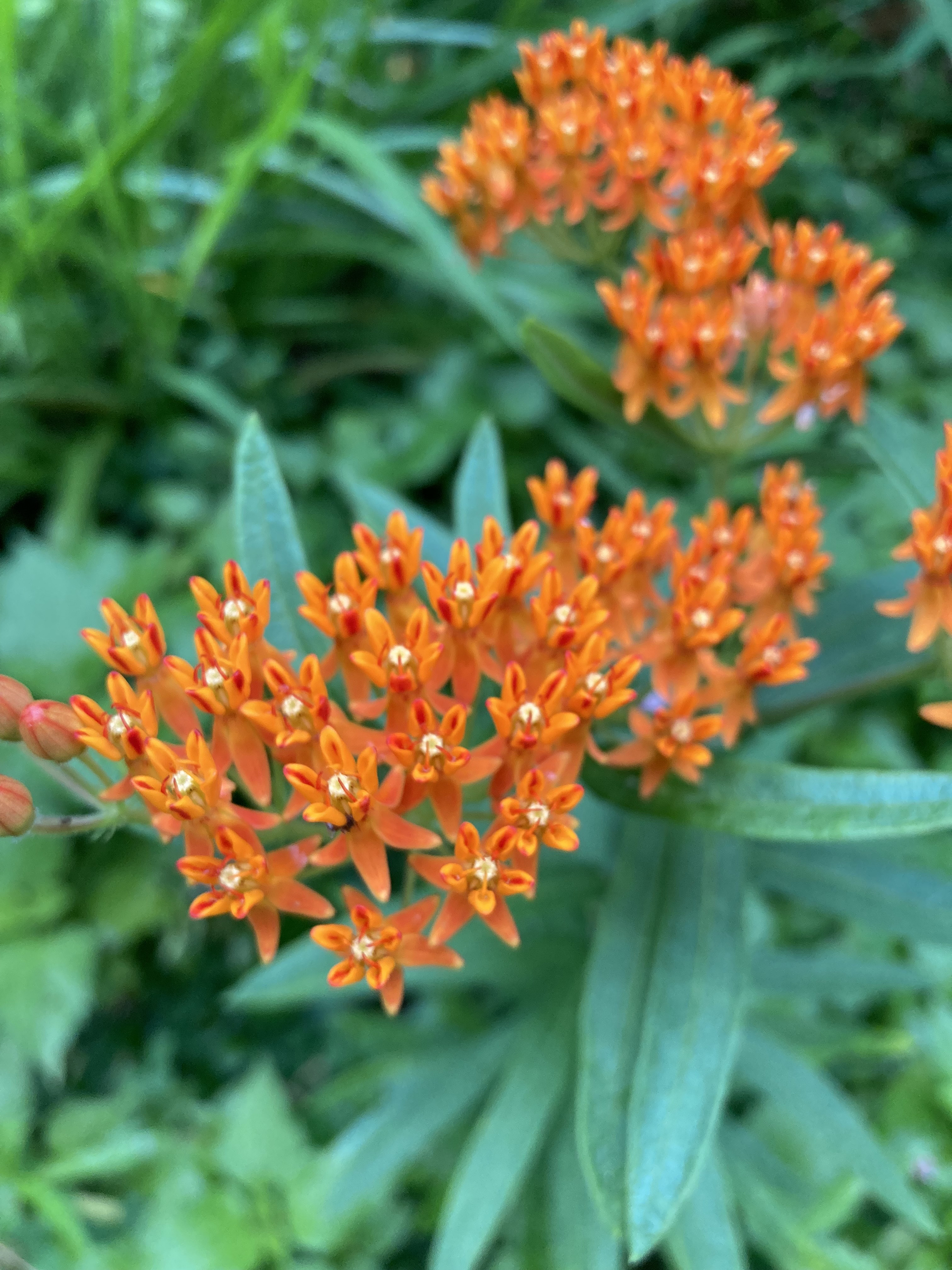
As the summer of our second year at Buttercup Cottage progressed, more and more of our flowers were blooming. Each month hosted a variety of blooms: anise hyssop, swamp milkweed, butterfly weed and spiderwort in June; purple coneflower, black-eyed Susan, wild bergamot and mountain mint in July; cutleaf coneflower, joe-pye weed, cup plant and partridge pea in August; Canada goldenrod, New England aster, boneset, snakeroot and blue mistflower in September.
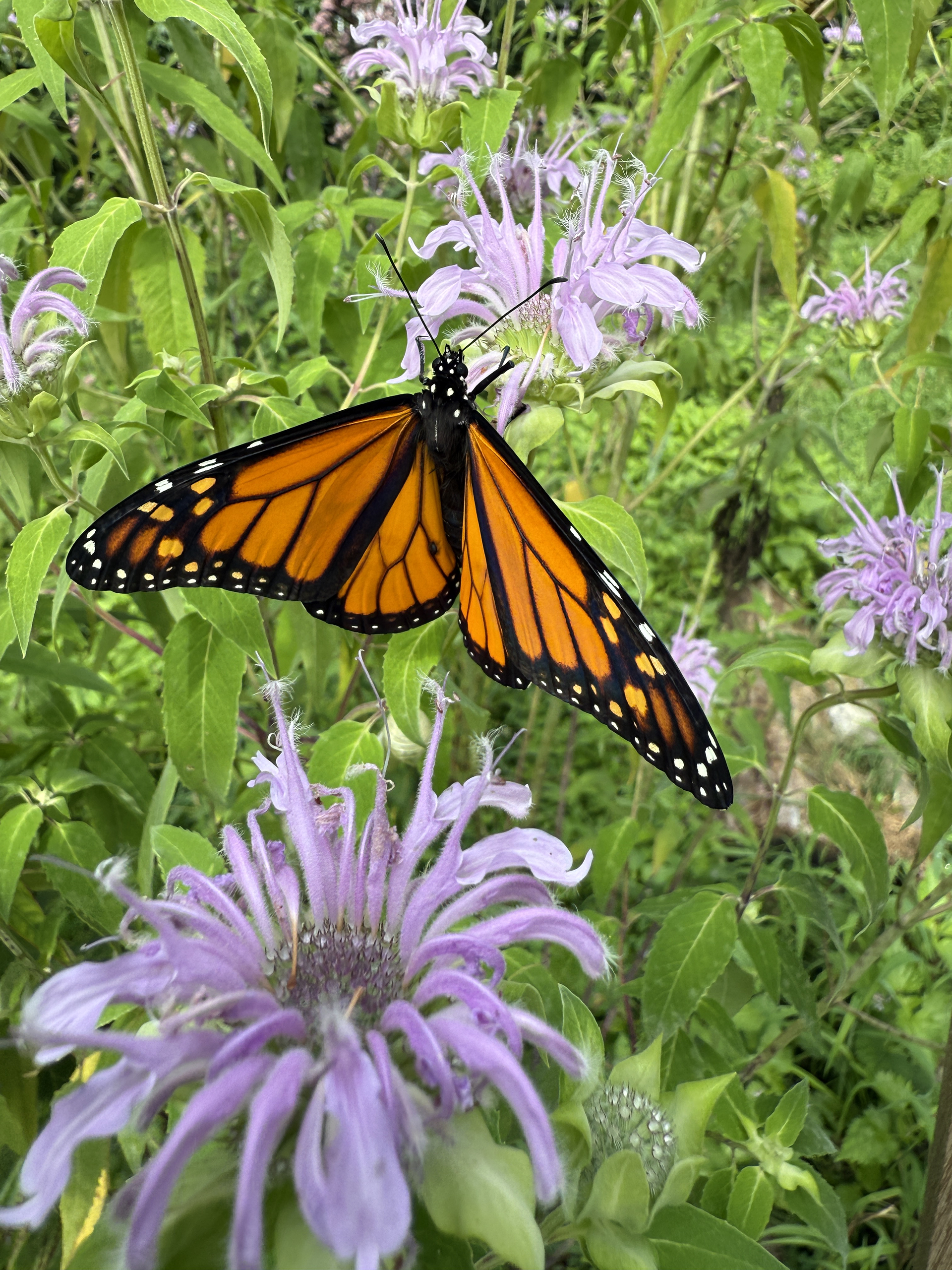
With each bloom of native wildflowers came the pollinators in full force: tiger swallowtails, black swallowtails, azure butterflies, bumblebees, solitary bees and even monarchs. It was very inspiring for us to see this kind of change occur at a site that was once a wasteland of invasive plants.
Now at the start of our third winter at Buttercup Cottage, our meadow has attracted wildlife of all kinds, from monarch butterflies to scarlet tanagers, toads and garter snakes to goldfinches and tiger swallowtails. We are continuing to expand our work here, brainstorming and executing new ideas, including planting a hedgerow of native trees and shrubs and creating an educational garden of medicinal native species. This winter, we have plans to further expand our efforts by removing invasive species in an area adjacent to the site and replanting with native trees and shrubs. In the midst of the ever-worsening threats to nature everywhere, Buttercup Cottage has become our one-acre beacon of hope.
To learn more about Monarch Defenders’ local efforts, go to monarchdefenders.org/philly. Those interested in volunteering at the site can contact noah@monarchdefenders.org.






You are true hero’s. In Easttown Township (Berwyn/Paoli) we are starting pollinator gardens. We have also planted rain gardens with natives and done two invasive plant removals from a local park. It is great to hear about your work and success.
Your long term commitment to this project is inspiring! And your passion is evident in both your words and actions. Thank you for sharing your talents with the community. Our pollinators are lucky to have you on their side!
Yay! I’m involved in something similar in Cobb’s Creek. Yes to restoration around the city!