• Race and Equity
  • Environment
  • Food
  • Circular Economy
  • Events
  • Advertise
  • Subscribe
  • Grid Podcast: The People Left Behind

The Latest

#153 February 2022/All Topics/Community/Jobs/Race and Equity

Nonprofit helps returning citizens beat the odds

Pennsylvania “locks up a higher percentage of its people than almost any democracy on earth,” states the Prison Policy Initiative, a nonprofit in Northampton, Massachusetts, that works to end mass incarceration. In addition, more than 40,000 Philadelphians, disproportionately Black and Brown, come home each year from state and federal prisons, according to a January 31, 2017

More
January 31, 2022
4 mins read
#153 February 2022/All Topics/Art/Culture/Race and Equity/Water

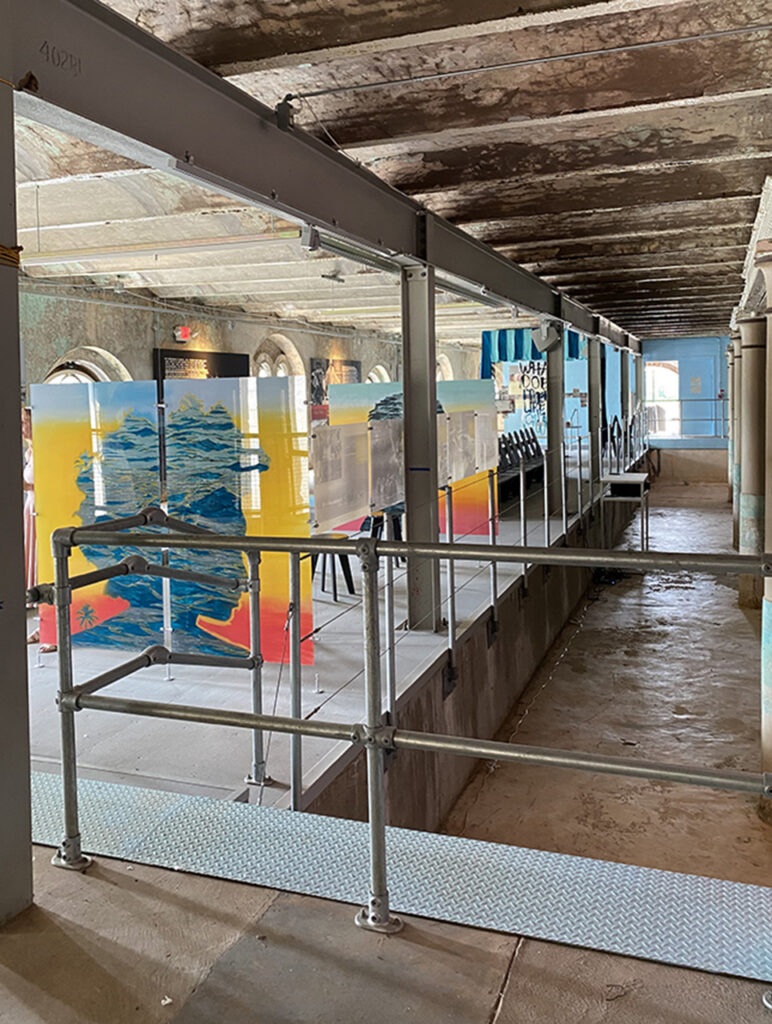
Fairmount Water Works exhibit takes a look at how segregation reshaped African Americans’ relationship with water

In colonial Jamaica a group of enslaved women were bathing in the nude, washing clothes and likely gossiping on a riverbank when some traveling Englishmen spied them, according to Kevin Dawson, associate professor of history at the University of California, Merced, in his book “Undercurrents of Power: Aquatic Culture in the African Diaspora.” Thrilled with

More
January 31, 2022
4 mins read
#153 February 2022/All Topics/Circular Economy/Community/Culture/Fashion/Shop Local

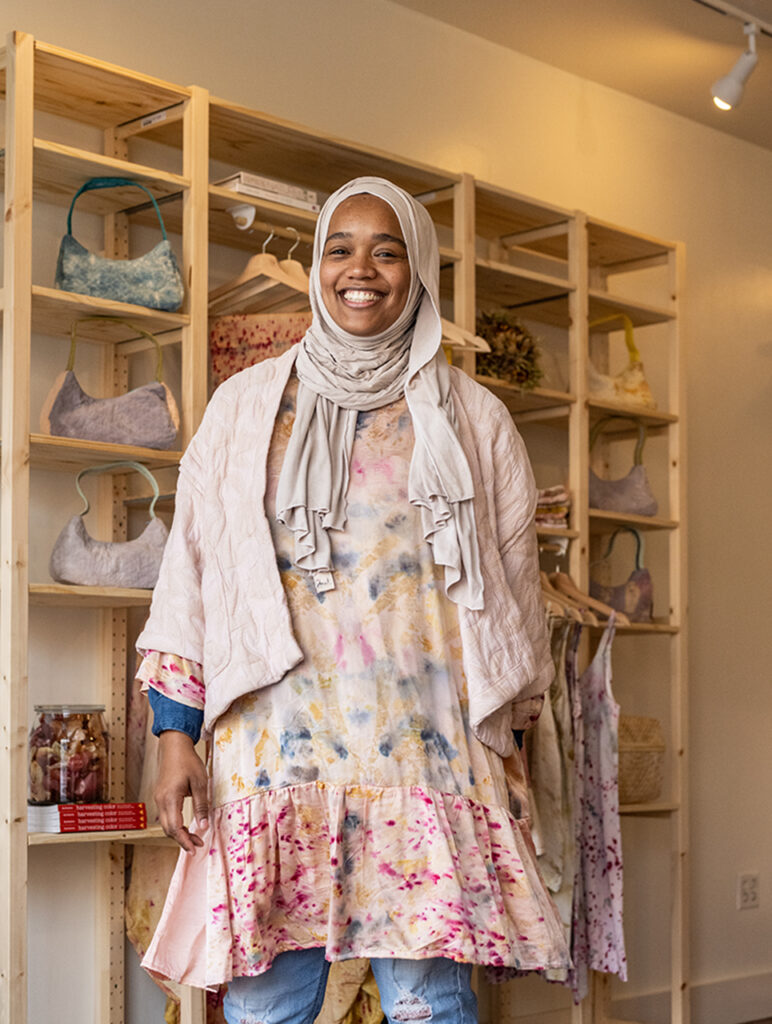
New Fishtown storefront will offer sustainable apparel and community workshops

Following the birth of her first son in 2018, Melanie Hasan experienced postpartum depression, a condition that affects millions of women each year. She turned to natural dyeing to find comfort. “Just dipping your hands into a really nice, lukewarm bath and absorbing the color of an onion skin, or just embracing the smell of

More
January 31, 2022
4 mins read
#153 February 2022/All Topics/Community/Editor's Notes/Environmental Justice/Farming/Food/gardening/Urban Nature

Editor’s Notes: Find the Money

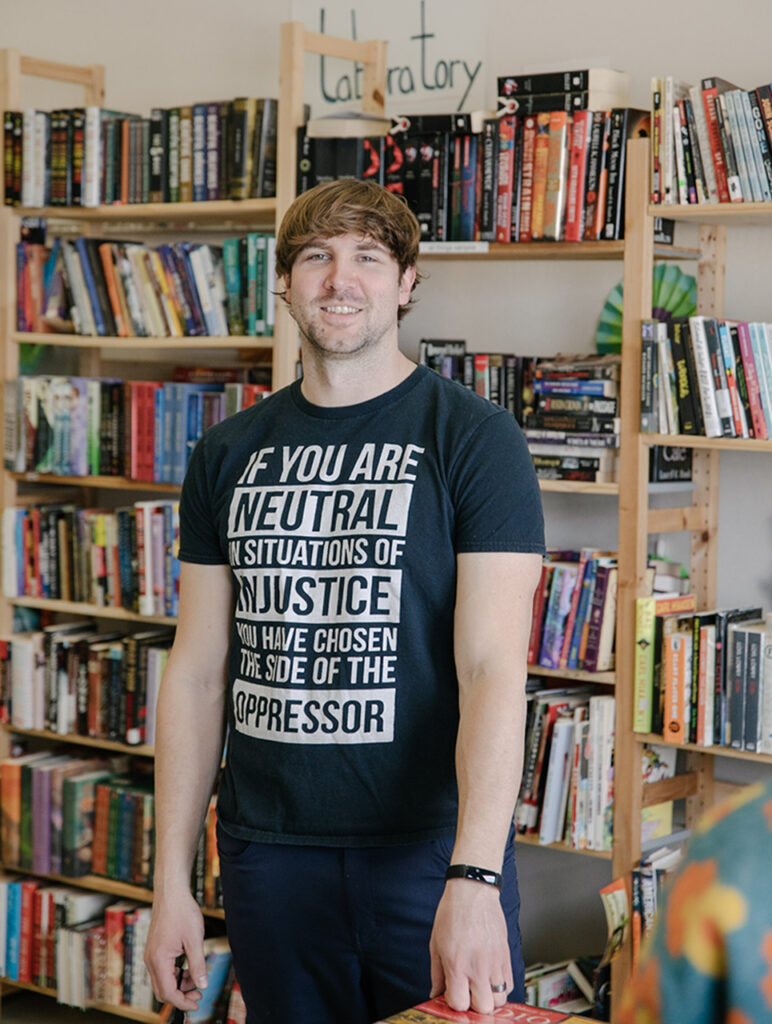
There’s nothing like a great bookstore. At their best, they can provide both a mirror to who we are and expand the possibilities of who we can be. They are the hubs of the dreamers and visionaries. I share in the disappointment of many Philadelphians that Joseph Fox Bookshop will be closing after 71 years

More
January 29, 2022
2 mins read
#153 February 2022/All Topics/Climate-Change/Environment/Urban Nature

Philly’s cold-loving trees are dying out due to climate change. The city has a plan to replace them

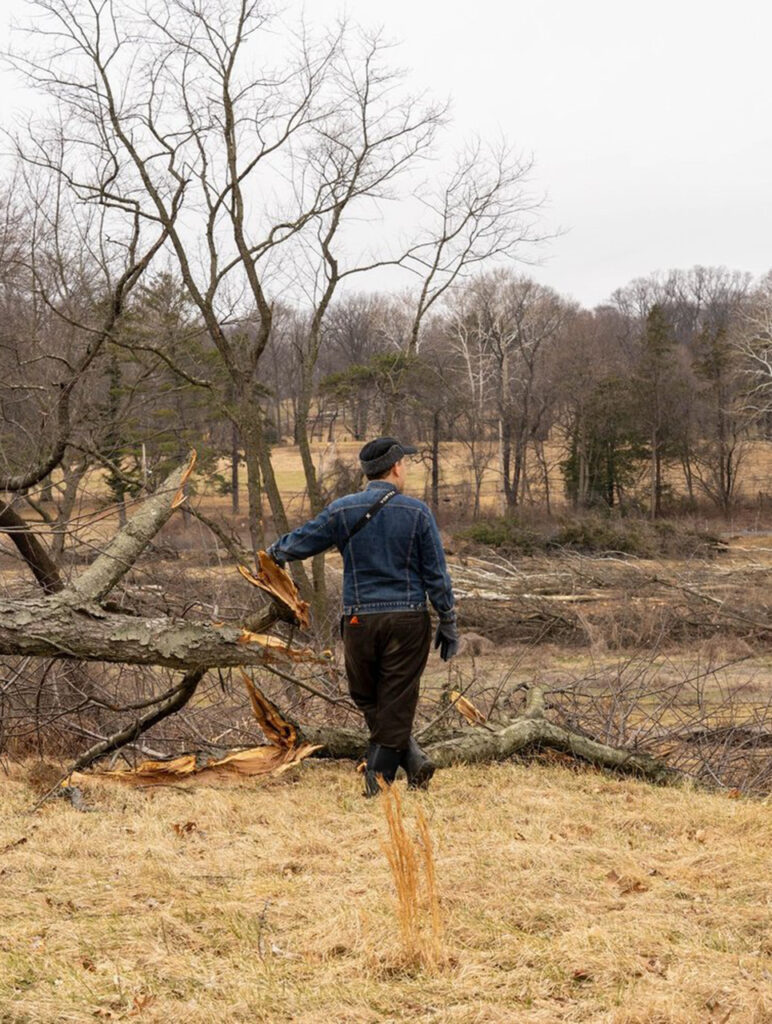
Sometimes a forest can feel like a time machine. A walk in the quiet, shaded woods takes you back to a world before there were crowded streets and computer screens. But in early January, as I walked through the Haddington Woods section of Cobbs Creek, I took a trip to what might be our future.

More
January 29, 2022
3 mins read
#153 February 2022/All Topics/Climate-Change/Community/Water

Schoolyard doubles as green stormwater infrastructure at West Philly elementary

Recently I slid a few dozen times down the curvy slide at Henry C. Lea School, as demanded by my daughter Gilda, who slid on the adjacent straight slide. She is almost three years old and thus has a bottomless appetite for repetitive fun. Her older sister, Magnolia, is in the fourth grade at Lea.

More
January 29, 2022
3 mins read
#153 February 2022/All Topics/Community

Dear Lois, Why is it easier to clean when you have people to clean with?

It’s okay for our hands to be held. Many times when I’m unmotivated to do a project, I know that the main deterrent to getting started is simply that I don’t want to do it alone. My week is split in two: I have my three teenage children four nights a week and the other

More
January 29, 2022
2 mins read
#153 February 2022/All Topics/Circular Economy/Culture/Fashion/Recycling/Shop Local

Antique lover turned jeweler breathes fresh life into old treasures

Feast Jewelry’s Adrienne Manno doesn’t upcycle because it’s trendy. Or because she’s on some sustainability soapbox. Manno describes the reclaim-and-repurpose aspect of her jewelry making as an organic outgrowth of incorrigible collecting. On her used-to-be-frequent travels, Manno would spot and acquire a piece here, an element there—a 1980s faux horn belt at a London flea

More
January 29, 2022
2 mins read
All Topics

The State of Textile Recycling in Philadelphia

More
January 25, 2022
1 min read
#152 January 2022/All Topics/Climate-Change/Culture/Environment

Movie Review: ‘Don’t Look Up’ Is a Metaphor for Our Inability to React to Climate Change

By Nic Esposito After the credits rolled on Adam McKay’s new film “Don’t Look Up.”, I lay in bed for the next two hours, heart and mind racing as I tried to process the film. It could have been an allegory for  the pandemic, plastic pollution or a number of other global crises that scientists

More
January 25, 2022
4 mins read
Previous 1 … 74 75 76 77 78 … 411 Next

Recent Comments

  1. Eileen Rice on South Philly Librarian Teaches People “How to Not Use AI”
  2. Margaret Barnes-DelColle on FDR Park’s renovation proceeds as lawsuit challenges its legality
  3. Ann Marie Doley on A contest-winning rice recipe celebrates tradition, community and care
  4. Gregg Gorton on Thousands of radio receivers track birds as they migrate across North and Central America
  5. Claudia Kent on A park in Cheltenham Township seeks accreditation as an arboretum

gridmagazine

Since May, the 13th Street bike lane has sported s Since May, the 13th Street bike lane has sported some new protective infrastructure: a series of plastic modular curbs. Between Locust and Chestnut streets, 18 of these curbs have been installed along the bike lane, stationed between existing flex posts, which have lined many of the city’s bike lanes for years.

The new protectors were inspired by a trip to Mexico City. When Prema Katari Gupta, president and CEO of Center City District (CCD), vacationed in Mexico’s capital, she noticed bike lanes protected by small, sturdy plastic modular curbs.

“Seeing this really simple curb product they installed, it seemed like something that Philadelphia could do and scale quickly and maybe save some lives,” Gupta says.

CCD bought and donated the curbs to the City, and after working with the Office of Transportation and Infrastructure Systems and the Department of Streets, they began a pilot phase ahead of potential wider use throughout the city. With just anchor bolts required to secure them to the pavement, the curbs are easy to install, says Andrew Jacobs, the vice president of planning and public realm at CCD.

➡️ Read the full story at gridphilly.com

✍️ Rusty Gorelick
📸 Julia Lowe

#philadelphia #bikelane #bikesafety #bikephilly #bikephl
The front door of Chris Hytha’s 1857 Fishtown-area The front door of Chris Hytha’s 1857 Fishtown-area rowhome opens to face a spotlit shelf cabinet — a “house museum” of artifacts: the house’s old lead water main, a hunk of its original stone foundation and a block of termite-hollowed wood. The artifacts catalogue the house’s history — and the hurdles of Hytha’s now two-year renovation project.

“There were so many surprises when I bought the house. I thought it was all made of brick, and I thought it was built in 1930,” Hytha says. When he started opening up walls, he learned that the house was 70 years older than he had thought, and that about half of its timber frame had been eaten by termites.

Despite being advised to tear the entire home down and start from scratch, Hytha kept as much of it intact as possible. He’s salvaged all kinds of materials over the course of the rehab, from old growth lumber ceiling joists he exposed in his living room, to a basement door he saved from his neighbor’s trash, to a collection of vintage ornate door locks. They are a testament to Hytha’s effort to save old stuff, not only to build sustainably, but also to give his rowhome its history back.

➡️ Read the full story at gridphilly.com

✍️ + 📸 Julia Lowe

#philadelphia #houserenovations #historichome #sustainablehome #sustainablerenovation
Imagine if developers quietly acquired and develop Imagine if developers quietly acquired and developed a few acres of Fairmount Park every year, carving them off into luxury housing. Philadelphians would rightly be outraged.

And yet: One building at a time, spaces that were designed for public assembly — churches, cultural centers, former schools — are being converted into private apartments or condominiums. And because each sale is treated as an isolated real estate transaction, it’s easy to miss what’s happening to the city as a whole.

These places are mostly privately owned, and because we’ve never recognized them as part of the same civic ecosystem, their disappearance barely registers.

During the Nutter administration, when our libraries and recreation centers faced closure after years of deferred maintenance, public outcry pushed the City not to accept their slow decline. It ultimately chose another path through the Rebuild initiative in 2017, investing in the places where neighborhood life happens.

Perhaps what we need now isn’t another Rebuild, but a broader conversation about how we revitalize and steward the places that make community possible — regardless of who currently owns them.

➡️ Read the full story at gridphilly.com

✍️ + 📸 Jacques-Jean “JJ” Tiziou 

#philadelphia #civicspaces #communitycenter #communityspace #recreationcenter
While Philadelphia Mayor Cherelle Parker’s ambitio While Philadelphia Mayor Cherelle Parker’s ambitious Housing Opportunities Made Easy initiative (H.O.M.E.) sets out to close the city’s affordable housing gap, some area nonprofits have begun working against an unintended consequence they foresee: the illegal act of short dumping demolition waste, often in known dumping hotspots in Black and Brown neighborhoods.

The community “collaboratory” Trash Academy is one such group that has devised a proposal for how to manage the construction and demolition waste produced by the proposed 30,000 homes that Parker has committed to.

Trash Academy proposes that H.O.M.E. contracts require contractors to prove that they have brought demolition waste to a recycling center or repurposing facility in order to receive funding and count as one of the 30,000 builds. The group also wants oversight from the mayor’s office to ensure compliance by developers.

“[The proposal]’s not setting anything new up. It’s just saying use the recycling facilities … to ensure that it’s not dumped somewhere random or just everything sent to the incinerator,” says Dallas Herbert Sr., a longtime member of Trash Academy and 215 People’s Alliance. “This is something the City already wants to do — everything we say is about clean and green. It’s about safety. It’s about what the mayor says she wants.”

➡️ Read the full story at gridphilly.com

✍️ Gabriel Donahue
📸 Photo courtesy of Trash Academy

#philadelphia #illegaldumping #wastemanagement #wasterecycling #reducewaste
Two hundred and fifty years ago, as a new nation w Two hundred and fifty years ago, as a new nation was being born in Philadelphia, botanist William Bartram was on the Altamaha River in Georgia — the edge of the infant United States — nearing the end of a three-year plant-collecting expedition.

In addition to Florida, Georgia and the Carolinas, he had traversed the “powerful empire or confederacy” of the Muscogee. He spent time in the Cherokee Nation and found its people, not unlike the authors of the Declaration, committed to “the liberties and natural rights of men.” He learned about local flora and fauna from the Choctaw and Seminole.

Though he hadn’t gone farther than the Mississippi River, Bartram had traveled internationally. When he returned to Philadelphia with a wealth of scientific knowledge, much of it gleaned from Indigenous sources, he also carried a conviction that his new nation had to do more to protect the “well being of our Indian brethren.”

In “Botany of Nations,” an exhibit at the Academy of Natural Sciences that brings Indigenous perspectives to the storied Lewis and Clark Expedition, Bartram is a minor character: A copy of a botanical textbook from Meriwether Lewis’s traveling library sits open to Bartram’s illustration of a tobacco plant. But Bartram’s story — that of the botanist and explorer whose journey was made possible by collaboration with Indigenous peoples — resonates with the version of the Lewis and Clark tale that “Botany of Nations” aims to tell.

➡️ Read the full story at gridphilly.com

✍️ + 📸 Tasso Hartzog

#philadelphia #academyofnaturalsciences #phillymuseum #botanyofnations #lewisandclark
Events happening in and around Philadelphia this w Events happening in and around Philadelphia this weekend!

➡️ Philadelphia Literacy Day 2026: Page Turners and Legacy Builders is our 2026 theme for Philadelphia Literacy Day. Join us for free books, fun, and community!

When:
Saturday, September 5 (12:00 PM - 3:00 PM)

Where:
Tree House Books
1430 West Susquehanna Avenue
Philadelphia, PA 19121

➡️ The Story Is in the Seed With True Love Seeds: Join us for an interactive, hands-on, seed storytelling circle followed by a seed swap. We will begin by shelling seed pods and hearing from four expert seed keepers from our region about the seeds they steward for their families, communities and diasporas. Participants will also have a chance to share about the seeds they hold dear.

When:
Saturday, September 5 (1:00 PM - 3:00 PM)

Where:
The Academy of Natural Sciences of Drexel University
1900 Benjamin Franklin Parkway
Philadelphia, PA 19103

➡️ Cobb’s Creek Monthly Clean Up: Join the Philadelphia Mycology Club for some community oriented land stewardship in Cobbs Creek Park! We will provide everything you need.

When:
Sunday, September 6 (2:00 PM - 4:00 PM)

Where:
Meet in the parking lot at Thomas Ave along Cobbs Creek Parkway

#philadelphia #philly #phillysupportphilly #eventsinphilly #phillyevents
Surrounding nearly every suburban business center Surrounding nearly every suburban business center and office park are swaths of manicured grass, occasionally interrupted by ornamental landscaping. Unlike green space at schools or residential complexes, it’s rare to see this outdoor space used for recreation or sunbathing. In fact, it isn’t really used for anything.

Up Top Acres, an agricultural startup based in Washington, D.C., is looking to change that. The company designs, installs and maintains raised-bed gardens at corporate centers and on urban high-rise rooftops, planting edible crops for tenants and local food pantries. So far, Up Top Acres has installed gardens in Washington, D.C., Maryland, Virginia, Georgia, New Jersey and now Pennsylvania.

As of April, there are three Philadelphia-area sites: Radnor Financial Center, Radnor Corporate Center and 620 Freedom Business Center in King of Prussia. All are managed by the Philadelphia-based real estate firm Brandywine Realty Trust.

Ron Becker, senior vice president of operations and sustainability for Brandywine Realty Trust, first encountered Up Top Acres a decade ago while working in Washingon, D.C. After joining Brandywine Realty Trust, he saw an opportunity to collaborate with them again. In his opinion, the benefits of activating the properties’ green spaces far outweigh the cost of establishing and maintaining the gardens.

“It is another way, as a committed environmentally sustainable company, to engage with our tenants and bring fresh produce right inside our buildings,” he says. “Here, it’s less than 1,500 feet — not the United States average of 1,500 miles — from farm to table.”

➡️ Read the full story at gridphilly.com

✍️ Emily Kovach
📸 Jeff Fusco

#philadelphia #greenbuilding #urbangarden #raisedbedgarden #rooftopgarden
At Re:Vision Architecture’s Manayunk headquarters, At Re:Vision Architecture’s Manayunk headquarters, energy-saving features are everywhere. Exterior walls are carefully sealed and insulated to keep the building warmer in the winter. Windows and skylights admit plenty of sun, reducing the need for artificial lighting. Those same skylights and windows can be opened on warm days to flush hot air up and out of the building.

But perhaps the most important energy-saving equipment of the building, which sports a Platinum rating in LEED’s Operations and Maintenance (O+M) certification, sits on the wall of the building’s garage: three electrical boards. These flat gray boxes with cables and wires snaking in and out are about the least sexy sustainable design features imaginable — but on a visit in July, Scott Kelly, founding principal of Re:Vision architecture, and Kristie Broussard, senior associate with Re:Vision’s High Performance Consulting Studio made sure to point them out.

One board is for wall plugs, one for HVAC and one for lighting. Having three lets the firm track electricity usage carefully to make sure that their building, designed to be energy-efficient, actually uses power efficiently.

“You can’t understand what you don’t measure,” Broussard says. Reducing the environmental impact of buildings might start with sustainable design, but as mounting research and Re:Vision’s experience shows, it can’t end there.

➡️ Read the full story at gridphilly.com

✍️ Bernard Brown
✏️ Illustration by James Olstein

#philadelphia #greenbuilding #sustainablebuilding #energyefficient #energysaving
Philadelphia is changing all around us. Fresh off Philadelphia is changing all around us. Fresh off a tourism season celebrating our city’s colonial history, our building boom is racing to meet a housing crisis and is, in turn, reshaping the very fabric of our neighborhoods.

As that transformation pushes forward, developers, designers and community groups are wrestling with what it means to build responsibly in a city defined, in part, by the historic structures increasingly forgotten or replaced with modern, boxy builds.

So what makes a building green? For years, we’ve pointed to energy savings, materials and certifications. But green is also what we choose not to tear down, what we find new uses for and what we refuse to throw away.

In this issue, we look at sustainable building not just as a checklist of features, but as a set of choices about how a structure, new or old, will shape the people and spaces around it for generations to come. How do we meet housing demand without burying neighborhoods in construction waste? Can corporate patches of lawn become productive farms? Are the standards we’ve relied on to define “green” buildings still ambitious enough? And how do we honor Philadelphia’s iconic rowhomes, churches and libraries as the city keeps building?

What we preserve, reuse, build from scratch and decide to demolish — these choices will separate Philadelphia’s architectural past from its future.

➡️ Read the full Green Building Issue now at gridphilly.com

✏️ Cover illustration by James Olstein

#philadelphia #greenbuilding #greenbuildings #sustainablebuilding #sustainablebuildings
The Philadelphia Energy Authority (PEA) manages gr The Philadelphia Energy Authority (PEA) manages green energy projects for the City and raises the money to make investments that will save electricity in the long run. The PEA is celebrating its first 10 years and looking forward to the next energy wins. Katie Bartolotta, the PEA’s vice president of policy and strategic partnerships, spoke with Grid about the PEA’s wins and its path forward.

➡️ Read the full interview at gridphilly.com

✍️ Bernard Brown
📸 Photo courtesy of Philadelphia Energy Authority

#philadelphia #philadelphiaenergyauthority #cleanenergy #greenenergy #energysaving
When a fellow volunteer at the Crossroads Kitchen When a fellow volunteer at the Crossroads Kitchen Project announced that she didn’t like rice, Philipa Laster sensed a challenge. Laster, a native of Nigeria, grew up eating rice every day. She began thinking about a dish that would change her colleague’s mind. Masa cakes, a traditional northern Nigerian food that Laster’s mother made weekly, offered an opportunity to showcase a tasty variation on the plain steamed or boiled rice her co-worker disdained as “poor people’s food.” But it was her aunt’s recipe, slightly modified, that helped Laster win first place in the 2026 Crossroads Kitchen Community “Vegetarian Rice and Beans” cookbook contest.

“My reason for being in the competition was to show people there are different ways to make one certain food. I am strongly connected to the nutritional benefits of food rather than (just) the filling parts of food,” Laster says.

She also cherishes her deep connection to food as a tribute to the women who shaped her life. Laster’s mother served her family masa as both a snack and a meal, but her aunt, with whom Laster lived while attending college in northern Nigeria, ran a small food business. An outdoor woodstove in the front yard enabled her to sell masa and bean cakes to passersby. Laster recalls that her aunt gave so many cakes to hungry schoolchildren that she laughingly questioned whether her aunt was running a business or a charity.

➡️ Read the full story at gridphilly.com

✍️ Marilyn Anthony
📸 Taylor Ecker

#philadelphia #masa #masacakes #nigerianfood #nigeriancusine
Iresha Picot wasn’t sure how many women would show Iresha Picot wasn’t sure how many women would show up. It was the fifth day in a brutal stretch of summer heat, with Fourth of July fireworks having wrapped up just hours earlier. But by 10 a.m., 26 women had gathered at the Indego station at 33rd and Diamond streets for what has become their regular dose of joy: a group bike ride through Fairmount Park.

Picot, founder of Black Girl Joy Bike Ride, says it was one of the group’s largest turnouts. The rides, which began in 2023, bring Black women together every other week for relaxed, noncompetitive bike rides designed to foster connection, with exercise as a welcome byproduct.

“I really just wanted to bring Black women together, because I do think a lot of us are super isolated,” Picot says. “We carry so many things and so much responsibility, and we do it by ourselves, because a lot of us was taught not to ask for help.”

➡️ Read the full story at gridphilly.com

✍️ + 📸 Julia Lowe

#philadelphia #blackgirljoybikeride #bikephilly #bikephl #phillybikeclub
Along the wide and scenic Susquehanna River near H Along the wide and scenic Susquehanna River near Harrisburg, Microsoft is reviving the nuclear power plant Three Mile Island. Infamous for the 1979 partial meltdown of one of its two reactors, it has been idle since 2019. But last year, Microsoft announced a deal with plant owner Constellation Energy to bring the nuclear facility’s remaining reactor back online and provide 835 megawatts of energy to help power its AI ambitions.

In some ways, this atomic handshake looks like the most palatable option for adding new energy onto an electric grid that sorely needs it. As increased demand from data centers and electrification outpaces energy supply, utility bills are on the rise and blackouts are more likely.

PJM Interconnection, a regional grid operator whose territory stretches from Chicago to Philadelphia to North Carolina, is warning of unprecedented electricity scarcity in the years ahead.

In many places across PJM’s 13-state territory, industry and officials are rushing to cover the gap with natural gas. In rural West Virginia, Microsoft is planning to power a 1.4-gigawatt data center by using hundreds of small natural gas-powered generators. Some analysts estimate the opening of the campus will cause the company’s greenhouse gas emissions to rise as much as 44%.

From an environmental perspective, Three Mile Island’s carbon-free footprint looks preferable, but it’s not as clear cut economically. The public could still bear the costs of new infrastructure required to plug the plant back into the grid through increased electricity costs. Nearby residents will also have to grapple with the plant’s considerable impact on local water resources and its demonstrated potential for nuclear meltdown.

Is there a smarter option? Indeed there is, says Michael Zimmerman, director and senior attorney of clean affordable power at the nonprofit Environmental Defense Fund.

➡️ Read the full story at gridphilly.com

✍️ Kyle Bagenstose
📸 Photo courtesy of The Office of Rep. Fiedler

#harrisburg #energy #nuclearpowerplant #smartgrid #smartgridtechnology
Along the sandy banks of the New Jersey Pine Barre Along the sandy banks of the New Jersey Pine Barrens’ meandering streams, a small grasslike plant with clusters of white, star-shaped flowers bloomed unnoticed for millennia until botanist and Temple University professor Sasha Eisenman made a surprising discovery. This rare and endangered plant, previously unknown to science, is found nowhere else in the world but New Jersey.

The plant was long assumed to simply be the northernmost population of a species called the coastal false asphodel. Eisenman set out to test that assumption after other botanists noted morphological differences in the New Jersey population. Using historical herbarium records to guide him, Eisenman went hunting for the plant among the rare wetland savanna habitats of the Pine Barrens. He collected and examined specimens and conducted a genetic analysis to compare them to false asphodel species present to the north and south. He concluded that the New Jersey false asphodel was in fact a unique, endemic species. In March, Eisenman published a paper announcing the discovery, dubbing it Triantha × novacaesariensis, after Nova Caesarea, the Latin name for New Jersey.

➡️ Read the full story at gridphilly.com

✍️ Sarah Ruiz
📸 Photo courtesy of Sasha Eisenman

#pinebarrens #pinebarrensnj #botany #newspecies #endangeredplants
Organizers with Philly Thrive and People’s Tech Pr Organizers with Philly Thrive and People’s Tech Project aren’t waiting for an artificial intelligence data center in the Bellwether District to be announced. In the deep freeze of February, the Point Breeze environmental justice advocacy group took to the sidewalks of Grays Ferry, knocking on 1,876 doors and speaking with nearly 500 people.

The advocates expect a developer to start building as quickly as possible to avoid community resistance. “They can’t wait to build the data center,” says Shawmar Pitts, Thrive’s managing co-director. “You need a lot of room, and you need water. The Schuylkill is right there. It doesn’t take a brain surgeon to figure out what they are trying to do.”

Thrive members aren’t the only people suspecting a data center at Bellwether. As reported in the Philadelphia Inquirer in December, HRP representatives would neither confirm nor deny that they were speaking with data center developers. Grid asked a City representative about plans to build a data center and did not receive a response.

“I think we are purposely targeted,” says Thrive board president Sonya Sanders, speaking about the history of placing polluting facilities in Black and Brown communities. “They put them in our areas because they feel as though we can do nothing.”

➡️ Read the full story at gridphilly.com

✍️ Bernard Brown
📸 Tracie Van Auken

#philadelphia #phillythrive #datacenters #stopdatacenters #environmentaljustice
When cinephile and Germantown resident Stephanye R When cinephile and Germantown resident Stephanye R. Watts entered the world of independent cinema, she discovered a troubling pattern.

“I started to notice there were no other Black people in the theater, unless they were like 60-plus,” Watts says. “Black millennials are on the internet, talking about wanting to see more Black films, and … I’m going to all these different independent cinemas but … people aren’t here.”

It was then, amid the #OscarsSoWhite movement, that she decided to form Be­Reel Black Cinema Club, a group dedicated to amplifying independent, archival and previously inaccessible Black films, one meetup at a time. “We’re just trying to let the world know independent Black cinema exists,” Watts says. “It is vast, it is deep, and it’s playing around you all the time.”

BeReel began in February 2017, while Watts was living in New York City, through a partnership with Gina Duncan, then-head of the Brooklyn Academy of Music’s film department. In 2022, Watts returned to her hometown of Philadelphia, where she has expanded the club’s reach. The group promotes local screenings of Black-led and -directed films and encourages Black film lovers throughout Philadelphia to attend screening meetups, helping ensure Blackness is reflected in the audience as well as onscreen. “Our members are people who genuinely care about the future of Black arts and culture,” Watts explains. “They understand the importance of the Black film canon, and that in order for it to sustain, we have to show up for it. These are people who are committed to shoring up the future of Black filmmaking outside of the Hollywood system.”

➡️ Read the full story at gridphilly.com

✍️ Elijah Fischer
📸 Taylor Ecker

#philadelphia #blackcinema #blackfilms #blackfilmmakers
The 30% federal tax credit for going solar ended f The 30% federal tax credit for going solar ended for homeowners in 2025, but it never ended for businesses. That’s the opening behind the Solar States Pre-Paid Lease.

Here’s the idea. A qualified business owns the system long enough to claim the credit homeowners no longer can — and passes those savings into your price. You don’t front the credit or file for it — you simply benefit from it, as a lower price.

What sets it apart from an ordinary lease is that it’s a path to ownership. A partner holds the system for its first five years — that’s what makes the tax savings possible — and then it becomes yours: the array, the power, the savings — all of it. You’re not renting your roof for decades; you’re on a discounted route to owning your solar.

➡️ Read the full story at gridphilly.com

✍️ Micah Gold-Markel
📸 Tom Assal

#philadelphia #solarenergy #solarpower #solarpowered #solarstates
When we went to print last month with “APOCALYPSE When we went to print last month with “APOCALYPSE NOW” splashed across the cover in 138-point type above a raging Canadian wildfire, I wondered if people would think we were being alarmist. Little did I know that the cover would prove timely.

It wasn’t just the smoky air from those Canadian fires haunting us. It seemed like one climate-fueled crisis followed another: oppressive heat waves, unbreathable air, flash floods. Until a few weeks ago, I’d never even heard the term microburst — a violent downdraft capable of producing winds as strong as a weak tornado. Then one ripped through my neighborhood, snapping mature trees in half and uprooting giants that had stood for generations. I continue to look in disbelief when I see houses in plain view that were very recently hidden behind leaves and branches. But it really happened, and those trees are gone.

For a while, it felt as though we no longer had weather. It was more like one assault from nature after another.

Fear has a way of getting our attention. Maybe living through summers like this will finally convince us to examine human beings’ place in nature more deeply. But fear isn’t the only reason — or even the best reason — to care.

The same systems that can overwhelm us are the ones that nourish us. A forest is not just a place where fires burn; it is also a place of beauty, refuge and renewal. A river or stream is not just a threat during a flood; it is a living system that has shaped our communities for generations.

This month’s issue is about rediscovering something we all need: the quiet joy of being outside.

➡️ Read the full note from our publisher at gridphilly.com

✍️ Alex Mulcahy

#philadelphia #urbannature #urbangreenspace #phillyparks #protectnature
Events happening in and around Philadelphia this w Events happening in and around Philadelphia this weekend!

➡️ Pick Your Own & Potluck: Stop by the nursery Friday morning between 8 and 10 to pick your tomatoes, beans, and nasturtium greens. We will offer produce until sell out. Then you’ll have until 6pm to prepare a dish! Potluck goes from 6-8. If you don’t make it in time for our produce, we would still love to have you attend the potluck and bring a favorite dish of your choice!

When:
Friday, August 14 (8:00 AM - 8:00 PM)

Where:
Greensgrow Farms
2501 E Cumberland Street
Philadelphia, PA 19125

➡️ EcoFest Block Party at The Water Shed: The Celebration just got BIGGER. As Philadelphia marks 250 years, we’re honoring our city’s legacy with a day of sustainability, creativity and G-town love. Join us at the Water Shed for the 2026 EcoFEST Block Party, a celebration of environmental justice, flood resilience, and family-friendly fun. Connect with your climate and community as you explore hands-on activities, art-making, community resources, and more.

When:
Saturday, August 15 (12:00 PM - 6:00 PM)

Where:
5300 Wayne Avenue
Philadelphia, PA 19144

➡️ Nurture with Nature — Songbirds, Seeds, and Seasonal Cycles: Working with the healing power of plants can help to decrease stress and anxiety, process grief, and improve overall well-being. Combining eco-mindfulness and creative activities, the workshops in the Nurture with Nature series invite participants to learn about the uses and roles of specific native plants through the lens of natural cycles.

When:
Saturday, August 15 (3:00 PM - 5:00 PM)

Where:
Laurel Hill West
225 Belmont Ave
Bala Cynwyd, PA 19004

#philadelphia #philly #phillysupportphilly #eventsinphilly #phillyevents
The City of Philadelphia’s FY 2027 budget allocate The City of Philadelphia’s FY 2027 budget allocated $25 million for the Zero Fare program in Mayor Parker’s budget. The funding will allow the service to continue for 12 months, which means advocates will need to lobby again for the program in the next budget.

“Transit riders should not have to balance paying for food, medical care, and transit fare,” said Stephen Bronskill, manager of the Transit Forward Philadelphia Coalition. “This budget moves us in the right direction.”

➡️ Read the full story at gridphilly.com

✍️ Erin Dohony

#philadelphia #publictransit #publictransportation #affordabletransportation #zerofare
Follow on Instagram

© 2026 - All rights reservedGrid Magazine

  • Race and Equity
  • Environment
  • Food
  • Circular Economy
  • Events
  • Advertise
  • Subscribe
  • Grid Podcast: The People Left Behind
  • About
  • Advertise
  • Online Store
  • Donate
  • Distribution
  • Magazine
  • Contact
  • Race and Equity
  • Environment
  • Food
  • Circular Economy
  • Events
  • Advertise
  • Subscribe
  • Grid Podcast: The People Left Behind