On the morning of Friday, Oct. 23, environmental advocates from across the region gathered at St. Joseph’s University in West Philadelphia. It was a diverse crowd, including elected officials, college students, City workers and neighborhood block captains, but everyone present had one thing in common.
“We all breathe the same air,” said state Rep. Morgan Cephas, addressing the room. “Environmental challenges do not stop at campus boundaries or City Council district lines.”
The occasion was Overbrook Environmental Education Center’s second annual Thriving Communities Symposium, a two-day event for local environmental advocates that included workshops, a resource fair and an awards dinner (Grid publisher Alex Mulcahy was among those honored at the dinner).
The symposium was specifically designed to support small community organizations, many of which have lost funding for environmental projects since Trump took office.
“In the previous administration, there was a huge emphasis around environmental justice,” said Jerome Shabazz, executive director of Overbrook Environmental Education Center. “With the current administration, a lot of those resources went away.”
Fortunately, state and local governments and philanthropic organizations are starting to step up and fill the gaps created by federal cuts, Shabazz said. At the symposium, attendees had a chance to learn about new resources and funding opportunities, and to hear firsthand from some of the state government officials filling those gaps.
During her keynote address, Jessica Shirley, secretary of the Pennsylvania Department of Environmental Protection, described initiatives her office is spearheading to improve air quality in Philadelphia, including RISE PA, an industrial assessment program aimed at reducing industrial sector emissions. Shirley said the program has the potential to reduce Pennsylvania’s annual industrial carbon emissions by 10% by 2050, while creating roughly 6,000 jobs.
“What we’re showing with the RISE program is that you can reduce emissions and you can create jobs at the same time,” she said.
Shirley also promoted the Department of Environmental Protection’s “funding concierge tool,” which allows nonprofit leaders to book a consultation with a “grant innovation officer,” who can help identify funding for environmental projects.
“We’re at our best when we are working together,” she said.
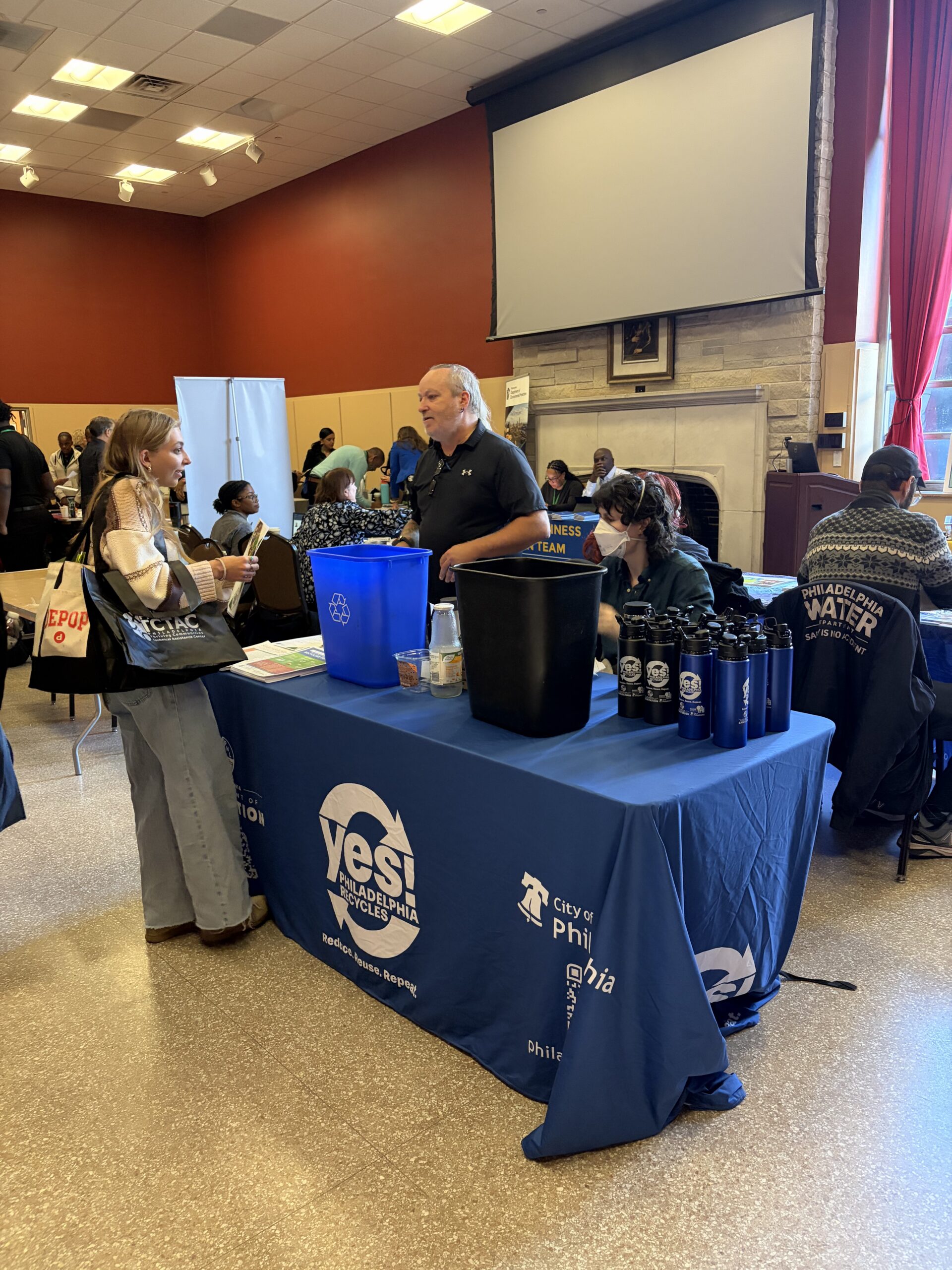
Attendees embraced Shirley’s advice at the resource fair later that day, where they gathered to network, exchange strategies and share information.
Dionna Davis, a program manager for the City of Chester’s Lead Safe and Healthy Homes Program, stood in line to speak with representatives from the Lead-Free Promise Project.
“We’re a new program,” Davis said. “I’m hoping to adopt some of their best practices to get our program off the ground.”
Nicole Koedyker, who runs a green jobs training program at the Philadelphia Energy Authority, said she’d already spoken with representatives from five organizations to learn more about their labor needs, so that she can connect her trainees to jobs when they graduate from her program.
“It’s very helpful to have everyone in one place,” she said.
Koedyker acknowledged that the funding landscape for environmental organizations has been challenging since January 2025, with federal cuts resulting in nonprofits competing against each other for a limited number of philanthropic grants, but said she was feeling inspired.
“It feels like there is a level of hope at the conference today, with the election coming up and the capacity building everyone’s doing here.”