Driving through the Main Line’s older neighborhoods, you’ll find American beech trees towering above you, with smooth gray trunks, thin bark, and some with carved initials from decades past. Their broad canopies shade properties that have stood for a century or more. These slow-growing, long-lived trees are irreplaceable and central to the character of many neighborhoods. Sadly, these stately trees are facing a serious threat called Beech Leaf Disease.
Beech Leaf Disease (BLD) was first identified in Ohio in 2012. It has since spread across the eastern United States and is now confirmed in every Pennsylvania county, with severity increasing in our area since 2022. Every species of beech is susceptible including American, European and Oriental. Although the dark-leafed copper beech can mask early symptoms for a longer period of time, they too are at risk and should not be overlooked.
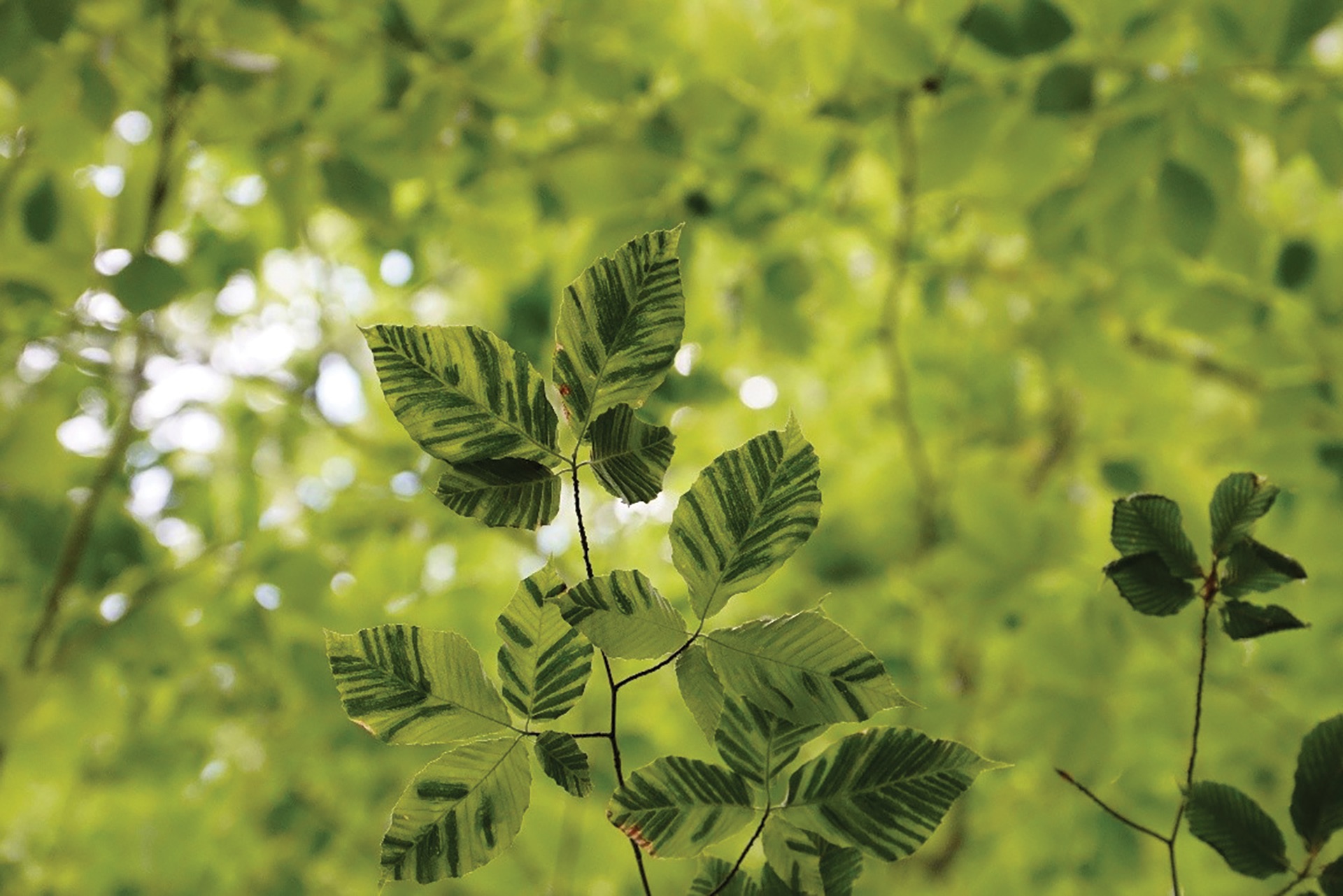
The cause is a microscopic worm called a nematode. It lives inside developing buds through the winter and feeds on them before leaves emerge. This results in dark, striped banding between the leaf veins, followed by leathery, curled foliage, thinning canopies and branch dieback that gives them a torn or ragged look. Left untreated, an infected tree can die within three to seven years.
What makes BLD particularly serious is how rapidly it is spreading. Rain, wind, birds, insects and mammals all appear to move the nematode from tree to tree, meaning even well-maintained, healthy-looking trees are at risk.
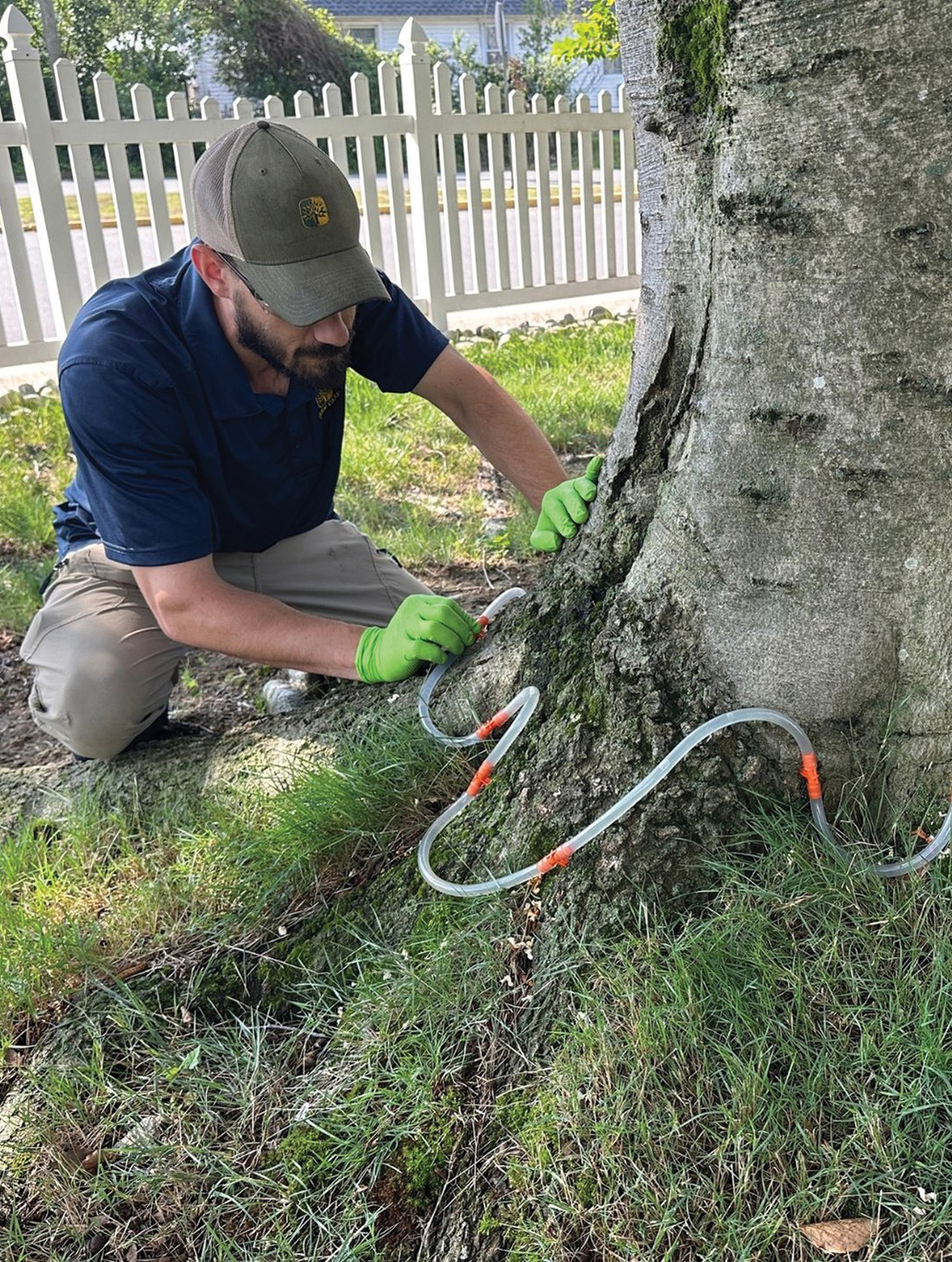
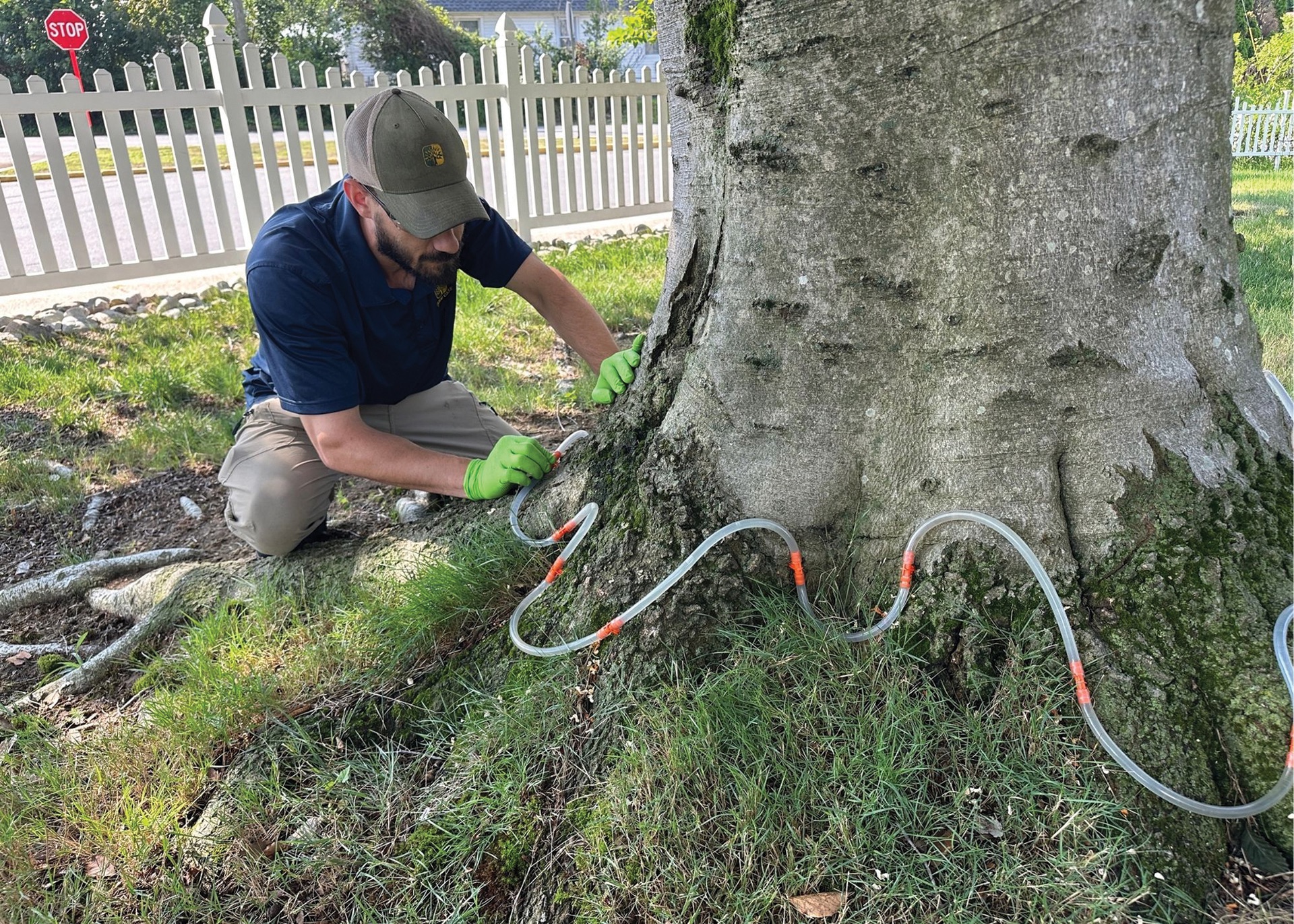
The good news is that there are treatments to protect your beech trees. While there is currently no immediate cure, trunk injections and, for smaller trees, foliar treatments have proven highly effective at slowing the disease and protecting the foliage. Treatments are performed between May and early August, before next year’s buds are fully formed. Additionally, trunk-applied phosphites will help strengthen cell walls and improve vitality. Soil fertilization is often part of a complete treatment plan to restore soil nutrients and the trees’ vigor.
My advice to any homeowner with a beech on their property is not to wait for obvious decline. Walk your property and look up into the canopies on a sunny day, when banding is often visible from below before it’s obvious from a distance. If you see signs or if you are unsure if your trees show signs, call a certified arborist promptly.
Beeches take up to 40 years to bear their first nuts and can live well past 200 years, providing shade and beauty in our neighborhoods, while serving as a reliable food source to wildlife. They are worth fighting for and with early action, many can be saved.
For more detailed information, visit Penn State Extension’s guide to Beech Leaf Disease: extension.psu.edu/guide-to-beech-leaf-disease-for-the-public.
Steve Shreiner is an ISA Board Certified Master Arborist and founder of Shreiner Tree Care, a family-owned and -operated TCIA-accredited company. His staff of ISA-certified arborists has served the Main Line and greater Philadelphia region for over 40 years.