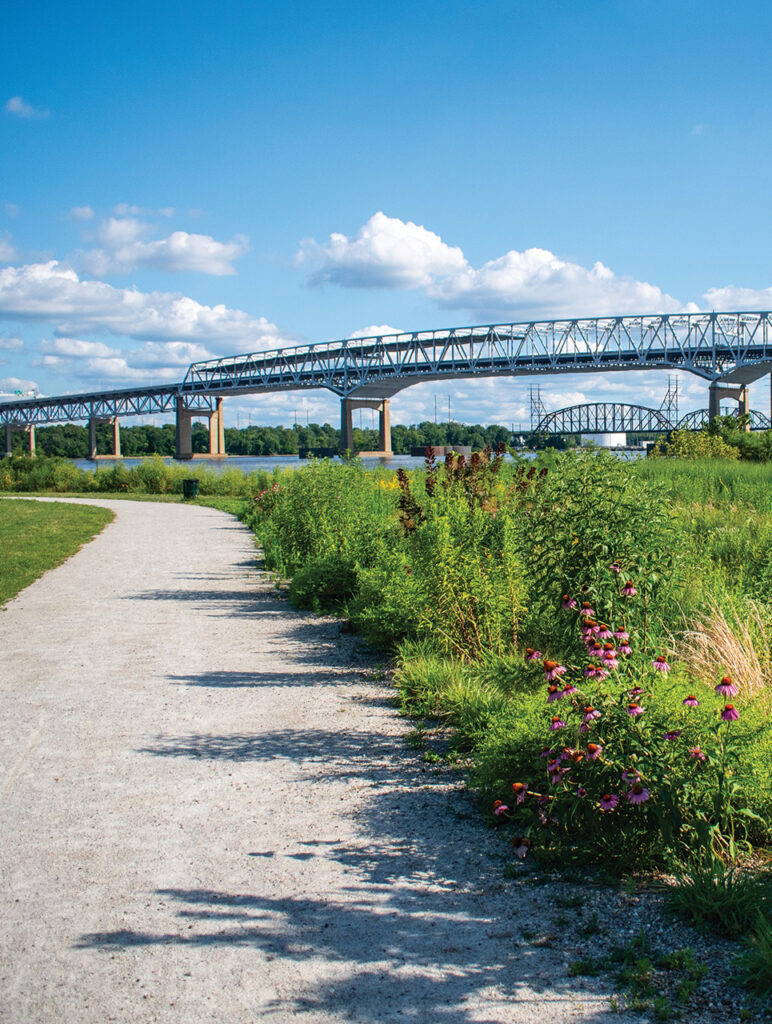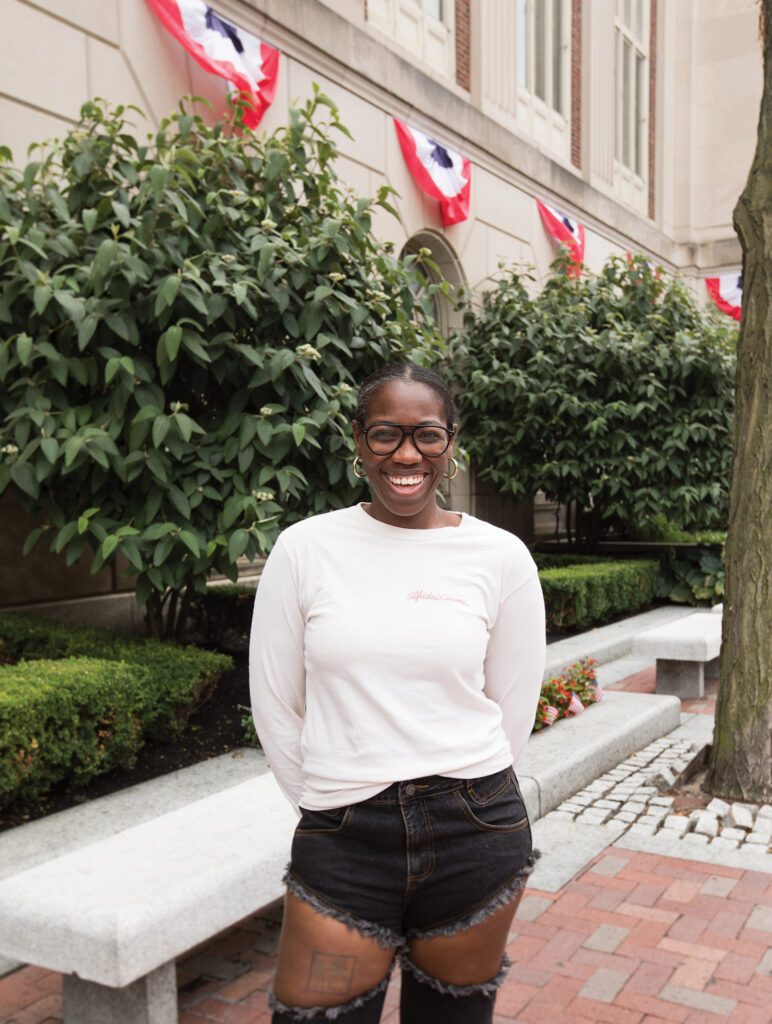
Octavia Nash was back for more. She had joined a friend for a paddle on the Delaware River with Camden’s Center for Aquatic Sciences once before and returned for a free kayaking session at Pyne Poynt Park in mid-July, this time with her fiancée. “I like the peacefulness,” she says. “Oh my God, it’s like you leave all the hustle and bustle behind, and you just get to be on the water.” Pyne Poynt sits near where the Cooper River meets the Delaware, facing Petty’s Island, whose lush green tree line mostly blocks the view of the Philadelphia waterfront.
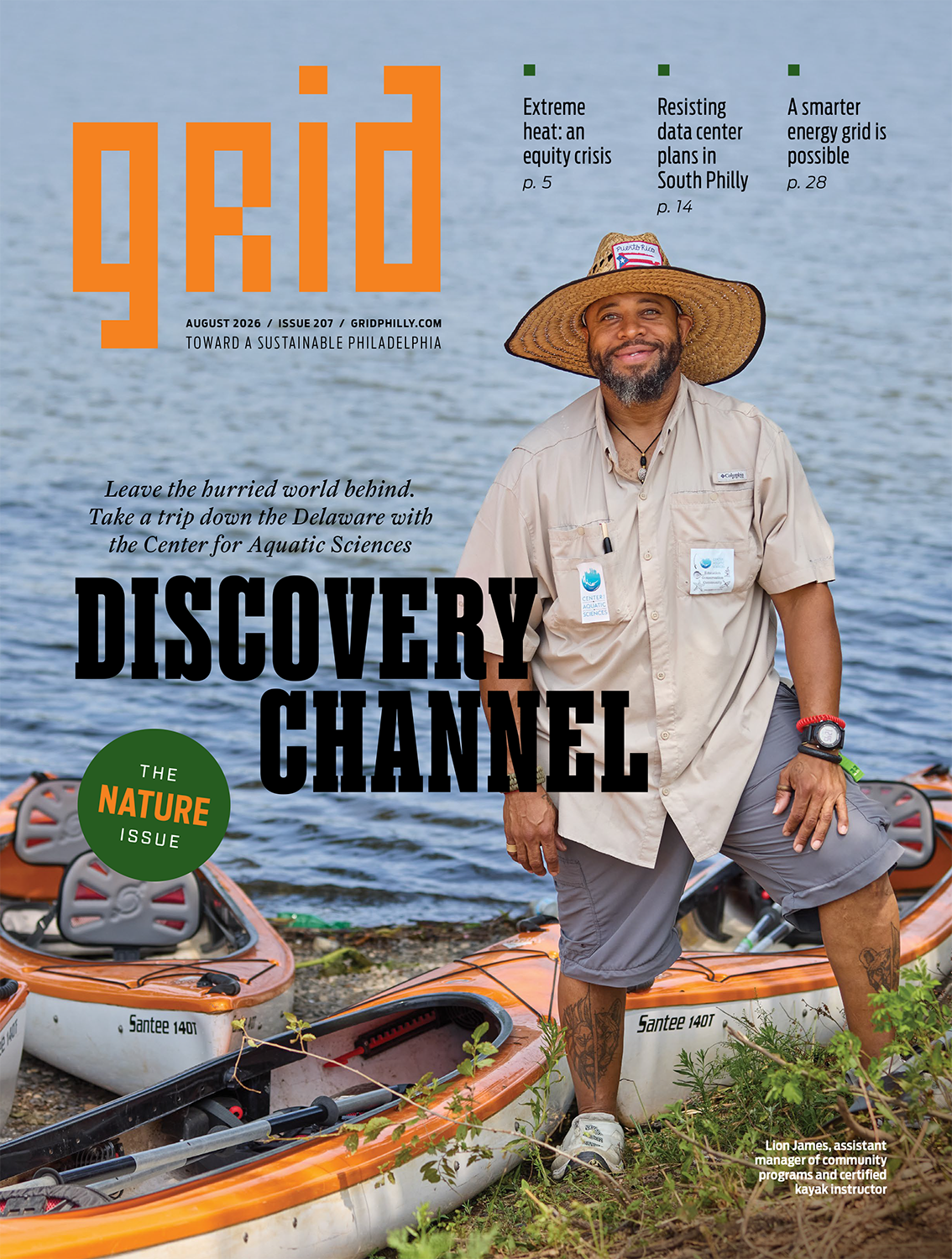
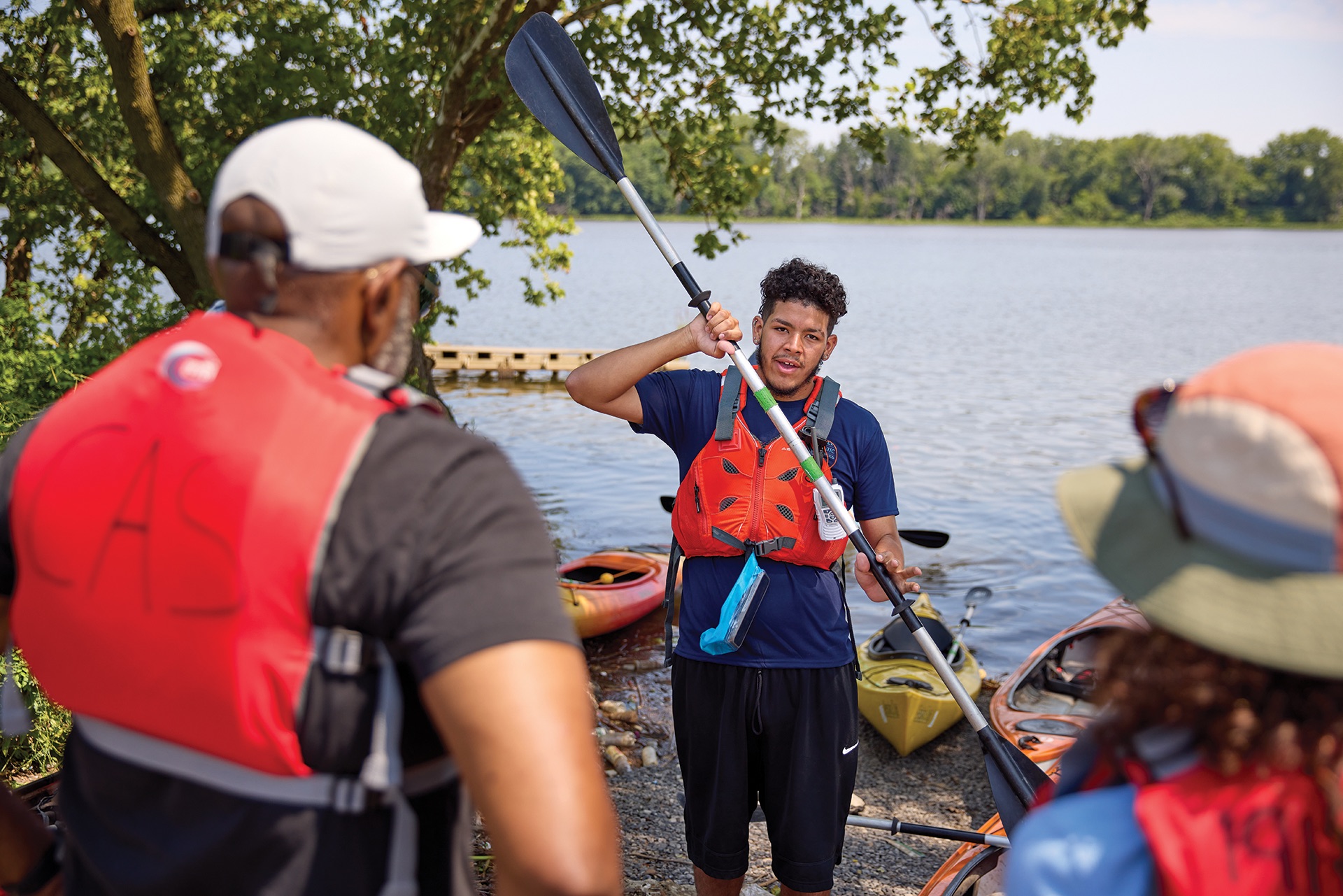
Lion James, assistant manager of community programs for the center, briefed the group of paddlers on safety and outlined the plan for their trip. Camden teens taking part in the center’s Community and Urban Science Enrichment (CAUSE) program passed out life vests and checked that they fit properly (if you can lift the vest over your ears, it’s too loose). Three of the more experienced teens waited at the gravel boat ramp to guide the trip.
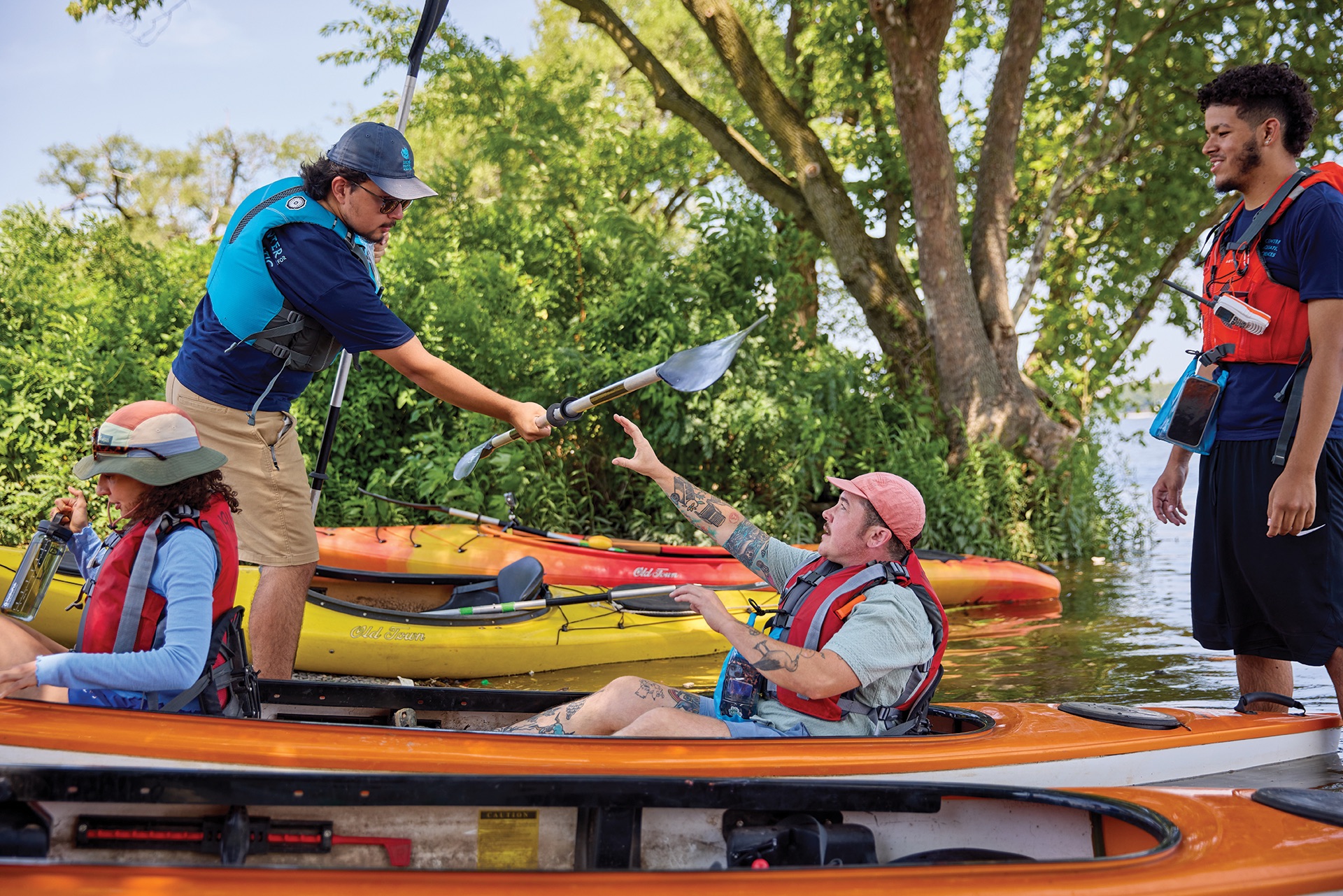
Luis Colon helped attendees into their boats before joining them on the water. Colon, who will start his second year of college in the fall, has been in the CAUSE program for seven years, starting in high school. He has spent the last three of those years as a paddling guide. Like Nash, he appreciates the peace that comes from leaving the land-based world behind. “We’re always so busy with work and school. It’s all about, oh, let’s get onto Canva. Let’s get onto Outlook. Let’s get onto Gmail. Let’s get onto this and that. It’s really nice to disconnect and really see what’s here in Camden compared to what’s on your phone and computer.”
“I’d say the best part is community engagement and being one with nature — the fact that I can do both at the same time,” says Jian Karlo Lopez-Jimenez, who graduated from high school in June and has been in CAUSE for five years. Lopez-Jimenez described seeing a bald eagle fly overhead from Petty’s Island, which sits in the Delaware across from the boat ramp. “It was 10 feet above us, max. Seeing the broad wingspan, everything, it was just breathtaking.”
“I’d say the best part is community engagement and being one with nature — the fact that I can do both at the same time.”
— Jian Karlo Lopez-Jimenez, Community and Urban Science Enrichment participant
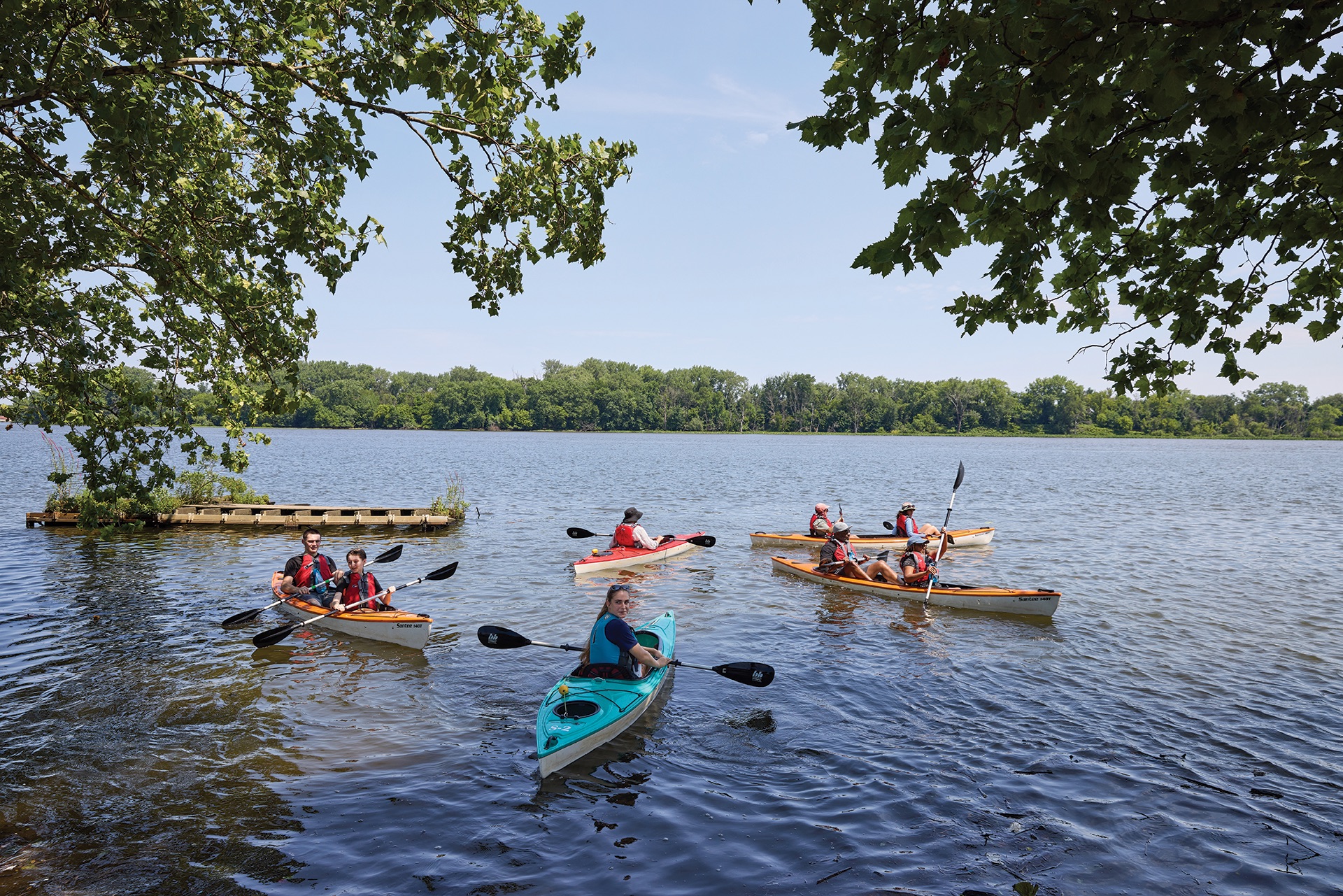
The Center for Aquatic Sciences started offering kayaking programs in 2017. “Originally, it was to get school groups on the water and work with children in the community,” says Amy Durkin, the center’s marketing and sales manager. People passing by would ask about the outings, prompting the center to expand the program to include free public kayaking events.
After 45 minutes, the kayakers returned. This was Mo Atia and his sister Ranem’s first trip from Pyne Poynt. “I was going to go to the beach, and I called up my sister,” says Mo. “She said, ‘We’re going kayaking.’ I agreed.”
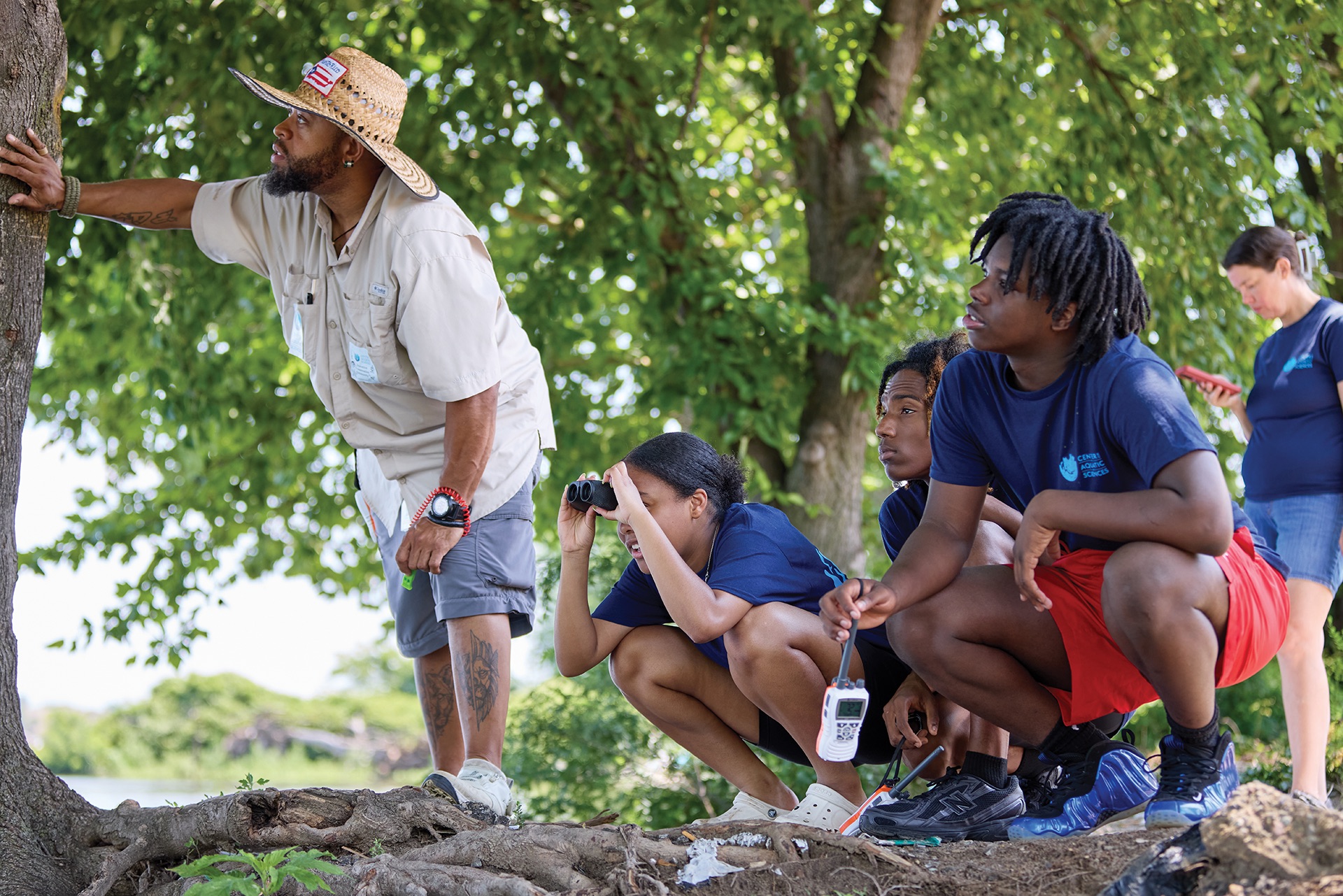
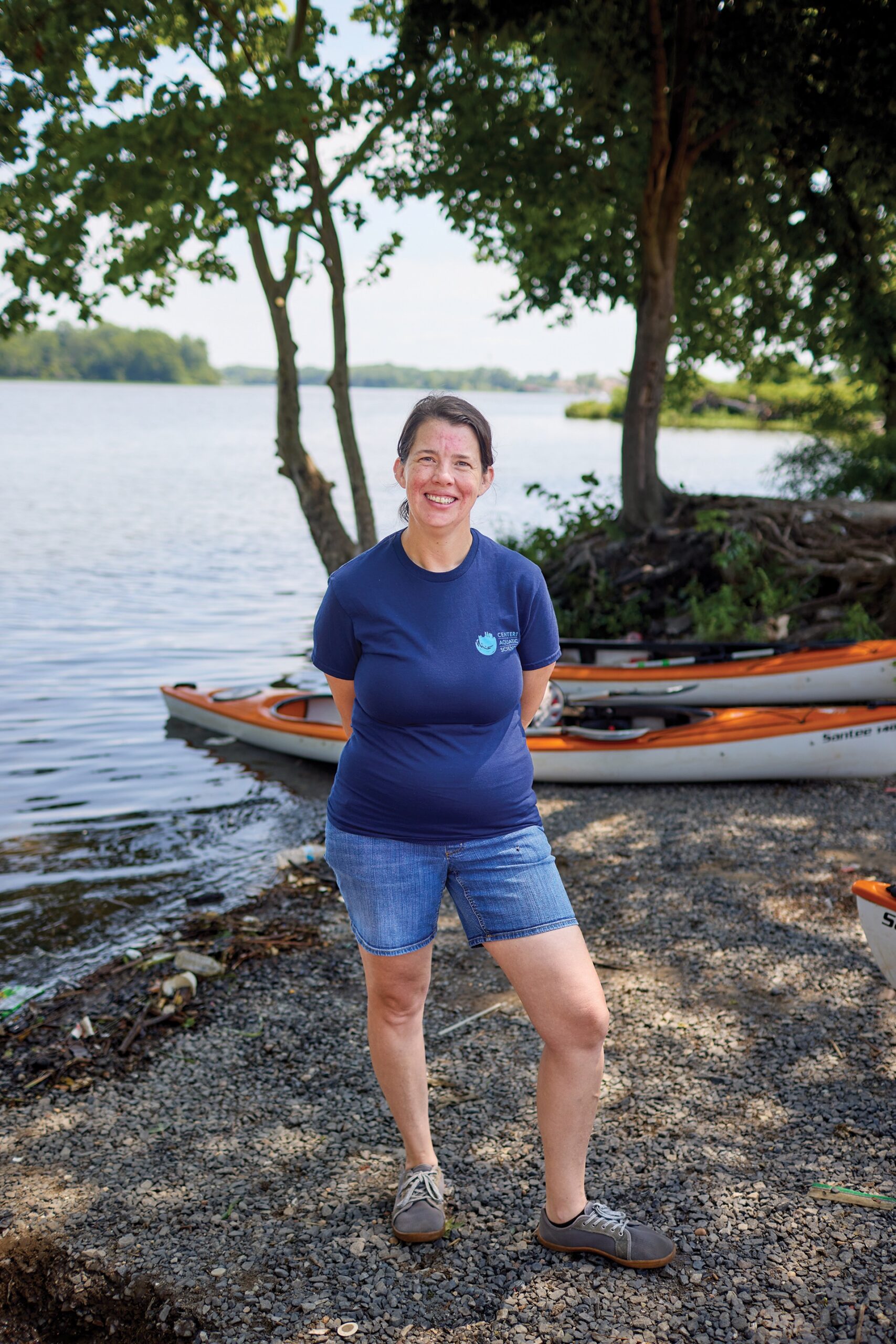
Ranem says she paddles a lot, but this was her first time in the back channel behind Petty Island. “I learned a lot,” she says. As they paddle, the guides discuss watershed issues such as combined sewer overflows.
“This is the next generation of those who are going to take care of the green spaces and waterways,” says Lion James, looking at the local teens staffing the program. “Kayaking has long been something that you could do on vacation, right? And only if you have the means and the access and the environment to do it.” He says youth from communities like Camden — largely Black and Brown — don’t see themselves as belonging in the outdoors. “We have everything we need, except for that spark that gets young people interested and involved. And if we don’t do it, they’ll continue to look at this resource as just a backdrop instead of a means for mental health improvement and recreation and exercise and so on.”