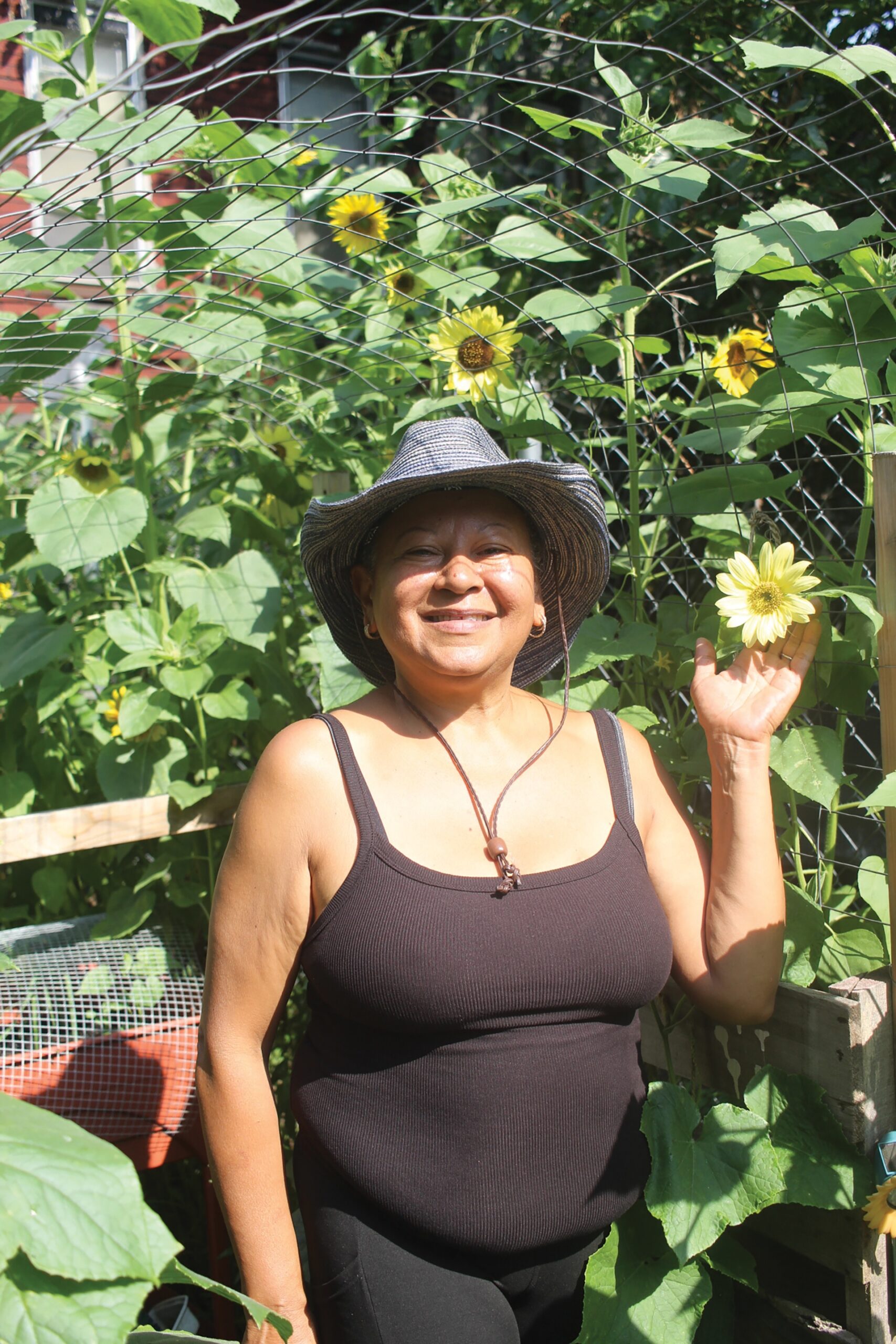
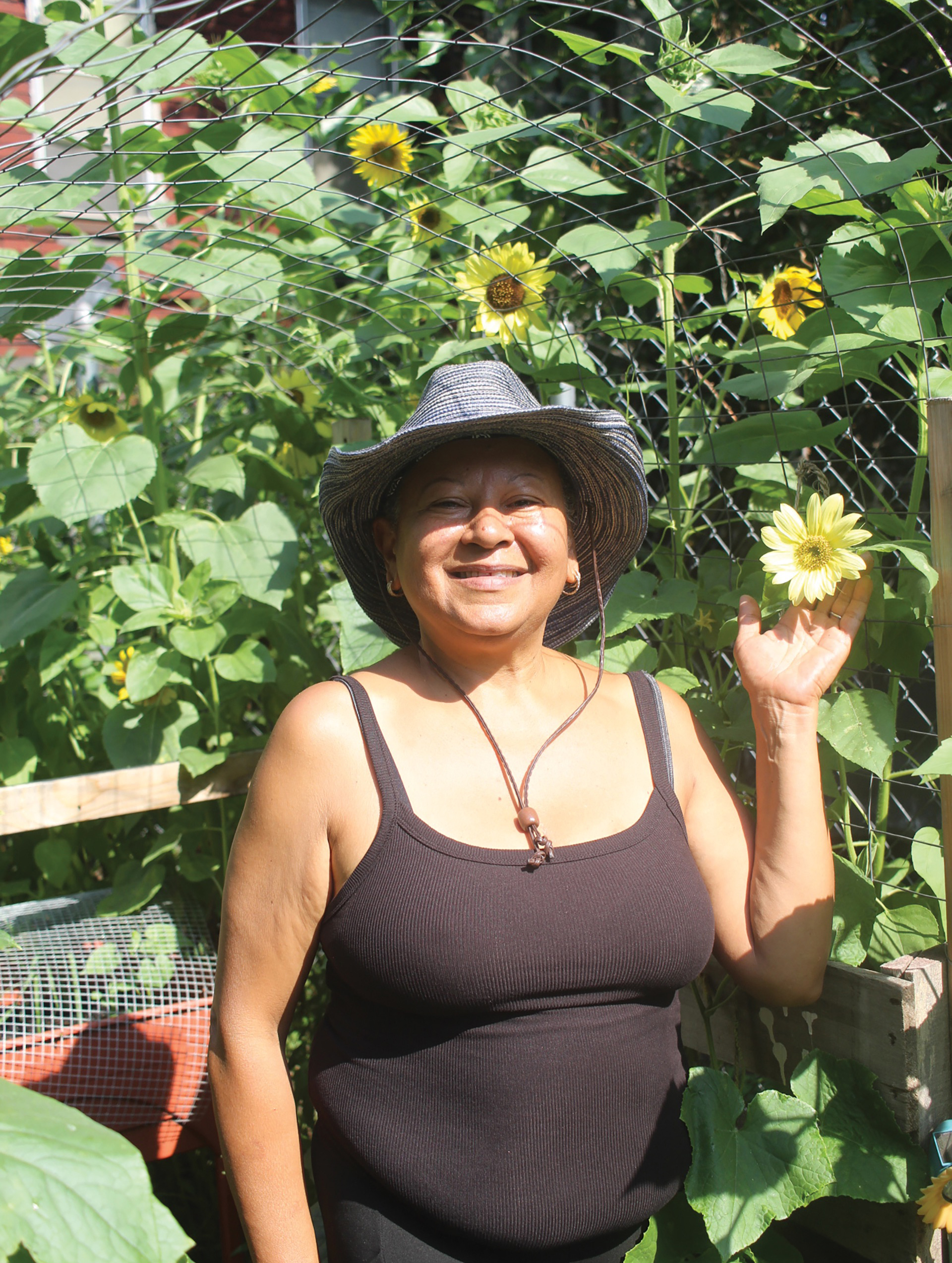
Wanda Lebron’s garden has an open-gate policy. From morning to night, the entrance, framed by sunflowers, is left unlocked so neighbors can stop in to chat, rest or harvest a vegetable from one of the raised garden beds.
But each day, Lebron wakes up knowing that she could lose everything she and her neighbors have built. She does not own the lot where the garden sits. No one has heard from the owner for the roughly 30 years she’s worked on the plot.
“I have been trying to acquire the lot from the City,” she says. “They say there’s nothing they can do. If I can find another lot that’s on the block that’s owned by the City of Philadelphia, I can try to go for that one. … But we didn’t want to do it, because we was working on this so long. We don’t want to start on another lot.”
Thousands of others are in the same boat. Nearly a third of Philadelphia’s 40,000 vacant lots are stewarded by volunteers who don’t have legally recognized rights to the land; those volunteers are at risk of losing all of their work, which can include community spaces they built with their own funds. These lots are concentrated in mainly lower-income neighborhoods and predominantly nonwhite communities.
That’s why Lebron was so excited last month when representatives from the Philadelphia Land Stewards Union knocked on her door and invited her to join their fight. The union, which grew out of Iglesias Garden, is an “organization of neighbors who use and care for vacant lots working together to solve our problems.” They’ve united behind a list of demands, beginning with official recognition by the City. That demand was met June 4, when City Council adopted a resolution introduced by Councilmembers Quetcy Lozada and Kendra Brooks recognizing the work of land stewards, stating the need for transparency and supporting the preservation of stewarded land.
The union also wants greater transparency from the Philadelphia Land Bank, including more complete public information about publicly owned land, pending applications and property acquisitions and dispositions. It is also calling for the land bank to follow its existing notification and processing timelines, and for neighbors to receive priority when applying to acquire vacant properties before developers can bid on them.
“I don’t think it’s fair or right that the City just ignores the ‘little people’ and give[s] these pieces of land to people who don’t even care about the neighborhood, who are not part of our neighborhood, to just build houses,” union member Dominique Johnson says. “These places can be used — have been used — for much more than houses. They are important to us. They’re not just pieces of land, they’re not just lots. These are places that we have been taking care of.”
A City-owned vacant lot sits adjacent to Johnson’s home. He has been maintaining the space for about 20 years. He’s tried to acquire ownership and says he has been met with silence from the City. Recently, the City removed a gate from the property, and Johnson received a notice that there are plans to develop on the land. A spokesperson for Councilmember Jeffery Young confirmed in a statement that the Expression of Interest process Johnson applied for the lot through was discontinued in 2020, and that the lot is designated to become affordable housing through Turn the Key.
Johnson says the union, which publicly launched in April, is building its membership and meeting with City Councilmembers as it works to advance its remaining demands.
“I wanted to get involved because it sucks when you think you have something of your own, and you use it to host family gatherings, cookouts, hang out with your friends, a space for maybe the neighborhood kids to hang out at, and then come to find out, you don’t really have it. You don’t really own it.”