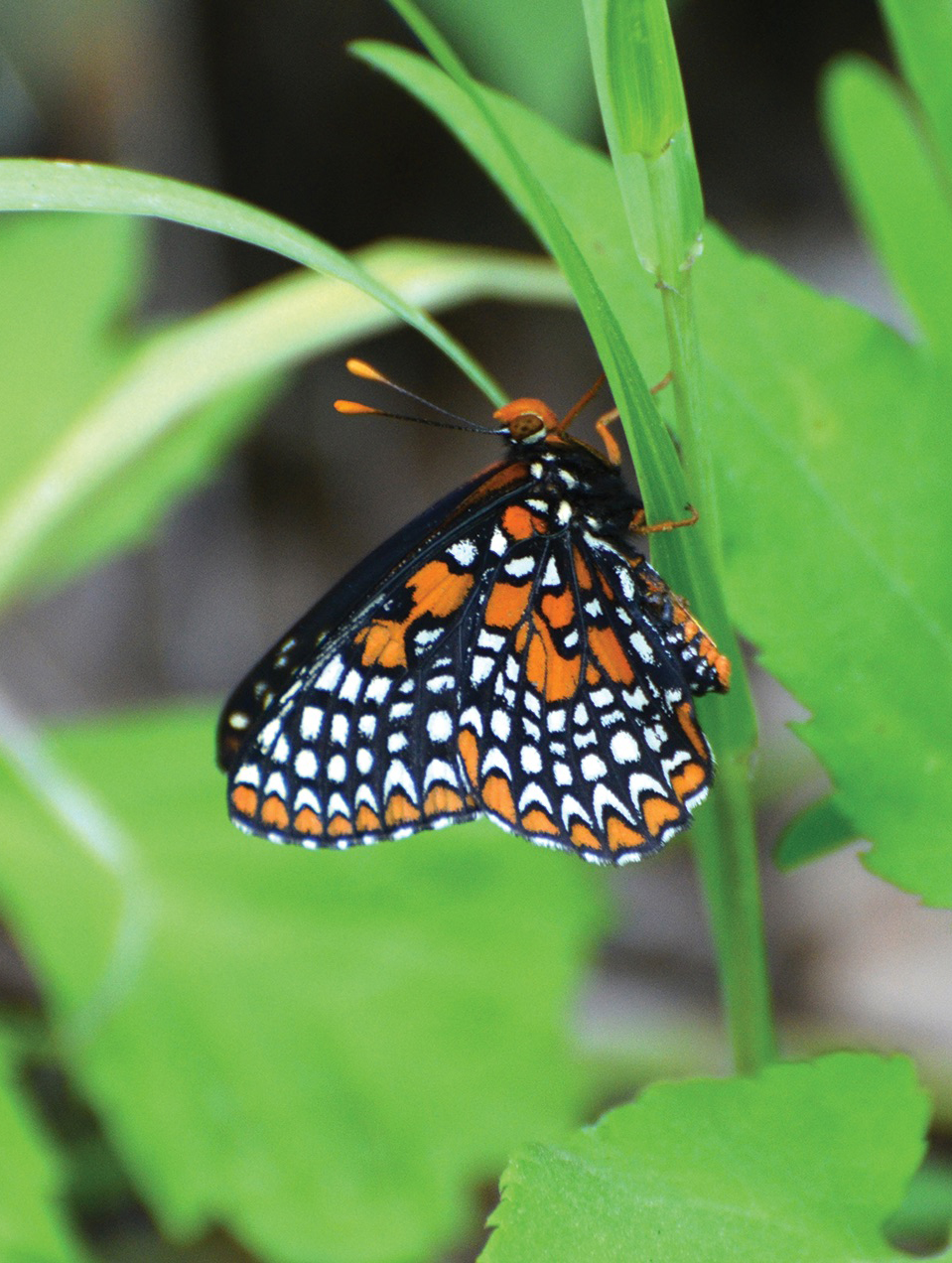
Maryland’s Department of Natural Resources is keeping an eye on Baltimore checkerspots. The once-common butterflies are in decline. They’re not rare enough to be endangered, but the state will be in a good position to step in if needed.
In the Keystone State, no agency is tasked with ensuring their survival. The Pennsylvania Fish and Boat Commission takes care of endangered fish, reptiles and amphibians, and aquatic invertebrates. The Pennsylvania Game Commission handles mammals and birds, and the Department of Conservation and Natural Resources (DCNR) protects plants. Terrestrial (land-dwelling) invertebrates fall into a regulatory gap, though a recently passed House resolution, introduced by Chester County state Rep. Chris Pielli, is starting to change that.
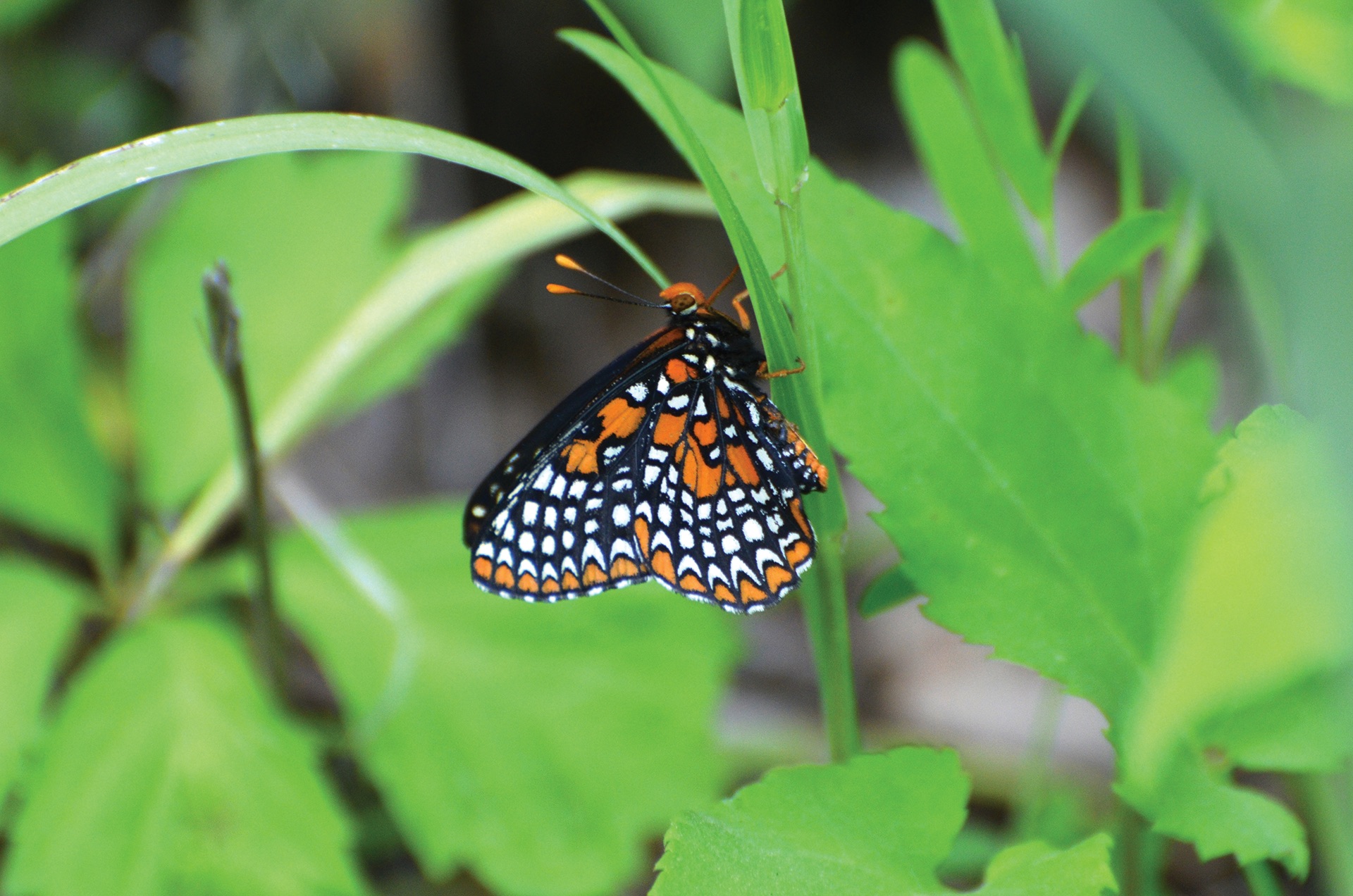
Baltimore checkerspots are black with rows of white and orange spots, and, like the oriole, they got their name because the pattern resembles the heraldic shield of George Calvert, the Baron of Baltimore, who established the colony of Maryland back in the 1600s. Their caterpillars only eat a wetland plant called white turtlehead. As their wet, shrubby habitat has declined, so have the butterflies.
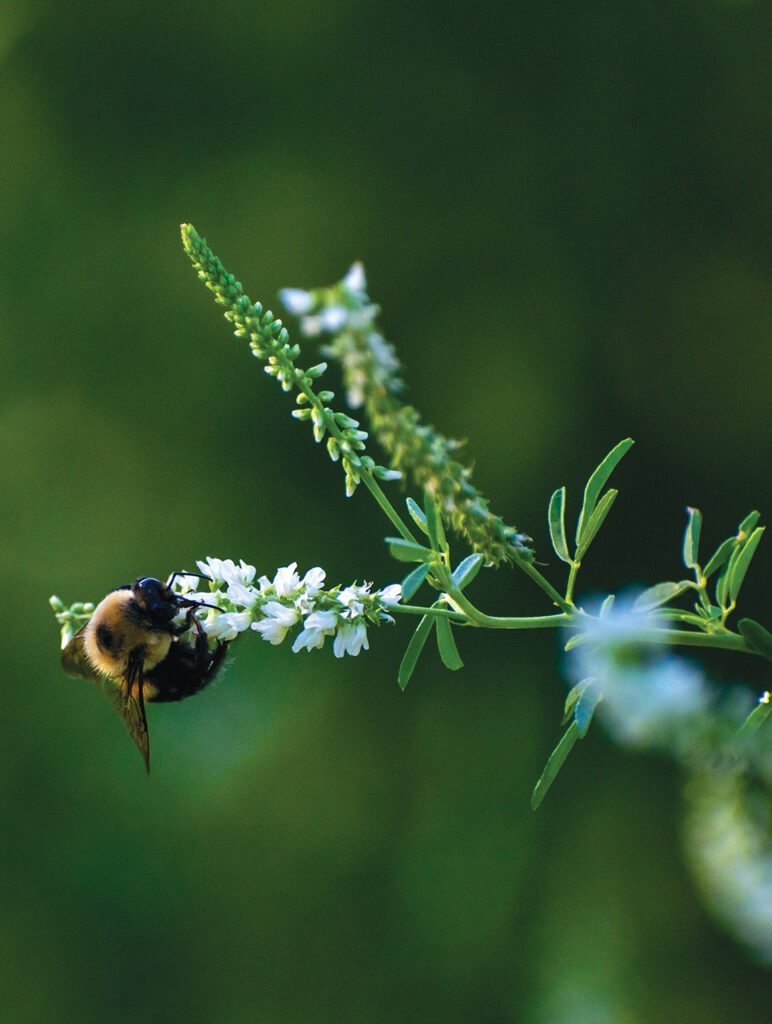
Baltimore checkerspots are far from the only bug whose population is slipping. “The insects that we’ve observed are declining extensively,” says Stephanie Wein, clean water and conservation advocate for PennEnvironment. And since scientists have studied relatively few of the thousands of insect species in Pennsylvania, “It’s just the tip of the iceberg,” Wein says.
Pielli’s House Resolution 66, which passed the Pennsylvania House of Representatives in May, kicked off a study of how state agencies assess the status of terrestrial invertebrate species and protect those in trouble. Conservation of insects and other invertebrates generally starts with protecting the plants they depend on, so Pielli expects that the study will point to DCNR as the lead agency. “The big thing 66 is going to do is help DCNR develop an effective insect conservation program,” Pielli says. The report should land this winter, but “some elements might be proactive habitat management and coordination with federal agencies like U.S. Fish and Wildlife. Having the ability to designate [species as endangered] is a needed tool in the toolbox and is a current gap — no agency has that authority.”
“We should get a good snapshot of what the state is doing already, what are the gaps that need to be filled and what are other states doing that we can mimic,” Wein says.
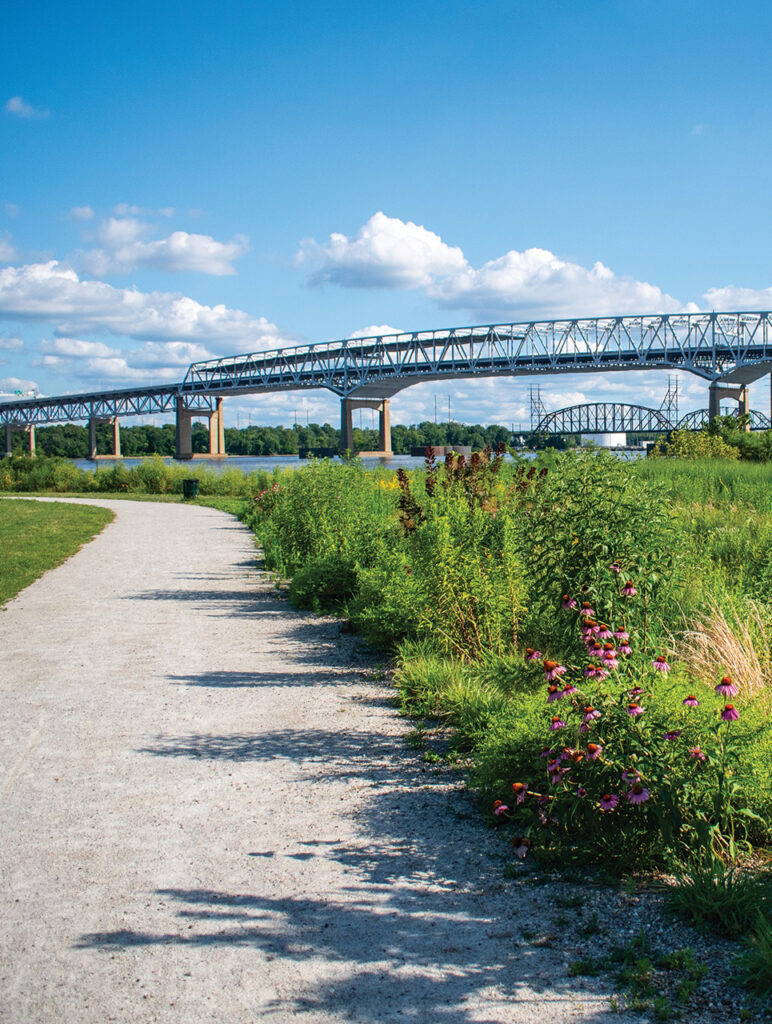
Pielli sees momentum building for wild insects with bills passed to promote native plants, which feed wild insects. In June, House Bill 426 passed with an overwhelming bipartisan majority. If a companion bill passes the Senate, the legislation will prioritize the planting of native species on the grounds of state properties. It builds on Act 37 from 2024 that did the same for native plantings along highways.
Pielli has also introduced a bill (House Bill 441) that would assign the responsibility for terrestrial invertebrates to DCNR. “It did pass the state House, but it did along party lines,” which does not bode well for the Republican-controlled state Senate taking action, Wein says. “When I look at that party-line vote, it says ‘Let’s make a clearer case for why we need to act on terrestrial invertebrate protection.’ I think the report [from HR 66] will do that.”