
It was a muggy morning in mid-August and parents were gathered inside The Academy at Palumbo High School’s cafeteria, chatting animatedly over coffee and biscuits. The occasion was the First-Year Student Breakfast, an annual event the school’s Home and School Association (HSA) hosts to connect new families with school staff and parent volunteers. The meeting had been running for nearly two hours when parents began asking about Palumbo’s tech policy. Edwin Mayorga, a Palumbo parent and HSA member, saw an opportunity to ask a question that had been on his mind — what, exactly, was the school’s stance on AI?
“I knew I was kind of opening Pandora’s box right at the end of the meeting,” said Mayorga, acknowledging that AI is a thorny topic for schools looking to strike a balance between preparing students for the future and protecting them from technology’s potential harms. He said the school staff members present at the meeting provided a brief answer to his question, but added that the school’s AI policy is “still very vague to me, which I don’t think is usually a good recipe for good education.”
Proponents say artificial intelligence has the potential to transform education by saving teachers time and personalizing curriculum, but research shows that AI tools can undermine student learning and stunt cognitive development. A recent report published by the Brookings Institution found that the risks of incorporating AI into classrooms currently outweigh the benefits. The School District of Philadelphia has taken steps to restrict student access to AI by limiting student use to ninth through 12th grade classrooms and publishing a set of AI guidelines, but some parents say they still lack information about how their children are engaging with AI at school.
“The school district is not communicating about this,” says Keren Sofer, whose son attends the Science and Leadership Academy Middle School in University Village.
It’s not a good idea for kids to have free reign on these incredibly powerful AI chatbots. We really don’t want young people to have AI do their learning for them.”
— Rebecca Winthrop, senior fellow and director of the Center for Universal Education, Brookings Institution
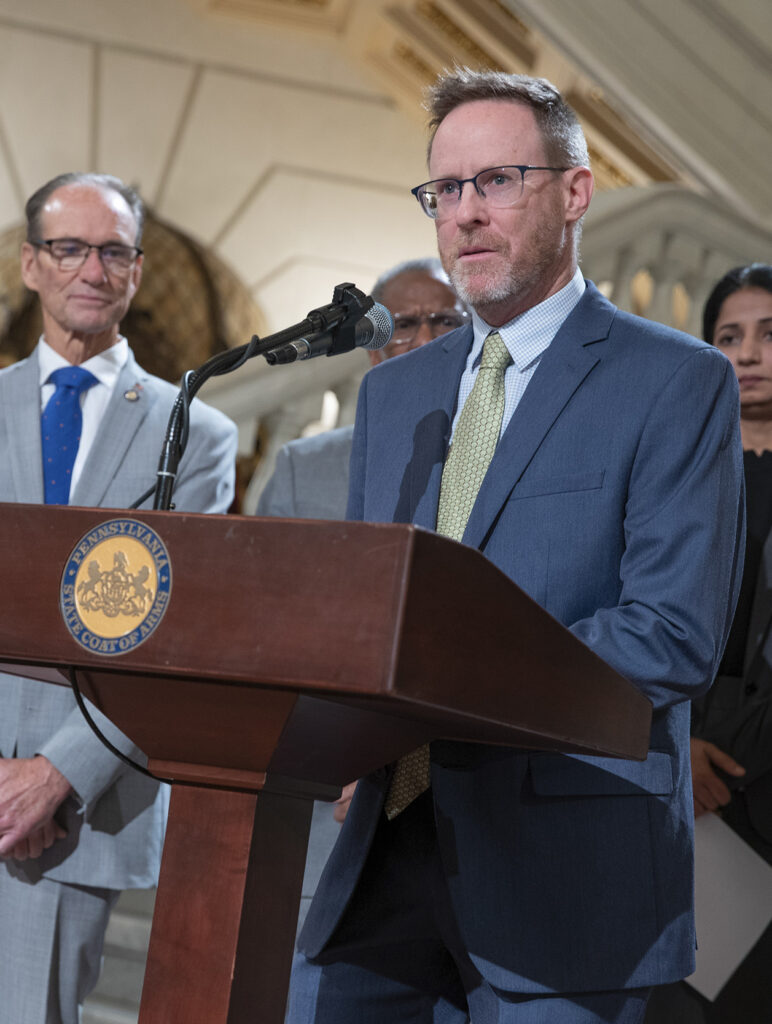
Philadelphia high school students have access to Google Gemini, a generative AI assistant, but the district’s AI guidelines do not explain how schools are to prevent students from using the tool to replace their own writing and thinking. Without proper guardrails, generative AI tools can undermine student learning and social-emotional development, says Rebecca Winthrop, co-author of the Brookings Institution report. “It’s not a good idea for kids to have free reign on these incredibly powerful AI chatbots,” she says. “We really don’t want young people to have AI do their learning for them.”
The School District of Philadelphia did not respond to multiple requests for comment.
Kate Reber, an English and history teacher at Bodine High School, says that she takes extra steps to “AI-proof” her assignments, including reviewing the editing history of her students’ Google Docs to make sure they aren’t relying on Gemini to compose written assignments. She says that the work required to ensure students don’t misuse AI has “created an additional burden” for humanities teachers.
Not all teachers are as careful about “AI-proofing” their assignments as Reber. Michelin Delgado, a junior at Central High School, said that many of her classmates turn to AI to complete their assignments.
“The students that use AI — you can see it in their grades,” she said. “If you don’t understand something, it’s better to learn it yourself instead of continuing to use AI.”
AI tools could end up exacerbating social divides, Winthrop says, because under-resourced school districts are less likely to retain experienced teachers, like Reber, who put in the extra effort to make sure kids aren’t offloading their thinking to AI tools.
“It’s not just using the tools, it’s knowing how to change your assignments so that kids don’t bypass what you’re asking them to do,” she says.
Parents in other cities have started pushing back against AI tools creeping into classrooms. This fall, New York City Public Schools and the Los Angeles Unified School District announced one-year moratoriums on student AI use in response to mounting pressure from parents and activists. Mayorga says he’s “curious to see” if the changes in other school districts spur Philadelphia school leaders to communicate with parents about their AI policies more proactively.
“I really do hope there’s more conversation at the school level and the district level about what’s happening [with AI] and we don’t just bury our heads in the sand,” he says.
Schools don’t typically provide families with AI literacy workshops or information about AI’s risks and benefits, even though many parents say they want this type of support, according to the Brookings Institution report.
“Parents have very little engagement in [the AI] conversation that’s happening in education circles,” Winthrop says.
The report also found that parents have limited awareness of the benefits and risks AI poses to their children’s education, even though they play a critical role in monitoring their children’s use of AI to complete homework assignments.
Mayorga says that when his son Teo gets stuck on his math homework, he snaps a photo of the problem and drops it into an AI-powered app that instantly generates a solution. This is partly because Teo doesn’t have a math textbook he can use as a reference guide.
“When it comes to the homework side, I don’t blame my son for using AI because he doesn’t have these other paper-based resources to fall back on,” Mayorga says.
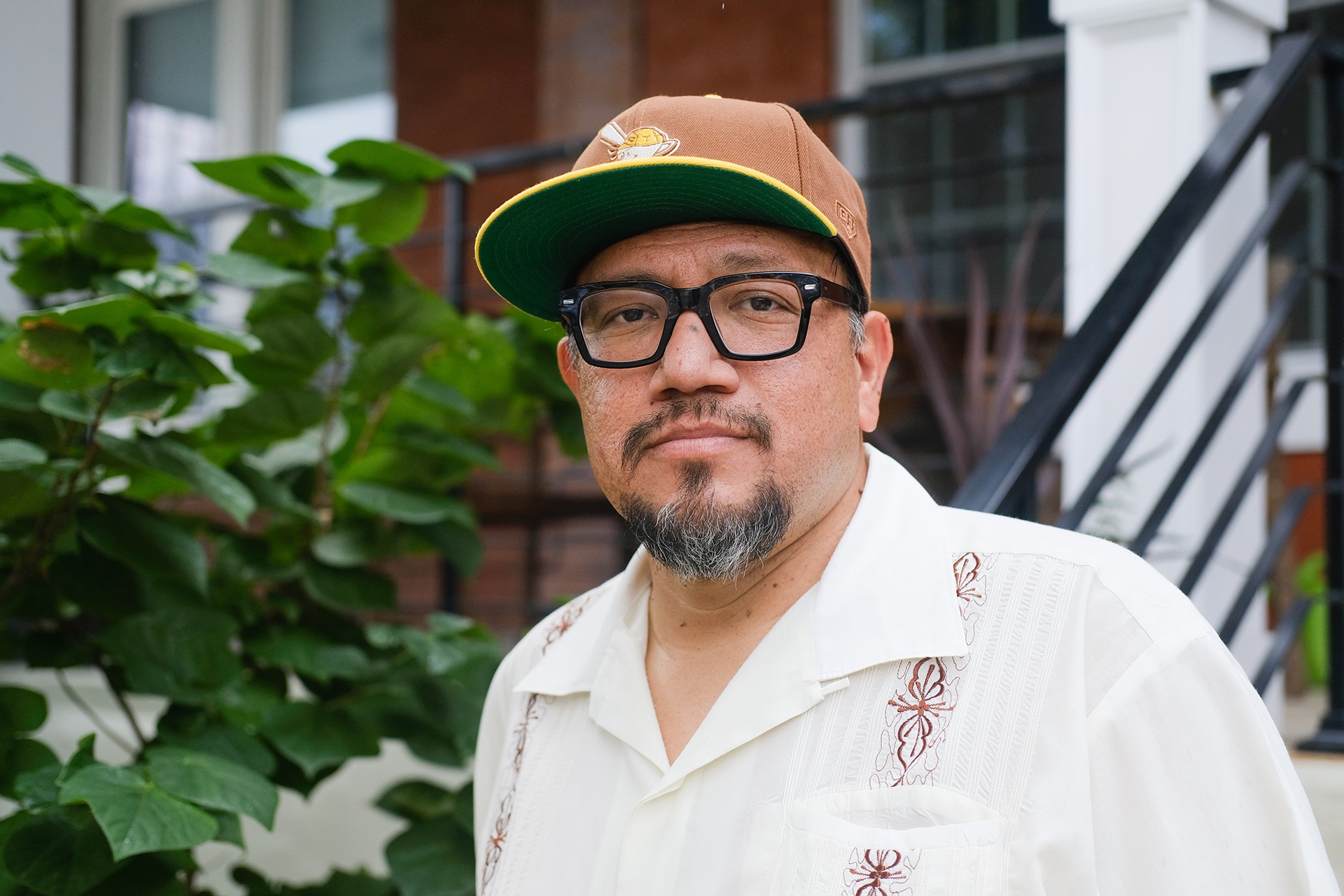
Philadelphia schools started widely using Google Classroom to share curriculum with students when schools closed during the COVID-19 pandemic. The platform acts as a convenient one-stop shop for teachers to share curriculum, post assignments and communicate with students, effectively sidelining textbooks and other paper materials, Mayorga says.
Mayorga and Sofer acknowledge that Google Classroom is a good organizational tool, but they worry that the district’s embrace of Chromebook-based learning also comes at a cost for students.
“Every minute they’re on their screens is a missed opportunity for a verbal, eye-to-eye contact, emotional exchange between two humans,” Sofer says. “My fear is that there’s going to be down-the-line impacts that are going to be really problematic.”
Mayorga also sees the push to integrate AI into classrooms as part of a larger digital learning trend that prioritizes exposure to technology and “career readiness” over more authentic learning.
“We really just lost sight of what learning is. That’s the heart of my frustration,” he says. “AI really just adds lighter fluid to a fire that was already simmering for a long time.”