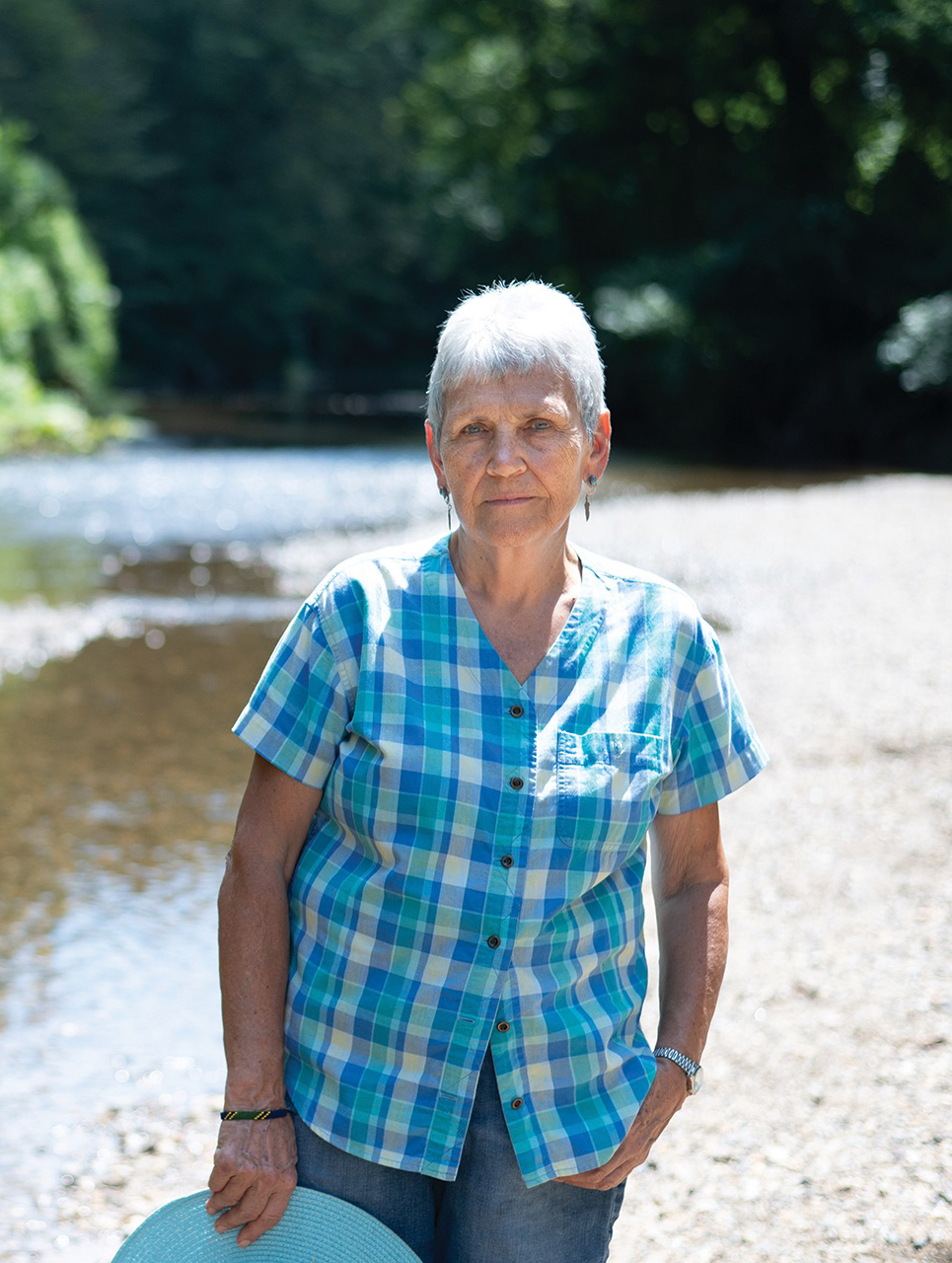
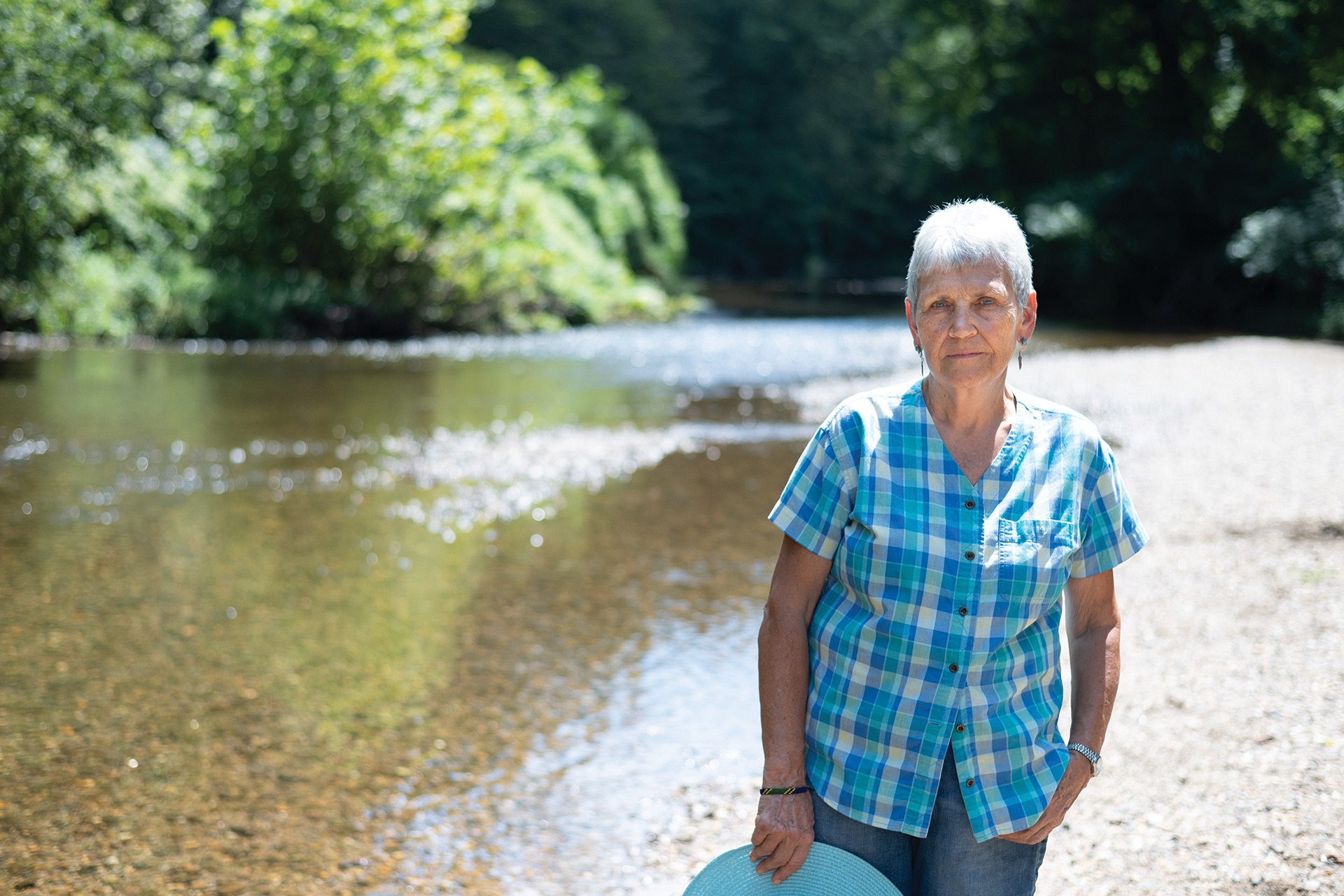
Sometimes Linde Lauff sees a pile of construction waste in Pennypack Park and thinks, that shouldn’t be there.
Not just in a general way in which, ideally, no litter should ever pollute a natural space, much less the enraging detritus left behind by short dumping. For her, the frustration is much more specific. A little over six years ago, Lauff was the president of the Friends of Pennypack Park, a nonprofit that regularly organized cleanups and otherwise cared for the 1,600-acre park that winds through Northeast Philadelphia. But after the families of two park users who suffered accidents sued the organization, the Friends group was left uninsurable in 2020 and dissolved.
Overnight, gone were the monthly cleanups during which volunteers spent nearly 1,000 hours a year hauling 4,000 bags of trash out of the park. Gone was the Tree and Trails committee, which planted over 2,000 trees in the park. And gone was a community of like-minded individuals who cared deeply for their local natural space and formed close bonds in the process.
Those people haven’t actually gone anywhere, Lauff says. She talks to many of them regularly, and some still perform smaller, informal cleanups. But what has disappeared is their sense of agency and ability to effect positive change in a substantial way.
“It’s hard to believe it’s been six years,” Lauff says. “People are still very much concerned about what happens in the park. And what will happen to the park in the future.”
Lauff’s sadness is mixed with bitterness. If there was a silver lining to the dissolution of the nonprofit, it was the possibility that what happened to it might serve as a warning to similar parks nonprofits in Philadelphia, of which there are more than 100, and a call for policymakers to implement protections for such groups.
But despite an effort by then-state Rep. Mike Driscoll to push through legislation to shield parks groups from similar liability after the group dissolved, nothing has changed. Park group leaders in Philadelphia still report regularly fielding inquiries from injured park users and are worried that they could suddenly face legal action.
We fear getting caught up in frivolous litigation if something happens at Tacony Creek Park, even though we don’t own the land.”
— Justin DiBerardinis, executive director, Tookany/Tacony-Frankford Watershed Partnership
“We fear getting caught up in frivolous litigation if something happens at Tacony Creek Park, even though we don’t own the land,” says Justin DiBerardinis, executive director of the Tookany/Tacony-Frankford Watershed Partnership. “God forbid someone has an accident. Someone gets seriously injured. Someone gets hit by a falling branch, someone drowns in the creek. That could pose an existential threat to this organization and the work that we’re doing to the community.”
This constant threat to parks nonprofits presents a particular problem in Philadelphia, where independent analyses have found that the cash-strapped city funds its robust park system at far lower levels than peer cities on a per-capita basis. That means Philadelphia also relies on philanthropy and volunteer hours from Friends groups to keep its parks clean and green far more than just about any other big city in the country.
Tony Sorrentino, chief executive officer of the Fairmount Park Conservancy, which organizes parks nonprofits across the city for various initiatives, says it’s an issue “on the radar screen” for many and can serve as a distraction from their core mission.
“We want [parks groups] to feel like they’ve got capacity to do their work,” Sorrentino said. “When they have to think about liability and about not being protected, it’s hard for them to focus.”
But, some still hold out hope for change. Tom Forkin, an attorney and former deputy director for properties and partnerships at Parks & Recreation who is now chief of staff for Driscoll — who left the State House in 2022 to become a City Councilmember representing the 6th District — says the councilmember is still working on potential policy solutions. Informed by the failure to get a bill that shielded parks nonprofits from personal injury lawsuits across the finish line in Harrisburg, Forkin says Driscoll’s office is reviewing state statutes to identify an approach that can win political support.
Forkin also said the office is waiting to see if political winds shift favorably in the fall elections, where Democrats are hopeful they might win the State Senate and take full control of state government. Either way, Driscoll and Forkin plan to try again.
“Do the Democrats win control? Do they get a bigger majority in the House? Then from there we can determine who the best champion will be,” Forkin says.
In the summer of 2013, a 13-year-old boy and his brother visited Pennypack Park with a few friends. Local media reports reveal what happened next: Like generations of nearby Philadelphians have done, the boys jumped into the creek at the site of a vestigial dam. But the creek, swollen with stormwater and with currents raging in a hidden pocket beneath the surface, overwhelmed the 13-year-old, who slipped under. His body was later recovered downstream.
In the aftermath, locals wondered what could have prevented the tragedy. Perhaps the City should tear down the dam, where drownings had occurred previously. Or regularly patrol or police the area.
The Friends of Pennypack Park had nothing to do with any of that, Lauff says, save one thing: sharing the name of the park. But that was still enough to be named in a lawsuit brought by the family of the drowned boy. Lauff says the nonprofit’s insurer hired attorneys to start fighting the suit, then decided to settle. Afterward, the Friends’ insurance premium went up.
Then came 2019, when the organization was sued again after a tree branch fell on a young girl visiting the park, causing her to be placed in a coma for several days. Lauff says the girl later recovered and that the Friends group again had no direct connection to the incident. But it was named as a party anyway, along with the City of Philadelphia, which owns the land, and a maintenance subcontractor.
Again, the nonprofit’s insurance company lawyered up. And again, they settled. But this time, the company informed the Friends of Pennypack that they would no longer insure them, and the nonprofit received similar rejections when it attempted to find a new provider. That left Lauff and other leaders with an untenable decision: carry on with their work and risk being held personally responsible for future incidents, or shut down.
“Why would someone want to take on that responsibility with a thought that you could be potentially liable?” Lauff says.
And so, in 2020, the Friends of Pennypack Park dissolved.
Parks advocates say it’s a danger many of them still face. DiBerardinis says his group, which cares for Tacony Creek Park, routinely fields legal inquiries of varying seriousness. In one recent case, DiBerardinis says, the nonprofit received notice that it was being sued after a woman tripped and fell in a part of the watershed in Montgomery County, even though his organization only operates within the city.
“I spent a good amount of time begging and pleading and making my case to the plaintiff lawyer that we did not own the land, that we’re an all-volunteer community group that does cleanups, and that we have nothing to do with this,” DiBerardinis said.
In that instance, it worked and the nonprofit was dropped from a suit. But that’s not always the case, and DiBerardinis dreads an existential lawsuit.
“The threat is always there, every year,” DiBerardinis adds.
Nonprofits that serve large, public spaces like the city’s watershed parks face particular challenges, says Sara Stevenson, the new executive director of the Friends of the Wissahickon. Prior to taking the role last January, Stevenson held the same title at Awbury Arboretum, a private nonprofit in Germantown. Because that organization owned its land, legal liability was “more expected,” but also thus accounted for. That’s a different dynamic than parks groups operating in public spaces, with little control over access or operational decisions.
“What comes with it is the ability to make decisions about the property, [while organizations] like Friends groups can’t make certain decisions about public land,” Stevenson says.
Parks advocates also say the risk is particularly acute for midsize parks groups, like the Friends of Pennypack was, that are just large enough to require an insurance policy and maintain financial assets, but lack the resources of major nonprofits, which often have wealthy donors or even high-powered attorneys who can work pro bono on their boards.
Lauff says that after the second lawsuit, confidants later told her that she should have pushed the insurance company to take the suit all the way to trial. But ultimately, the Friends of Pennypack was simply out of its depth legally and financially, and the insurance company appeared to cut its losses rather than drag things out.
“The costs of what Philadelphia lawyers charge and all the extra fees, it’s not cheap,” says Lauff. “That’s one of the main reasons, maybe the primary reason, that these companies choose to settle.”
Harrisburg, City Hall may hold solutions
Forkin, Driscoll’s chief of staff, says they were close to protecting parks groups when the councilmember was still in the State House in 2022. A bill Driscoll introduced to insert protections into a state law called the Recreational Use of Land and Water Act (RULWA) had passed unanimously, 200-0, out of the House. Then it cleared the Senate Community Economic and Recreational Development committee, a major hurdle.
Then, it died, under somewhat mysterious circumstances. Driscoll resigned his House seat in May of that year to move to City Council, and his bill went no further.
“We were waiting for a Senate floor vote in the fall of 2022, and that never happened,” Forkin says. “Something, somebody, started lobbying the Senate hard.”
Forkin says he doesn’t know who that might have been. But obvious guesses would be lobbyists representing either trial lawyers, the insurance industry or both.
Still, Forkin is a kind of Don Quixote on the issue. When he still worked for Parks & Rec in 2018, before joining Driscoll’s office in mid-2022, then-Commissioner Kathryn Ott Lovell tasked him with coordinating with Friends groups on the issue. He then carried that expertise over into Driscoll’s office, where he says he’s continued to search the state code for possible solutions.
After receiving feedback from attorneys that altering RULWA would “open up a huge can of worms,” by extending immunity in unforeseen ways, Forkin and Driscoll began to zero in on other potential state statutes that could be “easier to amend.” That includes a section of code that provides protections to public service volunteers, which could be amended to include nonprofit Friends groups.
“We’ve been kind of going back and forth on what we can get that will satisfy the various lobbying groups,” Forkin says.
Despite Driscoll now being on City Council, Forkin says he believes there is ample statewide support from lawmakers, and that his office already has a shortlist of state representatives who they believe would introduce a new bill.
“This came from Philly, but it wasn’t exclusive,” Forkin says. “We were getting support of statewide parks groups, statewide trails people, other Friends groups.”
Meanwhile, some park advocates wonder if there aren’t other solutions that could be had closer to home. Several noted that the City of Philadelphia self-insures and has an obvious self-interest in keeping the robust network of nonprofits caring for public parks both solvent and active. Could it take a more active role, perhaps by acting as a backstop insurance provider or providing some form of legal umbrella?
Stevenson, with the Friends of the Wissahickon, says she’s still catching up to the world of Friends groups less than a year into her tenure, but has already had these kinds of conversations with stakeholders.
“It makes sense — some kind of protection for the Friends groups that are doing such a civil service,” Stevenson says.
For its part, current leadership at Parks & Recreation say they highly value the role Friends groups play in caring for Philadelphia’s public spaces.
“They are an essential partner to what we do in all of our parks,” says Parks commissioner Susan Slawson. “They should absolutely be protected. They should be able to support us without having the responsibility — being concerned about [litigation.]”
However, Slawson said she believes Driscoll’s efforts are the right solution to lean into, and that she didn’t see a path toward the city providing any kind of direct financial compensation or legal support to Parks groups.
Lauff, who admits a certain sense of resignation, also doesn’t hold out much hope of a City-based solution. In her experience, that would take a level of interdepartmental coordination that she didn’t witness during her time with the Friends. In the end, she felt the City also could have made its own settlement over the 2019 incident contingent upon the plaintiffs dropping the Friends of Pennypack Park from the suit, if only the city’s Legal and Parks departments coordinated better.
“And my organization winds up being the victim,” Lauff says.