
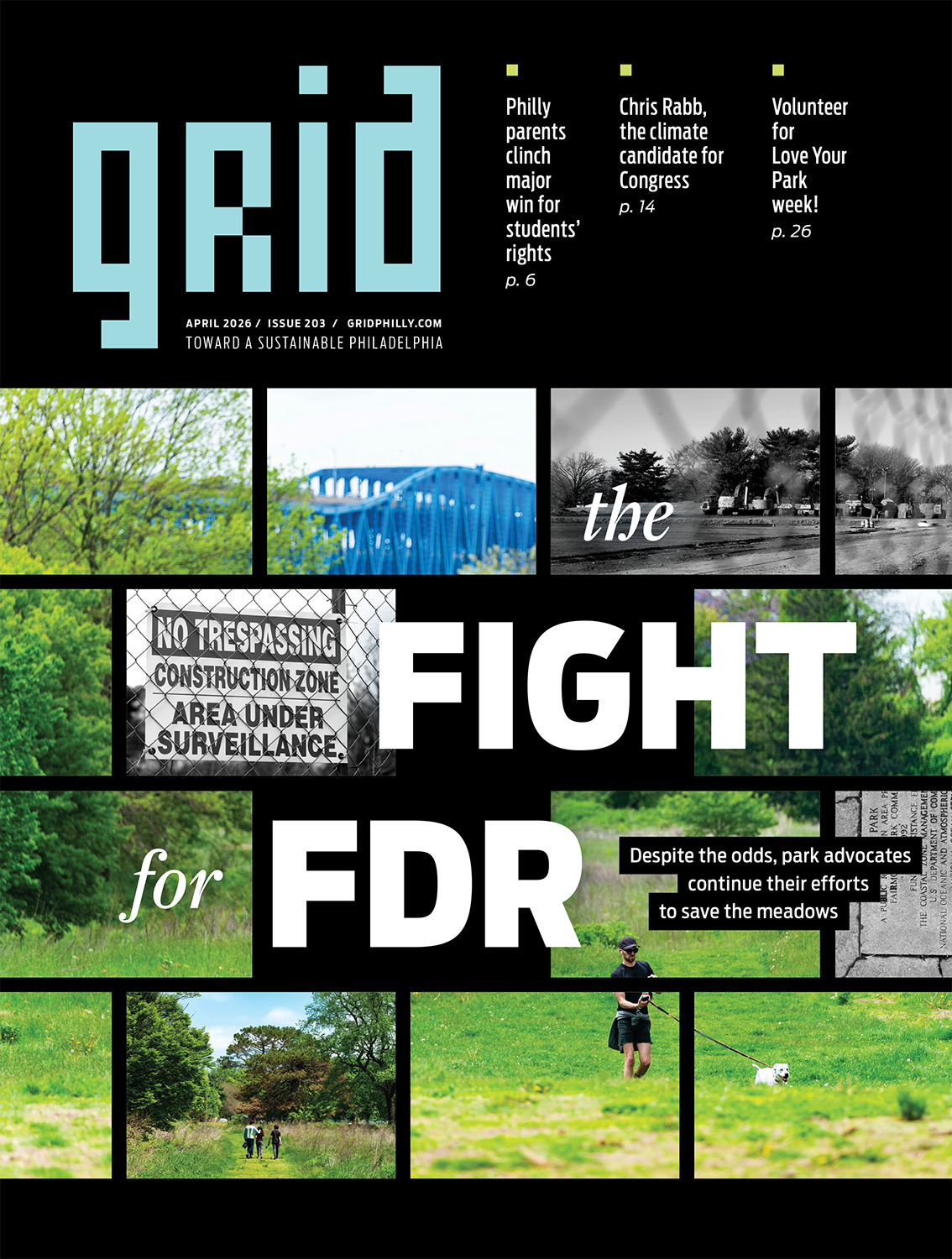
If not for the COVID-19 pandemic, the plan to renovate Franklin Delano Roosevelt Park in South Philadelphia might have proceeded without significant opposition. Workplace lockdowns and virtual schooling drove people outdoors to get some exercise and socialize in the fresh air. In South Philadelphia, many of them found the park’s shuttered golf course and fell in love with the landscape of meadows, picturesque trees and marshy water features, calling it the “South Philly Meadows.”
“To my delight, I discovered we have wilderness coming back in South Philly, a 10-minute bike ride from my house,” says Rich Garella, who lives in South Philadelphia and has been visiting FDR Park since he was a child.
Fans such as Garella and Anisa George were horrified to learn that the Meadows were mostly doomed. The park’s master plan called for parts of the Meadows to be excavated to create wetlands. Other sections would be filled and graded to create 16 playing fields, surfaced with synthetic turf and doubling as stormwater buffers, with storage tanks built underneath. All the trees in the way would be felled. Fans of the abandoned golf course formed a group called Save the Meadows to advocate for the space.
We don’t want any more trees to be cut. We don’t want toxic turf, and we want a pause in the plan.”
— Anisa George, Save the Meadows
Garella, George and eight others filed a lawsuit in Philadelphia Orphans’ Court on March 25, 2024, to force the City to stop the renovation and restore the park to its pre-renovation state. “The overall thing is we want to stop the bleeding,” says George. “We don’t want any more trees to be cut. We don’t want toxic turf, and we want a pause in the plan. We’d like a better plan.”
Rick Kowalski, who walks in FDR Park every day, was the only visitor Grid spoke with on a sunny March afternoon who knew about the park’s master plan, released in 2019, and the lawsuit opposing it. When asked what he thought of the plan, he said he is eager to see the boardwalk that will allow park visitors to explore the wetlands, which are under construction in the western part of the park. “I can’t wait for that to be done,” he said.
Kowalski is not a fan of the synthetic turf surface of the 16 new athletic fields. “It’s a shame that they have to put in artificial turf. If it does have some chemical in it, that’s going to be a problem.” More than anything, though, Kowalski says he is eager for the renovation to be done, though he sympathizes with the people suing to stop it.
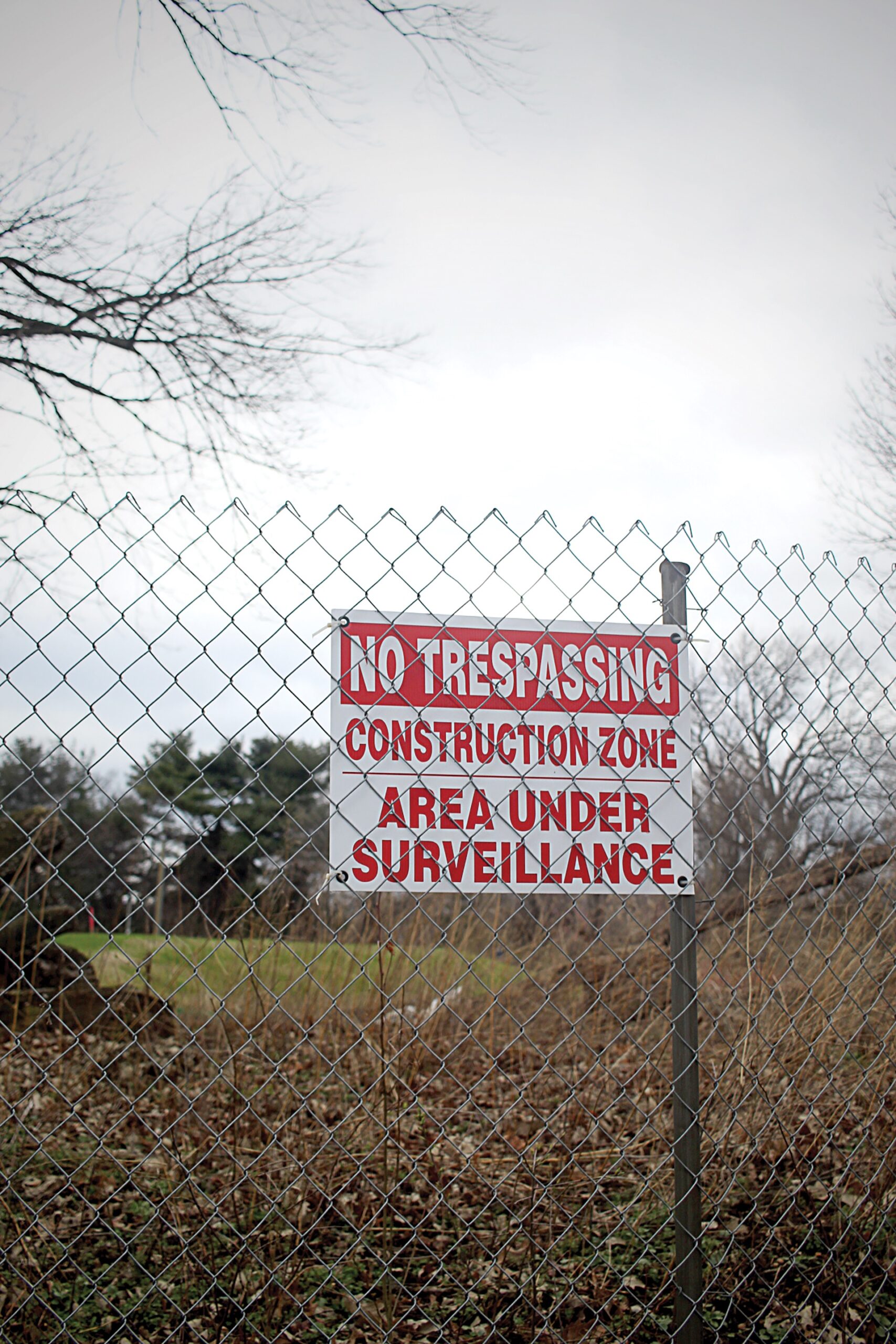
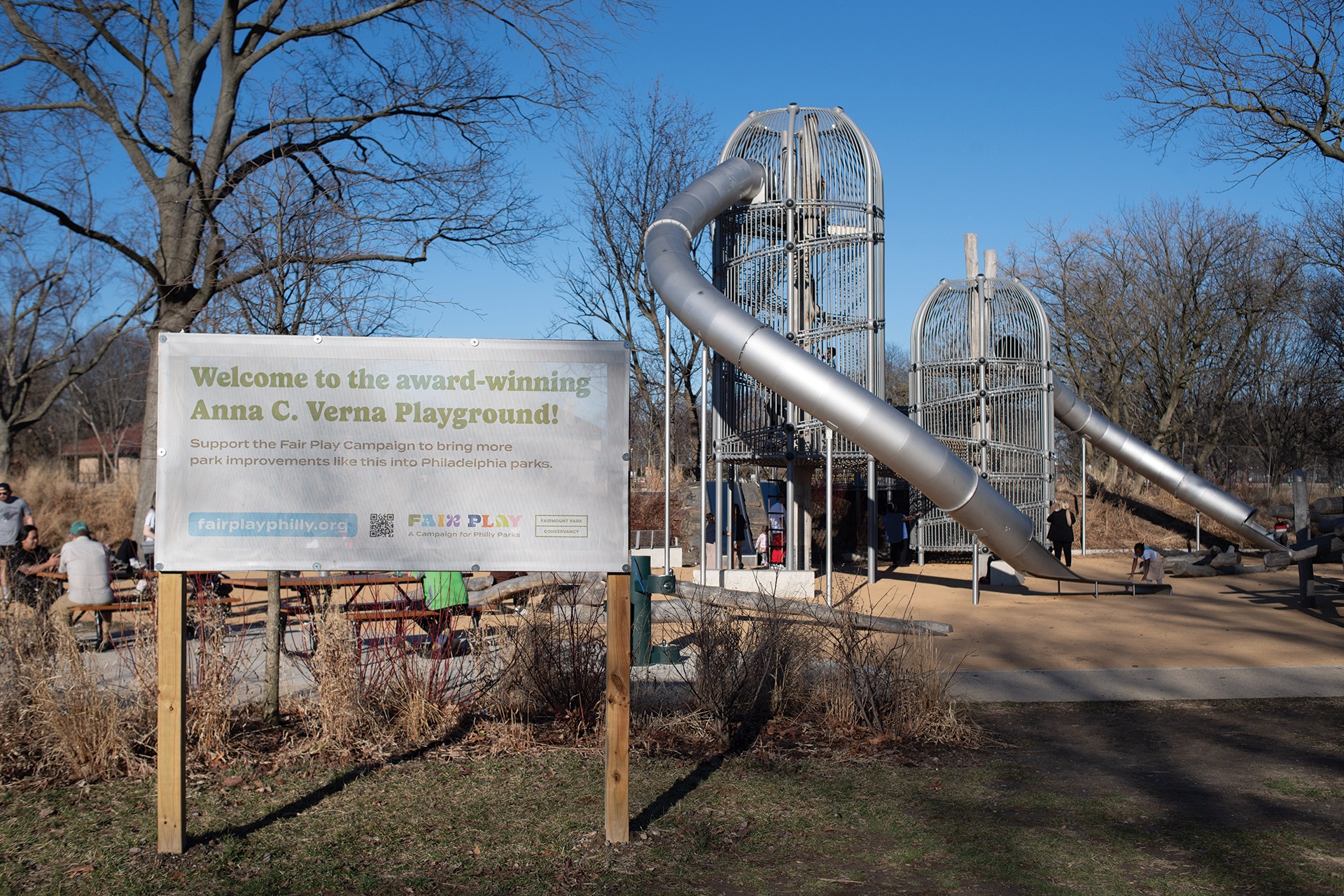
While Kowalski strolled, couples enjoyed picnics on blankets spread by the edge of the water. Other visitors walked dogs and jogged on the paths, separated from an expansive construction zone by a temporary chain-link fence. At the new Anna C. Verna playground, children seemed to sprint in every direction as they switched from swings to slides, slides to swings, and grabbed snacks from their parents seated at picnic tables. Another temporary chain-link fence surrounded the playground, with signs telling people to keep out for construction. That fence didn’t accomplish much, breached multiple times by children desperate to play and parents unable to say no.

The FDR Park Master Plan, released by the Fairmount Park Conservancy (FPC), a private nonprofit that raises and spends money on behalf of Philadelphia Parks & Recreation, aims to fight the flooding that has deviled the park for its entire existence, and to create infrastructure that will serve all visitors, whether they are coming to enjoy nature, play sports, work out on their own, or simply get some fresh air in a green space.
League Island Park, as FDR Park was originally known, emerged in the 1920s from the marshy bank of the Delaware, just east of the mouth of the Schuylkill River. It originally ran from 20th to 11th Street. The plan for the park changed almost as soon as it opened. In 1930, a municipal stadium rose to the east of Broad Street. The golf course was added to the western side of the park in the 1940s. Sports fields and courts were added, and some were lost when I-95 gobbled up 32 acres across the southern edge of the park. A swimming pool was built at Meadow Lake in 1958 and removed in the early 2000s.
For a century, the City has fought a constant battle to defend the land against the water. The land to the north, east and west of the park increasingly became impermeable, with trees, fields and wetlands replaced by dense housing and the asphalt sea of the stadium district. The tide gate at the Navy Yard, which keeps out water at high tide and lets it drain out at low tide, broke down. I-95 shunted stormwater into the park. And the sea level (and thus the tides) rose by about a foot, pushing water through the soil as well as past the faulty tide gate. According to the master plan, “Throughout the park’s history, fill has been added to help alleviate flooding issues and raise the elevation of park features.”
Chronic flooding and falling revenue led Parks & Recreation to close the golf course in 2019, just after the plan’s release.
The planners take advantage of Philadelphia International Airport expanding its cargo operations, which, by destroying wetlands there, created the legal obligation to “mitigate” the damage somewhere else. The soil removed to expand wetlands at FDR Park provides the fill needed to elevate other parts of the park. The comprehensive plan packs in a variety of amenities. These include a meeting space at a historic guardhouse (now the Welcome Center), the new playground and the 16 playing fields: four baseball and 12 rectangular.
The lawsuit argues that all of this is illegal.
A 1959 Pennsylvania law called the Donated or Dedicated Property Act requires governments to maintain parks in their original use, unless they can prove in Orphans’ Court that a sale or conversion is in the public interest. The plaintiffs also point to the Pennsylvania state constitution, which requires the government to maintain public natural resources on behalf of the people. The Philadelphia City charter includes similar protections. If Parks & Rec wants to “convert or transfer” parkland, the Commission on Parks and Recreation has to gather public input, and City Council then has to vote on the change. Until the current suit, the City has not presented a case for transforming FDR Park to the court, and City Council has not voted to convert the park.
Thus, the case hinges on a question: to what extent does the master plan transform the park? Are the changes so radical that they require approval by Orphans’ Court and by City Council?
The City declined to comment for this article, citing the litigation, but its representatives have argued in court that the park remains a park and is not being radically changed. Features are being moved around, but those features — playing fields, landscaping, waterways and wetlands — have existed in the park before.
[W]e are all in agreement that FDR Park was dedicated as public parkland, and we are still using it as public parkland … none of that is changing.”
— Melissa Medina, City attorney
“[W]e are all in agreement that FDR Park was dedicated as public parkland, and we are still using it as public parkland,” City attorney Melissa Medina said at a Feb. 26 hearing. “Active recreation, passive recreation — none of that is changing. We are still using it as public parkland.”
The plaintiffs disagree, arguing that the current renovation is substantial enough for the Orphans’ Court to weigh in. In the lawsuit they write, “[I]n reality the plans will totally change the nature of FDR Park from a wonderful nature area where people can visit, walk and enjoy, to an artificial landscape with artificial light, massive water runoff, and large storage tanks underneath.”
”It’s not like they have a playground and moved the basketball court to the other side,” says Sam Stretton, the attorney representing the plaintiffs.
The plaintiffs consider the 16 playing fields to signal a shift in the park’s intended stakeholder base, from local Philadelphians (particularly South Philly residents) to regional and suburban sports leagues that can rent large numbers of fields at a time. “Why would you put 12 soccer fields together in a giant complex way down in the southern corner of the city?” Garella says. “You build a complex like that because you want to rent it out for regional tournaments.”
The FPC and the City defend the number of fields as needed to address a shortage of recreational fields citywide and in particular in South Philadelphia. They say the synthetic turf fields are necessary to sustain heavy use.
The two sides dispute how much additional athletic field demand there is from local athletes. Witnesses from athletic leagues and parents of athletes have testified on both sides in the lawsuit. Tony Sorrentino, the FPC’s CEO, says that demand for athletic fields in recent years has “far outpaced supply,” and that “City officials asked planners to maximize opportunities for active recreation within the footprint of a former golf course.” In response to the demand for natural space, he says they cut the initially planned 19 fields down to 12 (not counting the baseball diamonds).
Synthetic turf has become notorious for exposing athletes to toxic PFAS (aka forever chemicals) as well as presenting a disposal challenge when the turf wears out. Nonetheless, Sorrentino argues that the synthetic turf fields are a more sustainable land use. Since one synthetic turf field can sustain three times as much play as a grass field, he says it would take three grass fields to replace each artificial pitch.
If you want more [playing] fields, fix up the fields you already have in the neighborhoods with the kids.”
— Rich Garella, Save the Meadows
But Garella takes issue with the City and the FPC’s claim that building synthetic turf athletic fields in FDR Park is the right way to deal with the shortage of quality fields. “Most of them are in poor condition because they’ve spent next to nothing maintaining them,” he says. “If you want more fields, fix up the fields you already have in the neighborhoods with the kids.”
According to the Trust for Public Land’s ParkScore, Philadelphia has 4.2 sports fields per 10,000 residents, which scored well (72 out of 100) compared to 99 other populous cities. In a written response to questions posed by City Councilmember Katherine Gilmore Richardson in 2023, Parks & Rec said it had 192 multipurpose fields citywide, with 21 below Washington Avenue, though some of those overlap with baseball diamonds.
The Friends of FDR Park, which responded to Grid’s questions by email, opposes suburban league play displacing local youth. They also expressed concern about the scale of the athletic infrastructure. “We support high-quality sports fields, but not 16 fields as the original master plan called for, which also requires the death of thousands of healthy trees and natural habitat for birds and wildlife.”
The Friends group also said they have not yet seen a traffic and safety plan that will help their group and the surrounding neighborhoods deal with an increase in visitors to the renovated park. Sorrentino confirmed that no traffic plan has been completed, but that the master plan takes increased traffic into account.
The master plan includes a section on how the park will be managed once it is completed. The planners describe a park that will ultimately operate with little to no resources from the City aside from a coordinating role. Maintenance and operations would be handled by partner organizations, such as the Friends.
When asked about how facilities such as the completed Welcome Center will be operated, the FPC’s Sorrentino said that the City is the entity that will determine how the park will be governed. “Our [FPC] job was designer, planner, project manager on the construction and then deliverer of.”
Along with a traffic and safety study, and written commitments to protect access by existing park users, the Friends continue to ask for “[a] transparent operational and business plan for our growing future,” and “[r]egular public reporting and dialogue to address the many questions regular park users continue to have,” stating that they “are not oppositional requests. They are governance fundamentals for a vital public space of this scale.”
The Friends group reports having been shut out of planning discussions for nearly a year. Sorrentino disagrees, saying his predecessor attended a Friends meeting in May and that, “we communicate regularly with the FDR Park Manager, who also serves as the City’s liaison with the Friends and all other park stakeholders.”
The FPC has already completed much of the work under the master plan. The gateway phase, which includes the Welcome Center (which won an award from the Preservation Alliance of Greater Philadelphia), the Anna Verna Playground and a plaza at the northeast corner of the park, is done. Thirty-six acres of habitat have been restored under the nature phase of the plan, and the mitigation wetlands have been landscaped. According to Sorrentino, the first of the synthetic turf fields is under construction, including much of the utility structures that will run under the field complex. Completing the renovation, however, will take a while. “It’s important to think of it as a multi-decade plan, with a lot of phases,” Sorrentino says.

In the coming decades, sea levels will continue to rise — by another foot by 2100, under the lowest global emissions scenario. Under the highest emissions scenario, the sea rises almost seven feet by the end of the century, which would flood almost the entire park and the Navy Yard a couple of times a day. Garella argues that no matter what, the park is going to revert to wetlands; better to accommodate the inevitable than fight it. “They saw this golf course get closed, and they saw a blank slate where they thought there ought to be human-created activities,” he says. “That’s why they see problems with flooding. It used to be wetlands, it wants to be a wetland. We need wetlands, and that’s not a bad thing.”
When Grid visited in March, Rhyan and Anthony were enjoying a picnic of hoagies after a trip to the zoo and before a Flyers game: a perfect Philly day. They sat near the fence closing off the construction zone at the future fields complex. The picnickers did not know a lot about the work on the other side of the rented chain-link fence. “It sucks getting rid of natural things,” Rhyan said. But “a place to send your kids where you feel safe about where they’re at, I think that could be a good thing.” However, she had her doubts about the successful execution of any major plan. “Philly folks tend to ruin s*** anyways.”
Colleen and V sat on a picnic blanket with V’s dog. They come to the park occasionally to get away from the city and enjoy a quiet green space. “What I wish was better was less cars,” V said.
At the playground, Anna Lieu kept an eye on her kids as they climbed the enormous slides, slid down, and then ran over to tell their mom all about it. Lieu’s husband was fishing at one of the lakes nearby. She says she likes to bring her family to the playground on weekdays after school. Weekends are too busy. “It’s nice,” she says. “It’s bigger. Bigger than the park they had before.” Her kids currently do not take part in organized athletics, though she says her son wants to play flag football.
During hearings about whether the court should impose a preliminary injunction to halt construction while the trial proceeds, FPC and Parks & Rec staff painted a dire picture of what would happen if the suit succeeded in temporarily stopping work on the park under a preliminary injunction. In testimony on Feb. 26, Leigh Ann Campbell, Parks & Rec’s deputy commissioner for planning, property and strategic engagement, said forcing a stop to the work would leave the park frozen as a construction site “with open trenches for utilities, and unsafe conditions.” A permanent injunction “would be devastating,” she said, costing at least $4 million to remove the work already completed. As for the Meadows, “It would, ultimately, most likely return to a golf course.”
Garella considers this assessment to be overblown and says the judge has the discretion to craft an injunction to avoid unsafe conditions. When asked about the damage already done to the Meadows, he says, “There’s 100 acres or so out of 175 that are pretty much untouched. And to the extent they can repair the damage to the rest, we would want to see that … What we’re trying to do is stop them from trying to do something that is illegal.”
Orphans’ Court judge dealt the plaintiffs a setback on March 20, rejecting their request for a preliminary injunction. According to Garella, on March 26 they filed a notice to appeal the verdict to Commonwealth Court.
Whatever the outcome of the renovation and the lawsuit challenging it, Kowalski says he enjoys sharing a space with people from all walks of life and backgrounds. “When the weather’s good, it’s really busy down here, and all the picnic spots are taken. There’s all kinds of music playing. To me, it’s like a microcosm of what’s good about this country, and I think that’s a wonderful thing.”






Thanks for the article!!!
Thanks for your comments and fabulous photo, Rick Kowalkski. You are right in everything you say. Hope to see you at the park wandering around! 🙂