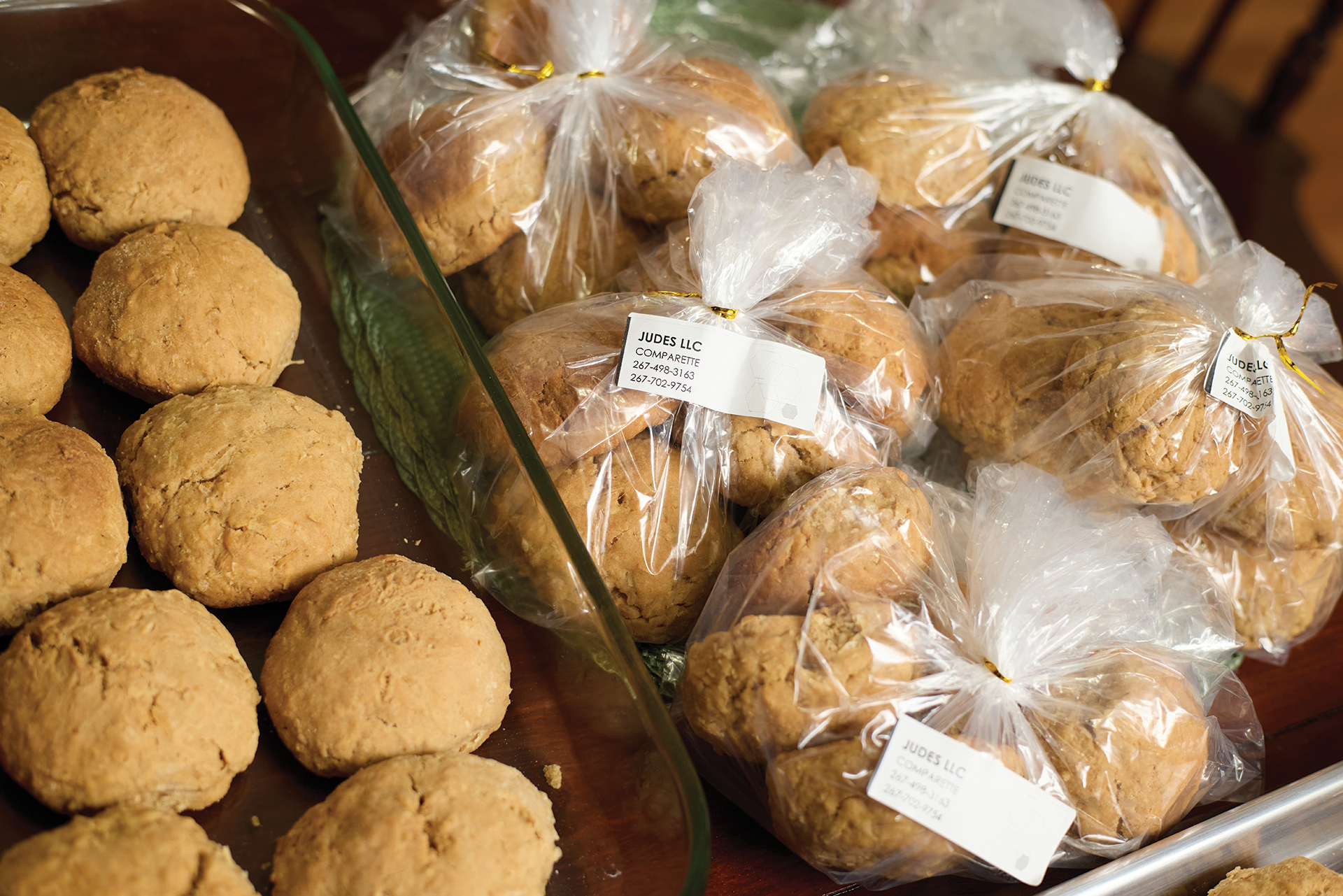
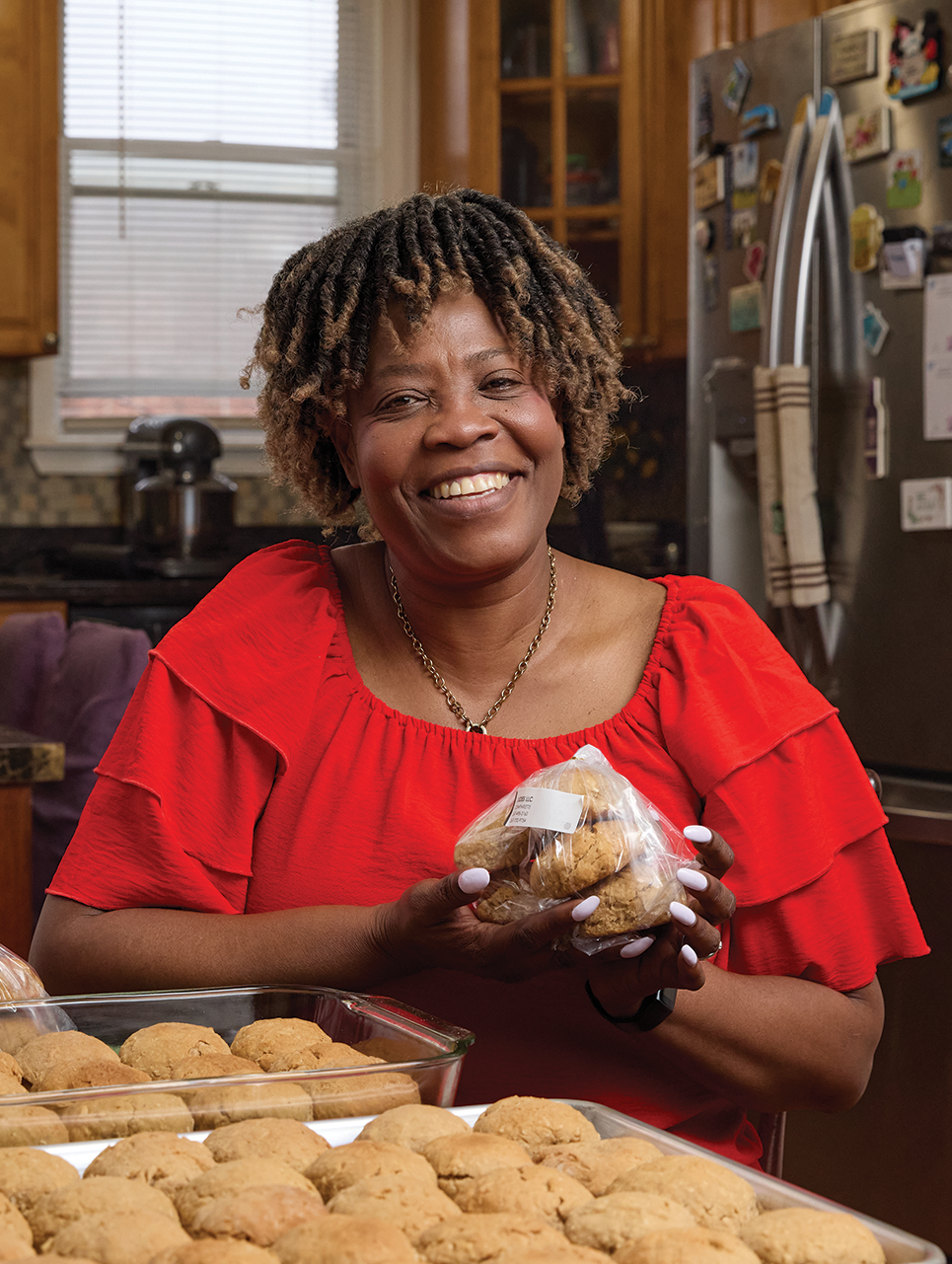
Estere Alveno-Marius remembers the first time she tasted comparette (also known as konparèt), the sweetly spiced gingerbread-like treat that originated in Jérémie, the capital of Haiti’s Grand’Anse region. A friend visiting Alveno-Marius in her hometown of Saint-Louis-du-Sud brought the pastry as a gift. One taste and Alveno-Marius understood how the fragrant coconut sweet bun got its name, a Creole interpretation of the French phrase, “quand’l paraît’t,” roughly translating to “eat it quickly when it shows up.”
In 2018, at the age of 45, Alveno-Marius left Haiti to join her husband, Jude Patrick Marius, in the United States. He had initially looked for work in Florida but found more opportunity in Philadelphia. Alveno-Marius left a good accounting job in Haiti to reunite with her husband. They settled in a Northeast Philadelphia neighborhood, home to a vibrant and growing Haitian community. Still, Alveno-Marius is keenly aware of all she gave up. “The hardest part of coming here was leaving behind all my traditions, my language and my culture,” she says. “Everything was different for me. I had to start at the bottom of my profession to find work.”
The hardest part of coming here was leaving behind all my traditions, my language and my culture.”
— Estere Alveno-Marius
One bit of continuity came in the form of baking. Just over a year ago Alveno-Marius returned to her mother’s recipe for a family favorite, bonbon sirop, and began experimenting with comparette, too. As a child she helped her mother make bonbon sirop, a soft bun or cookie flavored with ginger and cinnamon and sweetened with sugarcane syrup. She watched her mother mix the dough — judging by eye and feel, not measuring cups — to get the right consistency. Then her mother baked the pastry in a makeshift outdoor oven she had built from a box lined with aluminum foil and heated with burning coals. Alveno-Marius and her six brothers and sisters would devour the cookies, but some were set out on a roadside table where passersby could purchase them.
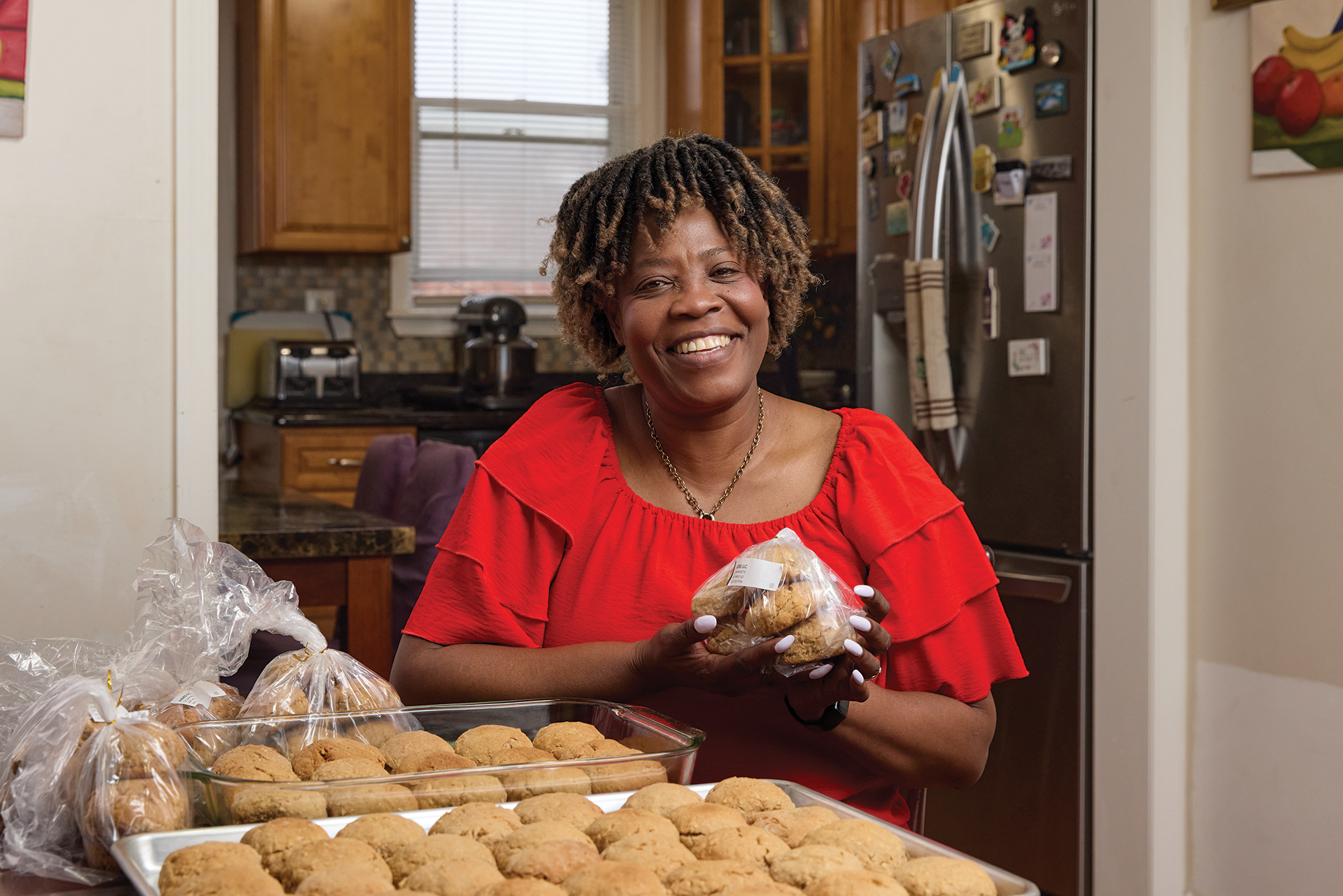
Recently Alveno-Marius has been looking for ways to realize her childhood dream of owning a bakery. For now she is baking small batches of Haitian cookies and breads, selling them at her church and a nearby beauty salon. Alveno-Marius, who last year completed an entrepreneurship class at The Welcoming Center, has a ready answer for why an accountant would start a bakery: “I know people like eating food, and I like making it for them. When you know someone likes something, then you make it.” She confesses, though, that she doesn’t enjoy cooking as much as baking. “My husband sometimes cooks for me, so I am very lucky,” she says.
Alveno-Marius envisions offering customers her sweet tooth-satisfying comparette and bonbon sirop but ultimately aspires to more than a bakery. “I’d like to have a big, beautiful place in Philadelphia that helps people from every nation, not just Haitians, with various services and immigration needs,” she says. “I think one day I don’t just want to get a paycheck. I want to have my own business. This is my dream.”
Estere’s Comparette
Serves 6
1 ½ cups unsalted butter (3 sticks)
1 cup sugar
1 tablespoon lime juice
1 teaspoon vanilla extract
1 ½ cups unsweetened shredded coconut
2 ¼ cups all-purpose flour
1 tablespoon ground cinnamon
¼ teaspoon nutmeg
1 teaspoon coarse kosher salt
2 teaspoons baking powder
cup finely diced ginger
1 teaspoon almond extract
1 teaspoon finely grated lime zest
- Preheat the oven to 350 degrees.
- Using an electric mixer, beat the butter and sugar in a large bowl until well blended. Add the lime juice and vanilla extract and mix in.
- Add the shredded coconut, flour, salt, lime zest, ginger, nutmeg, cinnamon, almond extract and baking powder, and beat on low until the mixture clumps together.
- Use your hands to form the dough into a ball. On a lightly floured surface, roll the dough out to ¼-inch thickness. Using a glass or a biscuit cutter, cut into rounds about 2 to 3 inches across.
- Bake on a greased sheet pan for 20 to 30 minutes or until golden brown.