“The Weight of Time,” a Morton Contemporary Art Gallery exhibition of paintings by 10 artists serving life sentences at Montgomery County’s Phoenix prison, lays bare heartache, hope and the crushing force of hour piling upon hour.
“I served 20 years with [the artists],” says Eddie Ramirez, who was formerly incarcerated at Phoenix. “We painted together in the Mural Arts Philadelphia’s Restorative Justice Program.” Started by executive director Jane Golden in 2004, the program shows people involved in the carceral system how to paint panels for future street murals, thus providing art education.
“I’m not a real artist, but the [other] guys are,” Ramirez says. “I made a commitment to get them exposure when I got out.” He says the show almost didn’t happen, as many galleries nixed a prison-themed exhibition, “but Debbie Morton, who owns this gallery, said yes.”
The exhibition provides a way for Morton to affirm her belief in art’s healing power. “Art offers many of these men a way to process grief, loss and remorse,” says Morton, the show’s co-curator. “I hope this body of work allows viewers to see the humanity and talent of each artist.”
The exhibition’s featured artist and co-curator, Keith Andrews, has been in prison for 27 years and “wanted to do something about doing time,” he writes in an email. “My fellow artists [and I] came up with ‘The Weight of Time’ to show how time is heavy both inside [prison] and outside.”
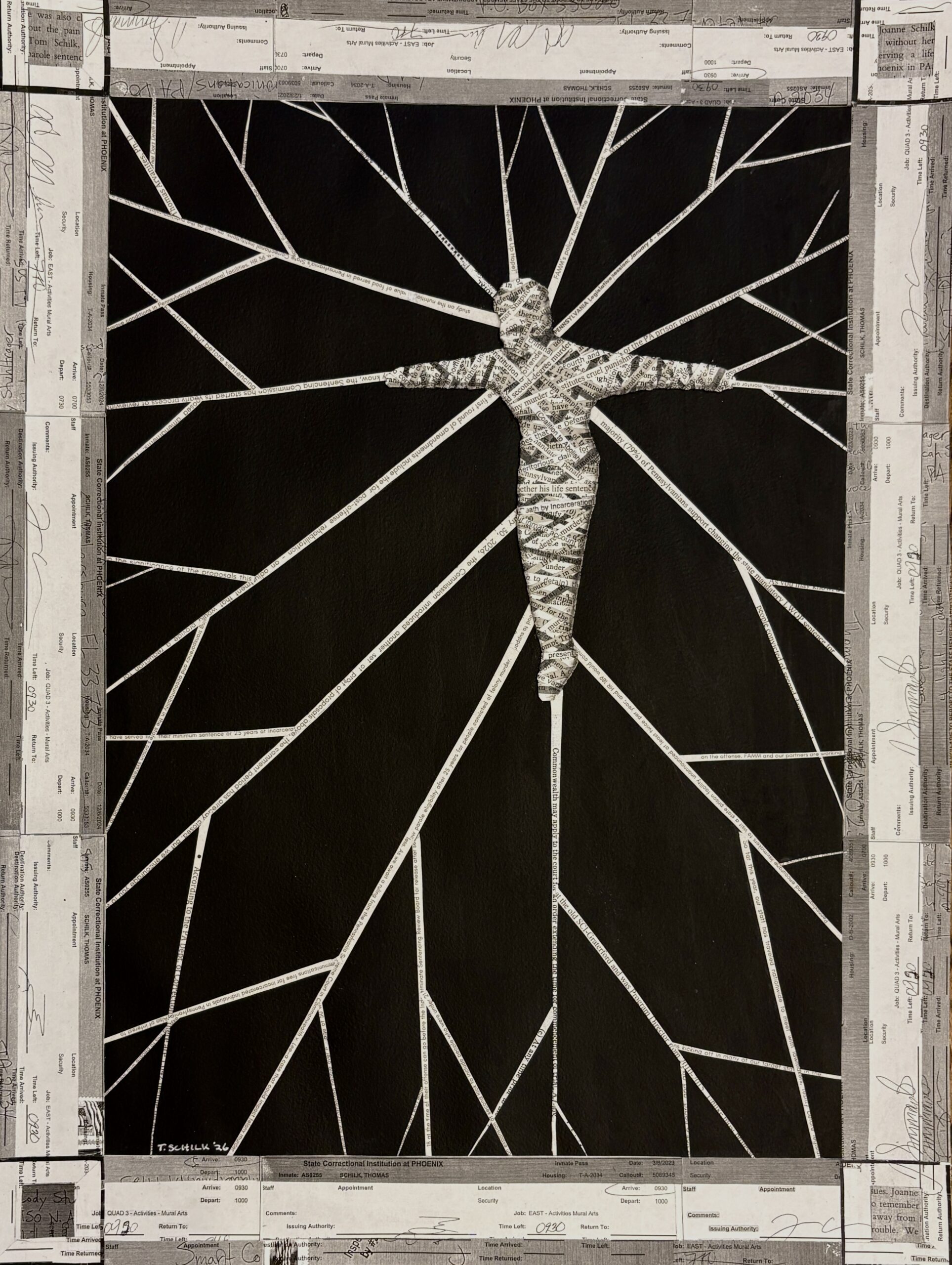
Most of the 48 paintings are acrylic on parachute cloth. Some works include collage.
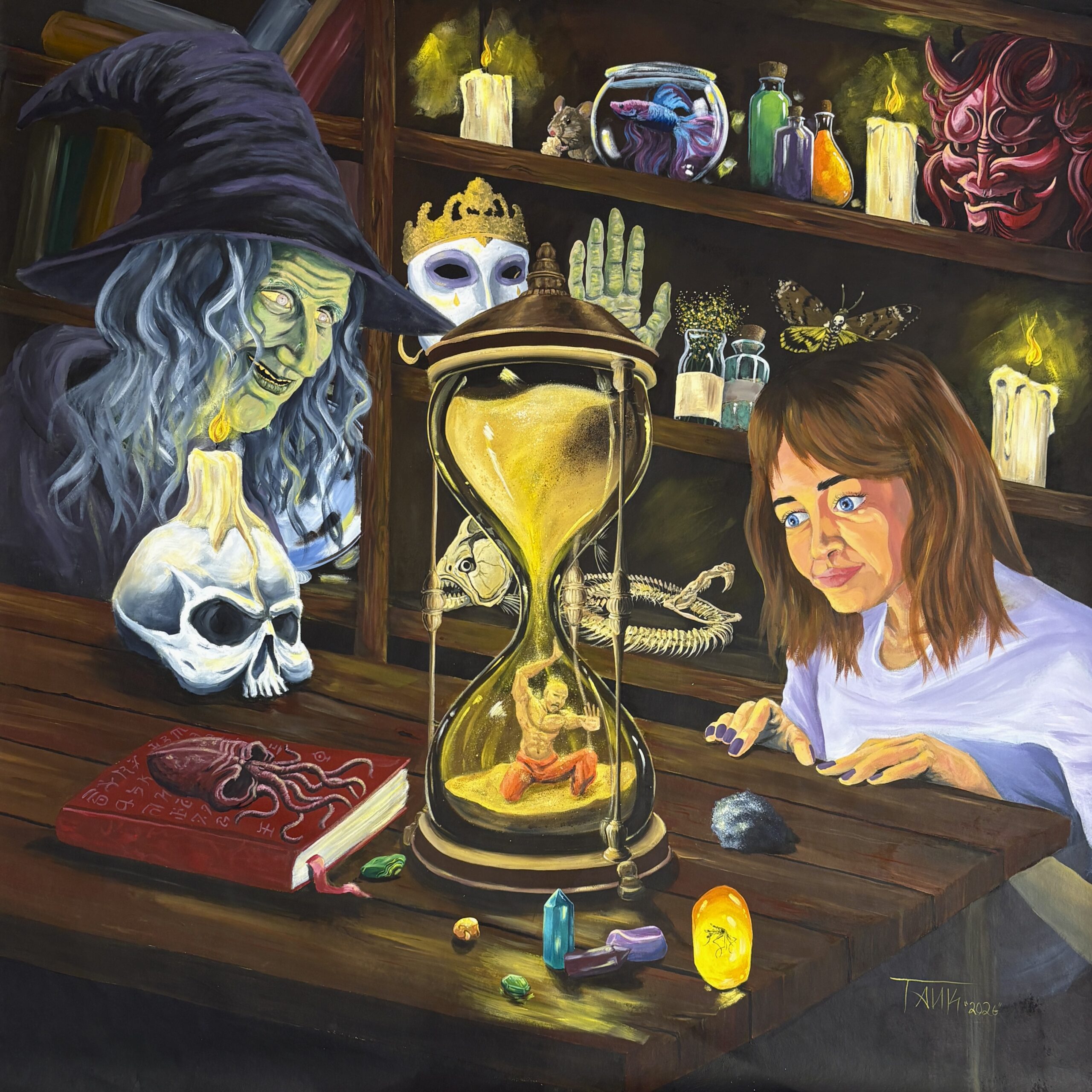
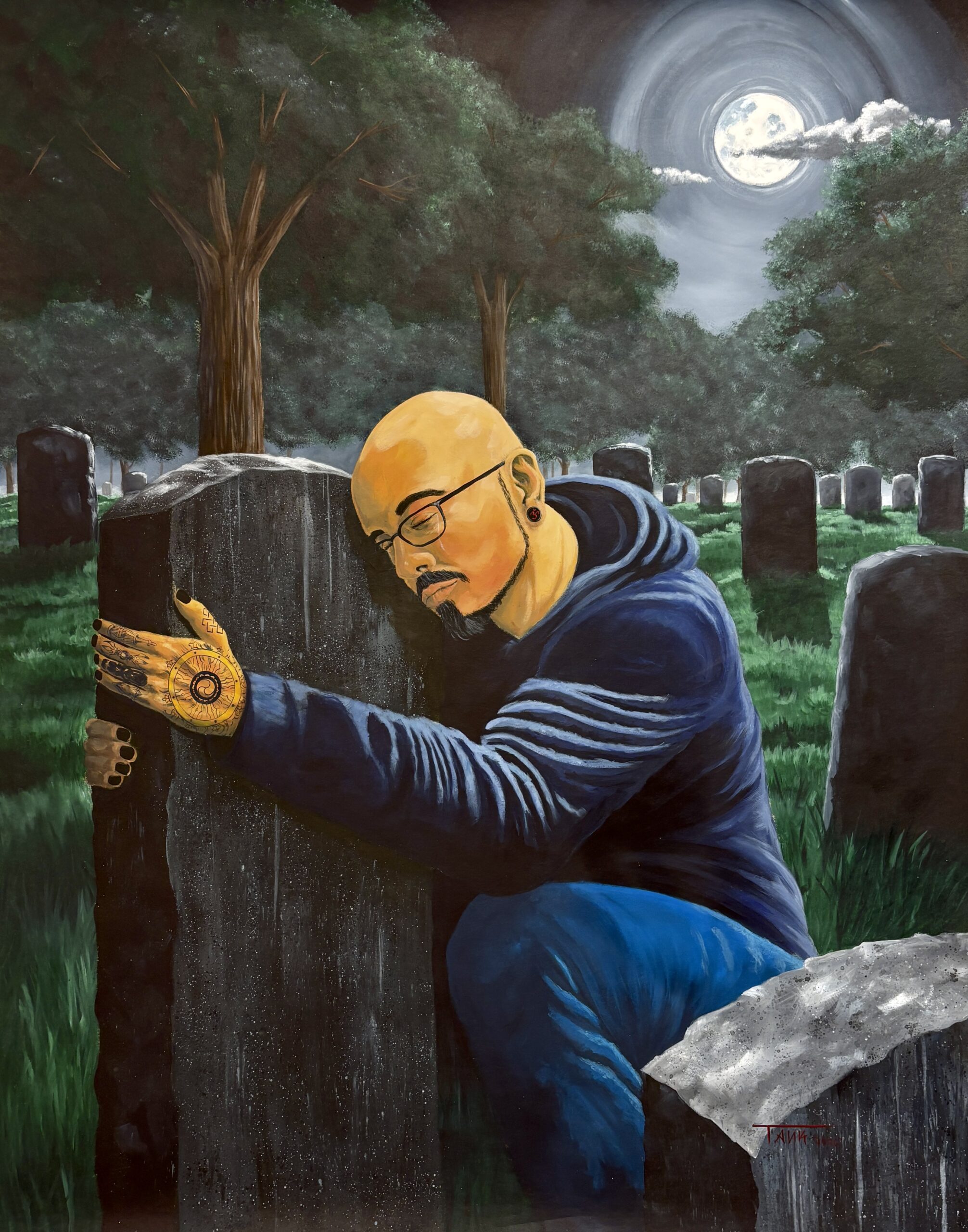
Many paintings feature timepieces. “Curiosity” by Albert Perez shows a man trapped in the bottom of an hourglass with grains of sand falling on him. A woman and a witch observe him gleefully. Another painting by Perez, titled “I’m sorry I wasn’t there,” depicts a man in a cemetery at night, hugging a headstone, crying. “It’s a telling of my deepest fear, [my mother’s dying before I came home],” Perez writes. His mother, who had been in hospice, recovered.
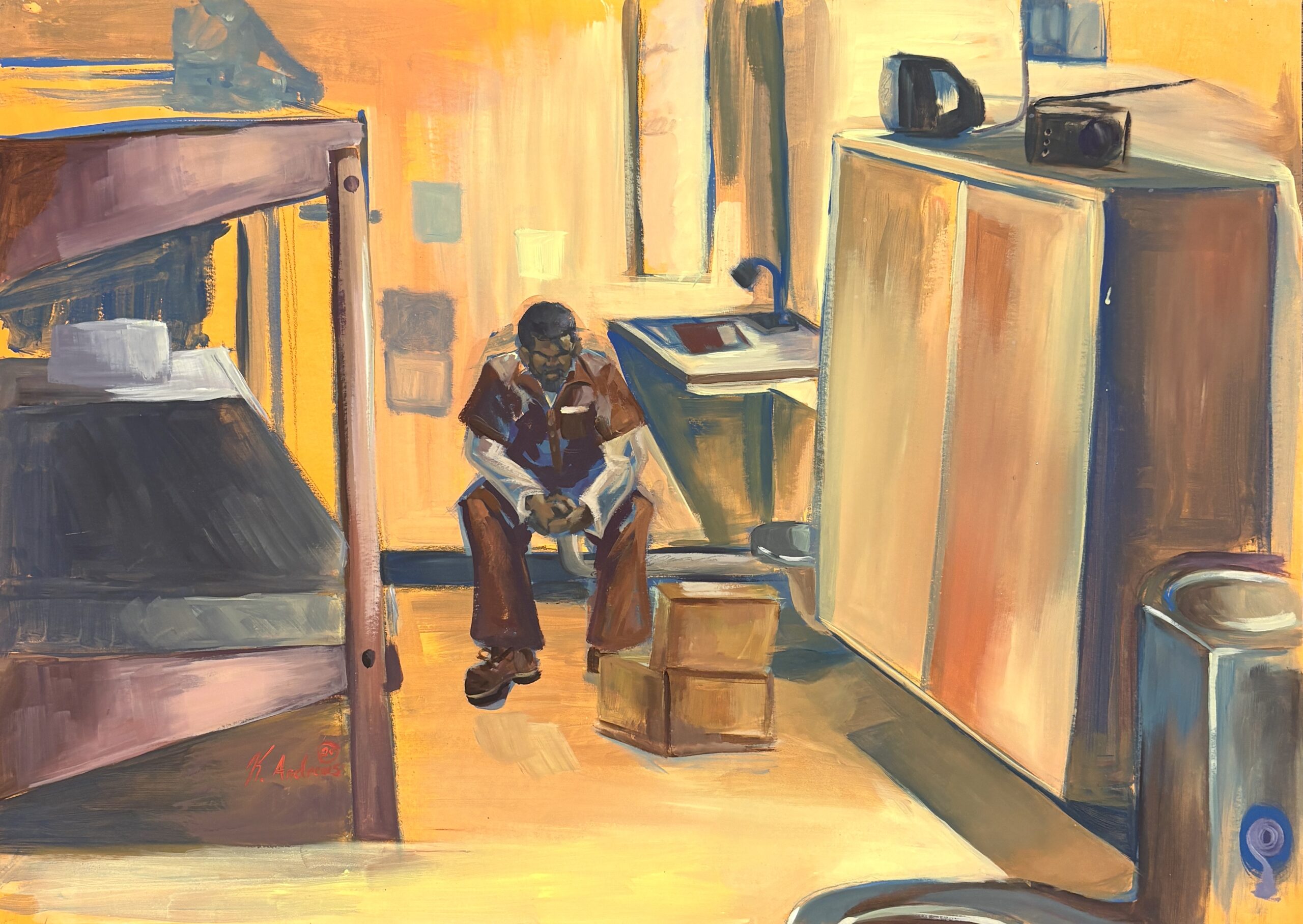
“Living in a Tomb,” by Andrews, comprises six paintings representing 60 years in prison. The scenes progress from a prisoner’s first day — with an outsized bunkbed, washbasin and toilet suggesting his apprehension — to the last image showing a man on a bed, hooked up to a monitor that has flat-lined.
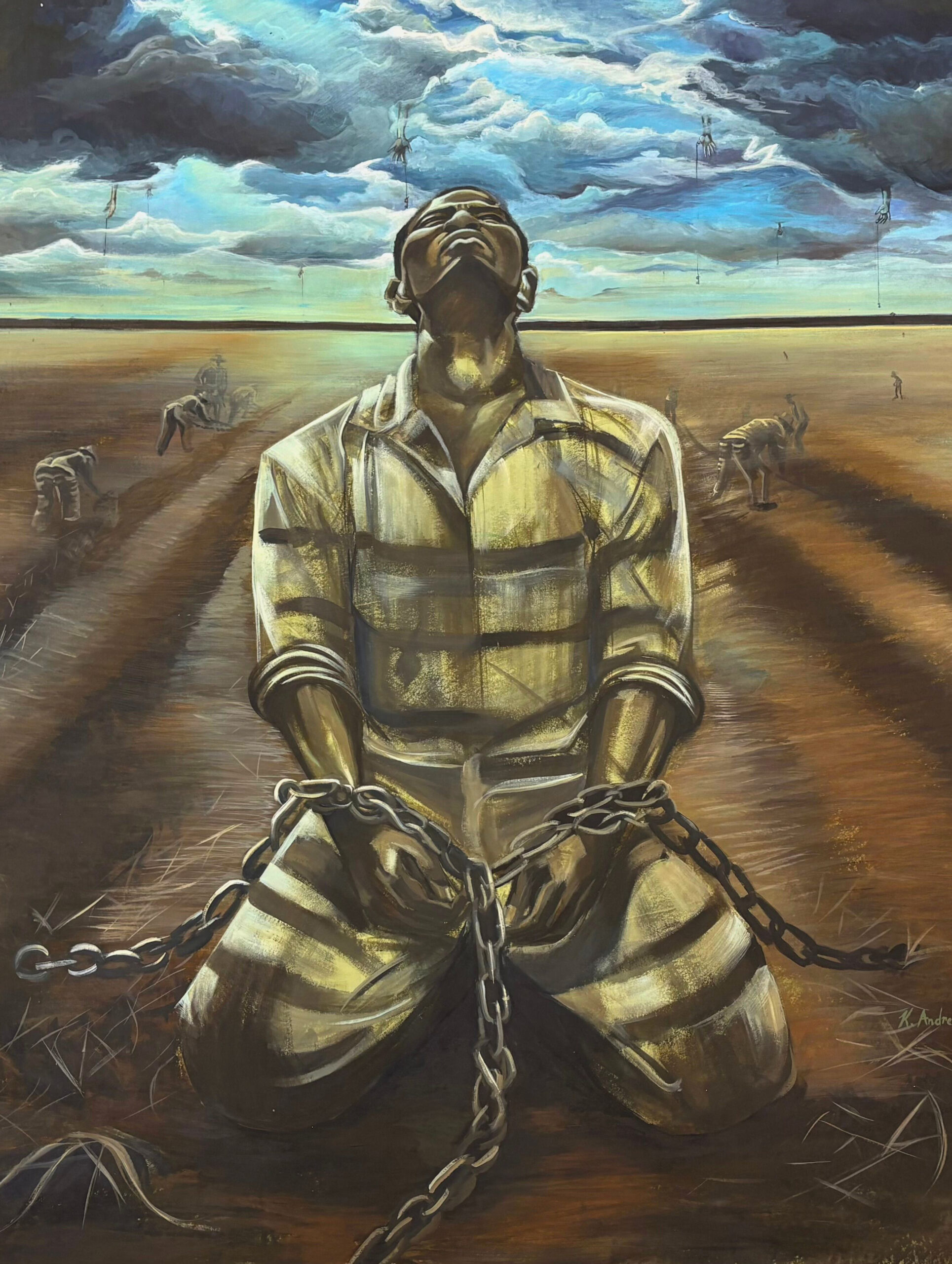
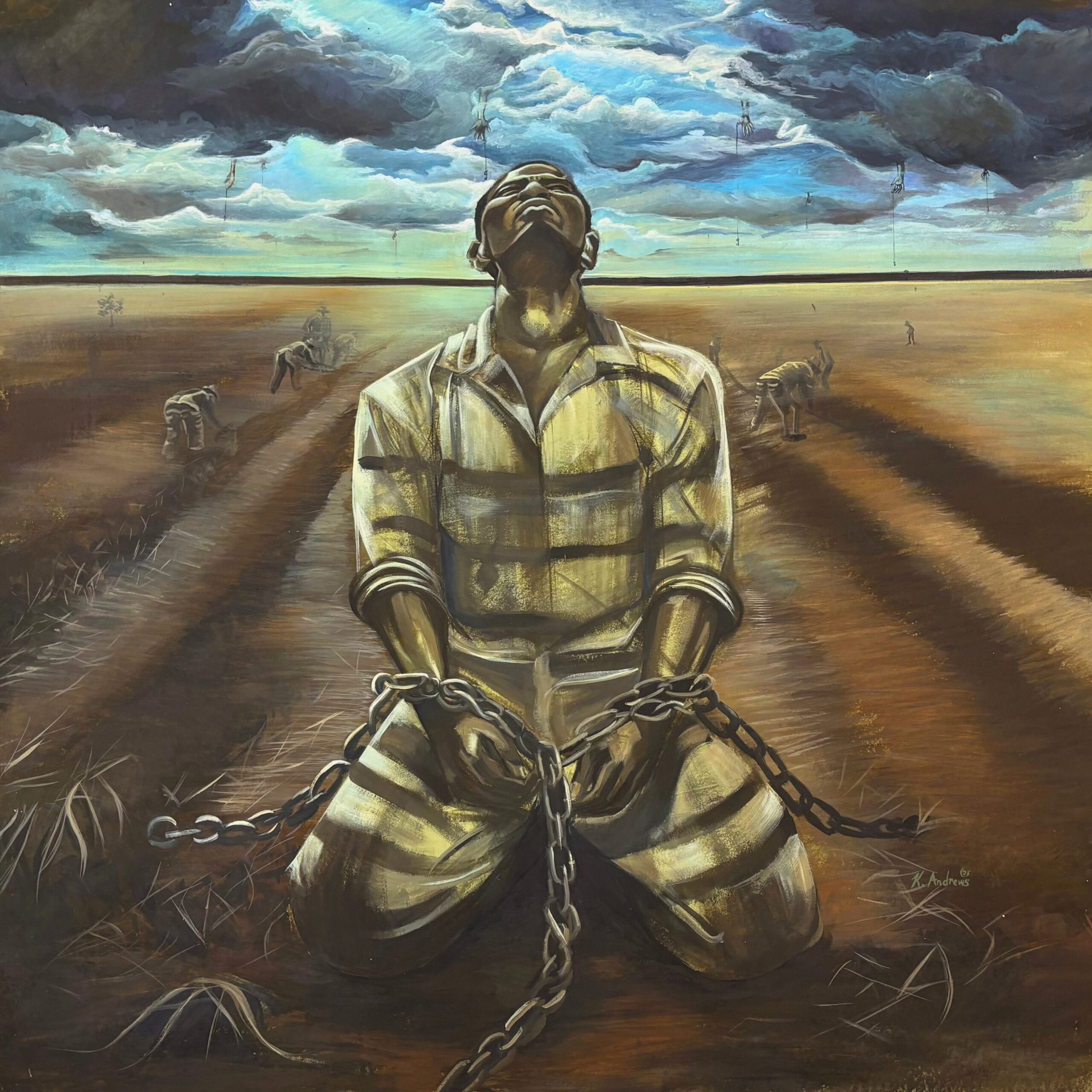
Andrews’ “Defiant Mercy,” the exhibition’s piece de resistance, hints at layers of time. In the foreground of this large painting, a brown-skinned man wearing an old-time jail’s black-and-white striped jumpsuit kneels on the ground, his face tilted skyward, perhaps in prayer. The men working behind him, also in striped suits, could represent the past or the incarcerated people who work nowadays on prison farms like the infamous 18,000-acre farm in Louisiana’s Angola Prison. Andrews introduces an element of Afro-futurism, which blends science fiction, history and fantasy, by including hands in the clouds with keys dangling from them. Looking at the painting, “you can feel the warmness and unselfishness of his heart, mind, body and spirit, …begging for relief, mercy of any kind not only [for] him but everyone in the field,” Andrews writes.
Family members of several artists attended the April 25 opening reception. “I feel so inspired,” says Saliyah Andrews, Keith Andrews’ daughter.
“There is so much unrecognized talent in this city,” Mural Arts’ Golden said while viewing “The Weight of Time.”
Strikingly varied in style and palette, the paintings have a unifying factor: “This show is about social justice,” Ramirez says. The artists, overwhelmingly men of color, reflect the skewed criminal justice system. The show also considers the issue of keeping people in prison — sometimes in wheelchairs or suffering from dementia — until they die.
“Hopefully, the day will come when I get a second chance at life, a chance at redemption,” Andrews writes. “But until then I will always continue to work hard and do the right thing.”
“The Weight of Time” will be at the Morton Contemporary Gallery, 115 S. 13th Street, through May 25, 2026. See www.mortoncontemporary.com. A portion of the proceeds will benefit the Mural Arts Restorative Justice Program.