From the outside, the building hasn’t changed much in a year. Merzbacher’s two-tone painted brick factory at 4530 Germantown Ave. still has the words “bread to share” flanking its front door, and the smell of freshly baked loaves still wafts out — only now, there are a lot more of them.
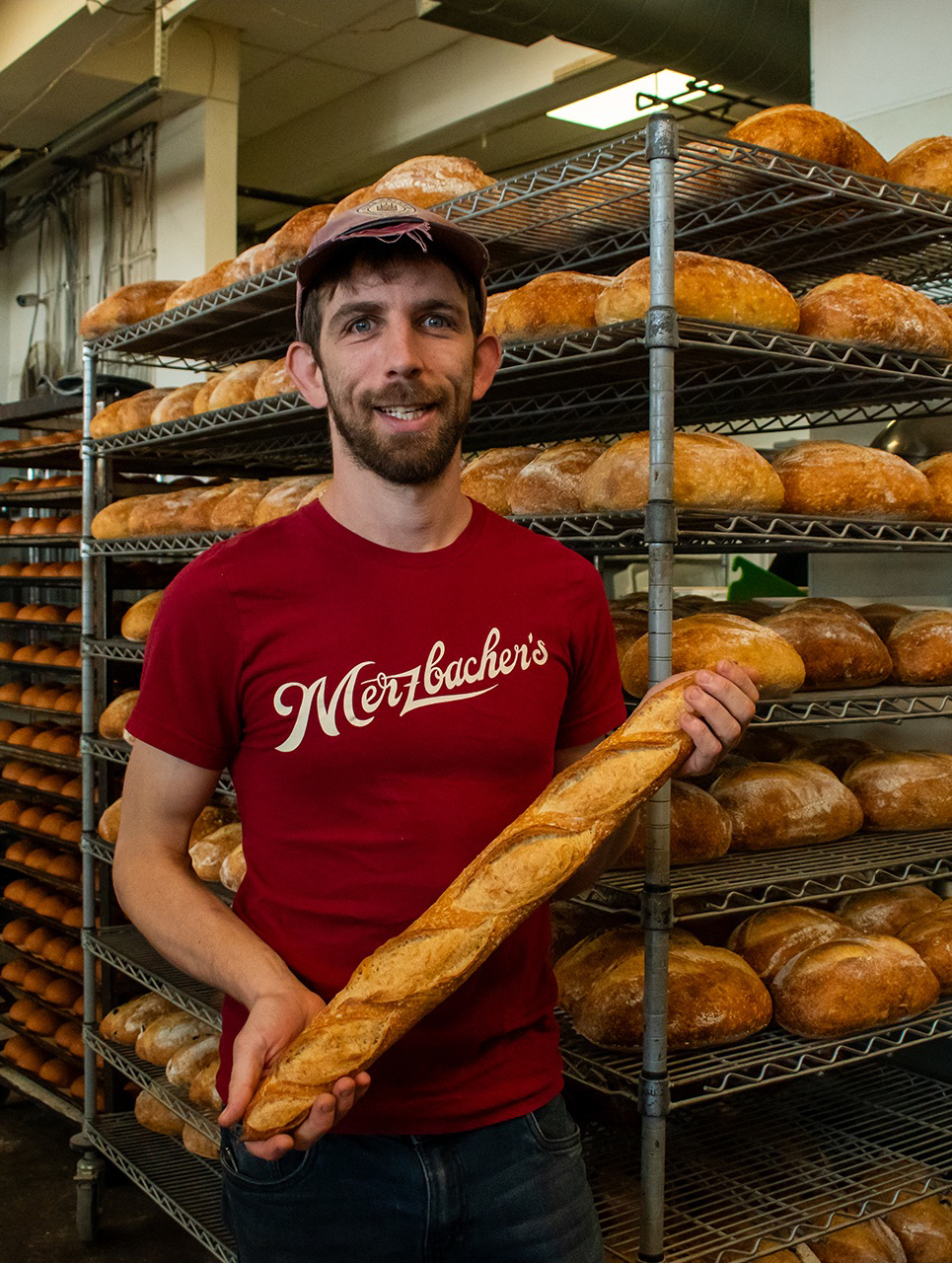
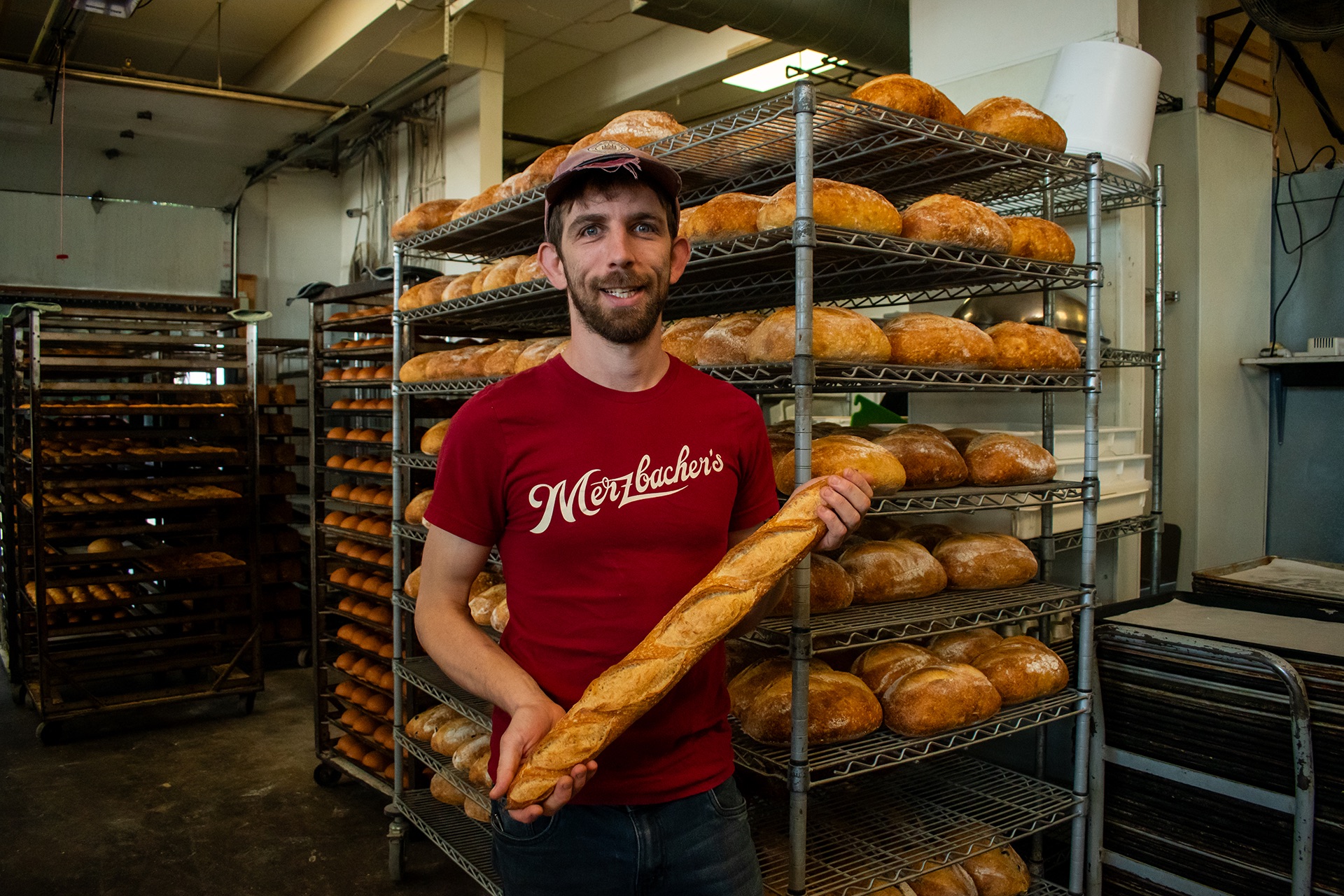
Inside, founder and head baker Peter Merzbacher weaves through a maze of racks as timers beep and motors hum around him. Since Grid first visited the bakery last summer, Merzbacher has gained a new title: owner of Metropolitan Bakery.
Acquiring Metropolitan, one of Philadelphia’s most trusted bakeries for more than three decades, increased Merzbacher’s production from about 12,000 pounds of dough a week to 25,000.
“We have more than doubled,” Merzbacher says. “When I was thinking about whether it made sense to acquire Metropolitan and steward their legacy, I hoped that we would maybe grow by — after the dust settled — maybe 70%. And to grow by an excess of 100% is my wildest dreams come true.”
Still, he remains focused on scaling responsibly, a priority he described to Grid in August 2025. “The goal certainly was not to get bigger,” Merzbacher says of the acquisition. “It was more about trying to cement Metropolitan’s legacy and steward it, but also to make the combined businesses a very sturdy business.”
Metropolitan announced the sale of its wholesale business to Merzbacher and the closing of its flagship Rittenhouse Square storefront in March. Founders James Barrett and Wendy Smith Born launched the Parisian-style bakery in 1993. Long before Merzbacher arrived in Philadelphia, Metropolitan was the cornerstone of the city’s bread scene.
“As I was getting familiar with the food scene here, it was pretty clear back in 2013 that it was Metropolitan, and everybody else. They were, in terms of quality and reputation, clearly number one,” Merzbacher says. “So when I got a call from one of their associates asking if I was interested, it was like asking if you want to play on the same basketball team as Michael Jordan.”
As Merzbacher brought both brands and recipe lineups under one roof, Barrett was active in aiding the transition, working alongside Merzbacher six, sometimes seven days a week, he says. “We made a million missteps along the way, but they caught me when I tripped.”
Merzbacher wanted to save as many Metropolitan jobs as he could. One staffer had spent over 20 years working under Barrett and Born, he says. Merzbacher was able to keep on 13 Metropolitan employees, bringing the total staff headcount to 46. Several of the bakers wear crimson Merzbacher’s T-shirts, which now also bear the Metropolitan logo across the shoulders. One divides mounds of dough into Merzbacher’s Philly Muffins as another drizzles olive oil on a tray of Metropolitan-style focaccia.
It was like asking if you want to play on the same basketball team as Michael Jordan.”
— Peter Merzbacher
Combining the bakeries was rather frictionless, Merzbacher says, as the two already shared similar artisanal production techniques. In the recipes themselves, one of the only major changes was replacing Metropolitan’s flour, King Arthur Sir Galahad, with a locally milled flour from Snavely’s Mill in Lititz, “which, on spec, is a very very similar flour,” Merzbacher says. “But in baking, every detail really matters.” While the bakery operated out of both facilities during the transition, the team kept using King Arthur flour at Metropolitan’s site and ran side-by-side tests to make sure the two flours behaved similarly.
Despite the added volume, waste as a share of total production has held steady or even dropped slightly, Merzbacher says. Overproduction, he says, is built into the baking industry to account for imperfections. Unsellable product goes to neighborhood and church groups, as well as to buyers via Too Good To Go. “Very, very, very rarely do we throw bread in the dumpster.”
The growth has also allowed for the streamlining of distribution, now with four delivery trucks in operation, with some even carrying routes that Metropolitan had previously outsourced. “What’s best for business is also what’s best for the environment, in that it just doesn’t make sense for there to be two trucks going to the same places every day.”
Although Merzbacher’s loaves and Metropolitan’s loaves are now baked under the same roof, the brands remain distinct. Each brand’s breads have their own character and serve a different purpose in the kitchen, Merzbacher says, so they can share the same shelves without competing.
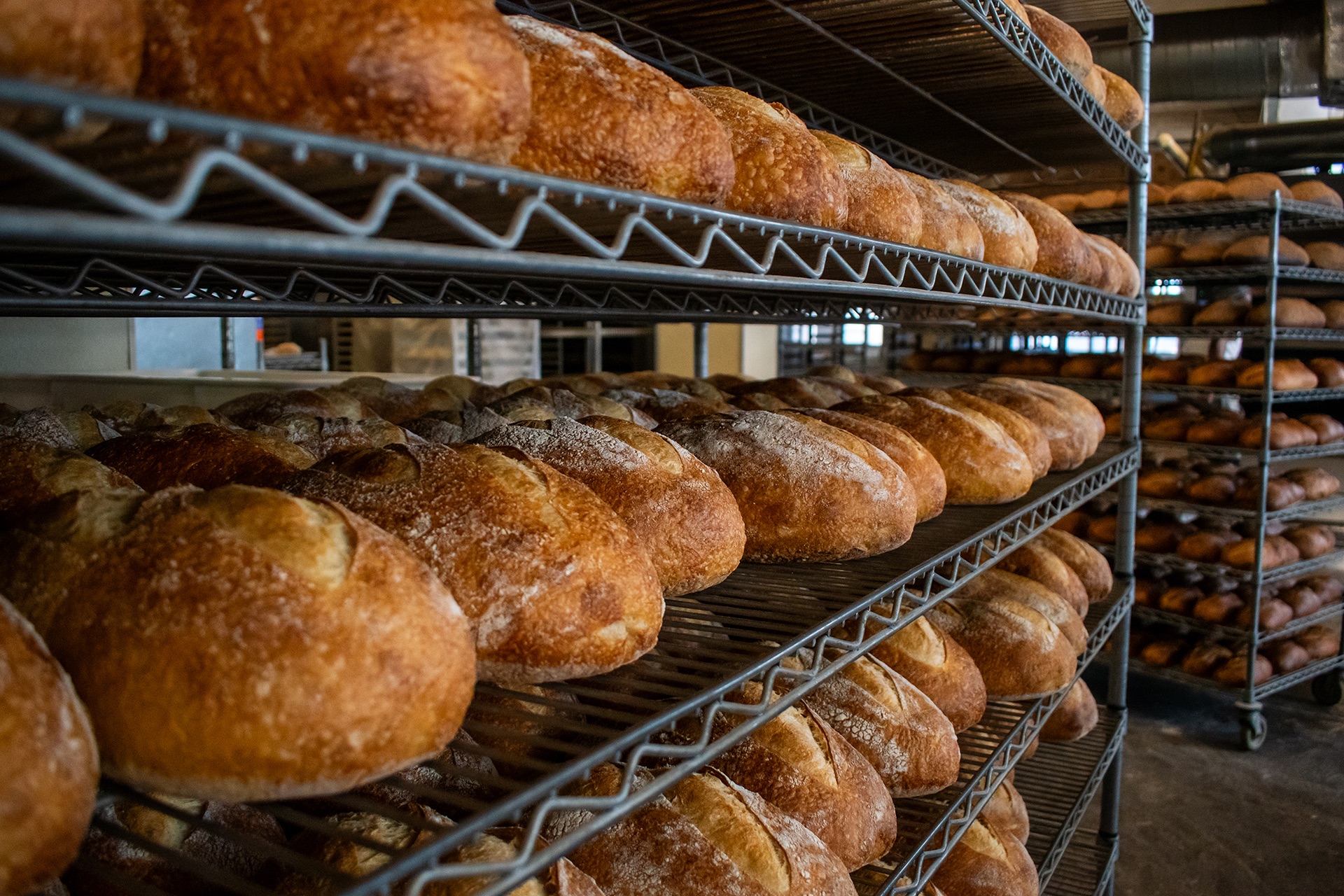
“I’m rarely debating between a baguette or a Philly Muffin for a breakfast sandwich. I’m rarely choosing between a Metropolitan San Francisco sourdough and a Merzbacher’s Sweet Potato Bun,” he says.
As of October, the full Metropolitan Bakery line of breads and baked goods is now available at all locations of Kimberton Whole Foods, alongside Merzbacher’s products.
“This effort to make great bread available throughout the region — which is already hard enough — without well-established businesses like Kimberton, would be almost too hard,” Merzbacher says. “And to be able to stand on the shoulders of giants and be able to tap into a network that already exists is a blessing.”
What’s next for Merzbacher, he says, is finishing what he started: ensuring the bread and granola quality is what it was under Metropolitan, continuing to support and train his staff, and respecting quality at scale.
When asked what he wants to see out of Merzbacher’s and Metropolitan in five years, his wish is simple: “I would like for people to come back after a vacation and to wake up, toast off a slice of bread, and to be like, ‘Glad I’m home. I missed this bread.’”