Every human produces a little more than 4.5 ounces of excrement per day. Multiplied by the 2.2 million customers of the Philadelphia Water Department’s wastewater system, the cumulative daily dump equals about 620,811 pounds, or about 310 tons.
The story of biosolids (treated sewage sludge) starts with clean water in the toilet bowls of the residents of Philadelphia and surrounding suburbs. That water carries away the 310 tons of what people deposit, joined by water from sinks and showers — not to mention everything that washes down the drains of car washes, small factories, dry cleaners and other businesses. Where old sewer lines are combined with stormwater drainage, rain and melting snow flow in as well.
Those toilet contents splash into the sewers and, driven mostly by gravity, roll downhill through more than 3,000 miles of pipes and tunnels to one of the city’s three water pollution control plants: Northeast, Southwest or Southeast.
As the name implies, those plants are tasked with removing pollution from roughly 400 million gallons of wastewater (about 500 Kelly Pools) per day before discharging it into the Delaware River.
It’s up to the PWD to separate the clean water back out and then dispose of what people put in it. A recent biosolids-processing failure at the Southwest Water Pollution Control Plant made plain that treating wastewater is an inherently complicated task made more difficult by aging infrastructure and staffing shortages. And as demands grow to filter out forever chemicals and reduce the environmental impact of treated sewage sludge, it’s unlikely to get any easier.
Much of the infrastructure at the Southwest plant is not new. The core dates back to the 1950s, and other features were added in the early 1980s when the sewage treatment plants were expanded to comply with the Clean Water Act.
Today, sewage treatment is an intricate process dealing with variable inputs and conditions. Because much of Philadelphia’s sewage system is combined with its stormwater system, wet weather sends a surge of sewage into the plant. And if one piece of equipment fails, it can send shock waves through the rest of the system.

The Separation Process
“Wastewater treatment is basically a separation process,” says Andy Kricun, retired executive director and chief engineer at the Camden County Municipal Utilities Authority.
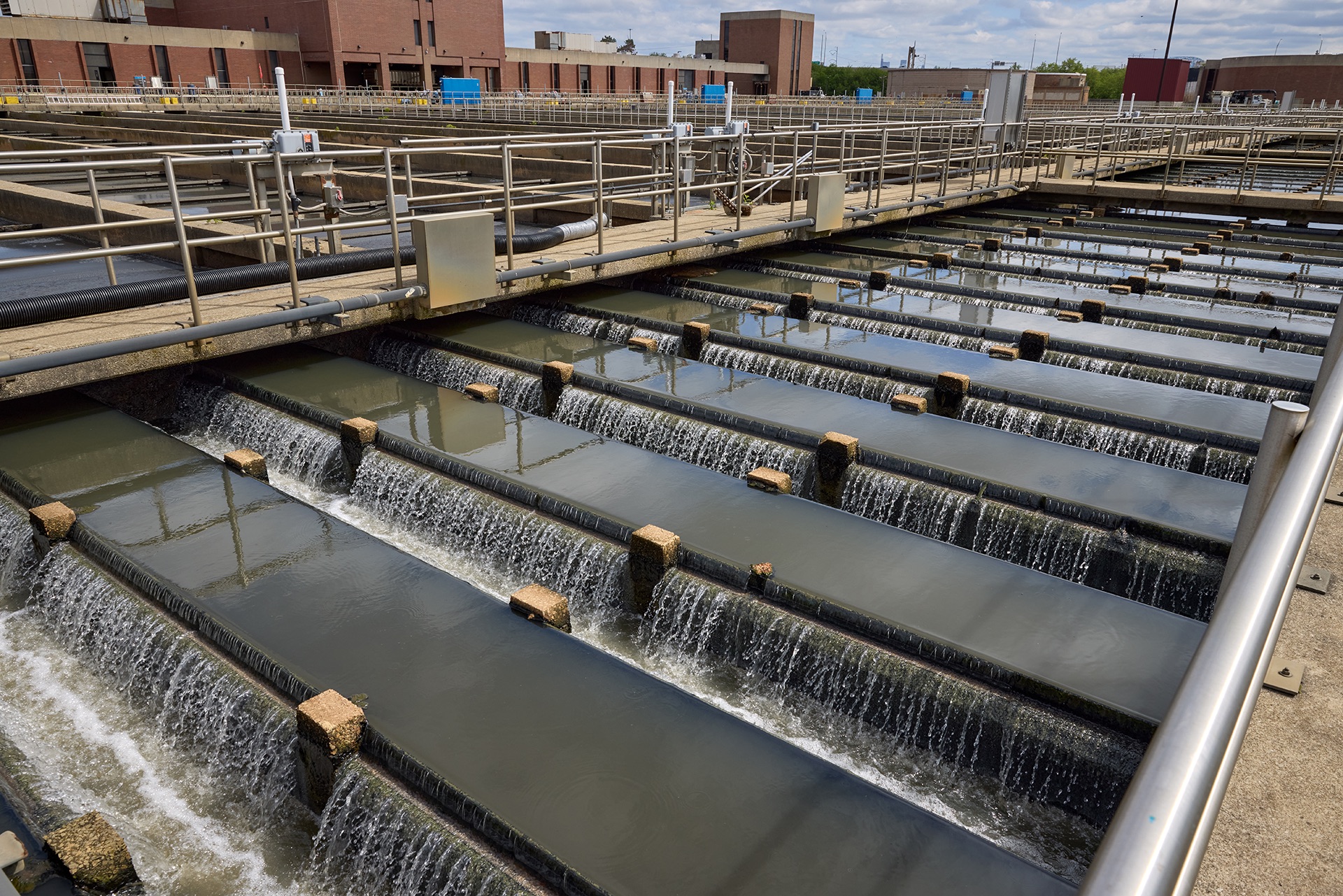
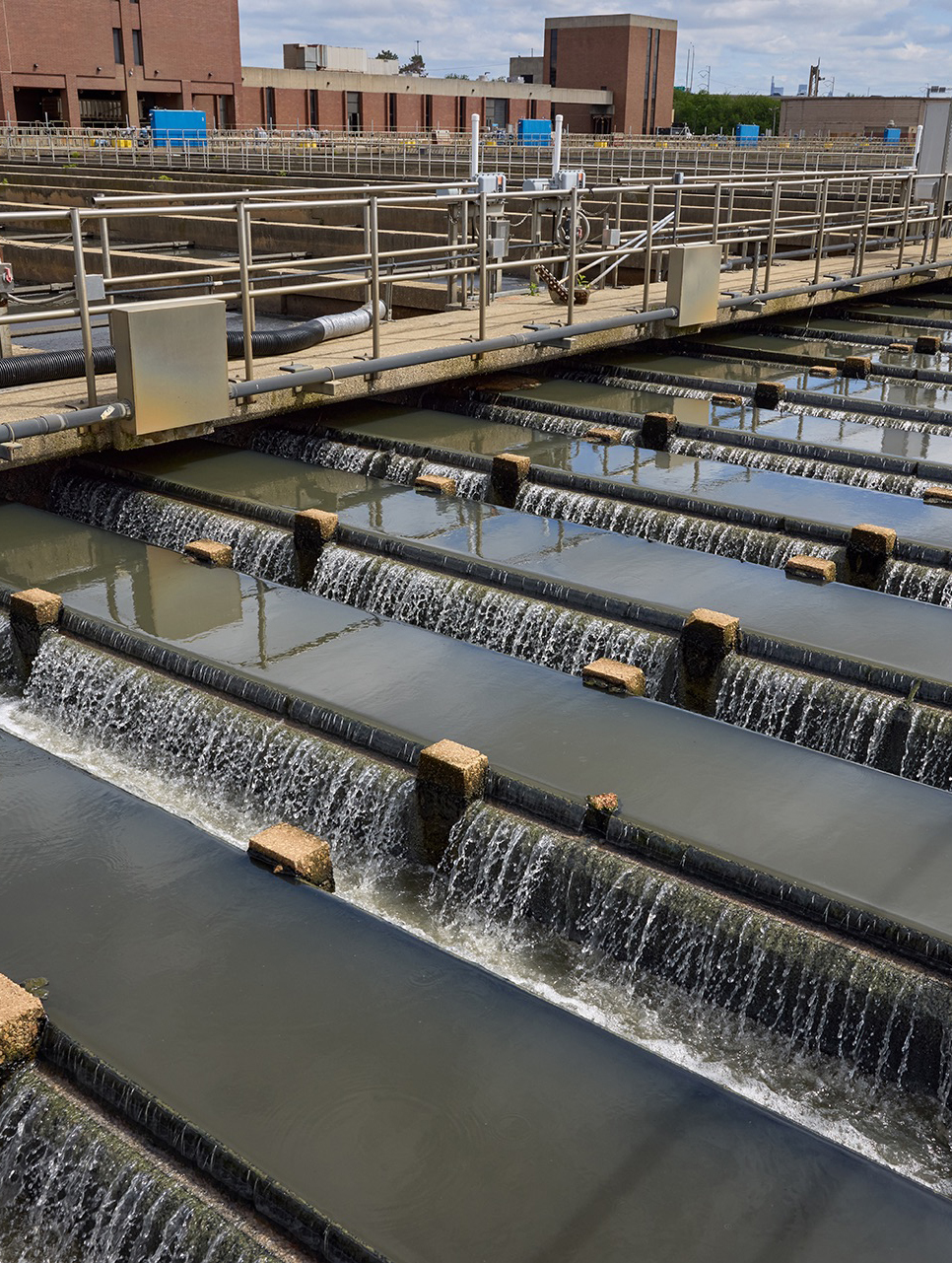
It starts by screening out trash and removing heavier grit that quickly falls out. Along with oily scum that floats to the top, these products go to a landfill. The watery sewage then flows very slowly through an expansive grid of concrete tanks that allow sludge to settle to the bottom.
While the water continues on to be treated before it is released into the Delaware River, the sludge is far from finished. It’s more like chocolate milk at this point and about 98%-99% water, as seen on a May visit to the Southwest plant. “The second half of the job is … to get as much of the water as possible out of the biosolids, because the drier that it is, no matter how you’re disposing of it, the easier and less costly it is to do so,” Kricun says.
The Southeast plant pumps its still-watery sludge through pipes to the Southwest plant. There, air is blown into the sludge from both plants, creating a froth so the solids can be skimmed off the top. The now less-watery, mousse-like sludge is then treated inside the Southwest plant’s 12 anaerobic digesters — house-sized tanks kept close to 95 degrees to stimulate bacteria to convert much of the organic matter into methane gas. The methane is siphoned off and burned to help heat the digesters. Outgoing biosolids pass through heat exchangers to warm up the incoming sludge.
Wastewater treatment is basically a separation process.”
— Andy Kricun, retired environmental engineer
The digestion process kills pathogens and reduces chemicals that might attract flies or rats (aka “vectors”). The material can then be classified by the EPA as Class B biosolids and legally applied to fields as fertilizer.
The sewage sludge from the Northeast plant is digested on site and then shipped in barges down the Delaware river to the Southwest plant. At this point all of the biosolids are pumped next door to the Biosolids Recycling Center (BRC), operated under contract by a national company called Synagro Technologies Inc.
In the pungent and deafeningly loud BRC, the biosolids are then run through hippo-sized centrifuges dating back to the 1980s that spin out yet more water, producing a thick “cake” that holds its shape when plopped onto conveyor belts below. Finally, the cake moves through two massive gas-powered dryers that yield hard pellets that are then loaded into silos. After the additional processing at the BRC, which further reduces pathogens, the EPA considers the pellets to be Class A biosolids, which can be applied in places where humans might come into contact with them, such as parks and golf courses. When the volume exceeds what the BRC can dry, Synagro distributes Class B biosolids to farms, where it is used as fertilizer, or to mine reclamation sites, where it is used to build up a layer of soil that can support vegetation. At every stage, water separated from the biosolids is piped back to the water treatment flow at PWD’s plant.
Hits the Fan
The Philadelphia Water Department (PWD) “became aware of data anomalies” in the processing of Class B biosolids at the Southwest treatment plant in March 2024, as the department said in an emailed response to questions from Grid. An internal investigation revealed that the anaerobic digesters had been failing since January 2022, but the plant manager had instructed workers to fudge the numbers to make it appear that the biosolids had been properly processed to reduce pathogens and not attract vectors, when in fact they had not.
Improperly processed biosolids distributed as Class B violated permits allowing land application. Liquid output was tainted as well. Contaminated water separated from the underdigested biosolids had flowed back into the plant’s water treatment system. During especially heavy storms, the overloaded system flushed the undertreated soup into the Delaware, increasing water pollution from the plant and violating permits that allow PWD to discharge water into the Delaware.
When PWD learned of the breakdown, the department immediately told Synagro and government regulators. PWD had to notify 25 farmers and other land managers who, unbeknownst to them, had used the noncompliant Class B biosolids.
As PWD investigated, it set up an operation to dry biosolids at the Northeast plant so they could be distributed directly from there, relieving some of the load at Southwest. The department also heaped improperly processed “cake” on covered concrete pads at the Southwest plant and began shipping about 200 to 400 tons a day of the sludge to the Fairless Landfill in Bucks County, according to documents obtained by Grid through a right-to-know request.
“The primary factors affecting digester performance were related to inefficient heat transfer and aging equipment within the digestion system,” PWD explained in its written response. “As digestion performance declined, solids weren’t broken down as effectively, which increased strain on downstream processing at the BRC and created an operational feedback loop, which had negative impacts on plant treatment processes.”
Staffing, or shortage thereof, might have played a part. At the start of 2024, 20% of the positions at PWD were unfilled, and it is particularly difficult to recruit the specialized workers who run treatment plant equipment. “At a wastewater or drinking water plant, you have two main kinds of employees: water operator-centric jobs and support jobs,” Kricun says. “Operators are maybe 10% of the total staffing. You have accountants, engineers, electricians and maintenance people — 90%. Those people you can get from other sectors. But it’s very difficult to find qualified operators.” An aging workforce means the problem isn’t going away anytime soon. A 2021 Brookings Institution analysis found that 88% of water treatment plant operators were 45 or older.
“Staffing challenges do not excuse compliance failures,” PWD responded when asked how staffing contributed to the biosolids breakdown. “After identifying the issue, PWD implemented additional oversight measures by bringing in staff from other units to support plant operations, process control, data quality assurance and reporting compliance.”
Ultimately the PWD and the EPA entered into a consent decree, a legal agreement under which the City paid the agency $203,563 to settle the matter. PWD also fired the plant manager and another supervisor and hired consultants to review the biosolids process.
Their recommendations included “both immediate operational improvements and longer-term infrastructure upgrades, including improvements to digestion system performance.” These included cleaning out the 12 digesters and replacing the digester heating system.
New Contaminants
The water department says the issue is behind it now and that it has launched a biosolids master plan expected to be completed in the summer of 2027. PWD Commissioner Ben Jewell said the plan will assess current infrastructure conditions and help guide renovations and replacements over the next 25 years. It will also prepare the department to address “emerging contaminants of concern.”
Perhaps the most concerning emerging contaminants are per- and polyfluoroalkyl substances (PFAS), often called “forever chemicals” because they break down slowly and can endure for years in the environment and in bodies, where they have been linked to some cancers and reproductive problems.
The chemicals can end up in household wastewater as they wash off clothing and other items. Larger amounts end up discharged by industrial sources. Once in the sewers, the chemicals bind to organic matter so that they end up spread on fields with treated biosolids.
“Industrial sources or the military are going to be some of the largest sources. Residential plays a smaller role,” says Jared Hayes, senior policy analyst with the Environmental Working Group.
The Pennsylvania Department of Environmental Protection (DEP) is currently studying high levels of PFAS in drinking water in Columbia County. According to a DEP website, “Based on the information that DEP has collected so far, it appears likely that a source of contamination is the historic spreading of sewage sludge on agricultural properties in the area.“
EPA regulations require sewage treatment plants to monitor biosolids for metal pollutants such as arsenic and cadmium. So far, forever chemicals have mostly escaped federal oversight, although the agency released an assessment of possible health impacts of PFAS in biosolids in early 2025.
“We’re really seeing the beginning stages at the state level of PFAS in biosolids,” Hayes says. Maine is one of the few states that has taken action on PFAS in biosolids. In 2016, a dairy farm in Arundel, Maine found high levels of perfluorooctane sulfonate (PFOS) in its milk. In 2020, the state found high levels in milk and soil from dairy farms in another area, near Fairfield. The state also found high PFAS levels in wildlife in 2021, leading to advisories against eating hunted deer and turkey. In both areas, the chemicals were traced to contaminated biosolids spread on farm fields.
PFAS have also found their way into milk and meat from nearby wastewater treatment plants, as has happened in Michigan, and from an air force base where PFAS-containing firefighting foams were used in New Mexico.
In 2024, Consumer Reports tested 50 samples of milk from California, Michigan, New Jersey, Texas and Virginia, bottled under five brands. The magazine detected PFAS in six of the samples spanning four brands and three states. Milk from multiple producers is often mixed together, so the magazine could not trace the samples to specific farms.
The mixing of milk and other agricultural products from multiple farms means that PFAS substances in them end up diluted by the time the products reach consumers. However, local, single-farm products could be more vulnerable to high levels of contamination, Hayes says.
Maine has responded by testing soil on farms and by restricting land application of biosolids containing PFAS. Five other states have joined Maine in regulating how biosolids containing PFAS can be used. Pennsylvania is not one of them. That could change soon.
DEP announced in March that it would propose changes to biosolids permits to require testing for PFAS, with different requirements for land application depending on the results. Biosolids with high PFAS levels could not be applied to land. Biosolids with lower levels would be limited in how much and how often they could be applied.
“Utilities are concerned that if PFAS is regulated in biosolids, it would be a huge problem because disposal costs would go way up,” Kricun says.
Synagro is clearly concerned. The company’s 2024 sustainability report uses the term PFAS 27 times. In 2024, a group of Texas farmers sued Synagro, alleging the company had distributed PFAS-tainted biosolids.
(Synagro, whose website lists 34 sites across the country where it operates, has a checkered past. In 2009, an executive of a Michigan Synagro subsidiary was convicted along with a Detroit city council member of bribing officials to secure the city’s biosolids contract. No one was convicted in connection to Synagro landing the contract with the PWD, but, as detailed in a 2012 Philadelphia Inquirer article, the company tried to have a consultant paid $400,000 per year as part of the 20-year contract. The consultant, Hiriam Hicks, coordinated a lobbying effort directed at Philadelphia elected officials as well as the union representing workers at the existing sludge processing operation so they would drop their opposition to privatization. Hicks’ compensation was later removed from the contract following a City ethics review.)
Although utilities and contractors such as Synagro might get stuck with the PFAS tab, the solution to contamination lies upstream. “One thing utilities can do is optimize industrial pre-treatment. It’s a lot easier to catch the stuff coming into the system before it’s mixed in,” Kricun says.
So far, PWD does not test biosolids for PFAS, but Jewell says that PWD is closely following the proposed DEP rules, which also would limit nutrient runoff from biosolids, particularly phosphorus, from farms. If DEP moves forward with the discussed rules, Jewell says, “We would expect that it would increase the cost of our land application system.”
Seven to 10 trucks pull up to the three silos at the BRC to fill up with class A biosolid pellets every weekday. These drive to any of 280 sites in Pennsylvania: mostly farms but also composting facilities and landfills, based on a list of DEP permits linked to Synagro. Limits on how much biosolids could be applied to a given field could “decrease available land for beneficial reuse of biosolids,” Jewell says.
They’ll have to go somewhere. As long as 2.2 million people keep flushing their toilets, the task of doing something with the biosolids will remain, even as it grows more complicated and expensive.