The streetlights lining Baltimore Avenue have been aglow for nearly two hours when Books Through Bars begins to bustle. Volunteers, stepping in from the stony November cold, come to support an often overlooked cause: providing reading material to people in prison.
Incarcerated individuals often have little to read, and the range of books provided to them tends to be narrow, due to under-funded prison libraries and censorship. The aim of Books Through Bars is to counteract the status quo of prison libraries by making reading more accessible to those incarcerated across Pennsylvania and beyond.
“Unfortunately, prison libraries and school systems always have their budgets cut, so they have less services to offer people that are incarcerated — this is where we come in and fill the gap,” says Tom Haney, who has spent a lifetime working with incarcerated people as a counselor and now as the president of Books Through Bars.
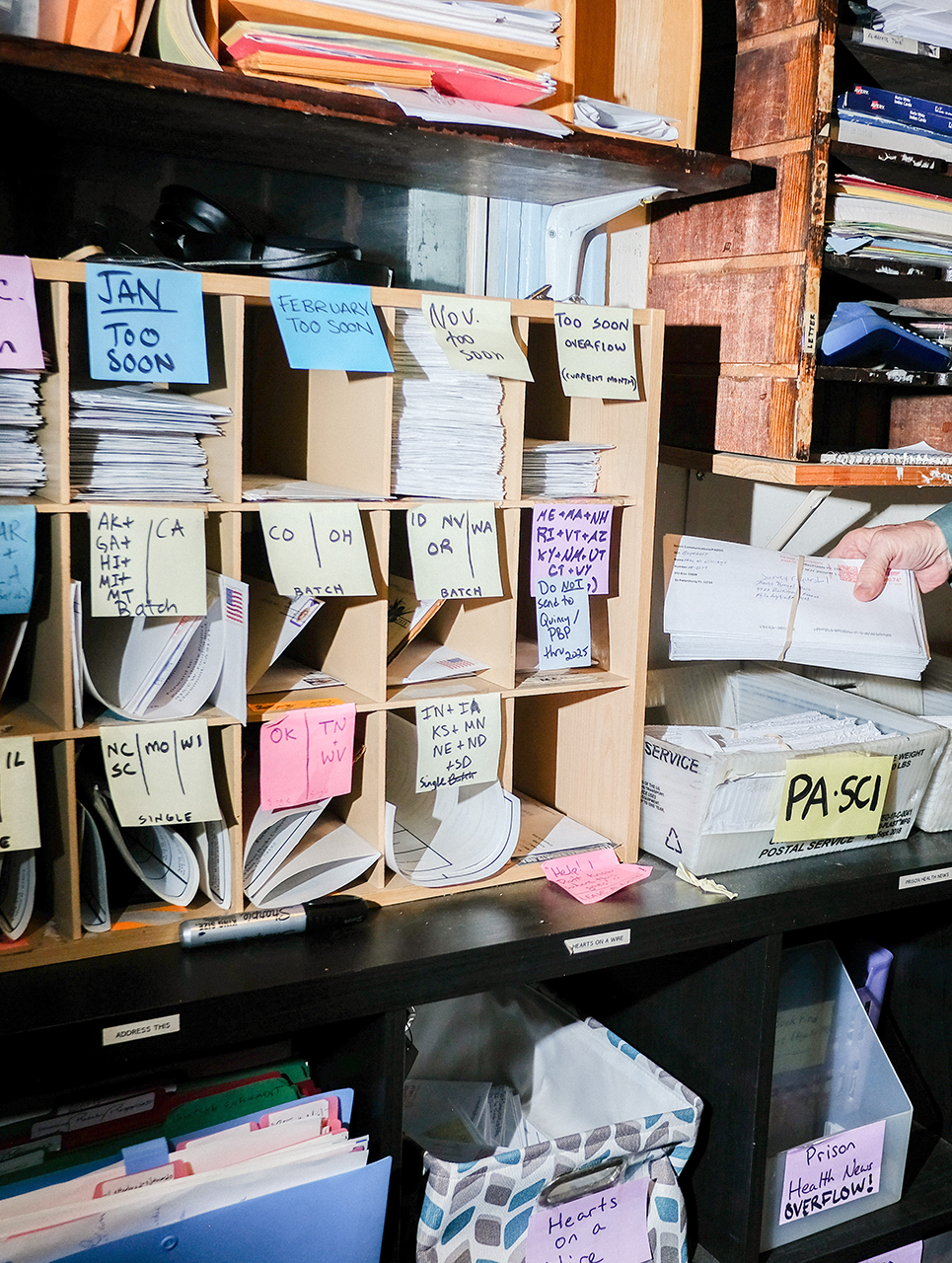
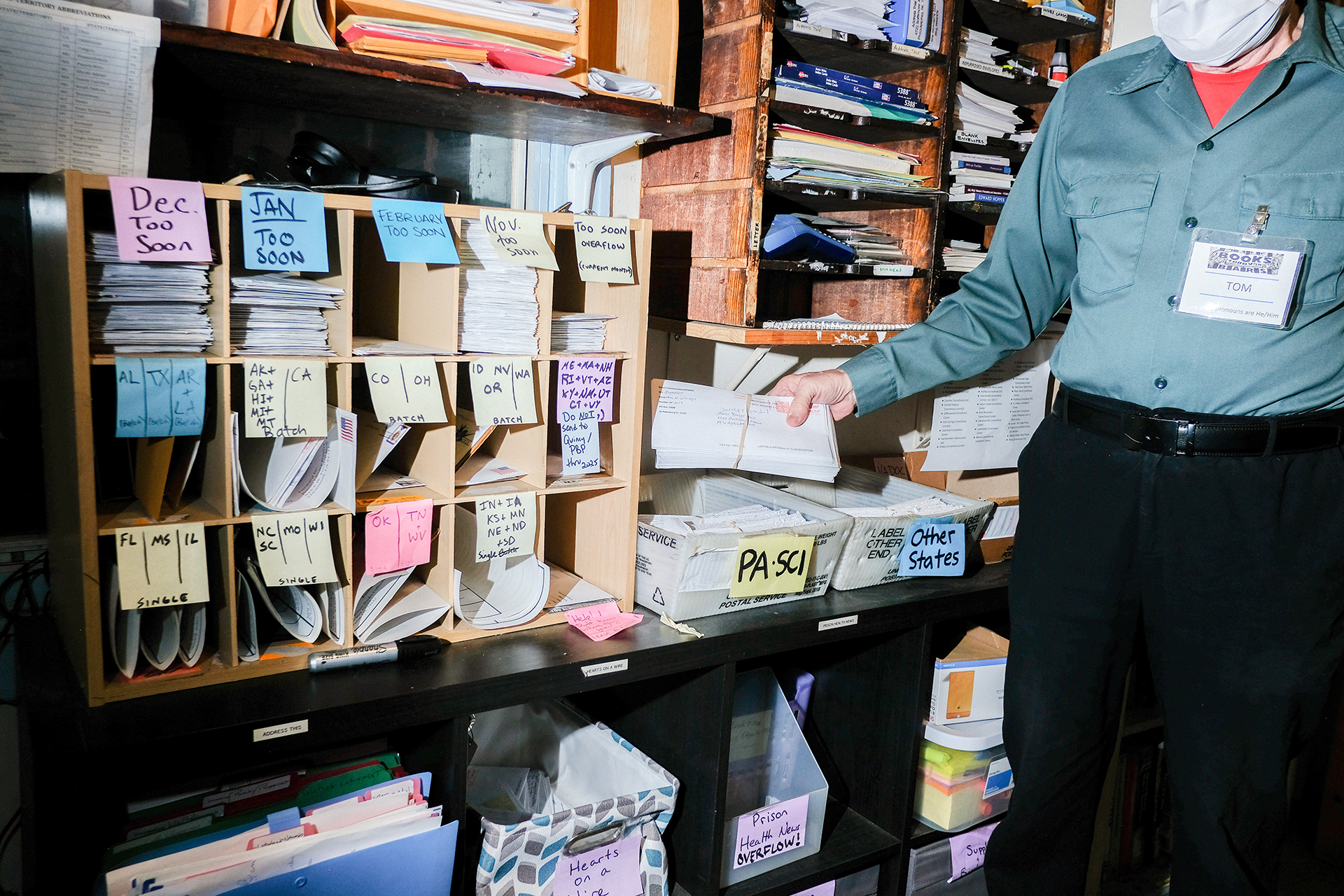
Typically, an incarcerated person will send a letter to Books Through Bars (BTB), requesting reading material of a specific book, topic or genre. In turn, volunteers comb through BTB’s library and mail back books that fit the request to the best of their abilities. Those incarcerated can send a new request once every three months. In 2025, BTB received over 8,200 requests, the highest total since 2016. Dictionaries, according to Haney, are the most requested item.
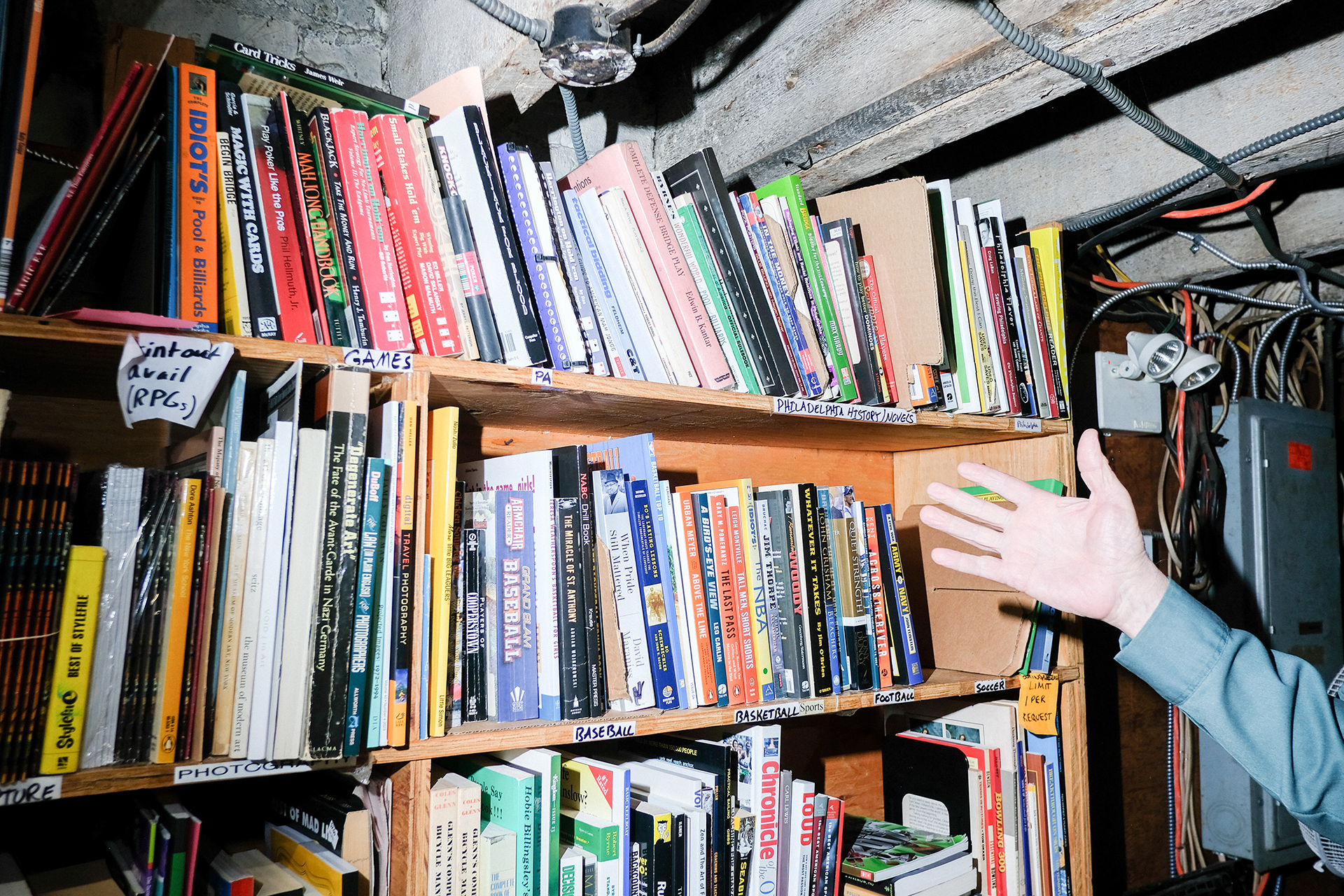
The recipients of BTB’s packages don’t understate the impact of having access to books. In an anonymous letter to BTB, one wrote, “Fighting cancer in prison is hard. It is hard anywhere. I could have had the books delivered to the ward, but I made a point of getting up, getting dressed, and walking down to the treatment area to pick the books up. Just that limited activity gave me a purpose that day. It was sort of like Christmas morning.”
BTB’s biggest expenditure is shipping. Pennsylvania state prisons use FedEx as a carrier instead of taking advantage of their own fleet of vehicles that already transports items between prisons throughout the state, Haney explains as he stashes away books from a recent donation. This makes it far more expensive to ship books than it would be with a different carrier.
They also frequently run into administrative and bureaucratic roadblocks. Each prison has its own rules for what can and cannot enter the facility — even books. Prison officials ban books due to security concerns. However, Keri Blankinger, writing for the Marshall Project, says that books banned by prisons feature content that officials object to. She mentions that “Internet for Dummies” was banned in Michigan due to it being a “threat to the order and security of the institution,” while “Mein Kampf” is banned by only seven states out of the 18 that publicly shared their banned book lists with The Marshall Project. Popular reads like the “Harry Potter” series, Stephen King novels, and even “Huckleberry Finn” and “The Adventures of Tom Sawyer” are banned in prisons. Hardcovers are often restricted due to physical safety concerns as well, making law books and textbooks far more difficult to get into the hands of incarcerated people.
Over 90% of incarcerated people are going to be released one day and come back to our communities. How do you want them to come back? How do you want them to fit in our communities and our society?”
— Tom Haney, Books Through Bars
“Our main goal is to help people on the inside self-educate themselves,” Haney says. “Many studies over the years have shown that people who are incarcerated, who do educate themselves in one way or another, come out in a far better position to live here on the street than how they did before they were incarcerated.”
A 2025 report by the American Library Association found that 68% of people incarcerated in state prisons don’t have a high school diploma, and the literacy skills of the incarcerated population in America are far below that of the general public. The same report, however, found that “incarcerated people who completed GEDs while incarcerated in Indiana had a 20% lower rate of recidivism, while those who received college degrees were 44% less likely to return to prison.” The report also highlighted the lack of funding that keeps many prison libraries from meeting prisoners’ needs. “Despite their value, prison libraries in the U.S. are widely under-resourced with vast disparities across facilities…”
Michael “Smokey” Wilson grew familiar with the lack of funding in prison libraries and the importance of education while incarcerated. Wilson, who grew up in Philadelphia’s foster care system, was 17 when he went to prison. He then spent 46 years behind bars in various Pennsylvania state correctional institutions. Between boxing and attaining a college degree, Wilson spent his time in prison learning and growing for when the moment came for him to re-enter society.
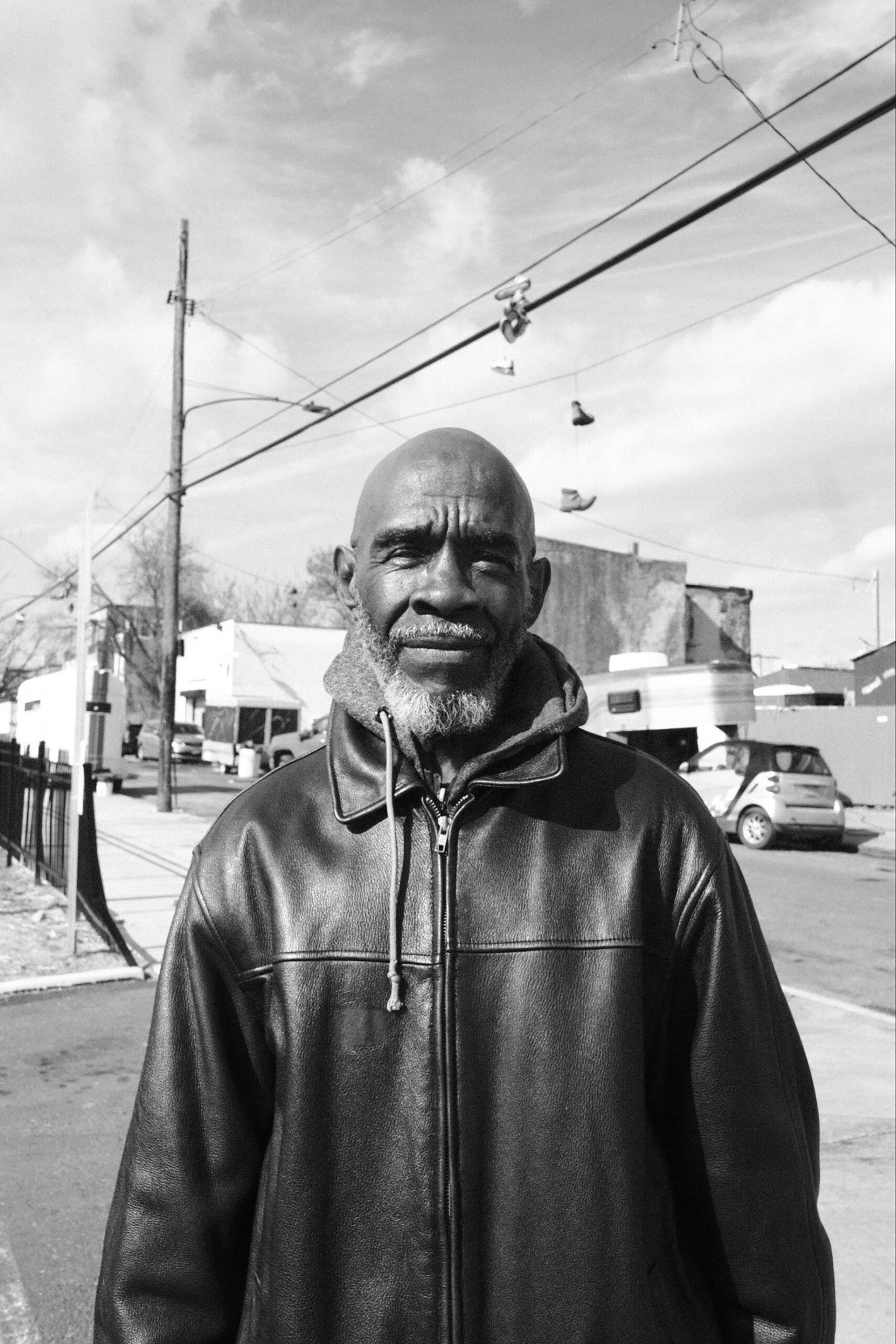
“You have to find something to do — being stationary for that long made me pick up books and read,” he says. “Studying is perseverance. Coming back out here into the larger community is the test. You have to believe in it and be patient. That’s what education did for me.”
Since his re-entry in 2017, Wilson has spent his time coaching boxing, volunteering at the Beckett Life Center in North Philadelphia and advocating for juvenile prison reform.
“Over 90% of incarcerated people are going to be released one day and come back to our communities,” said Haney. “How do you want them to come back? How do you want them to fit in our communities and our society?”
On a federal legislative level, the Prison Libraries Act was introduced to the House of Representatives in 2023. If passed, the act would have created a federal grant to establish and fund prison libraries. Despite having 45 co-sponsors, the bill died in committee. Grassroots causes, like Books Through Bars, remain a predominant way to support the educational growth of incarcerated people.
When discussing the need for accessible education in prison, Wilson quotes Malcolm X: “‘Education is the passport to the future,’” he says, “‘for tomorrow belongs to those who prepare for it today.’”
Book donations can be made at booksthroughbars.org/donate-books.