For the Elmwood Park Zoo, conservation doesn’t just mean protecting wild animals, like the giraffes, jaguars and monkeys that live at the Norristown facility, but also the planet they inhabit.
“We are not just species survival-based, we are also environmental survival-based, so we want to make sure we’re taking care of the planet as best we can and in any way that we can,” says Eric Donovan, the zoo’s chief operating officer.
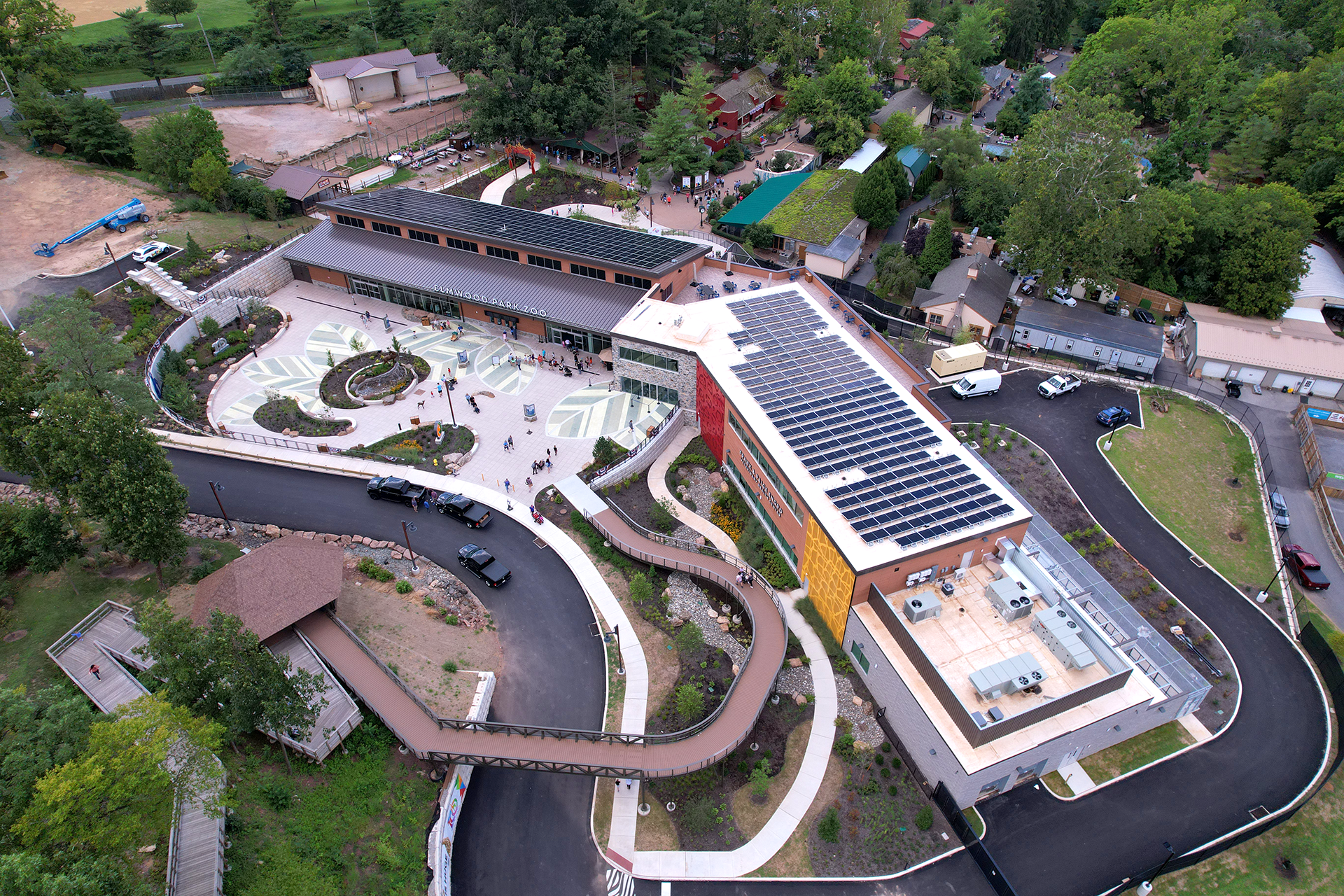
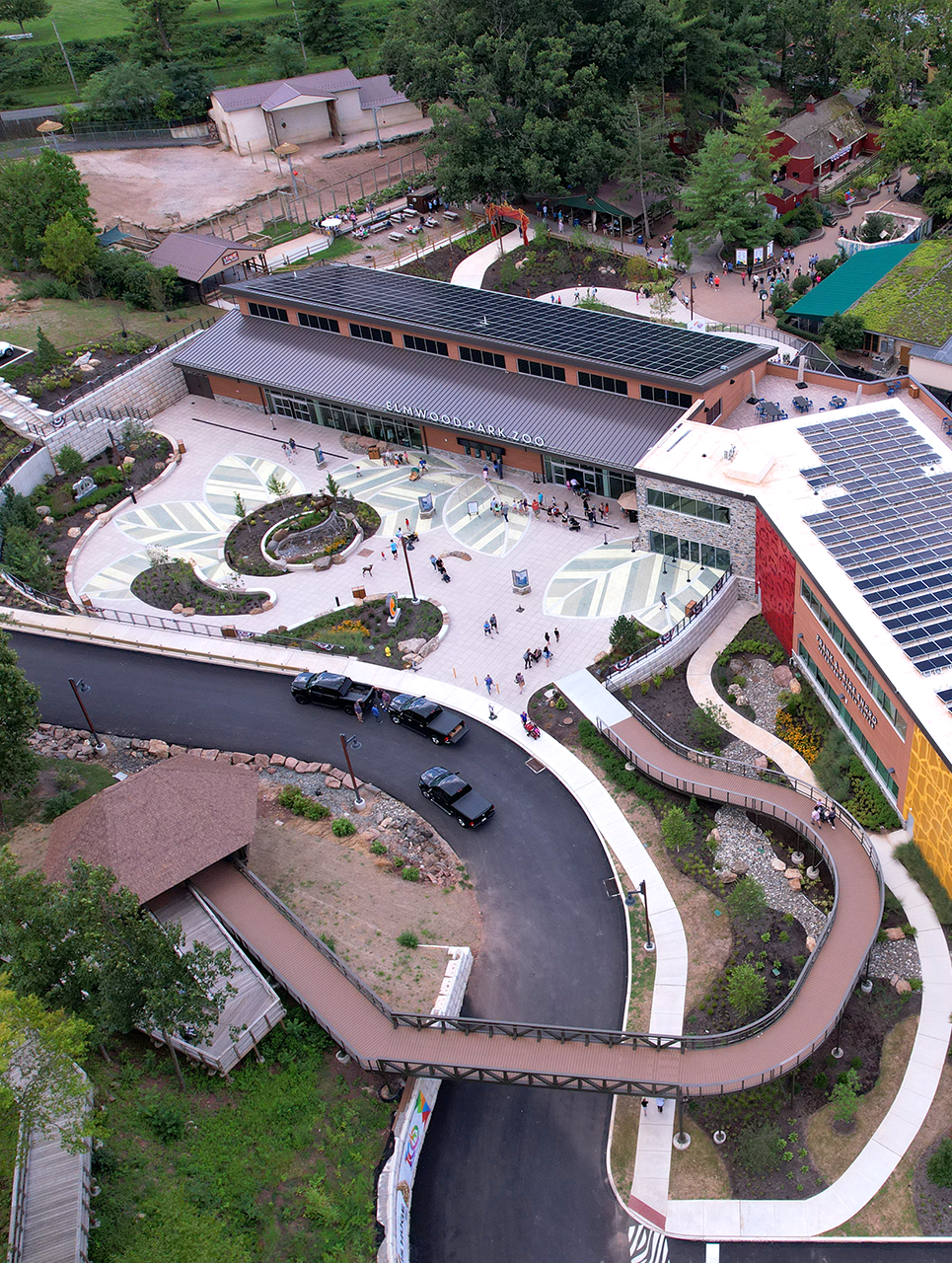
That commitment is built into the zoo’s new Welcome Center and Frank & Paige Engro Veterinary Health Center — a shared, solar-powered facility completed in summer 2024.
The building has 449 solar panels across two segmented roofs. The project was supported through PECO’s solar rebate programs, which provided the zoo with more than $40,000 in incentives for the project.
Residential customers can receive $500 rebates through these programs, while businesses earn 10 cents per kilowatt-hour in incentives. The zoo’s solar panel system is estimated to generate over 350,000 kWh of energy savings annually — at current commercial billing rates, that’s over $30,000 of savings and equivalent to the carbon captured by 215 acres of U.S. forests in a year.
“It was important for us to have some very sustainable practices within the implementation of the building that made sense from a cost perspective but also from a daily operational perspective too,” Donovan says.
We are not just species survival-based, we are also environmental survival-based.”
— Eric Donovan, Elmwood Park Zoo
The solar panels aren’t the only environmentally friendly initiatives at the welcome and health centers. The building also has bird-safe glass etched with stripes to prevent window collisions. The welcome and health centers recycle rainwater too — it’s used to irrigate outdoor plants and flush the building’s toilets.
The solar panels serve as a visible representation of the zoo’s commitment to sustainability — one that sparks interest among visitors. “A lot of people just find it really cool-looking,” says Donovan, adding that it offers visitors inspiration for a way they could choose to be sustainable too.
During the daytime when the sun is up, the solar panels are powering most of the welcome and health centers’ needs, but some electricity still needs to be drawn from PECO’s grid for equipment such as air conditioning units or MRI machines. At night, the building is still connected to PECO’s grid and able to pull electricity from it.
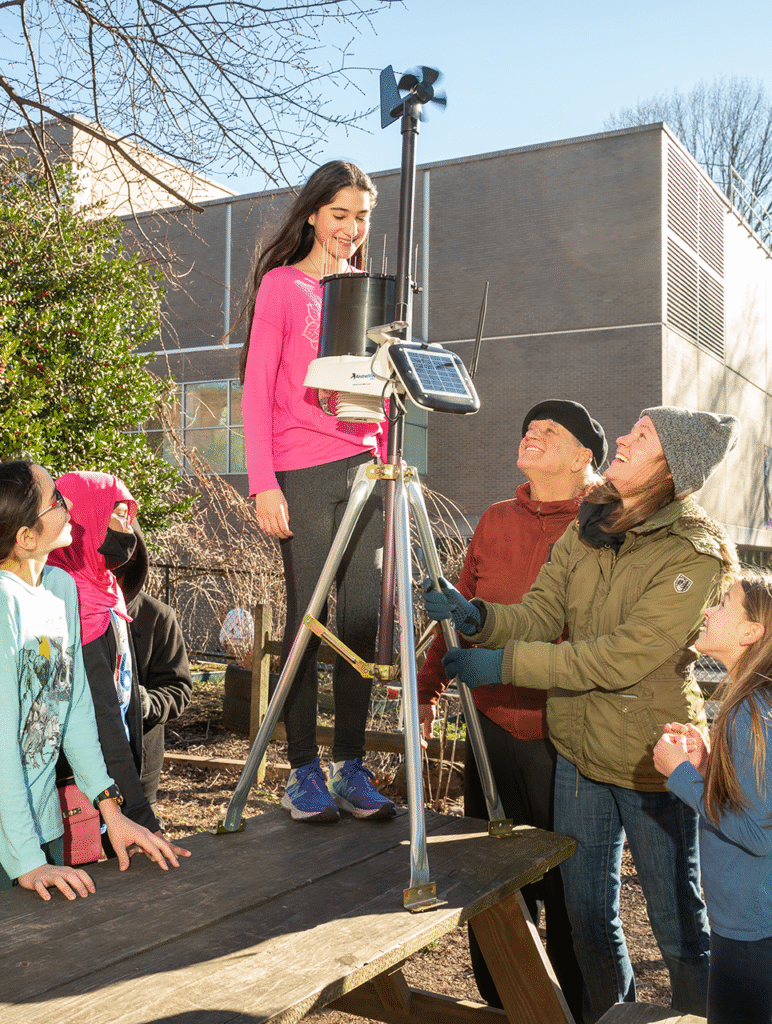
In August, the zoo held a Solar Safari event in collaboration with Solar States, the Philadelphia-based solar installer that worked on the zoo’s project. The event educated the public on the solar energy system, inverters and electrical infrastructure at the zoo.
Jared Pashko, Solar States’ director of sales and marketing, says solar panel systems like the zoo’s generally have warranties of 25 to 30 years, and some systems can last more than 50 years.
Donovan says the solar system at the welcome and health centers “made a lot of sense” for the zoo because it’s low maintenance and an accessible way to be sustainable. “We’re really happy with it,” he says.