• Race and Equity
  • Environment
  • Food
  • Circular Economy
  • Events
  • Advertise
  • Subscribe
  • Grid Podcast: The People Left Behind

The Latest

#183 August 2024

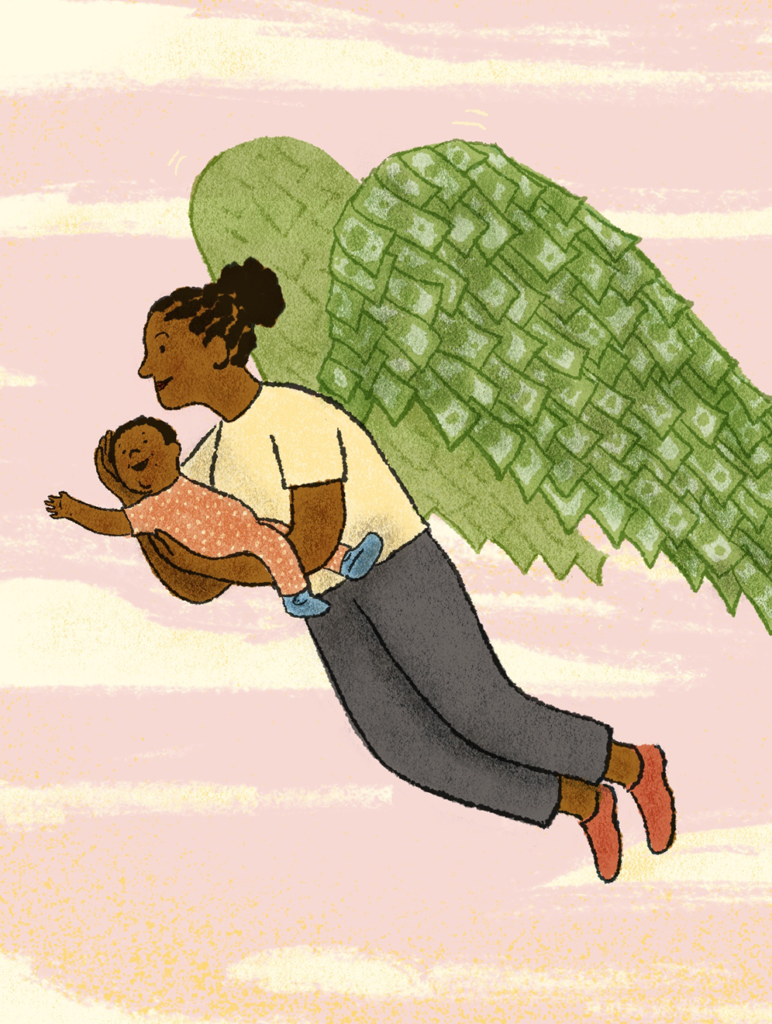
A pilot program shows the power of a modest guaranteed income

Imagine in the span of a year being badly injured in a car accident, suffering the loss of family members and discovering you are pregnant. After this happened to one Philadelphia woman, she was told she had been accepted into a study of how guaranteed income impacts quality of life. The gift of $500 a

More
August 1, 2024
4 mins read
#183 August 2024

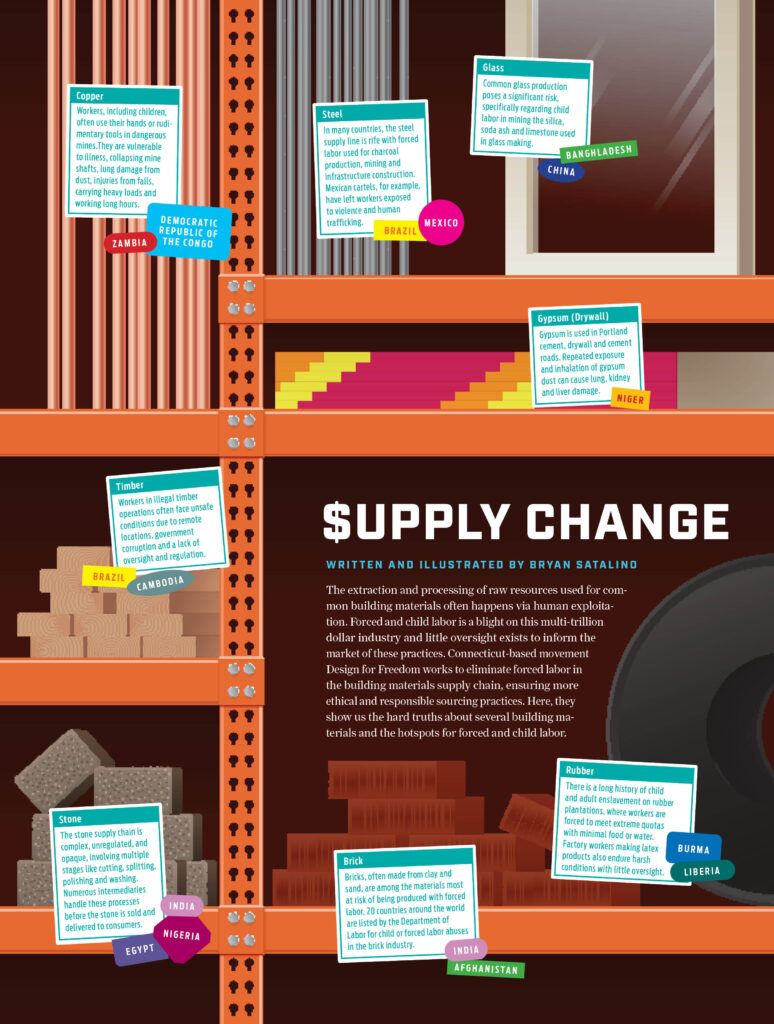
Slavery-free building products are possible if consumers demand them

Say you’re renovating your kitchen. You weigh the pros and cons of granite versus butcher block countertops, you compare different brands of convection stoves and you work through stacks of tile samples for the backsplash. You’re thinking mostly about style and function, and perhaps the sustainability of the materials, but how about slavery? Surely you

More
August 1, 2024
2 mins read
#183 August 2024/Environment

New book compiles essays on the hidden environmental impact of America’s big box stores

When was the last time you got lost in Home Depot, or cursed the amount of time it took to walk from one side of Walmart to the other as you checked off the items on your shopping list? The term “big box” captures their shape, but possibly understates their scale. A Walmart Supercenter and

More
August 1, 2024
2 mins read
#183 August 2024/Public Health/Race and Equity

Philadelphia isn’t prepared to help people struggling with addiction and homelessness, but that isn’t slowing down Mayor Parker’s plans to end Kensington’s open-air drug market

On May 8, the City of Philadelphia cleared a homeless encampment that stretched two blocks on Kensington Avenue between East Allegheny Avenue and Orleans Street under the Market-Frankford Line. This clearing marked the first step of Mayor Cherelle Parker’s five-phase plan to dramatically improve Kensington, whose residents contend with extreme poverty, open-air drug markets and

More
August 1, 2024
11 mins read
#183 August 2024/Air/Energy/Environment/Water

Companies burning fossil fuels and tires to mine cryptocurrency are setting up shop in PA

What’s the size of a toaster and uses three times the energy of an average Pennsylvania household? That would be a cryptocurrency mining machine — a computer that runs 24/7 and spits out numbers in an attempt to solve complex problems, creating proof-of-work cryptocurrency, like Bitcoin, as a result. “We have companies that have 80,000

More
August 1, 2024
4 mins read
#183 August 2024/Urban Nature

In Mount Airy, fox lovers are (illegally) treating local animals for mange. An expert says it’s inherently dangerous and could backfire

It was a warm summer morning and shirtless, sweaty runners were just coming off the Wissahickon Trail. As they ascended out of the picturesque valley in Northwest Philadelphia to start the workday, a woman named Mary and two companions were heading the other direction, already getting down to business. Their mission looked a little like

More
August 1, 2024
6 mins read
#183 August 2024/Editor's Notes/Politics

Editor’s Notes: Is Having Enough Un-American?

Remember Andrew Yang from the 2020 presidential debates? The current election cycle has been so frightening that you could be excused for forgetting the crowded Democratic primary stages of 2020, but Yang gained some headlines for backing a universal basic income (UBI) proposal he called the Freedom Dividend. Under his proposal, every American adult would

More
August 1, 2024
2 mins read
#183 August 2024

The Capitali$m Issue

Is capitalism inherently rotten, or do we just let it go too far? It can be hard for Americans to think critically about capitalism. If you want to know what water is like, don’t ask the fish, the proverb goes. Capitalism is the water we drink, the air we breathe. It is our state religion.

More
August 1, 2024
1 min read
#182 July 2024/Climate-Change/Environmental Justice/Public Health

For our city to beat the heat, it’s going to take a whole lot of green

By Kyle Bagenstose and Adam Litchkofski If you’re reading this story when it’s still hot off the press, odds are you’re probably pretty warm yourself. Another July has arrived in Philadelphia, and they ain’t what they used to be. From 1939 through the end of the 20th century, Philadelphia’s average air temperature in this quintessential

More
July 1, 2024
9 mins read
#182 July 2024/Public Health/Urban Nature

University of Pennsylvania researchers comb the forest floor to understand tick life cycles and the diseases they carry

Last week, I plucked a tick off the neck of a teenager I had guided on a canoe outing. (It came off easily, not having latched on yet.) Presumably the tick had climbed on as the teen had walked through some tall grass after the boats were put away. With single-minded determination, the tick had

More
July 1, 2024
4 mins read
Previous 1 … 33 34 35 36 37 … 411 Next

Recent Comments

  1. Roland Ott on South Philly Librarian Teaches People “How to Not Use AI”
  2. greggsandler on South Philly Librarian Teaches People “How to Not Use AI”
  3. Mike Heaney on What we lose when civic spaces are converted into housing
  4. AME on Philly parks depend on volunteer groups. But six years after the Friends of the Pennypack was sued out of existence, the threat remains
  5. Catherine Ross on Neighborhood-defining historic prison in Norristown threatened with demolition

gridmagazine

Sometimes Linde Lauff sees a pile of construction Sometimes Linde Lauff sees a pile of construction waste in Pennypack Park and thinks, that shouldn’t be there.

Not just in a general way in which, ideally, no litter should ever pollute a natural space, much less the enraging detritus left behind by short dumping. For her, the frustration is much more specific. A little over six years ago, Lauff was the president of the Friends of Pennypack Park, a nonprofit that regularly organized cleanups and otherwise cared for the 1,600-acre park that winds through Northeast Philadelphia. But after the families of two park users who suffered accidents sued the organization, the Friends group was left uninsurable in 2020 and dissolved.

Overnight, gone were the monthly cleanups during which volunteers spent nearly 1,000 hours a year hauling 4,000 bags of trash out of the park. Gone was the Tree and Trails committee, which planted over 2,000 trees in the park. And gone was a community of like-minded individuals who cared deeply for their local natural space and formed close bonds in the process.

Those people haven’t actually gone anywhere, Lauff says. She talks to many of them regularly, and some still perform smaller, informal cleanups. But what has disappeared is their sense of agency and ability to effect positive change in a substantial way.

“It’s hard to believe it’s been six years,” Lauff says. “People are still very much concerned about what happens in the park. And what will happen to the park in the future.”

➡️ Read the full story at gridphilly.com

✍️ Kyle Bagenstose
📸 Tracie Van Auken

#philadelphia #phillyparks #phillyparksandrec #urbannature #urbangreenspace
On September 27th, 2026, @acadnatsci closed its do On September 27th, 2026, @acadnatsci closed its doors after 214 years of natural science education and research. Hear from organizers, visitors, and staff about the impact the closure will have on the community.

#philadelphia #savetheacademy #saveacadnatsci #savetheacademyofnaturalsciences #academyofnaturalsciences
From outside of @acadnatsci earlier today. #phila From outside of @acadnatsci earlier today.

#philadelphia #savetheacademy #saveacadnatsci #savetheacademyofnaturalsciences #academyofnaturalsciences
On a June Monday evening, the loudest sound in the On a June Monday evening, the loudest sound in the South Philadelphia Library was the clicking of computer keyboards. Behind the busy island of computers, another group of people filtered into a classroom filled with green plastic chairs and soft ambient music: a space of quiet resistance.

“I’m tired of AI being shoved down my throat,” one woman said, puncturing the stillness.

She’d come to the right place: a workshop called “How to Not Use AI” led by librarian Charlie Bailey.

The Free Library of Philadelphia hosts hundreds of free workshops each year, many of which focus on digital literacy. Until now, those workshops have taught participants how to use programs such as Microsoft Excel and Quickbooks. Bailey’s workshops are the first to teach people how not to use technology. This may sound counterintuitive, but Bailey believes that showing people how to disable artificial intelligence features from common apps and websites aligns with the library’s mission of advancing digital literacy.

“We’re constantly helping people navigate technology,” he says, “I see this as part of that in that it’s helping people reclaim their autonomy over the technology they use and decide if they want to use certain tools.”

➡️ Read the full story at gridphilly.com

✍️ + 📸 Kathryn Rice

#philadelphia #antiai #libraryresources #digitalliteracy #freeworkshop
Anou Vongbandith, 51, the chef at Germantown’s Das Anou Vongbandith, 51, the chef at Germantown’s Das Good Café, was driving to work on the sweltering morning of July 26, 2025, when masked men from Immigration and Customs Enforcement (ICE) boxed in his car, then abducted him. They soon sent Vongbandith to the Moshannon Valley Processing Center in Philipsburg, Pennsylvania, a facility equipped with the barbed wire and other features of the federal prison it once was.

Detainees have sickened and died at Moshannon, and the clock was ticking for Vongbandith. Due to a bout with COVID-19, “[his] heart pumps only 27 percent of the normal volume of blood, and he didn’t have his medications,” says Anh Vongbandith, his wife of 25 years and owner of Das Good. “Also, ICE aims to deport people within 30 days of detaining them.” There was talk of returning Anou to Laos, his birthplace, though he has lived in the U.S. since the age of 5.

Anou’s arrest incensed many Northwest Philly residents. The Vongbandiths have become beloved members of that community, first through Tipsy Café and Catering, a takeout spot at 5227 Germantown Ave., then with Das Good, a spacious café on the West Chelten Avenue corridor that offers breakfast and brunch classics, often with an Asian twist.

“Anh never says no,” says Michael Lazrus, a longtime Germantown peace activist. “She provides food and a meeting place, even after ICE detained Anou,” he says, adding that the Vongbandiths give their food overages to nearby pantries. The family also serves up hundreds of free Thanksgiving dinners each year, Lazrus says.

Anh’s community involvement extends even further. “I can’t see animals put to sleep,” she says. “Right now we’re fostering four kittens and one puppy at home.”

People took Anou’s arrest personally, Anh believes. “It was as if they said, ‘No way are you going to keep our chef!’”

➡️ Read the full story at gridphilly.com

✍️ Constance Garcia-Barrio
📸 Taylor Ecker

#philadelphia #ice #deportation #immigration #immigrantjustice
In retrospect, it’s possible to reconstruct a reci In retrospect, it’s possible to reconstruct a recipe that enabled Catie Gainor to create her South Philly cookbook store, Binding Agents. Start with a family connection to the food business and a mother who loved cooking for friends and family. Add a high school summer spent working at a bookstore, early exposure to classic TV cooking shows hosted by Julia Child and Lidia Bastianich and nostalgia for the camaraderie of restaurant work. Fold in a desire to honor her mother’s legacy, a growing realization that Gainor wanted more from her career in public relations and a 2018 move to the Italian Market neighborhood. An idea that formed in 2022 became, by the fall of 2024, Binding Agents: a welcoming shop Gainor describes as “the size of a sardine can.”

With millions of recipes and cooking videos available online, opening a brick-and-mortar store selling cookbooks and fiction and nonfiction books about food and eating might seem foolhardy. But Gainor found reassurance in the fact that similar stores were thriving in cities across the U.S. She sees Philly as a great food city where interest in cooking and eating runs strong. Since the Cook Book Stall in the Reading Terminal Market closed in 2017, she says the city has lacked a hub for food authors, cooks and eaters to gather.

➡️ Read the full story at gridphilly.com

✍️ Marilyn Anthony
📸 Taylor Ecker

#philadelphia #phillybookstore #cookbooks #phillyfoodie #shopphilly
Throughout July 18 and 19, visitors arrived at Sou Throughout July 18 and 19, visitors arrived at South Philadelphia’s Franklin Delano Roosevelt Park with a unique task — to perform for a tree.

The production, “Arborlogues,” is a touring piece developed by Other Forms Of (OFO) Theater, a company led by set designer Dan Daly that emphasizes theatrical experimentation through unorthodox sets. Billed as a “botanical recital,” “Arborlogues” was born during the COVID-19 lockdown, when companies like OFO were forced to reimagine the definitions of theater under quarantine.

“I came with this idea of a play you perform for yourself ... and it developed into the idea of performing for a tree, using the tree as a mirror for the self,” Daly says.

The result is a 15-minute monologue performed from the confines of a thick velvet curtain that encircles a tree’s trunk. Within the intimate space, theatergoers address their arboreal audience through a personalized script composed by playwright Lee LeBreton.

➡️ Read the full story at gridphilly.com

✍️ Sophie Aanerud
📸 Tracie Van Auken

#philadelphia #phillyparks #urbannature #fdrpark #urbangreenspace
On May 4, following the unanimous passing of the “ On May 4, following the unanimous passing of the “ICE Out” legislative package by Philadelphia City Council, a series of letters were sent by the federal government to City officials demanding they turn over years worth of materials concerning “far-left” immigrant activist groups. Among the groups singled out was Asian Americans United (AAU), a community outreach group supporting people of Asian ancestry in the Philadelphia area with leadership development and immigrant justice action.

Vivian Chang, AAU’s executive director, spoke with Grid about the aftermath of the “ICE Out” ruling and the coalition of more than 60 organizations that it recently joined, urging Mayor Cherelle Parker’s administration to implement the legislation.

➡️ Read the full interview at gridphilly.com

✍️ Elijah Fischer
📸 Photo courtesy of Vivian Chang

#philadelphia #immigration #immigrantsupport #immigrantjustice #immigrantactivism
How much do you love your park? Maybe enough to o How much do you love your park?

Maybe enough to organize or participate in a cleanup, raise or donate money to make an improvement, or lead an educational walk. Or maybe you don’t have the time or money to donate, but simply find your local park to be a refuge — and appreciate the work other people are doing to keep it that way.

But no matter how deep your affection goes for your favorite park, it’s unlikely you’d want to get sued for it.

That, unfortunately, is the fork in the road that the people behind the Friends of Pennypack Park confronted in 2020. In early 2021, Bernard Brown reported on how their organization — which conducted park cleanups and educational walks — was forced to disband because, despite having no connection to two tragic deaths that occurred at Pennypack, the group was named in lawsuits.

Kyle Bagenstose returns to that topic this month, but only to say that nothing has been done yet to protect groups like this. And they are afraid.

➡️ Read the full story at gridphilly.com

✍️ Alex Mulcahy

#philadelphia #phillyparks #phillyparksandrec #urbannature #urbangreenspace
There is a surprising truth about the affordabilit There is a surprising truth about the affordability of solar panels that few people understand: despite all the headlines, solar has never been more affordable.

It’s easy to see why people might think otherwise. If you’ve been following the news about cuts to solar incentives — and to just about anything perceived as “green” — you might reasonably assume that the marketplace has turned against solar. You might also think it’s best to wait a few years on your solar plans and see what the next administration brings.

But from where I sit, the reality is almost exactly the opposite. Despite the political climate, there has never been a better time to go solar.

➡️ Read the full story at gridphilly.com

✍️ Micah Gold-Markel

#philadelphia #solarenergy #solarpower #solarpowered #solarstates
Will Ryan faces a half-dead (yet half-alive) ash t Will Ryan faces a half-dead (yet half-alive) ash tree deep in the woods of Tyler Arboretum and ties a plastic pill bottle around its trunk. Inside is a folded white paper dotted with tiny black specks that look like poppy seeds. He ties the bottle to the tree and takes off the cap. Those tiny specks are emerald ash borer (EAB) eggs containing parasitoid wasp pupae.

The invasive bright green beetles have devastated the region’s ash trees. Scientists have pinned their hopes on what they’ve dubbed “Oobinators,” pill bottles containing miniscule, stingless wasps (Oobius agrili). Once the wasps emerge from the Oobinators and find their beetle hosts, they could kill enough of them to save this ash tree and the next generation sprouting from seeds left behind.

“They have to be placed near where emerald ash borers likely will be, which means they’re no good after all the trees are dead,” says Ryan, the arboretum’s director of horticulture and land stewardship. The arboretum has cut down about 1,600 dead and dying ash trees in Tyler’s 550 acres of natural areas. Ryan’s team flagged about 25 of the dying trees to serve as release sites for the tiny, stingless wasps.

➡️ Read the full story at gridphilly.com

✍️ Bernard Brown
📸 Tracie Van Auken

#philadelphia #tylerarboretum #ashtree #parasitoidwasp #invasivespecies
Events happening in and around Philadelphia this w Events happening in and around Philadelphia this weekend!

➡️ Parks on Tap at Borski Park: Philly’s traveling beer garden returns to Borski Park! Enjoy food, drink, live music, good company, and more along the beautiful Delaware Riverfront.

When:
Friday, September 11 (4:00 PM - 10:00 PM)

Where:
Robert A. Borski Jr. Park
3150 Orthodox Street
Philadelphia, PA 19137

➡️ All Abilities “RAMble” Farm Visit: Join us for a FREE nature-based therapy program. The All Abilities Ramble is a gentle, joyful space created especially for children, teens, and adults with special needs — along with the people who love them. This is your time to explore, connect, move at your own pace, and enjoy our goats in a calm and supportive environment.

When:
Saturday, September 12 (12:00 PM - 2:00 PM)

Where:
The Farm at Awbury
6336 Ardleigh Street
Philadelphia, PA 19138

➡️ Trees for a Changing Climate: As trees face increasing threats from climate change and novel pests and diseases, it is essential to adapt our practices to protect and sustain our landscapes. Join the Mt. Cuba Center’s director of horticulture for an insightful discussion on strategies to safeguard their garden’s tree canopy. George Coombs will explain their strategic approach to choosing resilient species, including the models and thought processes behind it, their list of recommendations, and the methods that will be used to track tree resilience over the coming decades.

When:
Sunday, September 13 (3:00 PM - 4:00 PM)

Where:
Haverford College Arboretum
370 Lancaster Avenue
Haverford, PA 19041

#philadelphia #philly #phillysupportphilly #eventsinphilly #phillyevents
Since May, the 13th Street bike lane has sported s Since May, the 13th Street bike lane has sported some new protective infrastructure: a series of plastic modular curbs. Between Locust and Chestnut streets, 18 of these curbs have been installed along the bike lane, stationed between existing flex posts, which have lined many of the city’s bike lanes for years.

The new protectors were inspired by a trip to Mexico City. When Prema Katari Gupta, president and CEO of Center City District (CCD), vacationed in Mexico’s capital, she noticed bike lanes protected by small, sturdy plastic modular curbs.

“Seeing this really simple curb product they installed, it seemed like something that Philadelphia could do and scale quickly and maybe save some lives,” Gupta says.

CCD bought and donated the curbs to the City, and after working with the Office of Transportation and Infrastructure Systems and the Department of Streets, they began a pilot phase ahead of potential wider use throughout the city. With just anchor bolts required to secure them to the pavement, the curbs are easy to install, says Andrew Jacobs, the vice president of planning and public realm at CCD.

➡️ Read the full story at gridphilly.com

✍️ Rusty Gorelick
📸 Julia Lowe

#philadelphia #bikelane #bikesafety #bikephilly #bikephl
The front door of Chris Hytha’s 1857 Fishtown-area The front door of Chris Hytha’s 1857 Fishtown-area rowhome opens to face a spotlit shelf cabinet — a “house museum” of artifacts: the house’s old lead water main, a hunk of its original stone foundation and a block of termite-hollowed wood. The artifacts catalogue the house’s history — and the hurdles of Hytha’s now two-year renovation project.

“There were so many surprises when I bought the house. I thought it was all made of brick, and I thought it was built in 1930,” Hytha says. When he started opening up walls, he learned that the house was 70 years older than he had thought, and that about half of its timber frame had been eaten by termites.

Despite being advised to tear the entire home down and start from scratch, Hytha kept as much of it intact as possible. He’s salvaged all kinds of materials over the course of the rehab, from old growth lumber ceiling joists he exposed in his living room, to a basement door he saved from his neighbor’s trash, to a collection of vintage ornate door locks. They are a testament to Hytha’s effort to save old stuff, not only to build sustainably, but also to give his rowhome its history back.

➡️ Read the full story at gridphilly.com

✍️ + 📸 Julia Lowe

#philadelphia #houserenovations #historichome #sustainablehome #sustainablerenovation
Imagine if developers quietly acquired and develop Imagine if developers quietly acquired and developed a few acres of Fairmount Park every year, carving them off into luxury housing. Philadelphians would rightly be outraged.

And yet: One building at a time, spaces that were designed for public assembly — churches, cultural centers, former schools — are being converted into private apartments or condominiums. And because each sale is treated as an isolated real estate transaction, it’s easy to miss what’s happening to the city as a whole.

These places are mostly privately owned, and because we’ve never recognized them as part of the same civic ecosystem, their disappearance barely registers.

During the Nutter administration, when our libraries and recreation centers faced closure after years of deferred maintenance, public outcry pushed the City not to accept their slow decline. It ultimately chose another path through the Rebuild initiative in 2017, investing in the places where neighborhood life happens.

Perhaps what we need now isn’t another Rebuild, but a broader conversation about how we revitalize and steward the places that make community possible — regardless of who currently owns them.

➡️ Read the full story at gridphilly.com

✍️ + 📸 Jacques-Jean “JJ” Tiziou 

#philadelphia #civicspaces #communitycenter #communityspace #recreationcenter
While Philadelphia Mayor Cherelle Parker’s ambitio While Philadelphia Mayor Cherelle Parker’s ambitious Housing Opportunities Made Easy initiative (H.O.M.E.) sets out to close the city’s affordable housing gap, some area nonprofits have begun working against an unintended consequence they foresee: the illegal act of short dumping demolition waste, often in known dumping hotspots in Black and Brown neighborhoods.

The community “collaboratory” Trash Academy is one such group that has devised a proposal for how to manage the construction and demolition waste produced by the proposed 30,000 homes that Parker has committed to.

Trash Academy proposes that H.O.M.E. contracts require contractors to prove that they have brought demolition waste to a recycling center or repurposing facility in order to receive funding and count as one of the 30,000 builds. The group also wants oversight from the mayor’s office to ensure compliance by developers.

“[The proposal]’s not setting anything new up. It’s just saying use the recycling facilities … to ensure that it’s not dumped somewhere random or just everything sent to the incinerator,” says Dallas Herbert Sr., a longtime member of Trash Academy and 215 People’s Alliance. “This is something the City already wants to do — everything we say is about clean and green. It’s about safety. It’s about what the mayor says she wants.”

➡️ Read the full story at gridphilly.com

✍️ Gabriel Donahue
📸 Photo courtesy of Trash Academy

#philadelphia #illegaldumping #wastemanagement #wasterecycling #reducewaste
Two hundred and fifty years ago, as a new nation w Two hundred and fifty years ago, as a new nation was being born in Philadelphia, botanist William Bartram was on the Altamaha River in Georgia — the edge of the infant United States — nearing the end of a three-year plant-collecting expedition.

In addition to Florida, Georgia and the Carolinas, he had traversed the “powerful empire or confederacy” of the Muscogee. He spent time in the Cherokee Nation and found its people, not unlike the authors of the Declaration, committed to “the liberties and natural rights of men.” He learned about local flora and fauna from the Choctaw and Seminole.

Though he hadn’t gone farther than the Mississippi River, Bartram had traveled internationally. When he returned to Philadelphia with a wealth of scientific knowledge, much of it gleaned from Indigenous sources, he also carried a conviction that his new nation had to do more to protect the “well being of our Indian brethren.”

In “Botany of Nations,” an exhibit at the Academy of Natural Sciences that brings Indigenous perspectives to the storied Lewis and Clark Expedition, Bartram is a minor character: A copy of a botanical textbook from Meriwether Lewis’s traveling library sits open to Bartram’s illustration of a tobacco plant. But Bartram’s story — that of the botanist and explorer whose journey was made possible by collaboration with Indigenous peoples — resonates with the version of the Lewis and Clark tale that “Botany of Nations” aims to tell.

➡️ Read the full story at gridphilly.com

✍️ + 📸 Tasso Hartzog

#philadelphia #academyofnaturalsciences #phillymuseum #botanyofnations #lewisandclark
Events happening in and around Philadelphia this w Events happening in and around Philadelphia this weekend!

➡️ Philadelphia Literacy Day 2026: Page Turners and Legacy Builders is our 2026 theme for Philadelphia Literacy Day. Join us for free books, fun, and community!

When:
Saturday, September 5 (12:00 PM - 3:00 PM)

Where:
Tree House Books
1430 West Susquehanna Avenue
Philadelphia, PA 19121

➡️ The Story Is in the Seed With True Love Seeds: Join us for an interactive, hands-on, seed storytelling circle followed by a seed swap. We will begin by shelling seed pods and hearing from four expert seed keepers from our region about the seeds they steward for their families, communities and diasporas. Participants will also have a chance to share about the seeds they hold dear.

When:
Saturday, September 5 (1:00 PM - 3:00 PM)

Where:
The Academy of Natural Sciences of Drexel University
1900 Benjamin Franklin Parkway
Philadelphia, PA 19103

➡️ Cobb’s Creek Monthly Clean Up: Join the Philadelphia Mycology Club for some community oriented land stewardship in Cobbs Creek Park! We will provide everything you need.

When:
Sunday, September 6 (2:00 PM - 4:00 PM)

Where:
Meet in the parking lot at Thomas Ave along Cobbs Creek Parkway

#philadelphia #philly #phillysupportphilly #eventsinphilly #phillyevents
Surrounding nearly every suburban business center Surrounding nearly every suburban business center and office park are swaths of manicured grass, occasionally interrupted by ornamental landscaping. Unlike green space at schools or residential complexes, it’s rare to see this outdoor space used for recreation or sunbathing. In fact, it isn’t really used for anything.

Up Top Acres, an agricultural startup based in Washington, D.C., is looking to change that. The company designs, installs and maintains raised-bed gardens at corporate centers and on urban high-rise rooftops, planting edible crops for tenants and local food pantries. So far, Up Top Acres has installed gardens in Washington, D.C., Maryland, Virginia, Georgia, New Jersey and now Pennsylvania.

As of April, there are three Philadelphia-area sites: Radnor Financial Center, Radnor Corporate Center and 620 Freedom Business Center in King of Prussia. All are managed by the Philadelphia-based real estate firm Brandywine Realty Trust.

Ron Becker, senior vice president of operations and sustainability for Brandywine Realty Trust, first encountered Up Top Acres a decade ago while working in Washingon, D.C. After joining Brandywine Realty Trust, he saw an opportunity to collaborate with them again. In his opinion, the benefits of activating the properties’ green spaces far outweigh the cost of establishing and maintaining the gardens.

“It is another way, as a committed environmentally sustainable company, to engage with our tenants and bring fresh produce right inside our buildings,” he says. “Here, it’s less than 1,500 feet — not the United States average of 1,500 miles — from farm to table.”

➡️ Read the full story at gridphilly.com

✍️ Emily Kovach
📸 Jeff Fusco

#philadelphia #greenbuilding #urbangarden #raisedbedgarden #rooftopgarden
At Re:Vision Architecture’s Manayunk headquarters, At Re:Vision Architecture’s Manayunk headquarters, energy-saving features are everywhere. Exterior walls are carefully sealed and insulated to keep the building warmer in the winter. Windows and skylights admit plenty of sun, reducing the need for artificial lighting. Those same skylights and windows can be opened on warm days to flush hot air up and out of the building.

But perhaps the most important energy-saving equipment of the building, which sports a Platinum rating in LEED’s Operations and Maintenance (O+M) certification, sits on the wall of the building’s garage: three electrical boards. These flat gray boxes with cables and wires snaking in and out are about the least sexy sustainable design features imaginable — but on a visit in July, Scott Kelly, founding principal of Re:Vision architecture, and Kristie Broussard, senior associate with Re:Vision’s High Performance Consulting Studio made sure to point them out.

One board is for wall plugs, one for HVAC and one for lighting. Having three lets the firm track electricity usage carefully to make sure that their building, designed to be energy-efficient, actually uses power efficiently.

“You can’t understand what you don’t measure,” Broussard says. Reducing the environmental impact of buildings might start with sustainable design, but as mounting research and Re:Vision’s experience shows, it can’t end there.

➡️ Read the full story at gridphilly.com

✍️ Bernard Brown
✏️ Illustration by James Olstein

#philadelphia #greenbuilding #sustainablebuilding #energyefficient #energysaving
Follow on Instagram

© 2026 - All rights reservedGrid Magazine

  • Race and Equity
  • Environment
  • Food
  • Circular Economy
  • Events
  • Advertise
  • Subscribe
  • Grid Podcast: The People Left Behind
  • About
  • Advertise
  • Online Store
  • Donate
  • Distribution
  • Magazine
  • Contact
  • Race and Equity
  • Environment
  • Food
  • Circular Economy
  • Events
  • Advertise
  • Subscribe
  • Grid Podcast: The People Left Behind