
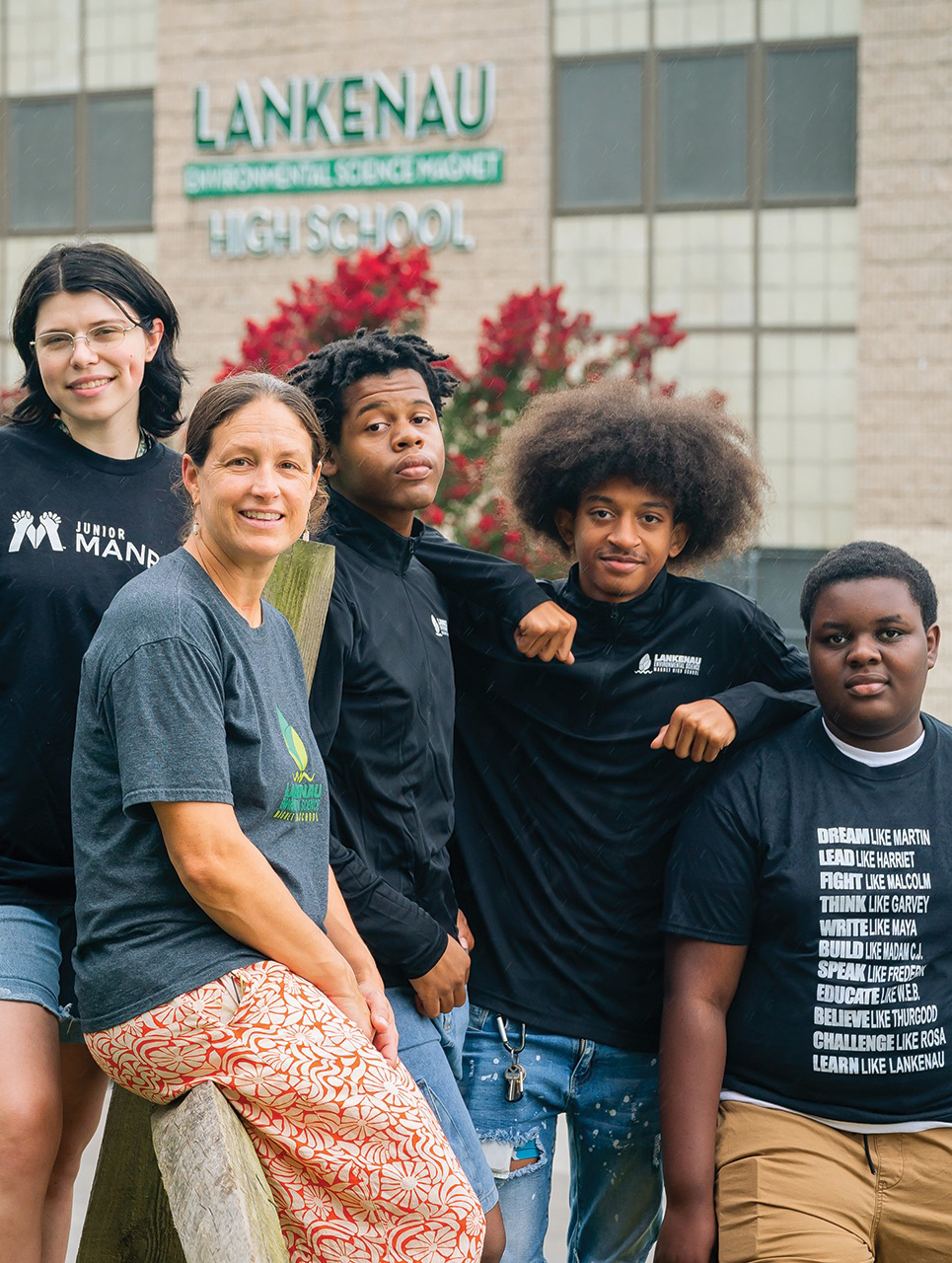
It’s not easy to get to the Lankenau Environmental Science Magnet High School. The school sits on 17 acres at the northwest border of Philadelphia, a pocket of land not served by SEPTA, forcing the district to bus students to and from school. In exchange for the long ride, however, students learn in an expansive outdoor classroom — the neighboring Schuylkill Center for Environmental Education has served as an extension of the grounds since Lankenau became an environmental magnet school in 2005. If the School District of Philadelphia is to be believed, students will be better served by Lankenau closing and having its programs merged into Walter B. Saul High School. (The original plan to merge the school with Roxborough High School was changed.)
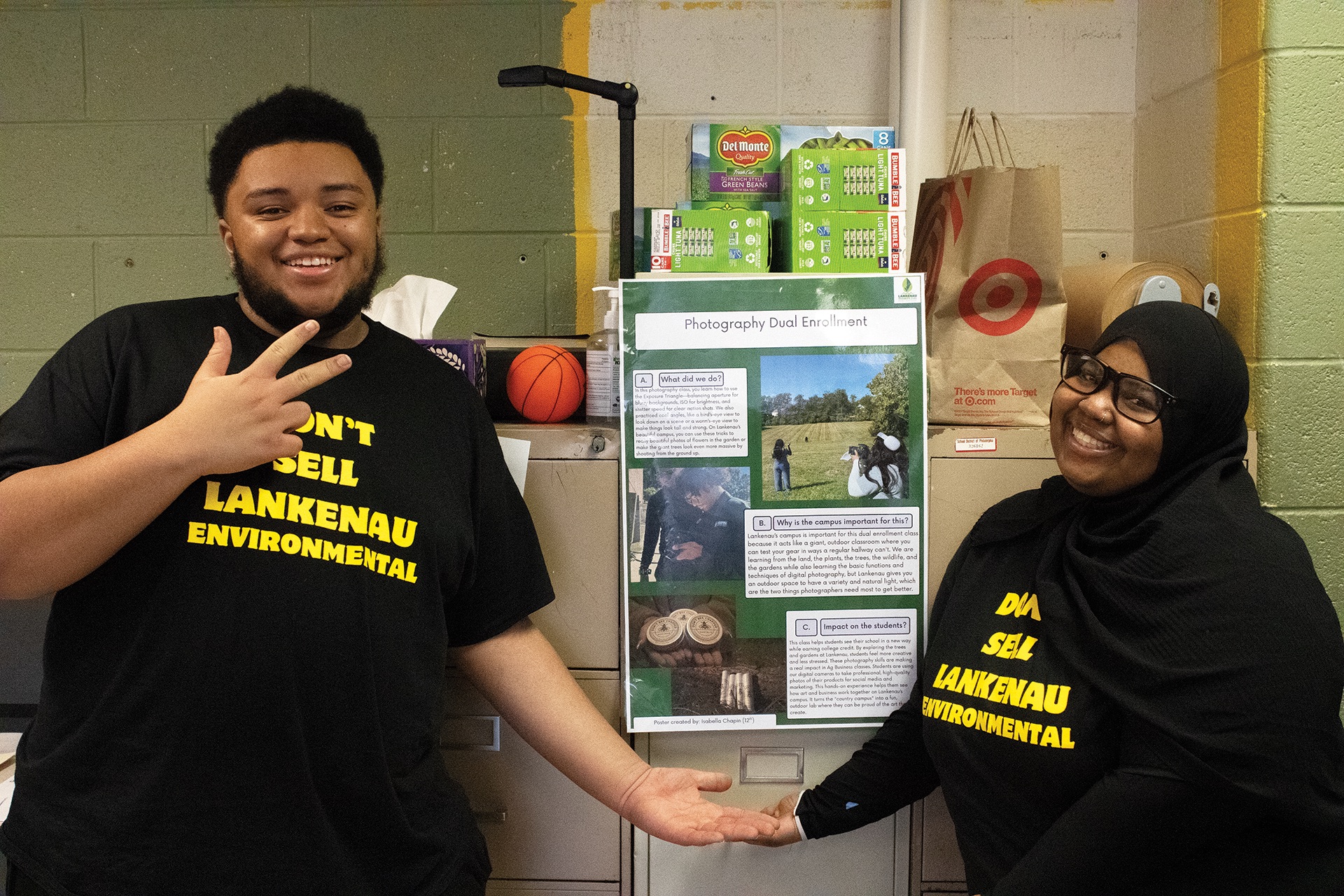
But “Don’t Sell Lankenau Environmental” was spelled out in bright yellow letters on the T-shirts worn by Lankenau students and teachers at a Feb. 4 open house and community listening session, addressing what they believe is the real reason the district proposes to close the school and send its students to another school.
The official recommendation of the school district on its facilities planning process website is to offer students better preparation for life after graduation near where they live by closing Lankenau and “Lankenau High School will merge into Walter B. Saul High School as a criteria-based CTE honors program with students applying from across the city through school selection. After closing the Lankenau High School building will be conveyed to the City of Philadelphia for affordable workforce housing and/or job creation.”
Eighteen other schools find themselves in a similar position as the district rolls out its plan, based on two years of research and community input.
Schools across the district are falling apart thanks to aging buildings and decades of deferred maintenance. At this point, fixing everything would cost $8 billion. Meanwhile, many schools are partly or even mostly empty. About 25% of school building capacity is underutilized, according to the district’s website. That space is unevenly distributed, however, with 146 buildings moderately or severely underutilized, and 34 buildings moderately or severely overcrowded.
At Lankenau’s listening session, state Sen. Sharif Street said he opposes closing the school but expressed sympathy for the district, which he says has been chronically underfunded by lawmakers in Harrisburg. “These decisions are not made in a vacuum. They are made in part because we, at the commonwealth, have not met our obligation to fully fund the district,” Street says.
Faced with chronically inadequate funding, the facilities planning process aims to save the district money and give students better learning experiences by, in part, closing some schools and moving students around so that the district’s footprint matches its learning objectives.
Every school in the district was evaluated and scored in four categories: whether the building is safe, accessible and modern; whether the school’s facilities align with its programs; whether the school is above or below capacity; and how vulnerable the neighborhood is, since closing a school can mean a neighborhood loses a valuable anchor institution. “The value of land was not part of any of the decisions,” a school district spokesperson says.
The district did not provide the rubric for any of the category ratings despite multiple requests, so it is difficult to ascertain exactly how it arrived at the scores for Lankenau, but some are easy to interpret.
Though students hail from all over the city, Lankenau’s neighborhood is far from vulnerable, resulting in a score of 1, with 5 being the most vulnerable. The high school sits in a green corner of the city, a quarter-mile from suburban-style, middle-class neighborhoods of detached houses with lawns and driveways. The facilities planning dashboard page devoted to neighborhood vulnerability bases the score largely on the Center for Disease Control’s Social Vulnerability Score, which rates the school’s zip code, 19128, as “low.”
The building lacks a proper gym or auditorium, which Lankenau staff and students say is part of why the district gave it a 46.6% rating for program alignment. The school building received a score of 59.9%, referring to the building’s “quality, safety, and functionality,” according to the facilities planning dashboard.
Lankenau’s classrooms could fit twice as many students as it now educates, yielding a capacity utilization score of 49.4%. In particular, its 11th grade class has only 24 students, says principal Jessica McAtamney, the result of the district’s difficult transition to a lottery admissions system in 2021, which led to low enrollment at magnet schools across the district.
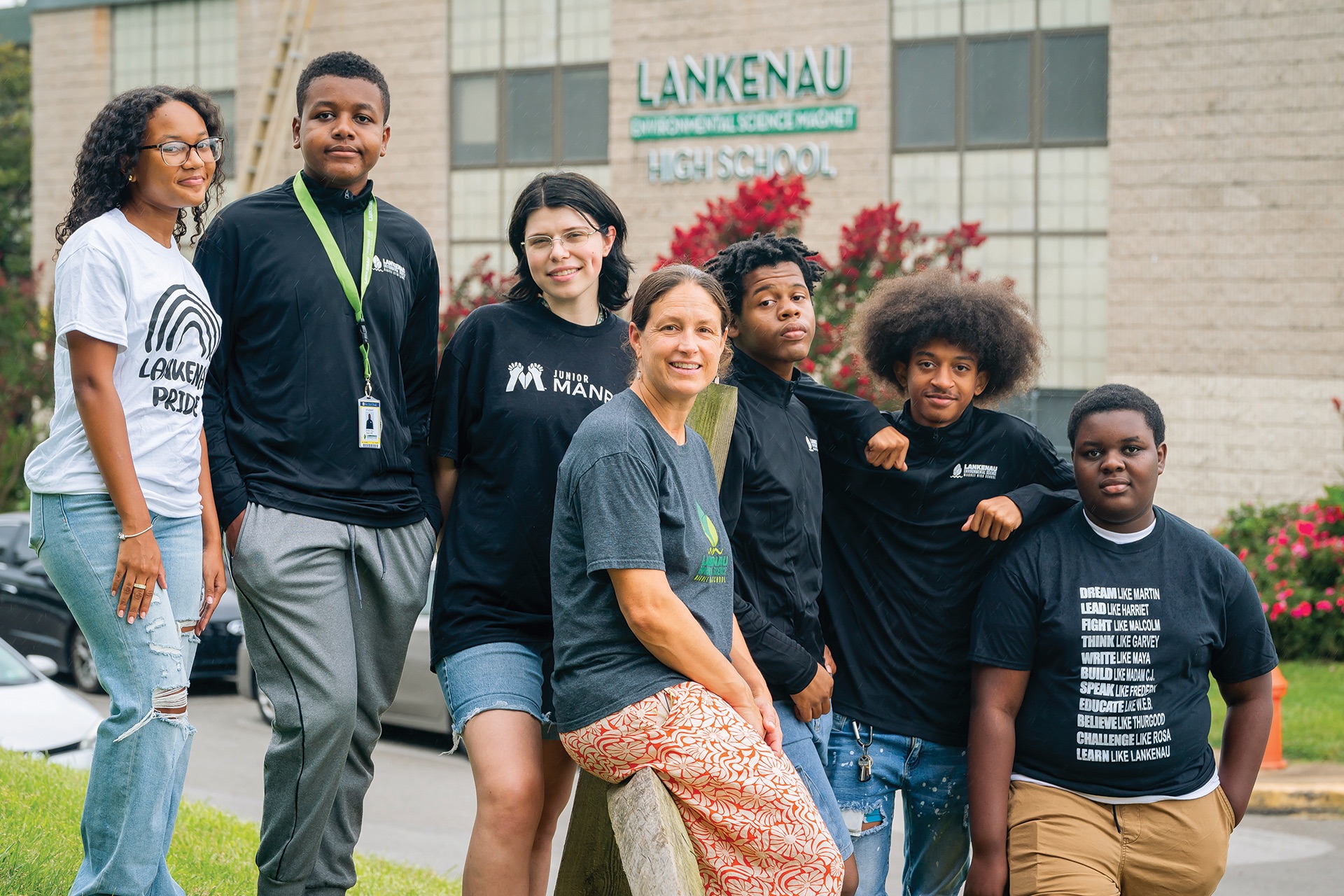
Grade sizes have since increased to 59 10th graders and 64 ninth graders, though teacher Erica Stefanovich says that more students have wanted to attend. “The district has been suppressing our enrollment for the past three years,” Stefanovich says. “We would have so many students accepted, and then they would say, ‘Okay, but we’re only allowing you educators for 66.’”
But as the “Don’t Sell Lankenau Environmental” shirts made clear, many of the school’s boosters suspect another factor in the district’s decision to close the school, in addition to the four official categories.
“From everything that we’ve heard, it’s about the land,” says a teacher who asked not to be identified out of concerns of professional repercussions. “They would like to take this land away from children and give it to developers.”
The houses closest to Lankenau’s 17-acre campus are valued at more than $500,000, raising suspicions that the cash-strapped district would welcome the millions of dollars it could make by selling the land to a developer.
Students and teachers say there’s no way to put a price on what would be lost.
One of the reasons Lankenau is so special and why the students are advocating is that the closure would prohibit them from being able to directly access these opportunities.”
— Jessica McAtamney, principal
“We don’t have boundaries here, in the most positive way. We look out for everybody,” says life skills teacher Cynthia Geezy, praising the school’s caring atmosphere. “When somebody is in trouble, everybody steps up to the plate.”
Under principal McAtamney, Lankenau has developed a career and technical education (CTE) focus in agroecology. As Grid covered in 2023, agroecology students have been able to participate in Minorities in Agriculture, Natural Resources, and Related Sciences (MANRRS). The network of school-based chapters links students to college-level programs in agriculture and natural sciences.
Stefanovich, who has worked at Lankenau for 10 years, teaches social studies and Geographic Information Systems (GIS), which helps to visualize and analyze geographic data. “We are the only school in the district that offers it. We are one of only two schools in the state that I know of that offers it,” Stefanovich says.
Stefanovich saw GIS as complementing the school’s agroecology career development focus. “I saw how well it fit with what we were doing here at Lankenau, as the future of agroecology. It really involves students understanding the technology side of that as well.”
This is a great place for students to grow.”
— Najilah Lackey, 12th grader
At the open house, students Najilah Lackey and Nicholas Motley stood with cameras hanging from their necks, ready to talk about the photography project they completed in their eco art class. “Photography is a newfound hobby of mine,” Motley, a senior from Germantown, says.
“In eco art, we connect our photography, people and the environment together,” Lackey says. A senior from West Oak Lane, Lackey values the small class sizes and nurturing environment. “This is a great place for students to grow,” she says. “I wanted to go to a school where I could connect to the environment but still feel comfortable.”
Although the school’s neighborhood counted against it in the facilities assessment process, Lackey views the location as an asset. The school’s isolation protects students from violence that can bleed into other Philly high schools from their surrounding neighborhoods. “We’ve never had a bad, scary event here,” Lackey says. “I’ve always felt safe going here all four years.”
Even though the building lacks an auditorium and a gymnasium, the school’s defenders say that the green campus and the neighboring Schuylkill Center grounds are essential assets not captured in the district’s assessment of the facility. “It’s a living, breathing, learning space surrounded by nature,” Alexis Musgrove, the school counselor and Lankenau alumna, said at the listening session.
“Within this niche, this space is what enables us to do CTE programming,” McAtamney says.
The school boasts a long list of partners for its professional development programs, including The Food Trust, the EPA, the USDA’s Natural Resources Conservation Service, and the Pennsylvania Horticultural Society, among others, according to McAtamney. The school recently received a $70,000 grant from software company Bentley Systems to develop a curriculum studying the properties of bee venom, she says.
The school had been working on a rebranding as the Environmental High School of Philadelphia, “to really stand out as the region’s true space to acquire that kind of hard scientific knowledge,” McAtamney says, but the rebranding was put on pause with the news of the facilities planning process.
District officials at the listening session said that CTE programming would continue from Roxborough High School (now Walter B. Saul High School), but that the details would still need to be worked out.
If Lankenau remains on the final closure list, students will have one more year at the school for what the district is calling a planning year.




Students from Lankenau created and are exhibiting a meaningful and fabulous display a the Philadelphia Flower Show this year. Not only is the exhibit well-executed and professional, but the student attendants are passionate, well-informed, articulate, and enthusiastic about their school and their program. We were quite impressed with the young men who answered all our questions about the display, and showed a deep appreciation for their school and its programs. It would be short-sighted for the school district to lose this gem and the talent it creates. Philadelphia needs more, not fewer, programs where students feel safe to explore and grow.
Don’t close it for lack of a gymnasium and auditorium. That’s a lame excuse. Athletics can take place outside… as can assemblies and theatrical presentations.. as an amphitheater… What other major U.S. City can boast a unique school as this? Urban dwellers deserve access to agriculture & ecological/environmental education. These srudents will be future Urban Farmers, Green-Space Advocates, Environmental Designers, Citizen-Scientists & more! Not every student thrives in “Riverdale” or “Ridell” High!