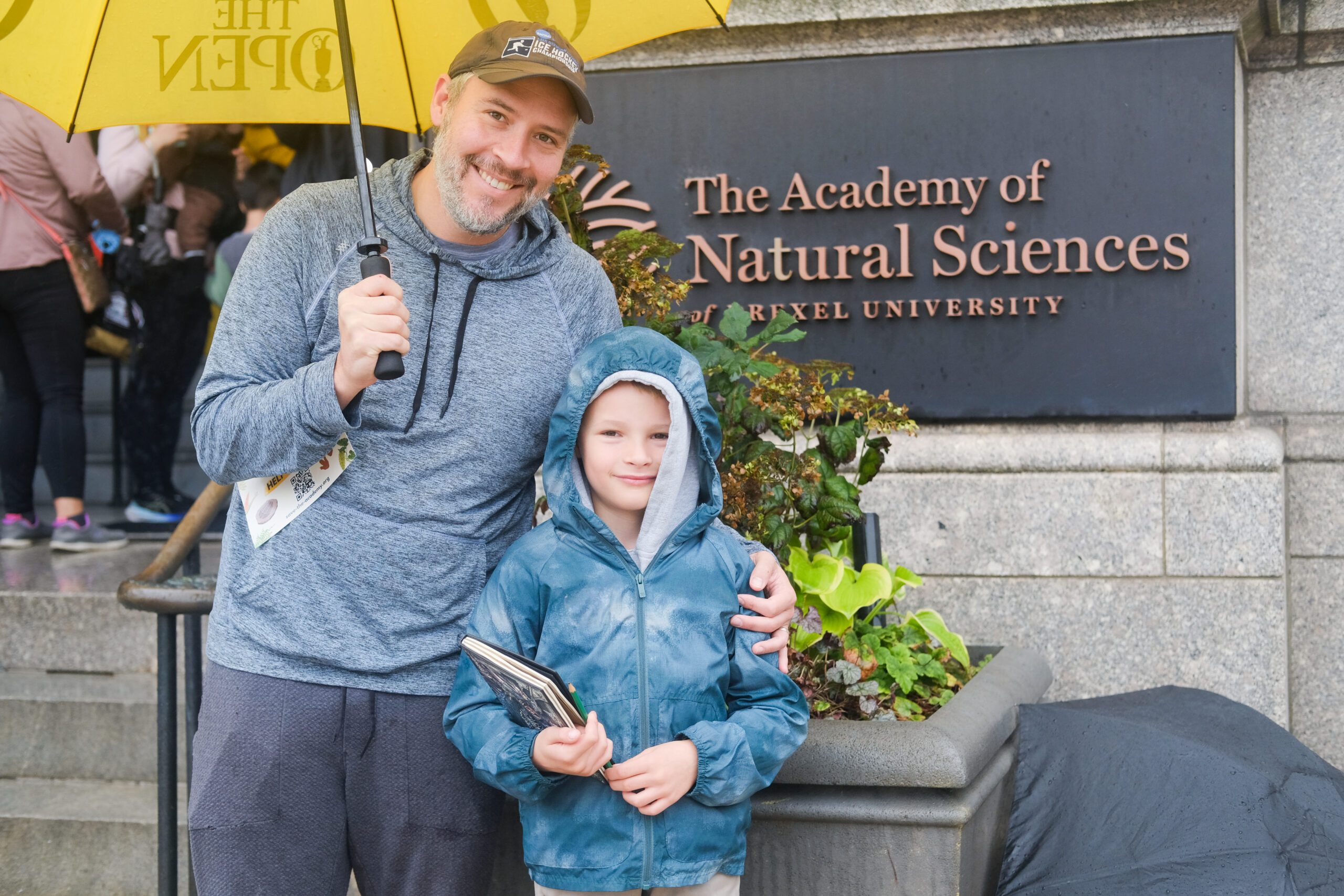
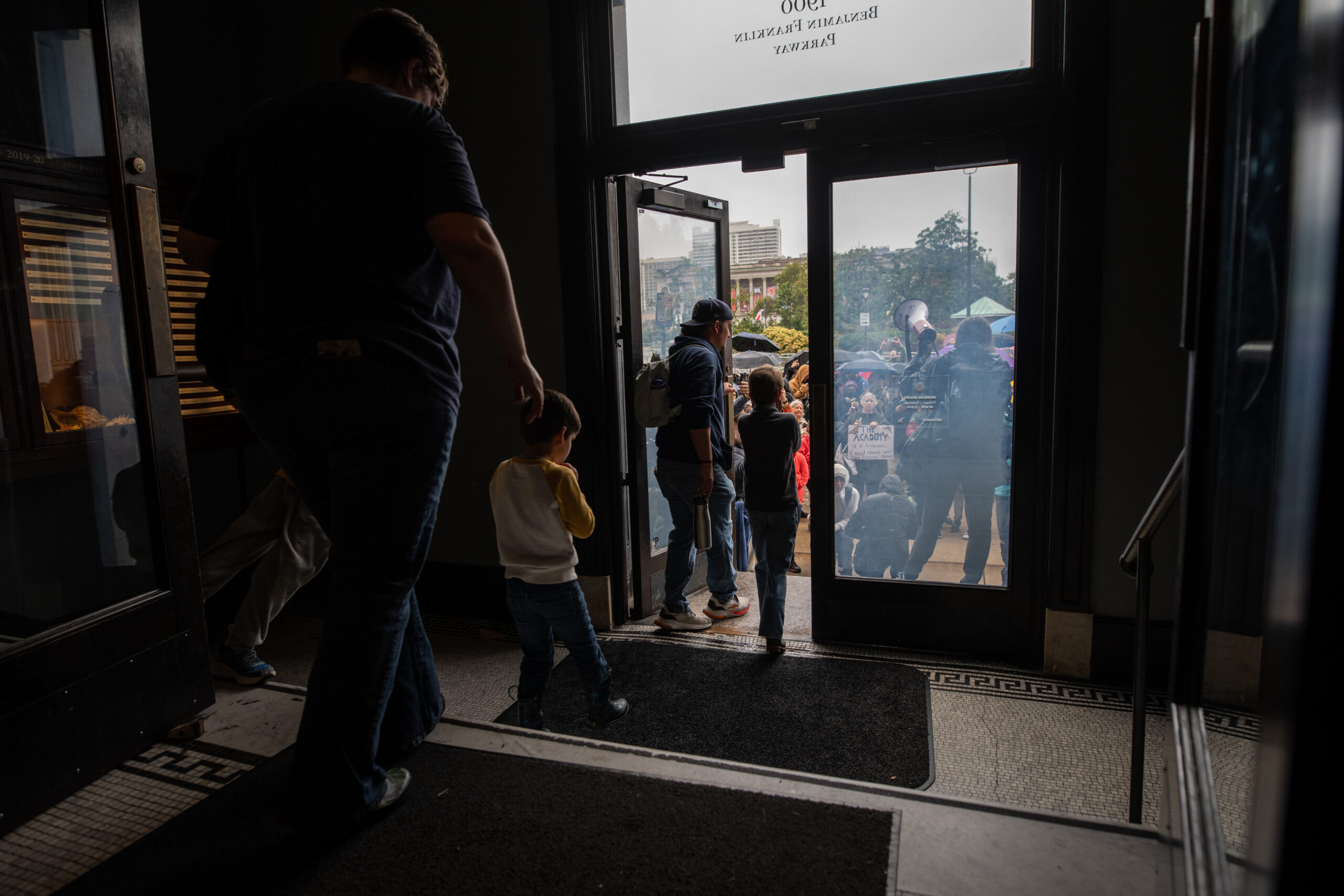
Just before 10 a.m. on Sunday, Sept. 27, dozens of people stood in line outside the Academy of Natural Sciences of Drexel University, waiting in the spitting rain for the museum to open its doors to the public for the final time.
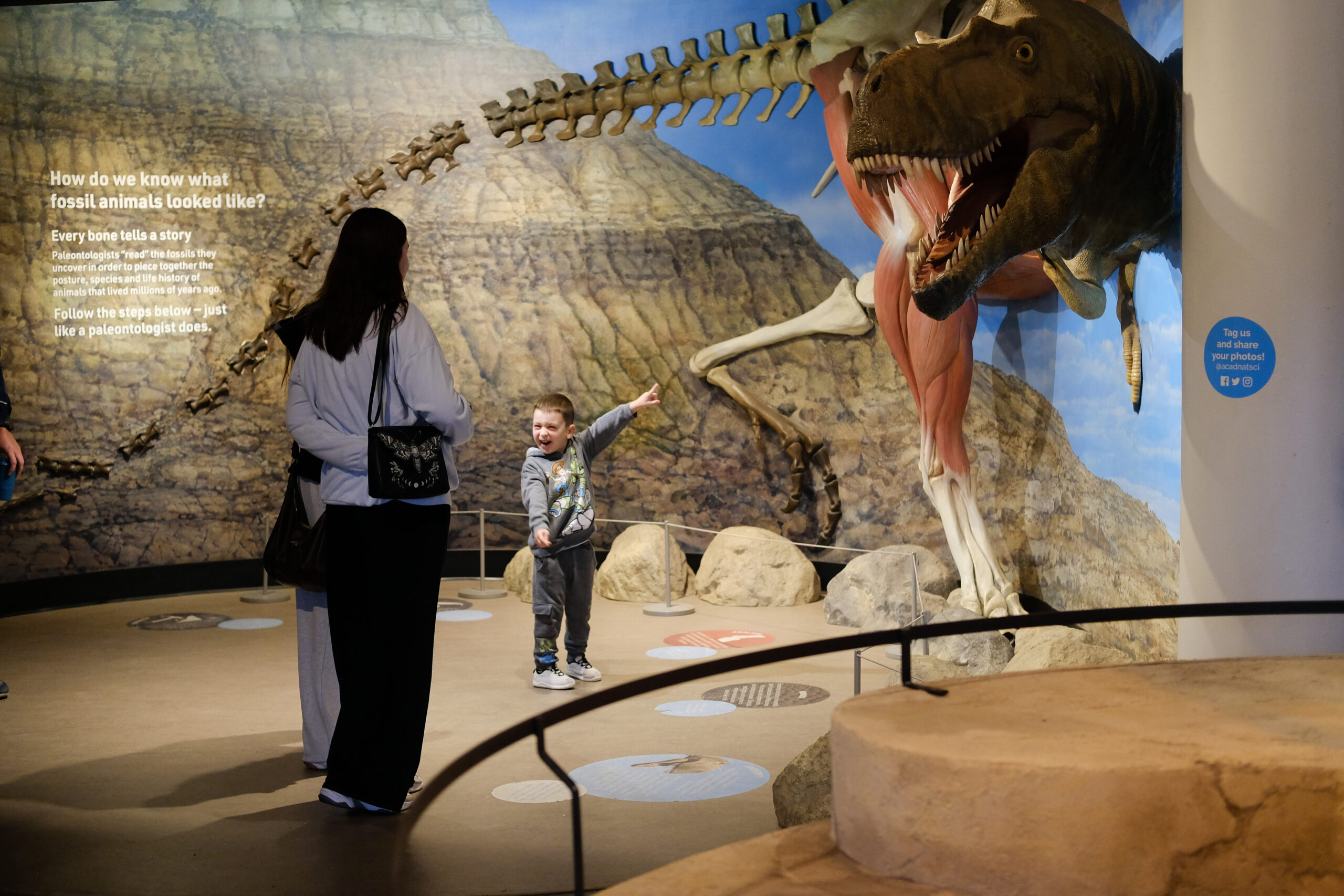
Artie Cohen, 6, who’d been going to the Academy since he was 2 years old, looked forward to seeing the dinosaurs. And how did he feel about the museum’s closure?
“Sad.”
“There’s a lot of other great natural history museums that we can visit,” said Lauren Zalut, Artie’s mother. “But to not have this one, the first one in the country, is pretty disappointing.”
“We’d have to go to New York to see something like this,” she said.
On Sept. 1, Drexel University and the Academy announced that the museum would close permanently at the end of the month, citing declining attendance that never rebounded after the pandemic. But, in 2025 at least, the Academy’s revenue outpaced its expenses. The greatest obstacle to the museum’s continued operation seems to have been a staggering $150 million in deferred maintenance costs for its 150-year-old building on the Ben Franklin Parkway, according to the Philadelphia Inquirer editorial board.
Though there had been indications, earlier than September, that the Academy was not in good fiscal health — a significant reduction in hours last fall, an accompanying round of layoffs — there were no public statements about a potential closure until the Sept. 1 announcement.
Casey Wulf, 8 and three-quarters, had strong convictions about Drexel’s conduct, which he thought had been “selfish.” “I’m here because the museum has been open for 198 years,” he said. “It’s one of the most important places in the whole entire community, and they’re shutting it down.”
Casey’s math is spot on: The museum opened to the public in 1828, making it the oldest natural history museum in the country. In 1868, the Academy became the first institution anywhere in the world to mount a fully articulated dinosaur skeleton.
“It just means so much to me that people are trying to save the museum,” Casey said. He said he wanted to do what he could to help preserve “all of the things that the paleontologists have worked so hard to dig up — the dinosaur bones and all of the other creatures.”
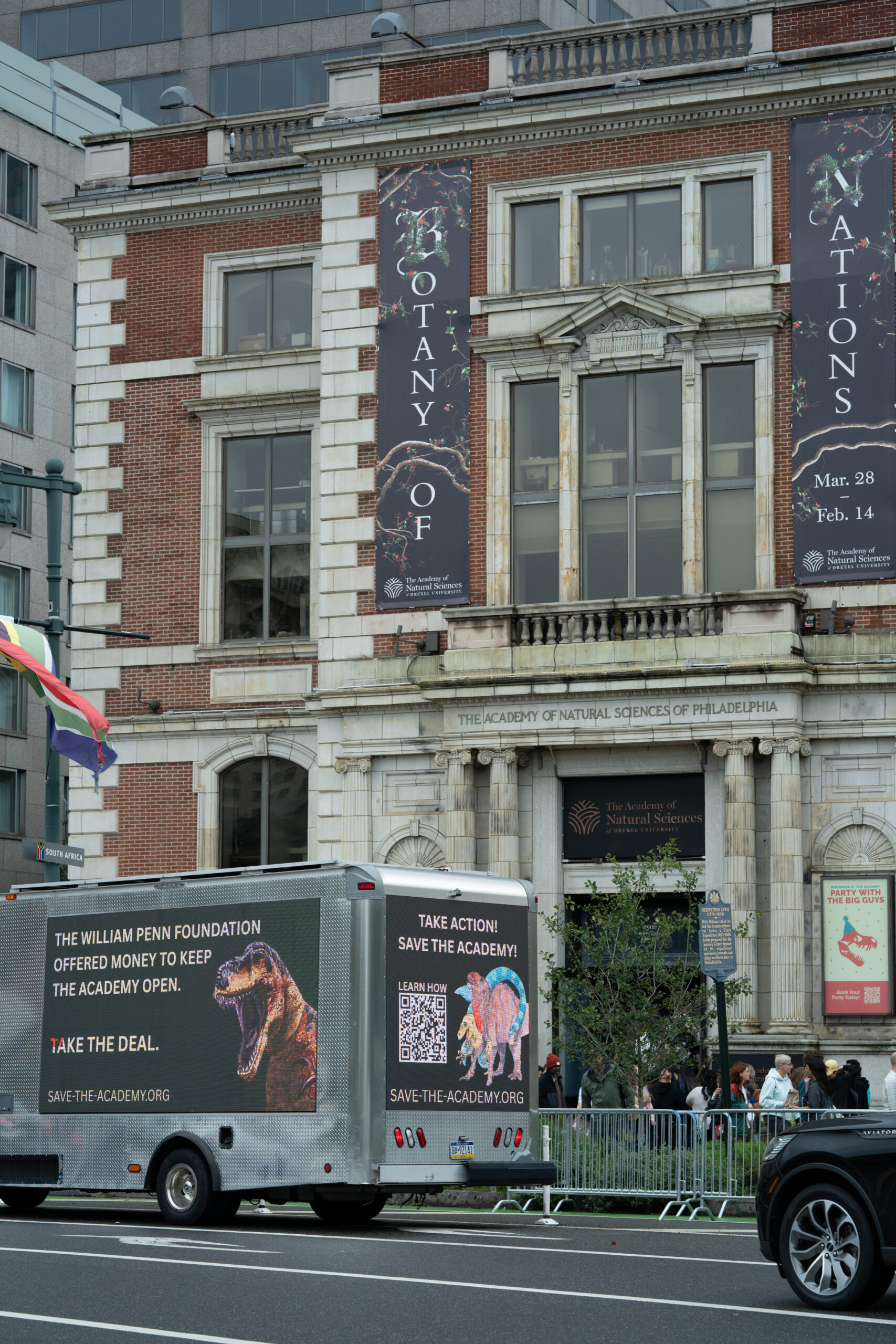
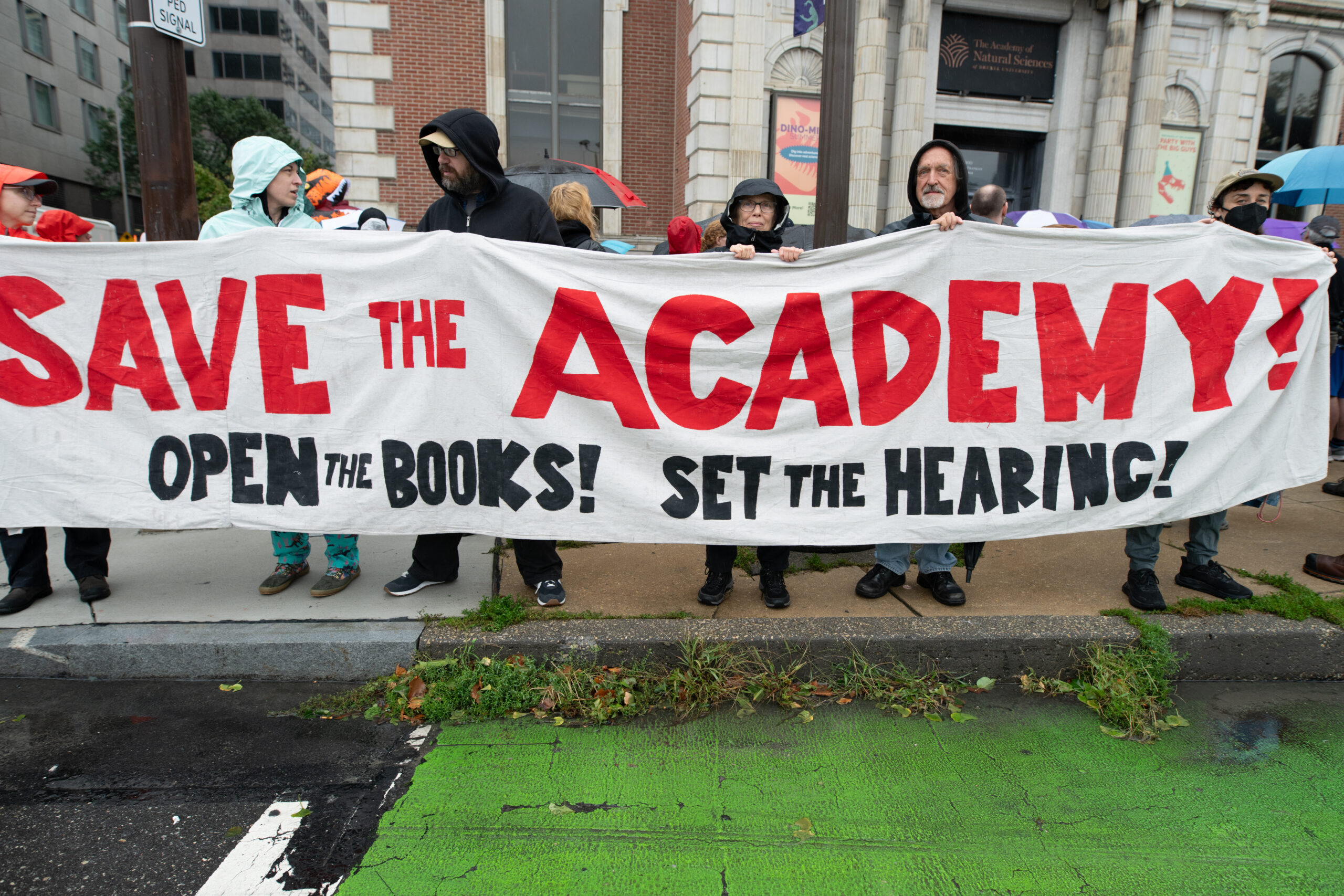
As people streamed in through the front doors, volunteers with Save the Academy, a coalition fighting to keep the museum open, handed out flyers and talked with visitors. A screen on the side of a truck out front displayed a message from the group: “The William Penn Foundation offered money to keep the Academy open. Take the deal.”
Two days earlier, the Inquirer reported that the William Penn Foundation had made funding available to keep the museum open for a year. The funds would temporarily cover the operating subsidy that Drexel has been paying since its affiliation with the Academy began in 2011. A Drexel spokesperson said in response that the university had not yet seen any proposal “that would provide a permanent, sustainable path forward for the Academy’s museum.”
According to reporting by the Inquirer, Drexel hopes to move the collections and sell the Academy’s aging building, though neither the university nor the Academy has commented publicly on those plans. Drexel maintains that its focus is on the “stewardship of the Academy’s collections.”
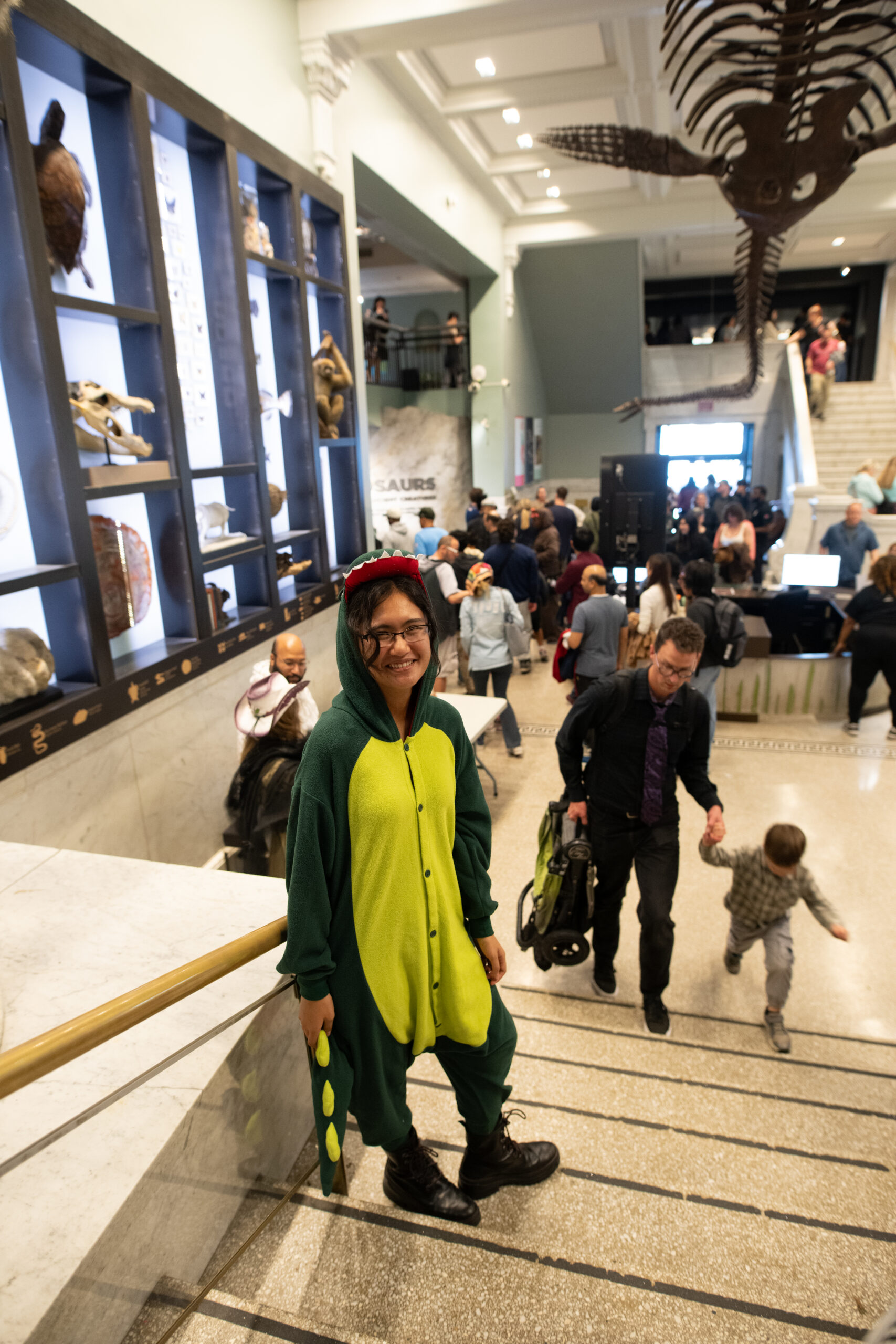
Inside the museum, families gathered in front of the Academy’s 37 dioramas, most of which date to the early to mid-20th century and are likely impossible to move. A few kids, looking at a moose, made their hands into antlers; others stared slack-jawed at a polar bear.
Brad Moritz and his son Adam, 27, were visiting from Limerick. Adam was not yet 5 when he first visited the museum, and he credits the Academy with inspiring his interest in biology and natural science. His greatest concerns had to do with the millions of specimens in the Academy’s collections.
“I’m deeply bothered by the fact that they’re willing to take that big of a risk with these invaluable and irreplaceable specimens,” he said. “There’s so many of them here that are just crucial to many branches of science.”
“The part that’s disconcerting for me is the sort of secrecy of it,” said Brad about the museum’s closure. “Even walking in here, other than the gentleman out front” — referring to a Save the Academy volunteer — “there’s no indication that this place is closing. If it’s a financial reason, why aren’t they seeking out assistance? Because I would gladly give to keep this around.”
On Saturday, Sept. 26, state Sen. Nikil Saval wrote a letter to Drexel President Antonio Merlo and Academy board Chair Suzanne Biemiller, urging that “museum facilities remain open through the end of the year until all potential avenues have been fully exhausted.”
“Legislators, advocates, and Philadelphians of all stripes deserve the opportunity to leverage their passion, creativity, time, skills, and resources to work together on potential solutions,” Saval added. “The recent offer from the William Penn Foundation to fund the continued operation of the museum on the Parkway suggests that the philanthropic community has both more to offer and has not been fully engaged.”
City Councilmembers have authorized special hearings to investigate the closure of the Academy. On Sept. 24, Councilmember Jeffery Young Jr. introduced a zoning bill that would prevent residential and commercial uses for the museum building, which is currently zoned to allow multifamily development, potentially complicating Drexel’s plans to sell the property.
Ryn McLane, a biology lab technician, had traveled almost 100 miles from Stroudsburg to see the museum at its home on the Benjamin Franklin Parkway for the first and potentially last time.
“As someone coming up in the early stages of a career in science, this is really scary and sets an ominous tone for where we’re at in the world,” said McLane. “You think an institution like this that’s been here for 200 years is kind of just going to be here.”
Sarah McAnulty, a science communicator who helped organize the Save the Academy coalition, agrees that the museum’s closure is a civic and scientific tragedy.
“Losing educational institutions is something we absolutely cannot afford right now,” she says. “And even if we were having a great time in American literacy and science, we couldn’t afford to lose the Academy of Natural Sciences.”
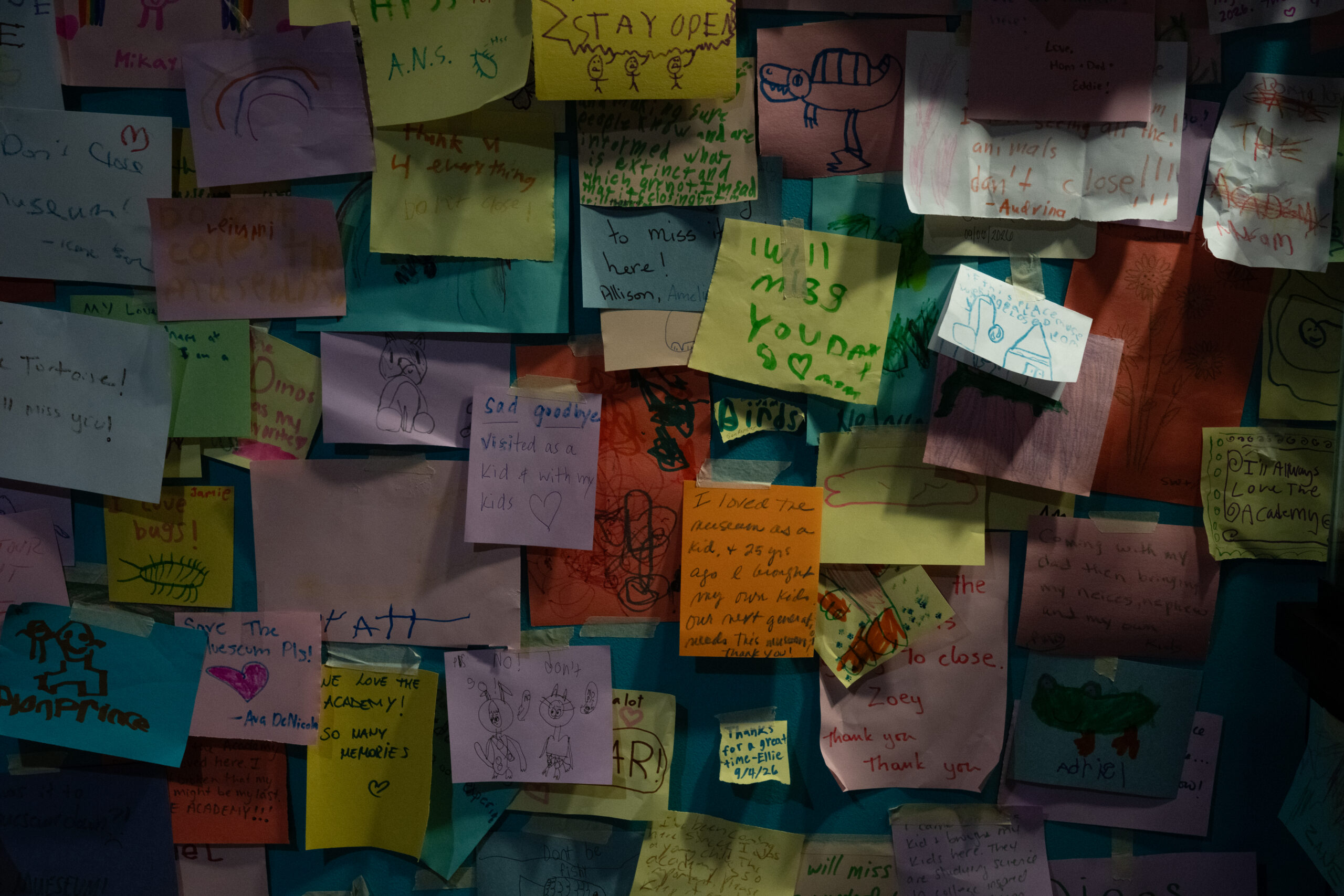
At Outside In, a hands-on zone of the museum designed for young children, the impending loss felt especially acute. At a table with markers and paper, visitors were encouraged to write memories of the museum and tape them to the walls.
Alongside sketches of animals and dinosaurs, there were simple pleas — “Don’t shut this place down” — and somber memorials in kids’ handwriting: “I will miss the snake I got to pet.”
“We brought our kids here when they were toddlers,” one note read. “This month, at ages 24 and 27, our kids came with us for one last visit.”
Lovell Govan El hadn’t been to the Academy since he was a kid, living in West Philly. He and his two daughters, Amirah and Hidayah, had just arrived from Georgia to see the museum on its last day. “This is their first time seeing fossils live and in person, so they’re ecstatic,” he said.
Their joy was tempered only slightly by the knowledge that they might not see those fossils again. Like Artie Cohen, they had one word for the situation: “Sad.”
“And it’s forever!” Amirah lamented.
Donna Li, who grew up going to the museum, stood nearby with her sons Alex, 5, and Andy, 1. “We’ve been saying goodbye for the last four weeks,” she said. “We came literally every weekend just to document it.”
Li estimated that, in the last six years, she’d visited 100 times; the museum had been a “second home” for her family.
As a member at the Academy, she was surprised by the closure announcement. She had renewed her membership in June and didn’t know the museum was struggling.
“I don’t want my money back,” said Li. “I want them to stay open for the year.”
Like many other visitors, Li hoped that Drexel would accept the funds offered by the William Penn Foundation and had trouble understanding why the university hadn’t done so already. David L. Cohen, a third-party facilitator appointed by the governor, had said, about the funds, “no one is helping things by offering Band-Aids,” though Li had little patience for that reasoning.
“They’re saying stuff like, ‘It’s just a Band-Aid on the situation that needs a permanent solution.’ I was like, ‘But you didn’t try to search for a permanent solution. None of the members even know that you’re closing.’”
Li understood that Drexel and the Academy had been facing real financial headwinds; she was frustrated, above all, that neither institution had been transparent about the extent of those challenges before it was too late.
In 2024, the Academy was awarded a $480,000 grant from the Pew Center for Arts & Heritage to “undertake a two-year business model analysis” and chart a “detailed roadmap toward long-term sustainability.” If that analysis, scheduled to wrap up this year, led to any conclusions about the museum’s future, they were never made public.
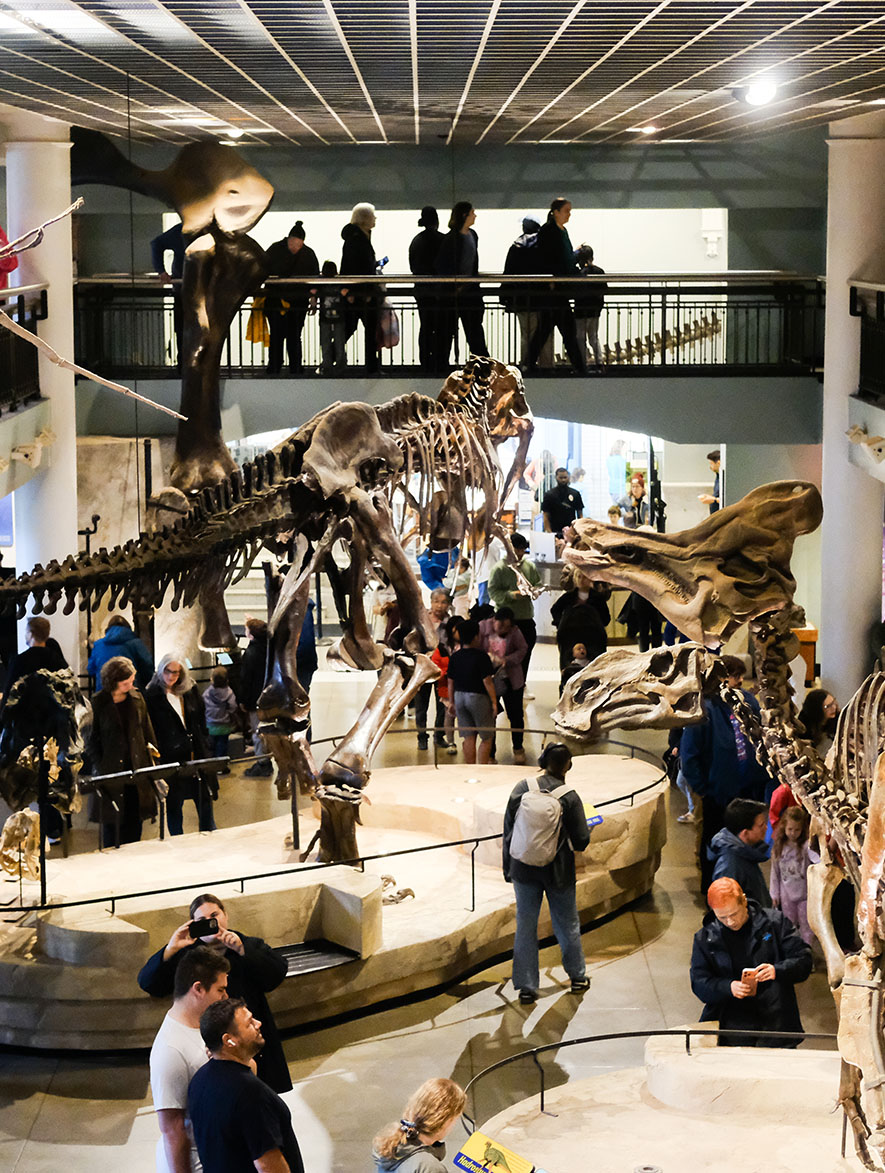
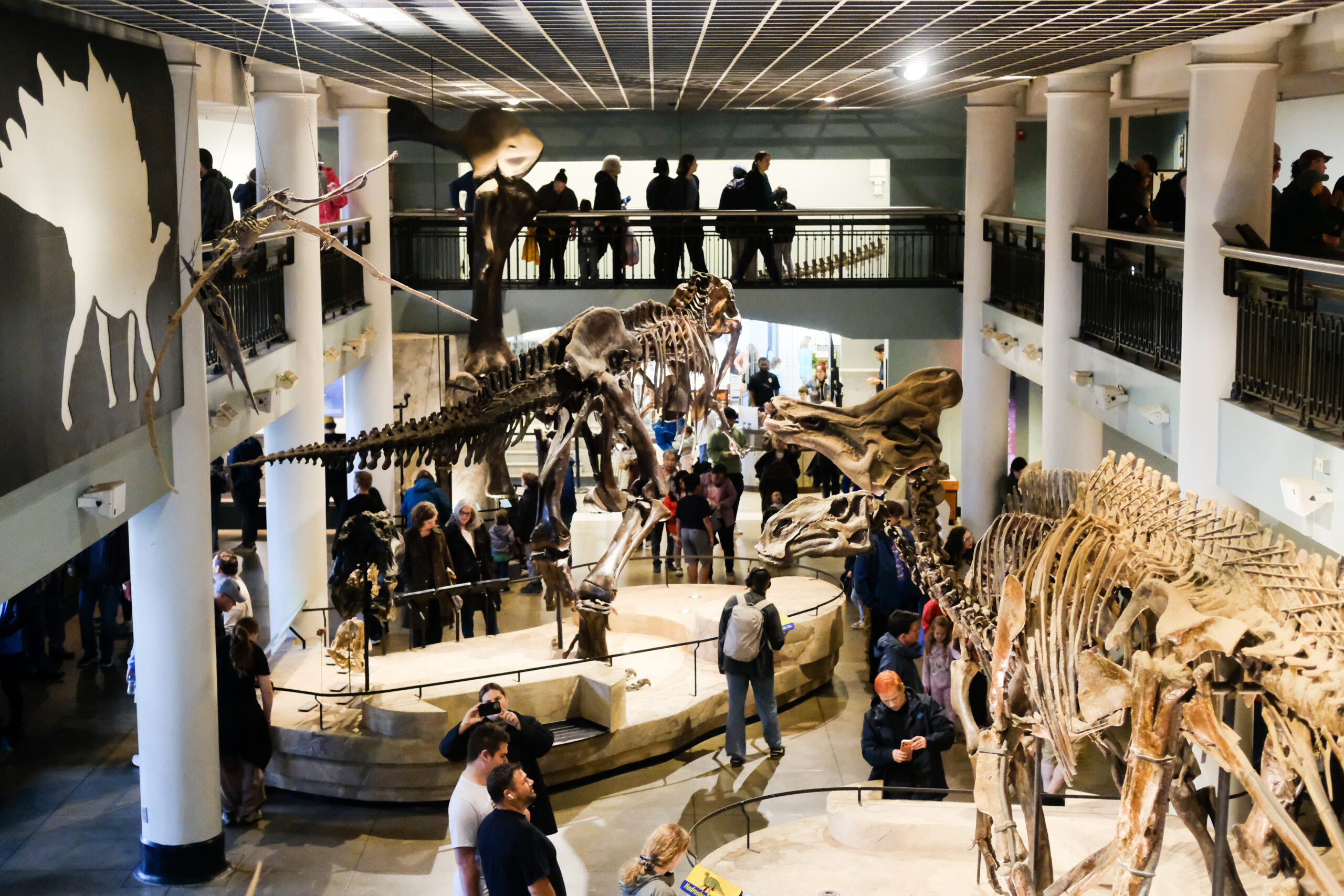
As Dinosaur Hall teemed with visitors, Amber “Dino Lady” Redfield, an educator and paleontologist at the Academy, reached above her head to secure a cervical bone that had become dislodged from a hulking Corythosaurus skeleton.
She hopes that the Academy can find a way to “patch the Philadelphia pothole that we’re in.”
Redfield, a Philly native who has worked at the Academy for 14 years, is one of more than two dozen staff members whose positions will be “impacted” by the closure of the museum, according to Drexel. “I found out we were closing just like everybody else found out we were closing,” she said.
Redfield mentioned the University of the Arts, another beloved Philadelphia institution beset by murky financial woes, which shuttered abruptly in the spring of 2024, giving students and staff only a week’s notice before ceasing operations permanently. “I’m just hoping this isn’t a pattern,” she said.
“To see everybody, especially this past month and today, coming out to support us,” said Redfield, “it absolutely moves me, and it shows why we have to be here.”