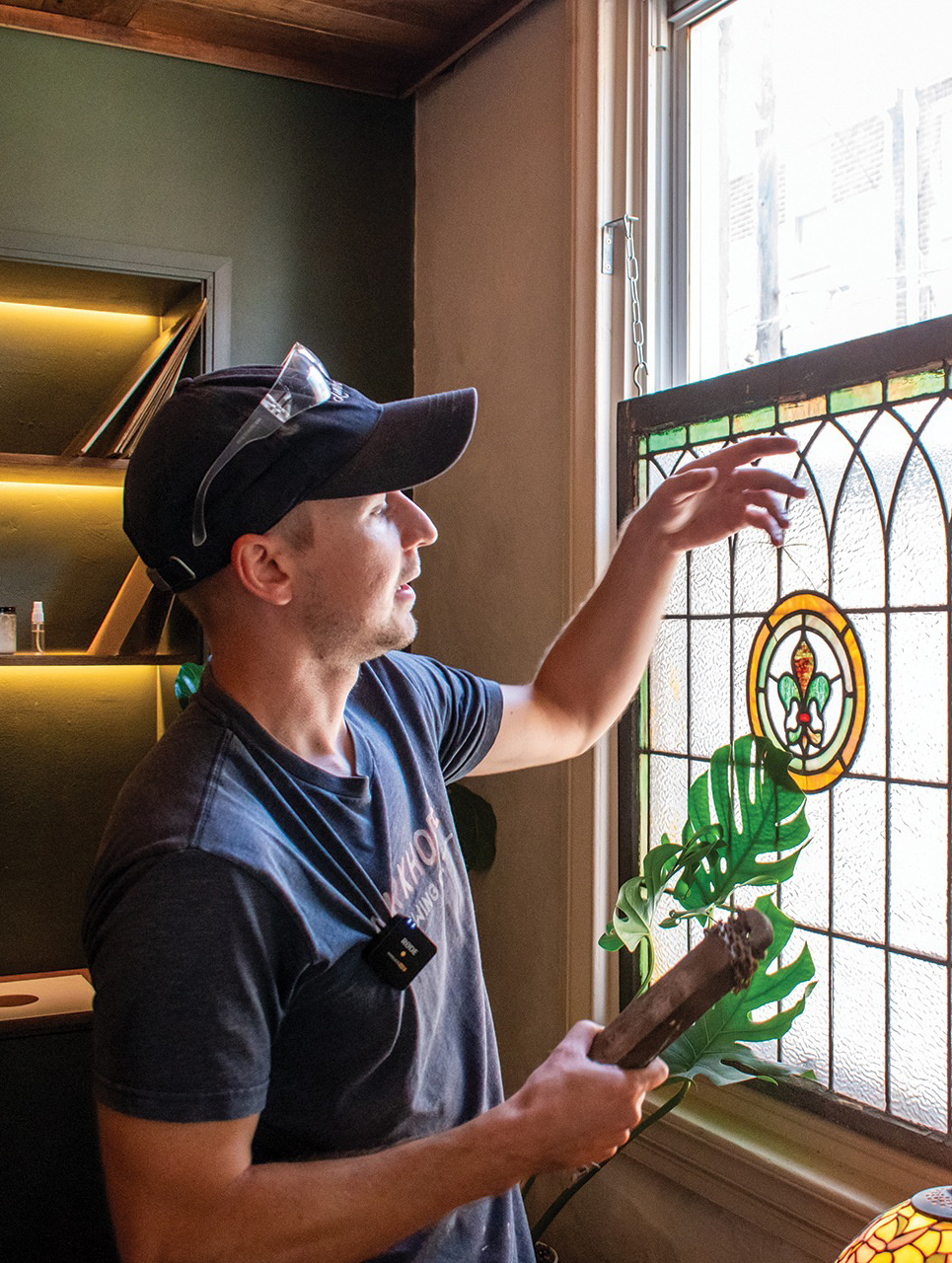
The front door of Chris Hytha’s 1857 Fishtown-area rowhome opens to face a spotlit shelf cabinet — a “house museum” of artifacts: the house’s old lead water main, a hunk of its original stone foundation and a block of termite-hollowed wood. The artifacts catalogue the house’s history — and the hurdles of Hytha’s now two-year renovation project.
“There were so many surprises when I bought the house. I thought it was all made of brick, and I thought it was built in 1930,” Hytha says. When he started opening up walls, he learned that the house was 70 years older than he had thought, and that about half of its timber frame had been eaten by termites.
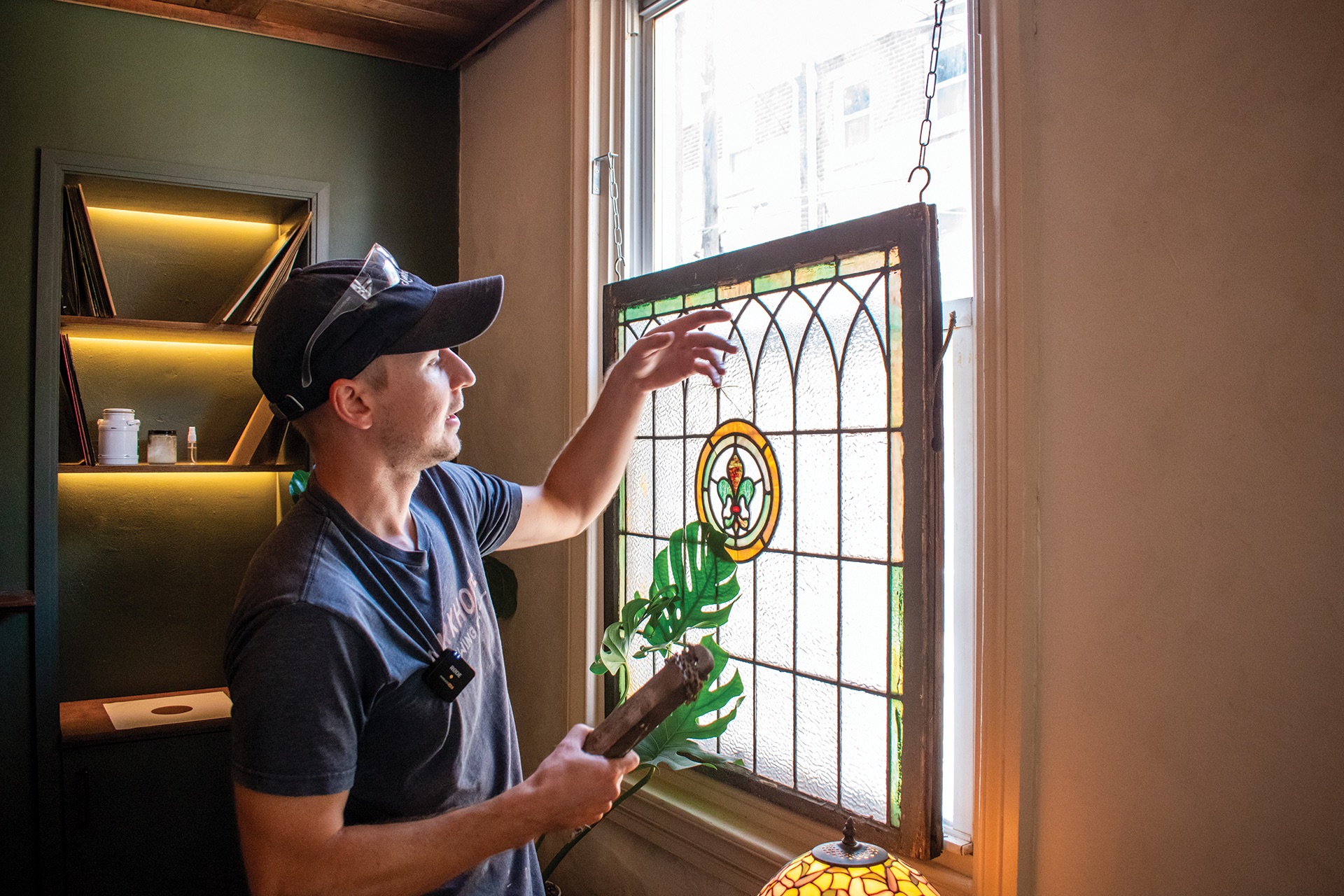
Despite being advised to tear the entire home down and start from scratch, Hytha kept as much of it intact as possible. He’s salvaged all kinds of materials over the course of the rehab, from old growth lumber ceiling joists he exposed in his living room, to a basement door he saved from his neighbor’s trash, to a collection of vintage ornate door locks. They are a testament to Hytha’s effort to save old stuff, not only to build sustainably, but also to give his rowhome its history back.
Hytha, 29, studied architecture at Drexel University and worked at a firm for three years before pivoting to photography. In 2020, Hytha published “Rowhomes,” a book of composite photographs of over a hundred of Philadelphia’s derelict rowhomes. The project made him “fall in love” with the rowhome as the city’s architectural staple, and purchasing one as his first home in 2024 was a full-circle moment.
But when he realized the extent of its needed repairs, he began documenting the renovation in weekly updates on YouTube.
“I think most people just wanted to watch a dumpster fire.” His first episode garnered over half a million views, giving the house’s transformation a sudden audience. Followers helped research the home’s actual age and offered salvage pieces like stained glass windows and floor tiles.
The project became a lot bigger than me. Being able to share the bad and the good, I think really helps, almost like catharsis.”
— Chris Hytha
“The project became a lot bigger than me,” Hytha says. “Being able to share the bad and the good, I think really helps, almost like catharsis.”
When it comes to saving materials, Hytha says he came into the project “naive and romantic.” He quickly realized the costs and constraints of managing the demolition waste coming out of the rowhome. “There’s no alley, trucks can barely fit down the street.” For months, Hytha’s backyard was full of bricks and old wood. Holding onto some of that material for other projects became both a cost-saving measure and a way to reduce his waste.
“Every brick that I can save and reuse, then I don’t have to buy a new pallet of bricks, and I get to reuse the bricks that I took,” Hytha says. He inspected, sorted and chipped mortar off of thousands of bricks, saving roughly a thousand from disposal. “I’ve touched each one of them probably at least four or five times now as I’ve moved these piles back and forth.”
Hytha feels a closeness with the bricks and other materials he’s saved. That additional labor isn’t feasible for most contractors, but he still encourages it. Since moving in this spring, he now gets to enjoy the fruits of his sacrifices and the knowledge that his house is full of pieces with provenance.
Hytha would like to see the City incentivize more restorations like his, especially with the number of abandoned rowhomes across the city and the need for housing. Rowhomes, like Philadelphia’s history in general, Hytha says, are often taken for granted.
“Once you tear this down, to me, it feels like an artifact, like a piece of history. Because there’s only less of these.”