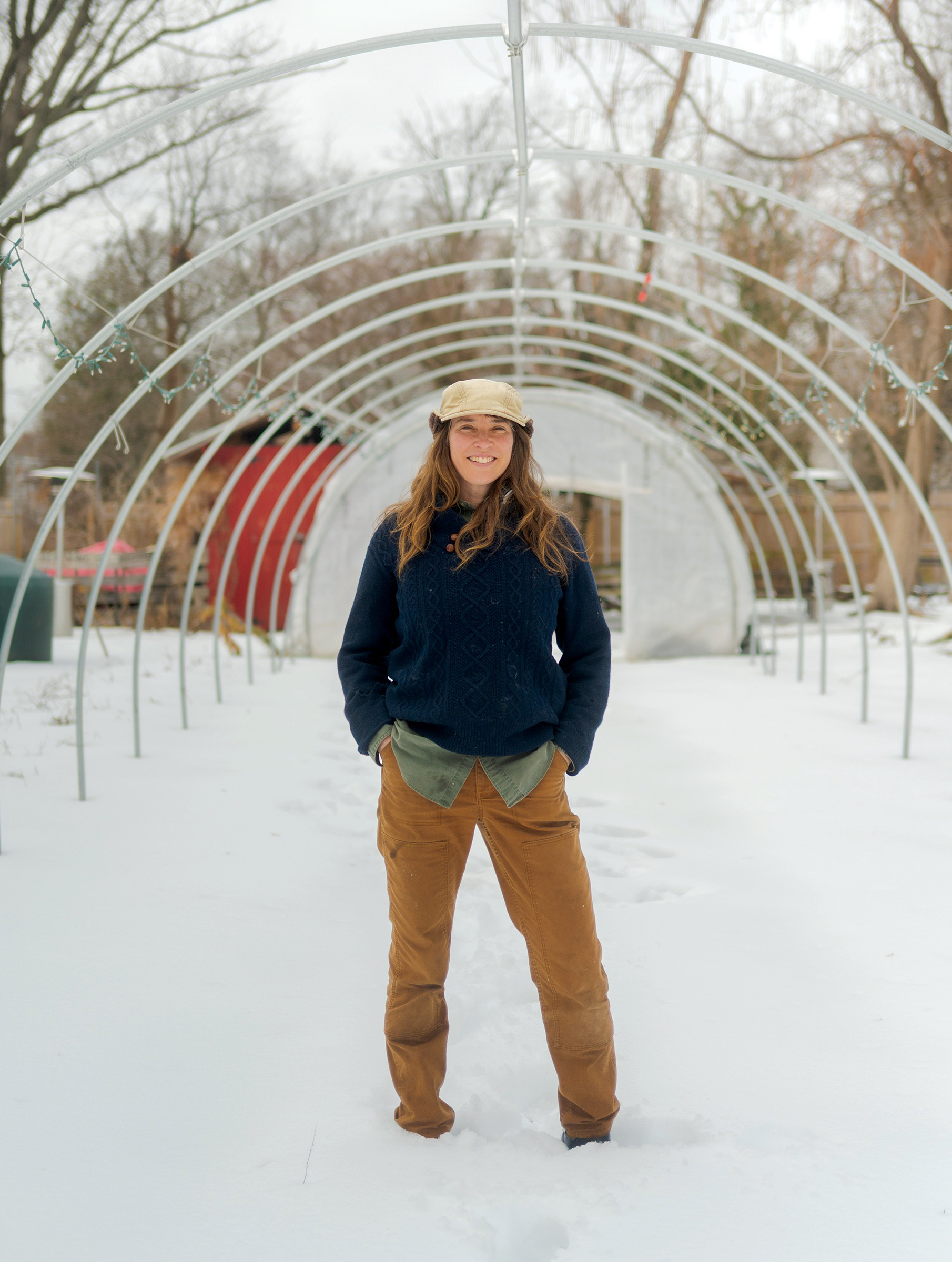
Germantown Kitchen Garden’s farmer, Amanda Staples, who hails from Upper Darby, did not grow up on a farm. Although her grandparents operated a Christmas tree farm near Clarks Summit, Lackawanna County, Staples’ initial hands-on contact with farming was growing lima beans in her backyard for an elementary school assignment.
After graduating from Temple University with a degree in religion, Staples moved to Kensington, where she first encountered community gardens popping up on vacant lots. A friend invited her to help at a community garden in Camden, and that experience inspired Staples to mobilize volunteers and build a garden near her Kensington home. She nurtured the garden while earning money from customer service jobs at Philadelphia International Airport, Wawa and the Franklin Institute. Eventually, Staples committed to an internship at Scarecrow Hill Farm in Lancaster County. “Everything you did there was about farming. It was by far the most intensive learning experience,” she recalls. Her aspirations to become a production farmer started taking shape.
Buying a half-acre plot in Kensington proved impossible. Then something unexpected happened. An acquaintance was purchasing a home in Germantown, but the seller made the deal contingent on buying the adjacent parcel. It was a forest of neglect, so overgrown it was impenetrable. But it was affordable and available. Staples and her husband bought it in 2008. “It didn’t feel that risky,” she says. “It felt crazy, but not risky.”
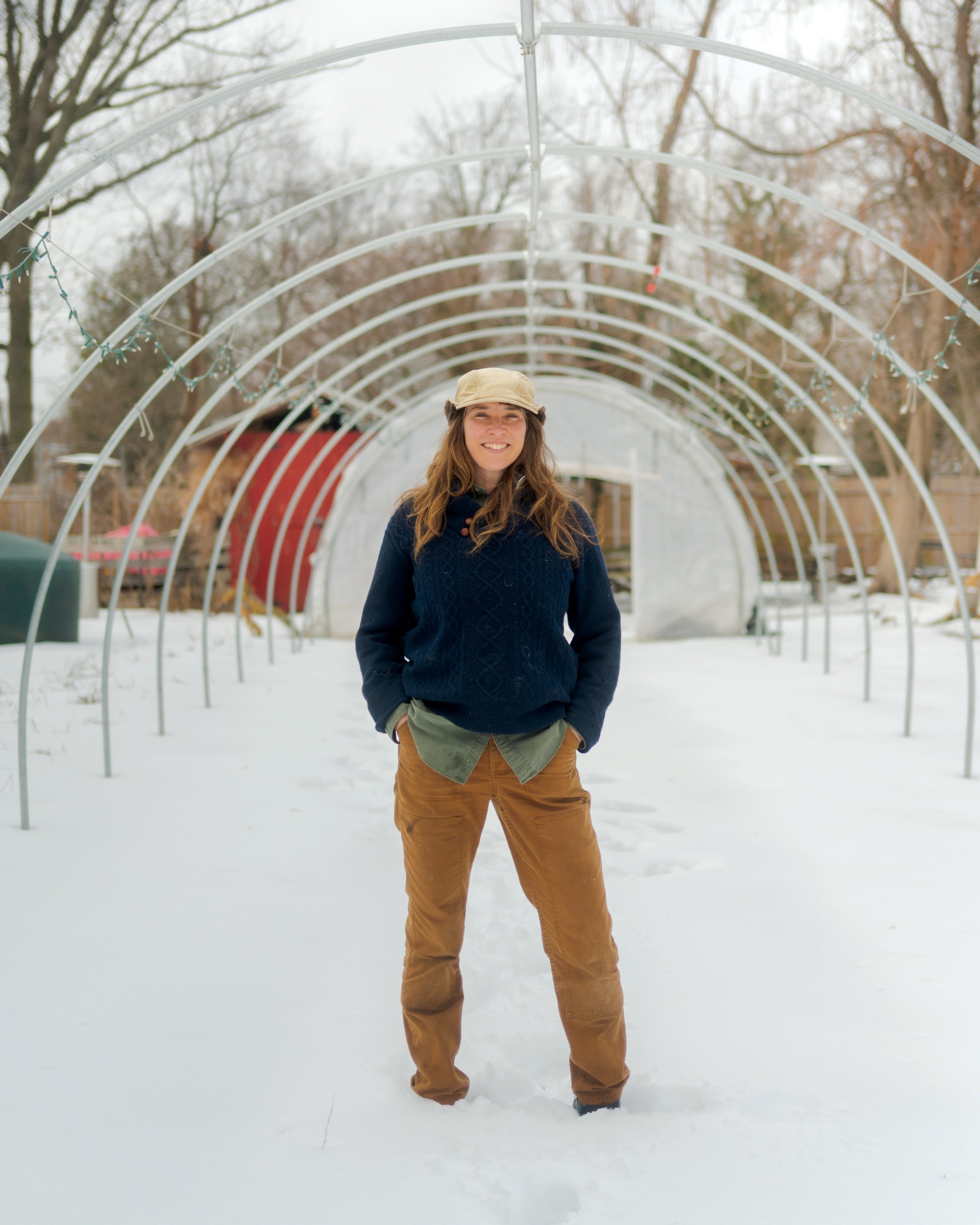
Founded on her conviction that farms should exist in cities, Staples began to build Germantown Kitchen Garden as the “hybrid homestead and tiny business” she envisioned. In those early days, she’d sit at a roadside table with salad greens and collards, waiting for customers to find her. After her divorce in 2015, Staples’ vision had to evolve for her to make a living. Unsure if she could keep the farm going, she harvested greens from the family tree farm that winter, fashioned them into wreaths and sold them to raise seed money (for actual seeds). She reopened in 2016 with a new goal. “My attitude became ‘I am running a business,’ and I have to do it all the way, or I can’t do it.” Now 45, Staples gratefully notes that many customers have been with her since the beginning, remaining loyal to her and the farm.
Farming on small acreage requires tough decisions about what to grow. Staples’ process is “a combination of sentimentality, personal tastes and what makes money.”
Tomatoes, in their glorious redness, ripeness and bread-soaking juiciness, tick all the boxes. They require much labor, but she loves the weekly meditative work of pruning and tying them up. Tomatoes also feed her.
Summer leaves little time for cooking, but the upside for Staples is that “it makes it a hell of a lot easier to make a quick meal when you have fresh food.” Her meals get simpler as the season warms. “I’m not a person who says ‘I forgot to eat lunch today,’” she admits, so when hunger calls, tomatoes are the answer. Staples shares her instructions for the ultimate seasonal recipe, a “tomato, cheese, bread situation” inspired by the casual summer meal her mom often made.
She adds, “I don’t eat tomatoes any other time of year, so that’s why I don’t get tired of it.”
Tomato Cheese Bread Situation
Makes one massive sandwich that’s hard to get your mouth around if you did it right
One large, ripe tomato
Cherokee Purple preferred
Two thick, crusty, excellent slices of bread
Ursa Bakery and Dead King Bakery are Staples’ favorites for sourdough
Fresh mozzarella slices
or cheddar, provolone, ricotta, goat cheese — the choice is yours
Salt and pepper
Optional Additions
Fresh basil leaves, roughly chopped
Bacon (Staples recommends Stone Arch Farm’s)
Bibb lettuce or Arugula
Mayonnaise, generously applied (store-bought, no need to make your own)