
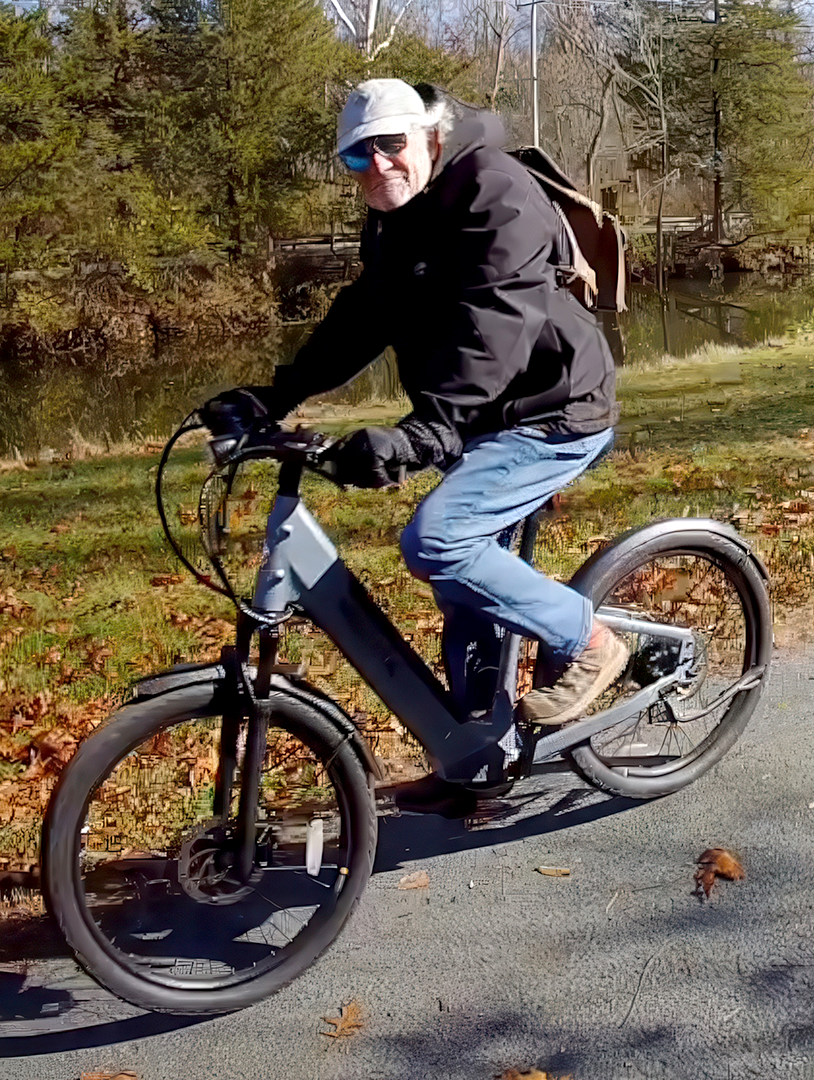
Jeff Strahley, of Red Bank, New Jersey, spent an early November afternoon riding along the Delaware Canal towpath near Washington Crossing Park in Bucks County. He has mixed feelings about the increased e-bike presence on the popular trail. “There’s good and bad. The good is it gets more people out on the trails that might be restricted, health-wise or injury-wise,” Strahley says. “But there’s a lot of people abusing the e-bikes where they have high-powered, super fast e-bikes where people are walking or walking their dogs.”
Cyclists often ride along the Delaware Canal or the Delaware and Raritan (D&R) Canal State Park towpath that’s across the Delaware River in New Jersey. Many of them walk their bikes over the Washington Crossing, Lambertville or Frenchtown bridges to ride a looped trail that lets them enjoy both towpaths.
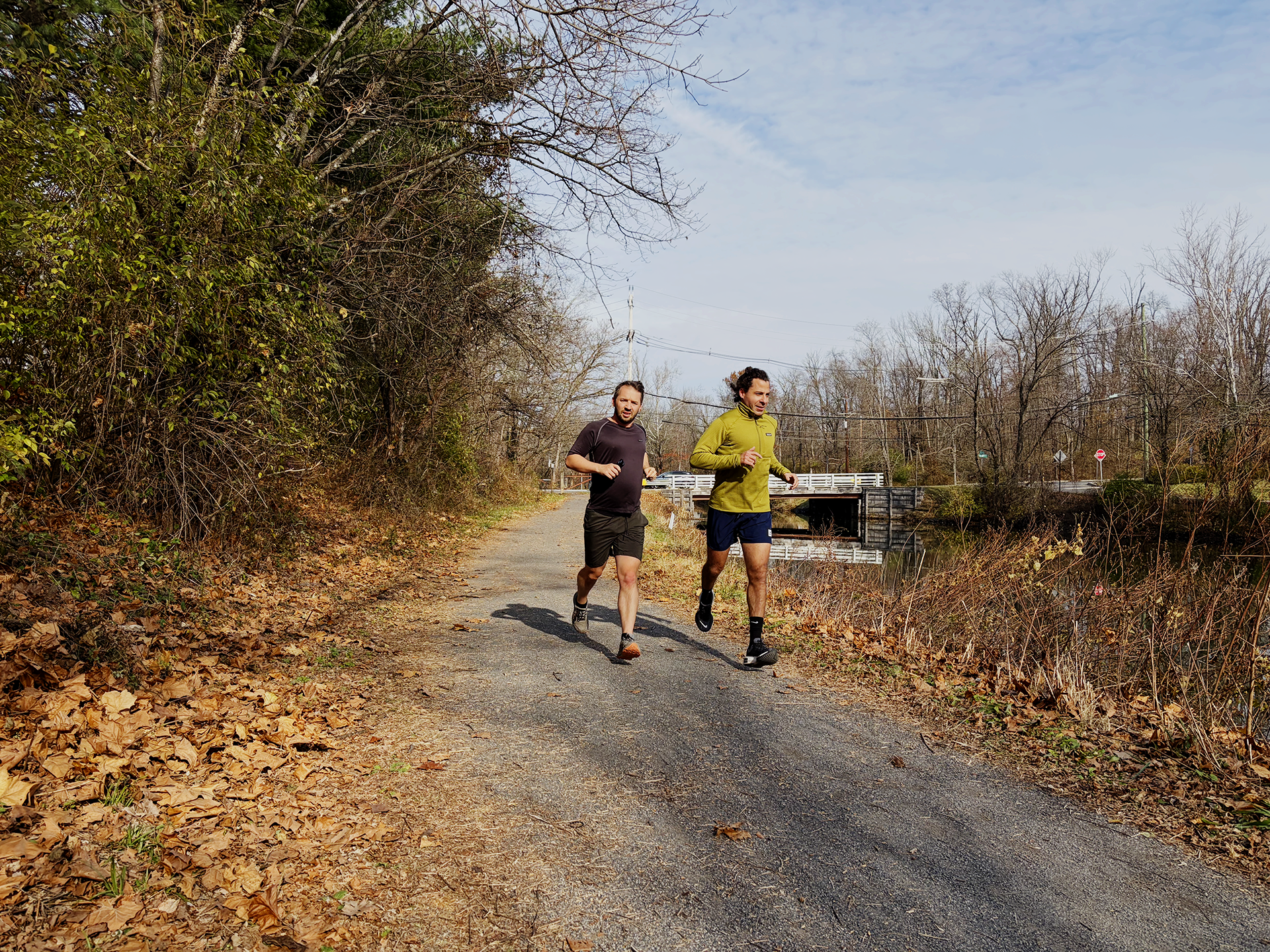
On the New Jersey side, Division of Parks and Recreation officials are currently developing a policy that will outline guidelines for e-bike use on state park lands based on the three e-bike classifications. Class 1 e-bikes provide only pedal-assist power and Class 2 provide pedal assist as well as a throttle. Both Class 1 and Class 2 bikes can reach top speeds of 20 mph, compared with Class 3 e-bikes, which can reach speeds as high as 28 mph. A parks system media representative told Grid that only Class 1 and Class 2 e-bikes are currently permitted on trails such as the D&R Canal towpath. There are no posted speed limits on the 70-mile-long towpath, but park officials recommend a 15 mph speed limit.
The same representative also said the New Jersey State Park Police have no records of any incidents in which an e-bike operator has been cited or fined for improper use.
There’s no need to be going 30 miles per hour on a walking path.”
— Ed Smith, cyclist
Ed Smith, of Langhorne, says he hasn’t personally had any conflicts with e-bike riders when he’s pedaling on the towpath but agrees speed limits are necessary. “There’s no need to be going 30 miles per hour on a walking path.” Smith also raised concerns about possible surface impacts on the gravel trails from heavier e-bikes.
On the Pennsylvania side, according to Department of Conservation and Natural Resources (DCNR) deputy communications director Madalyn Neff, “DCNR recorded seven medical incidents and ambulance transports involving e-bike users in state parks in 2024 and 11 in 2025.” Neff also said PennDOT figures show that in 2024 there were 345 crashes involving e-bikes, out of 1,271 crashes involving bicycles on Pennsylvania roadways. DCNR has already set a 20 mph speed limit for e-bike use in Pennsylvania’s state parks, along with a 100-pound weight limit. The department also posts e-bike guidelines along bike trails.
Roy Weaver, of Tinicum Township in Bucks County, rides his Class 1 e-bike along the two towpaths, and says he’s come across heavier e-bikes that may be inappropriate for the trail. “Now, they are not really a bicycle. They are electric motor bikes,” Weaver said.
New Jersey lawmakers are moving to tighten regulations for e-bike use across the state following two fatal crashes in September involving teenagers. A bill sponsored by state Senate President Nicholas Scutari would update 2019 regulations, creating a Class 4 category for e-bikes that exceed 28 mph or 750 watts. The bill would require Class 2, Class 3 and Class 4 e-bikes to have insurance and registrations and would require their operators to obtain an e-bike license. Anyone under 17 years old would only be permitted to operate Class 1 e-bikes.
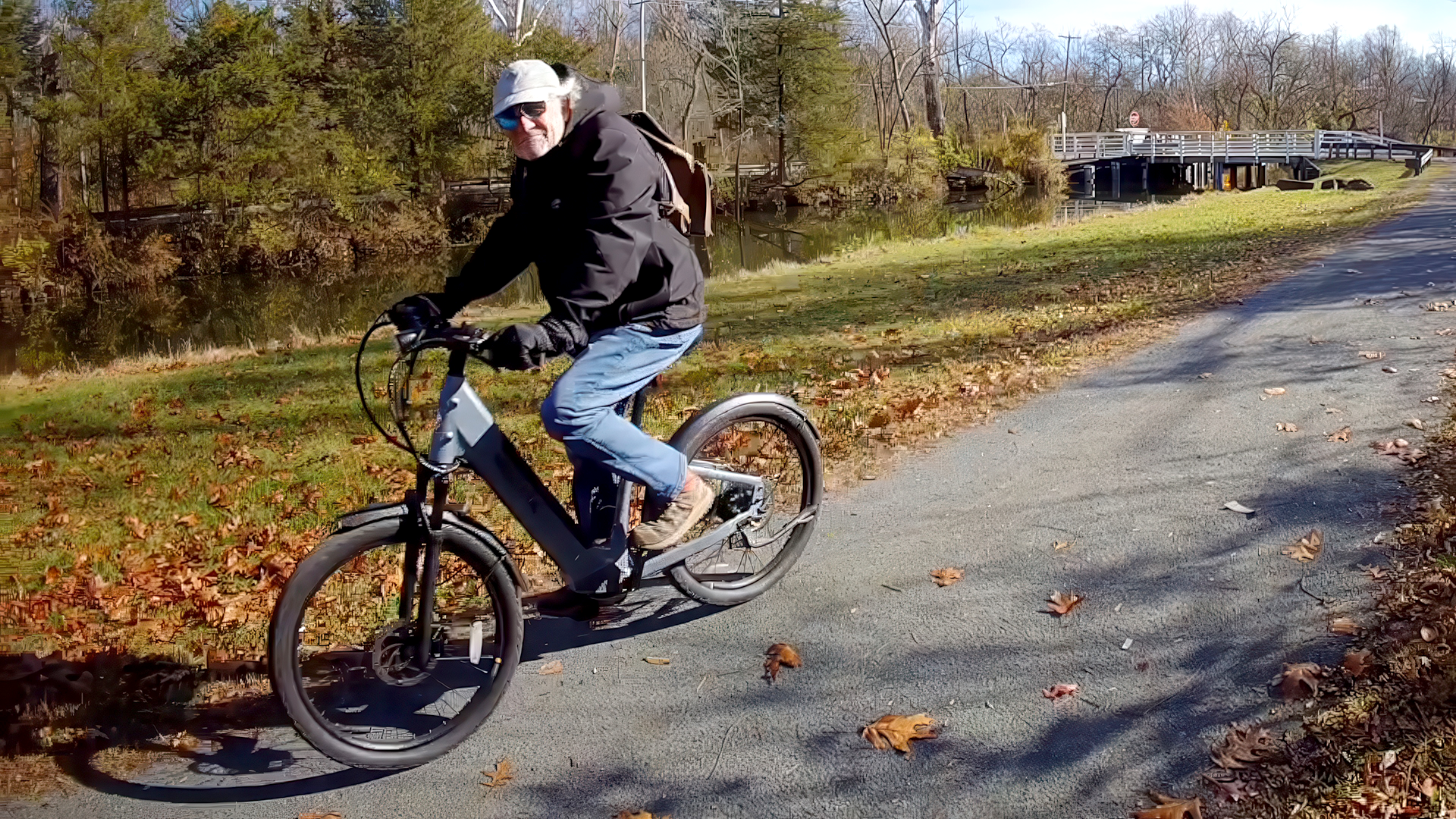
Bruce Fletcher, of Ewing Township, New Jersey, rides his Class 2 e-bike along the D&R Canal, and opposes the legislation because it could discourage people from using an environmentally clean form of transportation that provides access to outdoor areas. “This is not right. They’re hurting everybody just for people who disobey the law,” Fletcher said. He believes more enforcement of existing laws is needed. “They’ve got to start cracking down.”





Bruce Fletcher’s right! Its dumb to punish everyone owning an e-bike just because some people can’t use them safely and within the rules of the law. Class 2 and 3 E-bikes shouldn’t need insurance or registration.
Of.course NJ is foaming at the mouth to impose more “regulations “ for residents. E-bikes are great especially for seniors who cannot constantly pedal a normal bicycle up hills or for long distances. You have your registration mandate You have your license mandate. You have your helmet mandate. You have your insurance mandate and now that EVERYONE owns an e-bike, you’re looking to move the goal post once again! Yes people get hurt every day doing normal activities and they learn to be more careful the next time. Why do states always have to interfere with people just wanting to enjoy themselves?