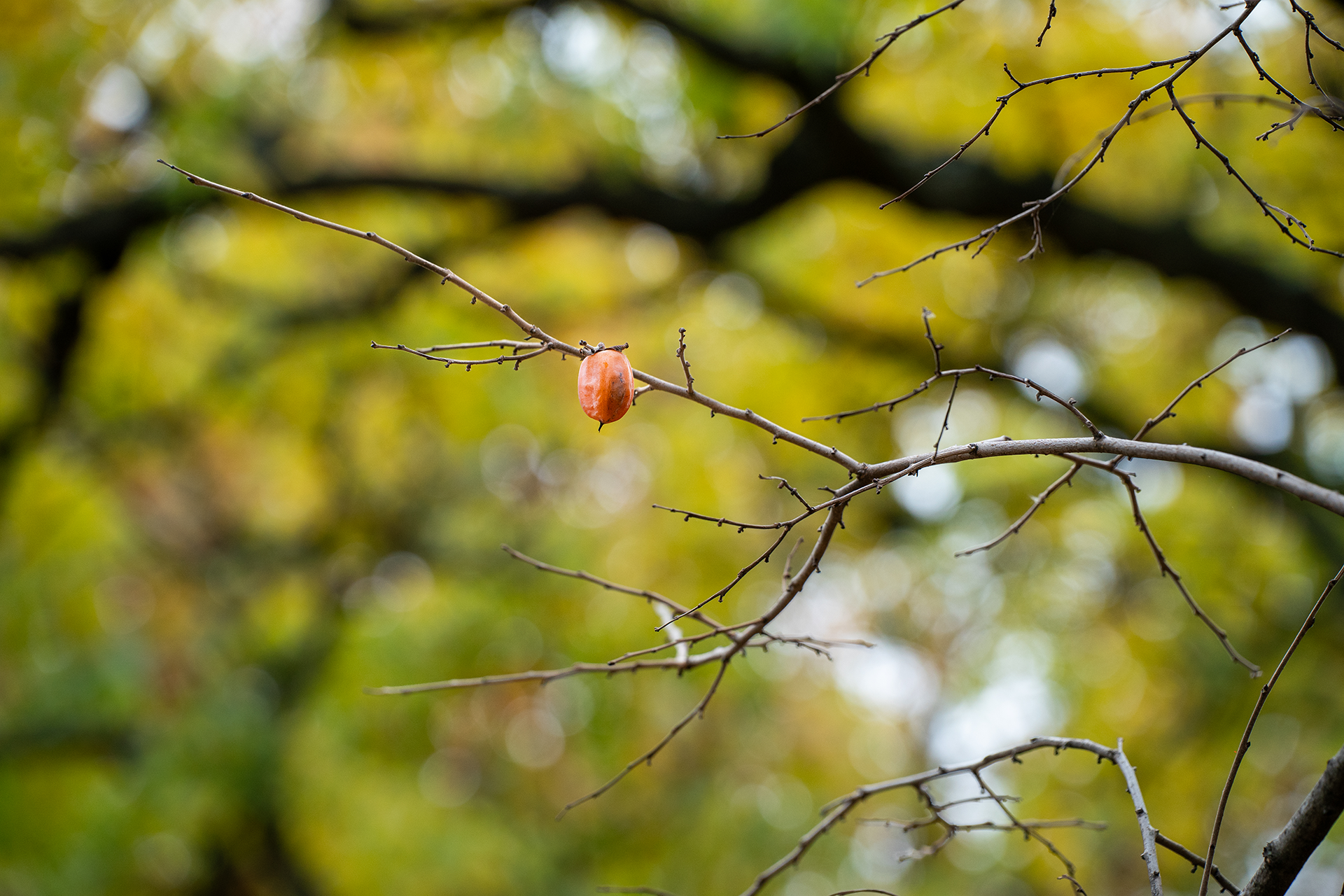
On my way out of the Cobbs Creek Environmental Education Center in October, I stopped to pick through the leaves around the American persimmon trees at the top of the driveway. It was a little early in the season, with plenty of fruit still on the tree, but I found a few little blobs of luscious orange goo to eat.
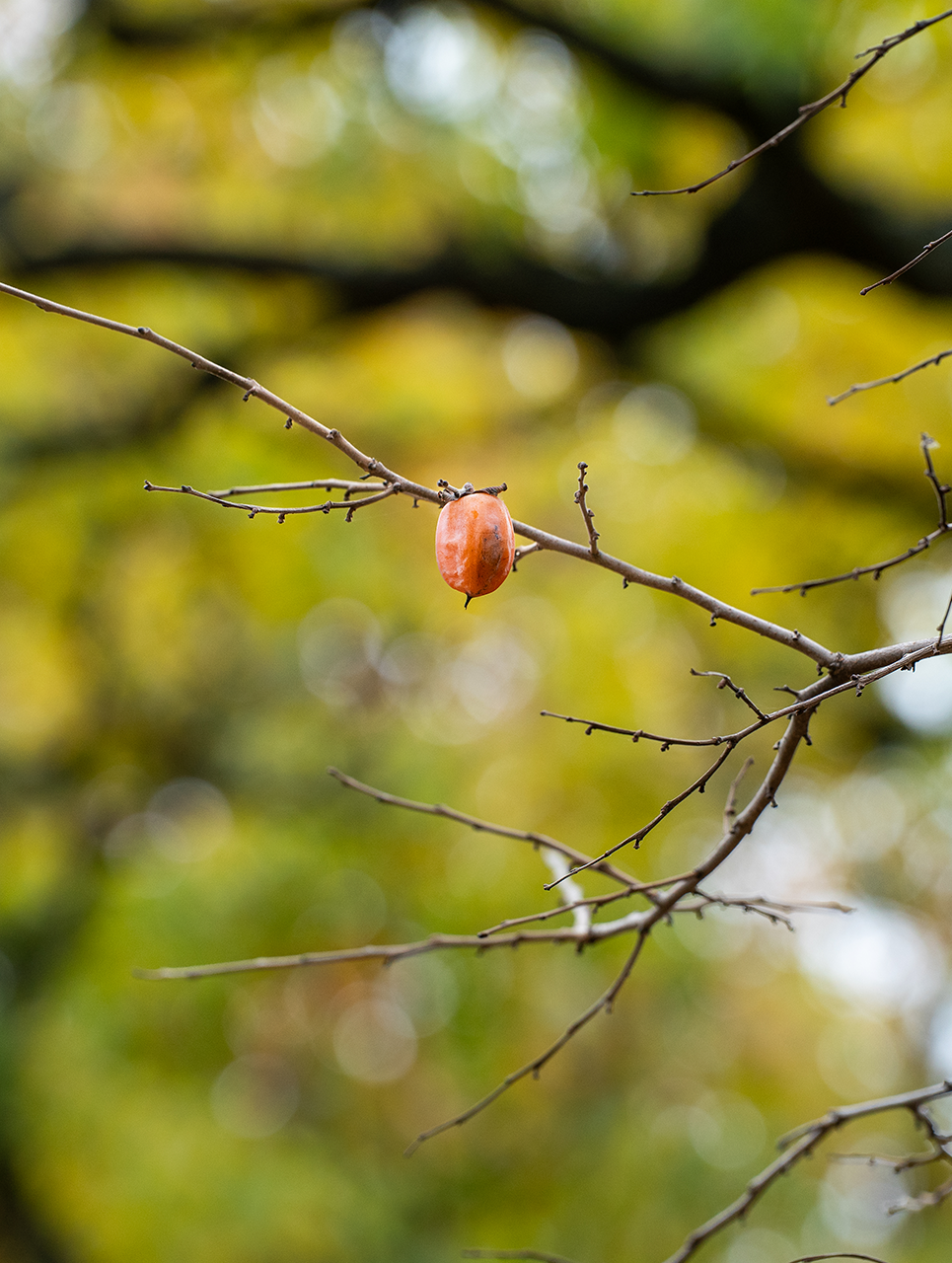
A ripe persimmon looks rotten by any other fruit’s standards, a ball of mush thinly contained by a weak skin. The force of hitting the ground usually breaks that skin, so that you could be fooled into thinking someone stepped on the fruit — and why would you want to eat something that looks rotten and stepped on?
Because it’s delicious, that’s why. And because if you eat it any earlier, it will be miserably astringent, its tannins coating the inside of your mouth with an unpleasant, scowl-inducing film. An early English colonist in Virginia wrote that the fruit are “not good until they be rotten.”
Persimmon trees have a distinctive blocky texture to their bark, and in late autumn, after they lose their leaves, they will still have some of the golf ball-sized fruit clinging to the twigs. When I find a tree, I’ll walk carefully around to find the fruit on the ground. Sometimes I’ll give a branch a shake to knock loose any that were about to fall anyway (any you have to manually pick from the tree will be underripe), but I particularly target the ones that look like they have freshly fallen on a dead leaf. If the ground side of the fruit looks a little dirty, I work from the top and suck out the pulp, a candy-sweet pudding tasting of cinnamon and cantaloupe.
You can buy farmed persimmons, an East Asian species now grown in California, usually at markets serving East Asian immigrant communities, and they sometimes pop up at Trader Joe’s or other mainstream chains. The fuyu variety you see most often looks like a flat, orange tomato. The hachiya variety is shaped like a heart (the internal organ, not the symbol) and, like the wild species, is unpalatable right up until it is mushy and perfect.
The ones I picked off the ground in Cobbs Creek were from the locally native species, Diospyros virginiana, though they were planted intentionally. I have gathered these in the wild — in the New Jersey Pine Barrens, for example — but these days I forage them from trees in Fairmount Park.
“Foraging” implies the harvest of wild foods, but is that what I’m doing when I’m stuffing my face with persimmons from trees planted by Parks & Recreation? I wouldn’t say that about apple picking — a version of gathering fruit from cultivated, domesticated trees that is squarely “harvesting.”
In this case, though, I’m eating a relatively undomesticated native species. Humans here have been eating persimmons (the word itself is of Powhatan origin) for thousands of years. These persimmons aren’t only enjoyed by humans. One time, I rounded a tree, picking up fallen fruit until I got to a fresh clump of deer poop, evidence of another critter foraging.
Ultimately this is a question about how we cultivate the wild. If a park system plants trees for all the usual ecosystem services (providing habitat, slowing runoff, providing food for wildlife), maybe we can enjoy the landscape they create as if it were natural.