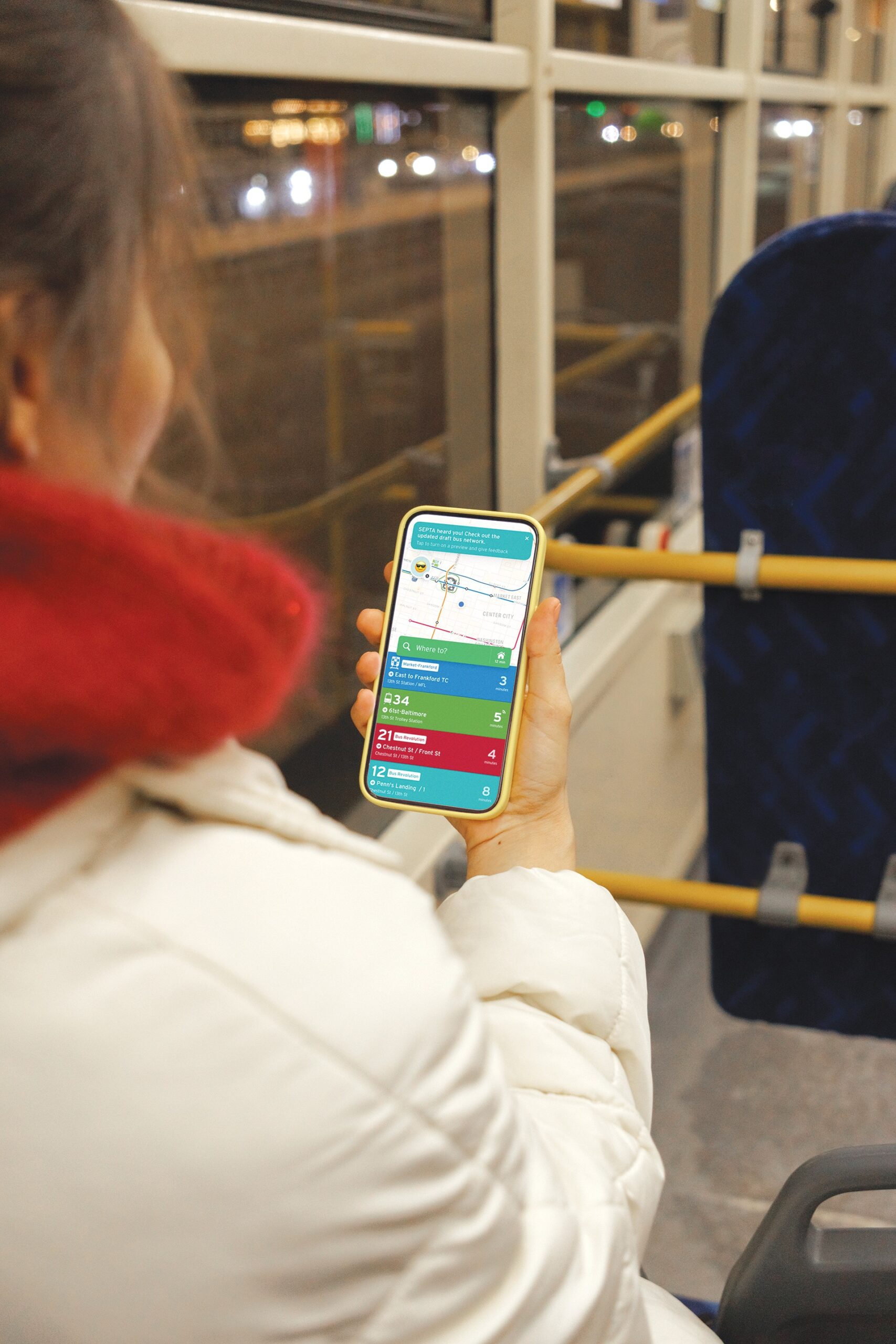
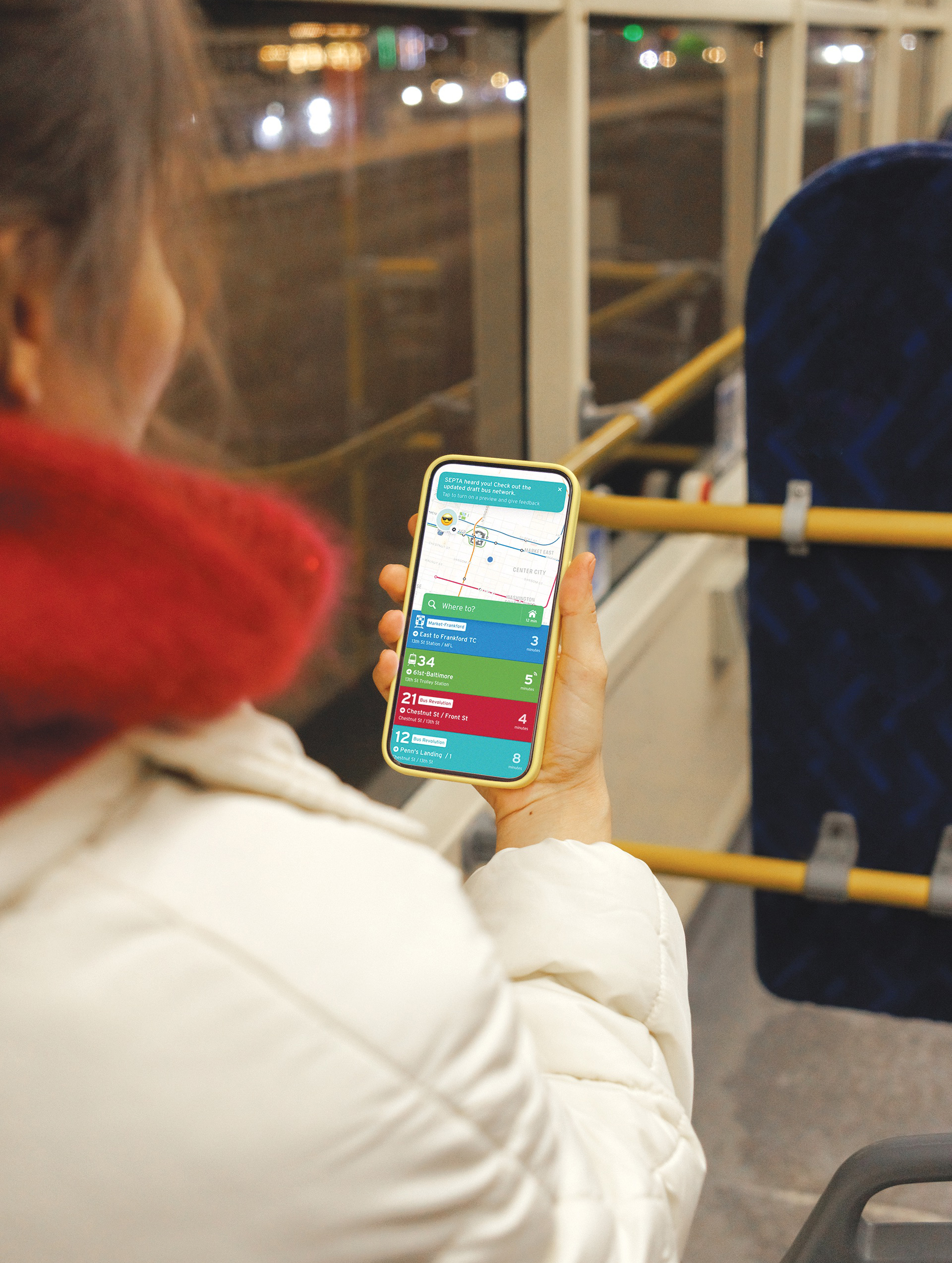
For roughly 20% of Americans who ride public transportation, the Transit app is their guide. Displaying nearby routes and mapping step-by-step transit directions, it also asks users to give feedback on their rides.
But for SEPTA riders, their responses to Transit’s in-app questions about station and vehicle conditions during a trip and overall satisfaction at its completion aren’t seen by the transportation authority. That’s because SEPTA does not subscribe to Terminal, Transit’s customer experience platform.
Rather, it relies on its own methods to acquire customer feedback.
The agency conducts a quarterly customer satisfaction survey, which asks riders to rate cleanliness, safety, reliability and other aspects of the system.
“We are super focused on those numbers right now,” says Lex Powers, chief officer of customer experience. “It’s a whole rallying cry in the agency to improve these scores. And over the past year or two, for the most part, they have gone up.”
Other data, such as complaints about onboard conditions like temperature, come through calls and emails, direct interactions with staff and even online mentions of the word “SEPTA.”
“People may not know that if they say something on X or Facebook or something like that about service, there’s a good chance that that comment was cataloged, and I may have gotten it emailed to me,” Powers says. “So that’s a lot of [the] primary information that we receive.”
From there, the agency can consider what went wrong in certain situations and possibly identify overarching patterns, says Katie Monroe, SEPTA’s project manager for service disruption communications.
“All that kind of data certainly is useful to us, and we have ways to use it to improve customer experience,” she says.
Transit’s policy lead, Stephen Miller, says it crowdsources data so agencies can track their performance generally — what their riders experience daily, rather than the extremes that prompt active feedback through phone calls and emails. It analyzes this data and returns it to the 19 agencies that subscribe to receive Rate-My-Ride feedback through Terminal, he says.
While SEPTA is far from opposed to a closer partnership with Transit, the agency has to weigh the benefits of signing on to Terminal, especially given tight budget constraints. There’s a price to accessing Transit’s data, which Miller said varies by agency size but declined to quantify specific ranges. And although more data could always be useful, Monroe says, feedback from Transit would only be supplementary to SEPTA’s in-house customer satisfaction collection.
As it stands, Powers says Transit is a good channel to distribute its customer experience survey.
SEPTA provides Transit with open data, including schedules and real-time tracking, Monroe says. The same information is shared with other GPS applications, allowing users to plan their trips and see live delays or detours when available. It also works with Transit to ensure the app’s displays match the wayfinding signage and route information passengers encounter during their trip, such as updates reflecting SEPTA’s 2025 Metro rebrand, Monroe says.
The percentage of riders who get information about SEPTA via Transit soared from 2022 to 2025, according to survey response data provided by the agency. While the figures — 8% in 2022 and 49% last year — may not accurately reflect SEPTA’s general ridership due to collection methodology, Transit’s prominence in the list of information sources does indicate its growth as a resource.
And because they are indeed using Transit, Miller emphasizes the importance of continuing to serve SEPTA riders and maintaining open communication with the agency, regardless of whether it subscribes to Terminal.
“In all cases, we are there to work with the transit agency,” Miller says. “It’s not an all-or-nothing approach. There’s never a situation where the lines of communication are closed, because people are still using us to navigate the system, and we’re still relying on the accuracy and quality of the information provided by the transit agency.”