Cristina De Jong, a master’s student studying textile engineering at Thomas Jefferson University, is a fervent reader of clothing labels, carefully assessing fiber content before purchasing new garments.
“I’ve sort of given myself a reputation among my friends and family,” says De Jong. “I will be your sustainable clothes consultant. Like, tell me if you’re going to buy something and I’ll tell you if this is a good purchase for you or not.”
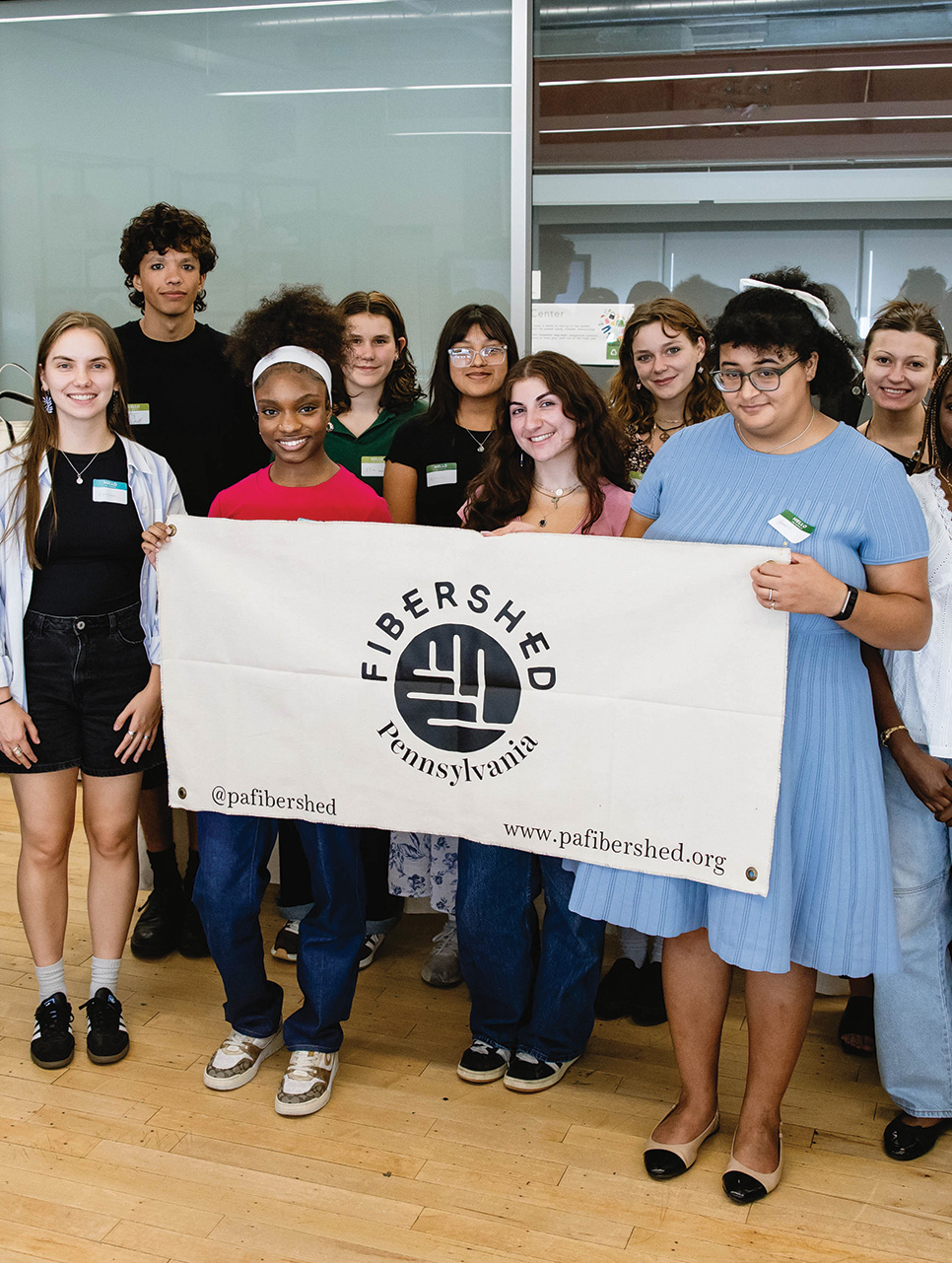
De Jong is president of the Jefferson University chapter of Pennsylvania Fibershed’s 2025-26 student ambassador cohort, an application-based program that operates as an on-campus organization. Alongside five other Jefferson student ambassadors, De Jong is a peer educator on sustainability in textiles and fashion, and helps facilitate on-campus events like clothing swaps and natural dye workshops.
The ambassador program, in its first year, also has a chapter of six students at Drexel University, where Pennsylvania Fibershed co-founder Rachel Higgins is a professor of fashion design. Higgins formed Pennsylvania Fibershed with Leslie Davidson in 2023 to strengthen connections across the state’s fiber, textile and fashion industries, building up circular and sustainable supply chains. Educational programming has always been a core component of the nonprofit, which now has its 12 peer educators sharing information about the impacts of fast fashion and overconsumption.
“The idea behind the ambassador program is that we can train students from all across the state, who can then work on their own campuses to spread more of our mission and further the work of Pennsylvania Fibershed,” says Higgins.
While Gen Z has a growing awareness of sustainable fashion consumption, the fashion industry remains one of the most environmentally detrimental, generating 10% of global carbon emissions and consuming 1.5 trillion liters of water annually. Fast fashion, defined by mass-produced garments made mostly with synthetic fibers, particularly targets younger consumers with low prices and rapid trend cycles. And millions of tons of textile waste end up in landfills every year. As Davidson puts it, we have six generations of clothing on this planet — enough to clothe everyone.
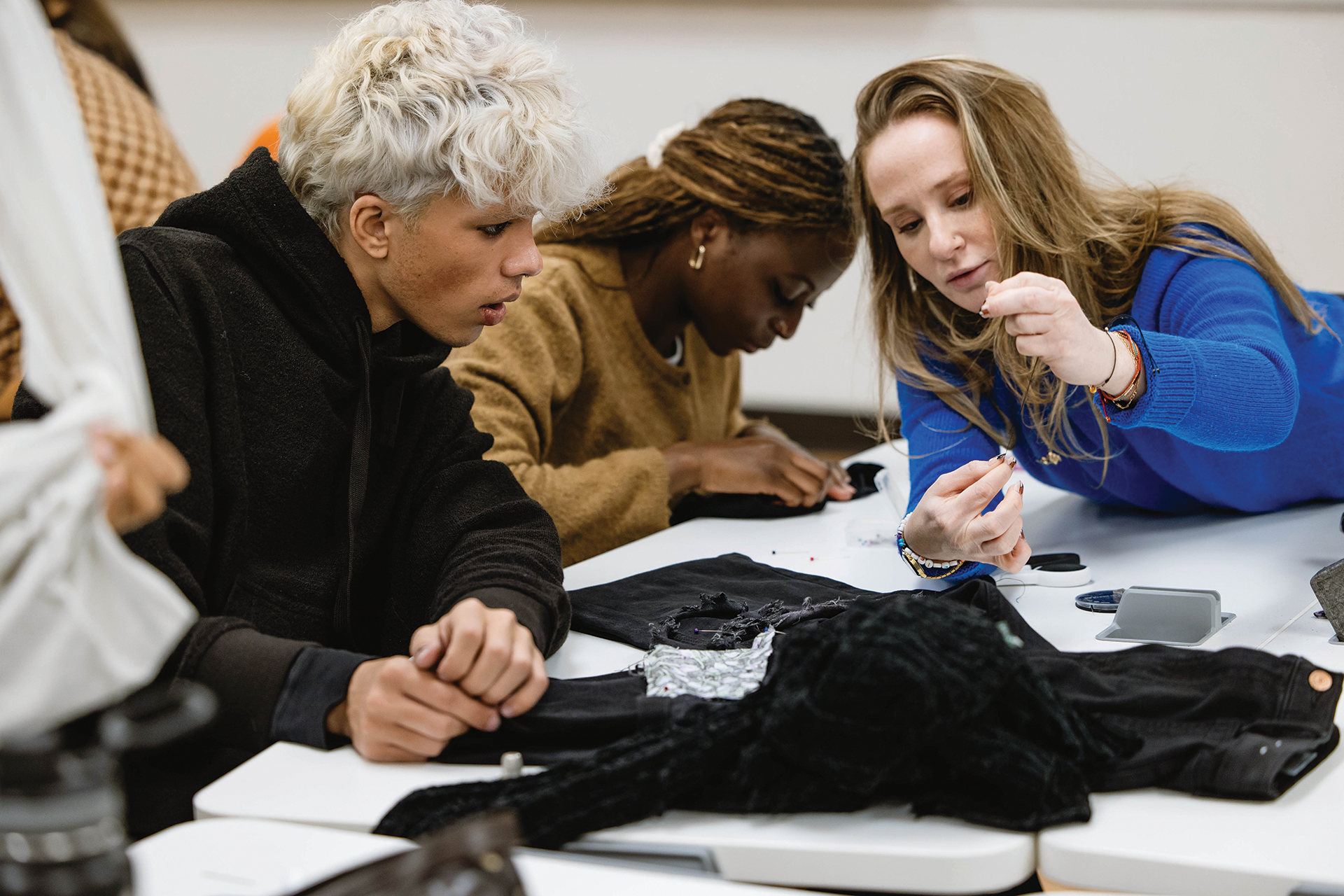
The cohorts include both undergraduate and graduate students representing a wide range of fields of study, from fashion design and textile engineering to law. Pennsylvania Fibershed provides the ambassadors with training, resources and access to industry events and workshops, equipping them to spark conversations with their fellow students, whether that’s at a tabling event or in a classroom.
“I think that 90% of the time, people are very open to the ideas that we’re putting out there. People want to do the right thing,” says De Jong. “But the biggest pushback is, ‘oh, well, it’s expensive.’ And with repairing, it’s just not convenient.”
Ambassadors on both campuses are tackling the convenience issue by hosting clothing swap events and creating other on-campus donation points. Both cohorts held end-of-semester clothing swaps in the fall, where students could drop off unwanted garments they gathered while moving out of their dorm rooms, or exchange them for other donated clothes. On Drexel’s campus, ambassadors have set up a “downcycling” center — a station of bins where students can drop shoes, jeans, socks and bras, which are not typically donatable.
Drexel ambassadors also manage Reworn, a secondhand clothing store on campus featuring curated pieces from student donations. Items are offered on a pay-what-you-wish basis, with proceeds helping fund the ambassador program.
“It’s a great way to build a circular system. They get to really see how that can work firsthand,” says Higgins.
I think it’s very meaningful when you can see the production line of where the fiber was first found to where it was spun, where it was made, all the way to cut and sew.”
— Maggie Robinson, Student Ambassador
Student ambassadors gain experience in event planning, marketing and outreach, and they have full control over their events calendar. While clothing swaps and mending workshops target issues like fast fashion and overconsumption, ambassadors have also organized events around the science of fibers. Maggie Robinson, events coordinator of the Jefferson chapter and a third-year student majoring in textile product science, works on an alpaca farm during the summers. She hopes to organize a field trip to the farm this spring for her fellow ambassadors to see an upcoming shearing and learn how fleece is processed.
“I think it’s very meaningful when you can see the production line of where the fiber was first found to where it was spun, where it was made, all the way to cut and sew.”
While ambassadors are not paid, they do receive a free yearlong Pennsylvania Fibershed membership, giving them access to members-only events and monthly meetings. Fibershed also provides what Davidson described as a “120-page handbook” with resources for networking, event planning, email and social media outreach and more. “We want to make sure that, yes, they’re sharing this [information], but also developing their personal skills that they can put on their resume and that can further them in their careers.”
Robinson cites Pennsylvania Fibershed’s supply chain directory as a favorite resource of hers, both for networking and for better understanding the industry players. She and her fellow students have used it to identify internship opportunities and learn more about the mills, farms, designers and others along the textile supply chain.
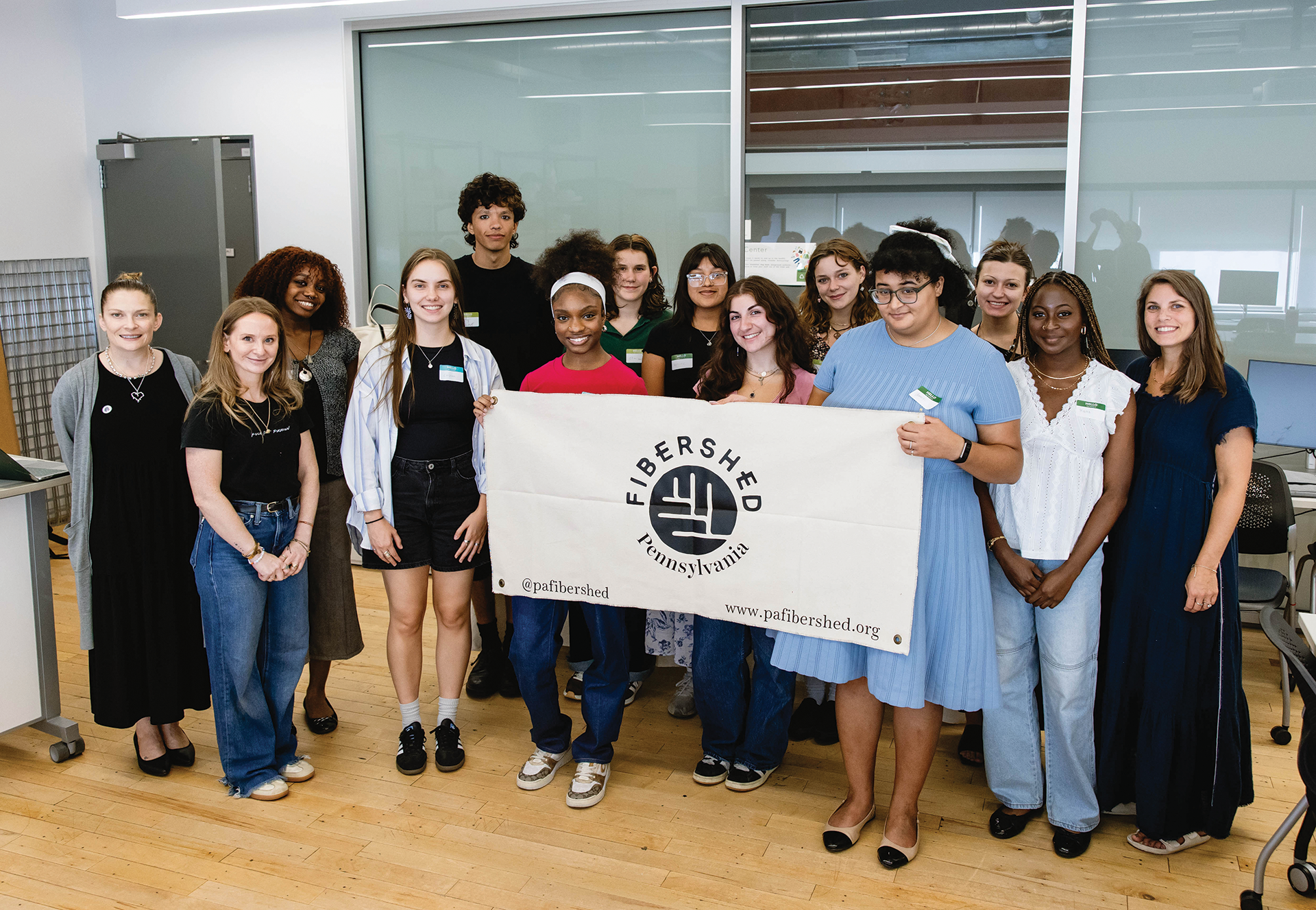
Robinson and De Jong are planning events for the rest of the spring, focusing on attracting students outside the fashion and textile disciplines. To start, those plans include a larger end-of-year clothing swap, but Robinson said it also means “going out of our comfort zone, going to spaces we as textile majors never get to see, going into different buildings and putting up a poster.”
That outreach effort is already paying off. A natural dyeing workshop they hosted in November drew mostly pre-med students, Robinson said. Jennifer Rhodes, a Pennsylvania Fibershed board member, led the workshop and demonstrated how to dye fabric swatches using turmeric.
“We wanted it to be that anyone could explore natural dyeing, whether you are a textile major or not,” Robinson said.
The student ambassador program will continue for a second year this fall, Davidson says, with plans to expand the program to additional universities across Pennsylvania.
“For me, the most important part about working with this younger generation, this next generation of sustainability leaders and advocates, is their influence on what comes next for our world.”
Pennsylvania Fibershed will hold an information session for university students or faculty members across the state who are interested in joining the ambassador program on March 27. More information can be found at pafibershed.org.