In June at the Hunting Park Recreation Center, Ilianny Rodriguez, a senior at Esperanza Academy Charter School, was playing volleyball in the gym with her friends. She says that when it’s very hot, they cope by lying in front of the fan because the gym is not air-conditioned.
Rodriguez has noticed that people try to mitigate the heat by painting surfaces white, and she remembers efforts a few years back when more trees were planted in the park and benches added, but she says these improvements haven’t been maintained.
Juan Díaz, who also enjoys going to the recreation center for volleyball, says that when it gets really hot, he steps outside for relief. “It’s draining,” Díaz says. “I come out here for a breeze and fresh air.”
Rodriguez says that the community needs to create more air-conditioned spaces, and her neighbors agree.
As documented in the 2018 report “Beat the Heat — Hunting Park,” community activists working with the Office of Sustainability heard from more than 600 community members that high heat was an important issue. This expression of concern led to a targeted effort to provide more resources, but more needs to be done, says Hunting Park United co-founder Leroy Fisher. He says more cooling centers are needed for teenagers and vulnerable populations. His organization is advocating for the City-owned Logan House in Hunting Park to be used as a cooling center.
The need for such centers will only grow. The Philadelphia Department of Public Health (PDPH) declared two heat emergencies in 2024, but, according to “Pennsylvania’s Looming Climate Cost Crisis,” a July 2023 report from the Center for Climate Integrity (CCI), that number is expected to go up. A heat emergency occurs when temperatures in the 90s or higher coincide with high humidity. The PDPH website states that this is when people can most easily suffer dehydration, heat exhaustion and heatstroke. And as the frequency of heat emergencies increases, it’s Philadelphians — especially those in neighborhoods like Hunting Park — who will be the most severely impacted.

According to the CCI report, the Pennsylvanians who will be at higher than the state average risk of heat-related illness, who will be “disproportionately burdened” by the effects of rising temperatures, include Philadelphia County residents and members of communities classified as Environmental Justice Areas or where high percentages of the population are foreign-born or speak languages other than English at home.
The City’s map depicting heat vulnerability, which it uses to plan door-to-door outreach and the placement of cooling centers, confirms that the most affected communities are largely divided by race and income. Hunting Park faces higher temperatures due to aging homes, fewer trees and fewer green spaces. As compared with sections of the city with newer housing and light-colored roofing, lower income neighborhoods frequently have dark roofing and more concrete, exacerbating the urban heat island effect.
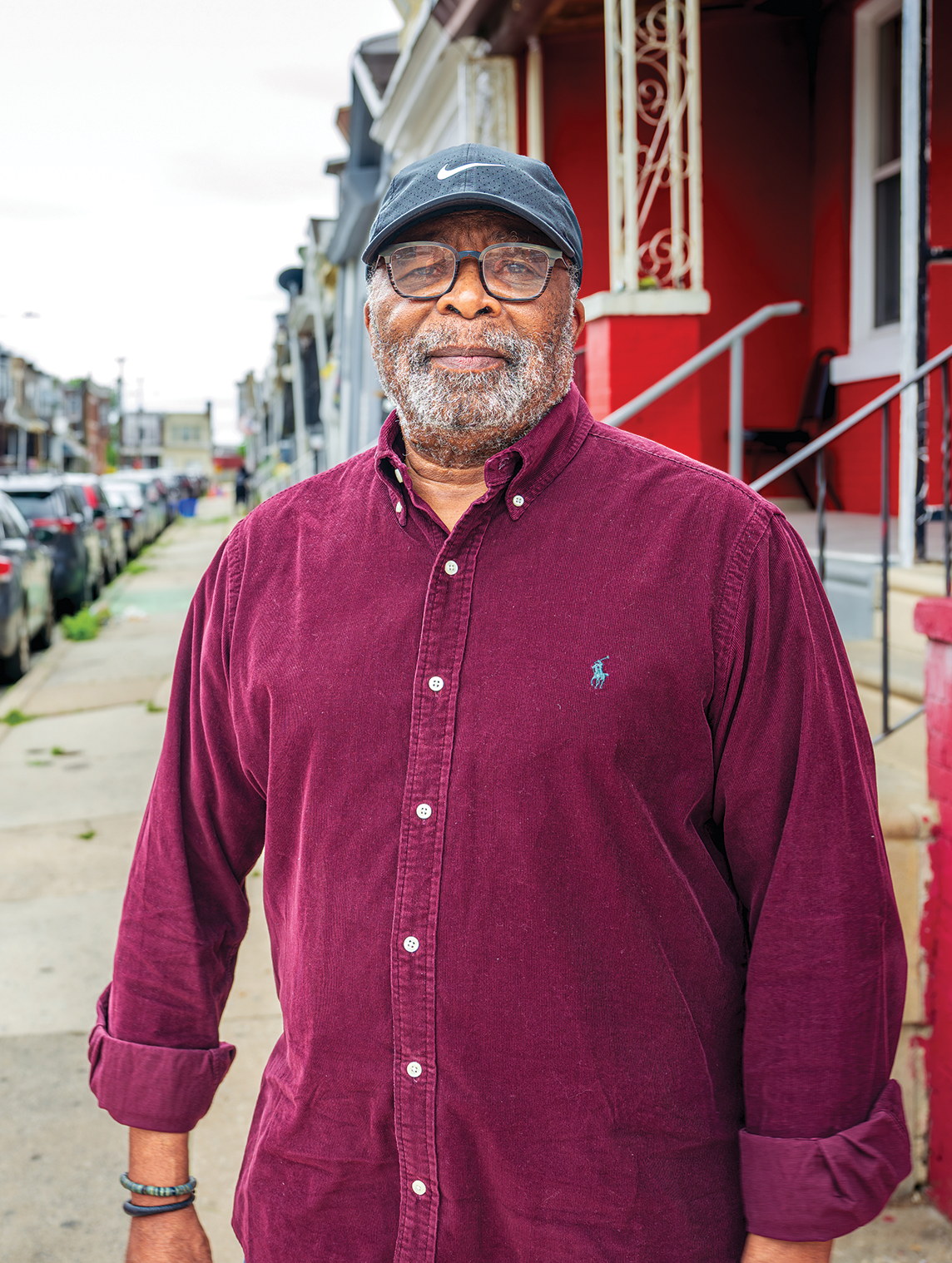
“The housing situation has definitely impacted the health of residents,” says Charles Lanier, executive director of the Hunting Park Neighborhood Advisory Committee (HPNAC). Lanier works with HERE 4 Climate Justice, the Office of Sustainability and Built to Last, run by the Philadelphia Energy Authority, to advocate for upgrades to preserve older homes.
HPNAC coordinates community DIY workshops, providing tips on weatherizing homes and energy conservation. Residents who attended the workshops have received cooling kits with materials like caulk, weatherization strips and window insulation materials, says Lanier. Some received air conditioning units. “The funding doesn’t allow us to serve every household in the neighborhood, but we try our best to raise as many funds and serve as many people as possible.”
As temperatures rise, federal funding cuts make such work trickier to finance. According to a May 15 Billy Penn report, recently “canceled grants include $500,000 for Esperanza’s tree-planting and climate resilience project in Hunting Park and $700,000 for the Overbrook Environmental Education Center’s program to help other groups secure grant funding for projects in disadvantaged communities.”
According to a March WHYY Climate Impact story, $13 million in cancellations and freezes “have hit projects to monitor air pollution, plant trees and protect residents from extreme summer heat in the Philadelphia region.”
The City is coming through, though, at least with funding to improve older housing stock. “We were successful in getting a $5 million increase in the City budget to upgrade more homes,” Lanier says. HPNAC and its partners, like Built to Last, will push for a $10 million increase going forward with a focus on electrification, solar paneling and heat pumps, he says.
“Built to Last is spending roughly $25,000 per home, and that funding leverages an equal amount of funding from partner programs, such as the Basic Systems Repair Program, the Weatherization Assistance program and aging-in-place, health and utility programs,” says Alon Abramson, vice president of programs for the Philadelphia Energy Authority.

In the meantime, the City is working with 300 faith-based and community organizations to expand the network of libraries, recreation centers and other community spaces that serve as cooling centers from 48 to 55. According to a City representative, warming centers used during periods of extreme cold do not always serve as cooling centers in the summer. The City is updating its inventory of cooling spaces and is readying emergency workers for challenges like additional health crises and power outages.
And when the PDPH does, inevitably and increasingly often, declare a Heat Health Emergency, the City activates additional services including extended hours at cooling centers and assistance for those most at risk during a high-heat event: those over 65, infants, young children and those suffering from chronic health conditions, according to the PDPH Extreme Heat Guide.
It is recommended that during a heat crisis, residents check on vulnerable community members and pets. During heat emergencies, the Office of Homeless Services declares a Code Red, and residents are encouraged to report anyone on the street who may be experiencing a health crisis to the homeless outreach hotline, (215) 232-1984.
In addition, the heatline, (215) 765-9040, is open during heat emergencies, and the Office of Emergency Management’s Hot Weather Preparedness information page provides links for additional resources and tips.
City residents can sign up for ReadyPhiladelphia, a system run by the Office of Emergency Management, by texting READYPHILA to 888-777 or by registering online to receive emergency alerts by text or email. Those alerts are translated in American Sign Language and 10 other languages.
 This special section is a part of Every Voice, Every Vote, a collaborative project managed by The Lenfest Institute for Journalism. The William Penn Foundation provides lead support for Every Voice, Every Vote in 2024 and 2025 with additional funding from The Lenfest Institute for Journalism, Comcast NBC Universal, The John S. and James L. Knight Foundation, Henry L. Kimelman Family Foundation, Judy and Peter Leone, Arctos Foundation, Wyncote Foundation, 25th Century Foundation, Dolfinger-McMahon Foundation, and Philadelphia Health Partnership. To learn more about the project and view a full list of supporters, visit