
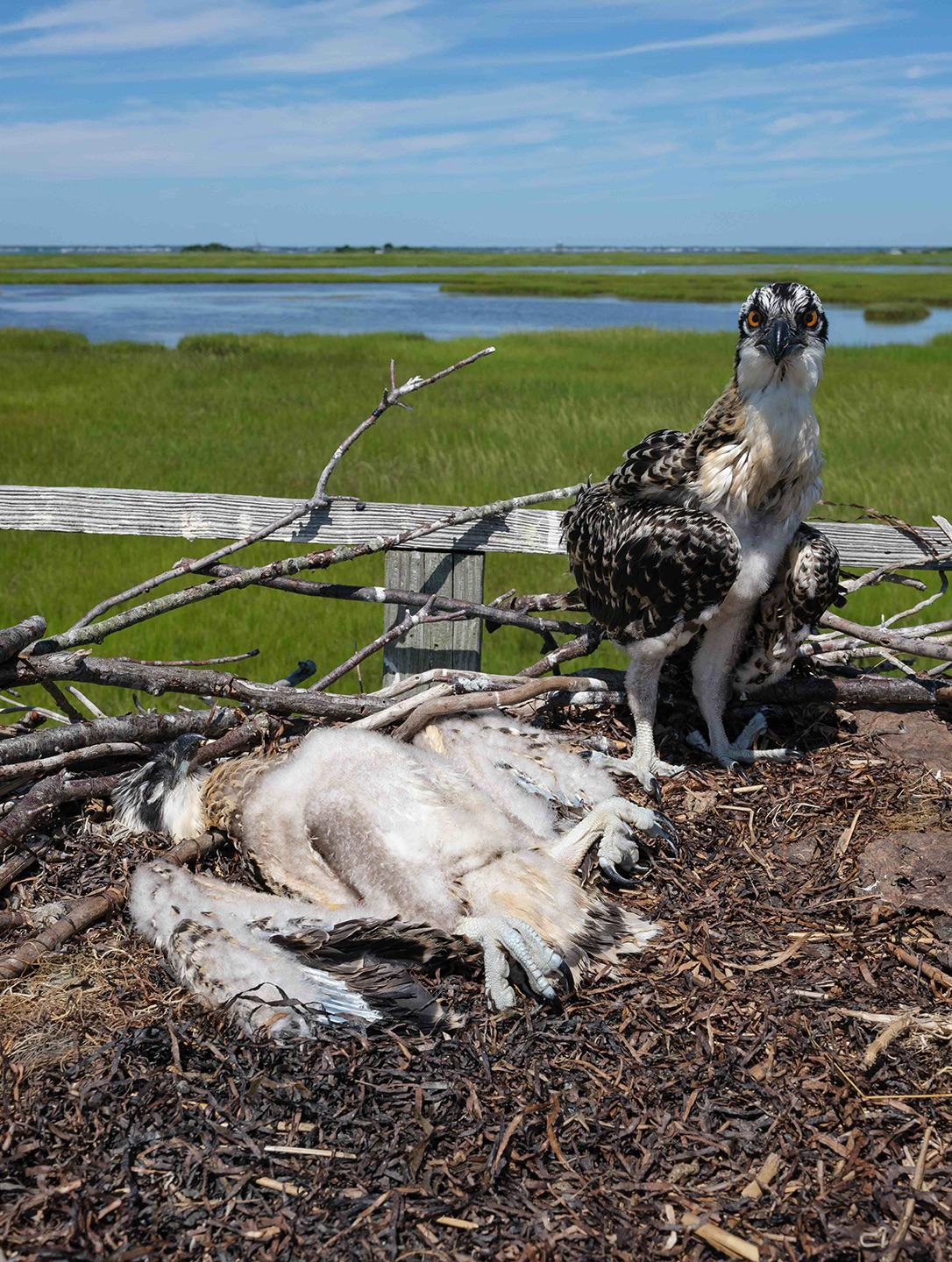
Mike Maahs has been fishing the Delaware Bay and the ocean off New Jersey for at least 35 years, he says. And for most of that time, he has seen menhaden, aka bunker. “A couple years ago, I ran 20 miles out into the ocean and 10 miles was solid bunker schools,” Maahs says. These historically abundant fish have supported the striped bass (striper) and other species that anglers like to catch, as well as charismatic predators such as ospreys and bald eagles. “There were a lot of ospreys around,” Maahs says. “You could watch them dive into schools and grab a fish and fly away with it.” But lately the menhaden have been scarce, and predators that eat the fish, especially ospreys, have been suffering.
Menhaden, a kind of herring, travel up and down the coast in large schools feeding on plankton in the water. “They migrate basically from North Carolina up to New Brunswick,” says Jaclyn Lunaas, forage fish program manager for the Theodore Roosevelt Conservation Partnership.
Anglers pay close attention to menhaden because if they find a school, they also find predatory sportfish. “We used to have great striper fishing here. And the stripers were here because the bunker were here,” Maahs says.
“[Menhaden] have a very high omega-3 content, so they provide a lot of energy to a lot of fish, marine mammals and seabirds that eat them.”
— Jaclyn Lunaas, Theodore Roosevelt Conservation Partnership
Menhaden aren’t just abundant, they’re nutritious too. “They have a very high omega-3 content, so they provide a lot of energy to a lot of fish, marine mammals and seabirds that eat them,” Lunaas says. “We call them the most important fish in the sea.”
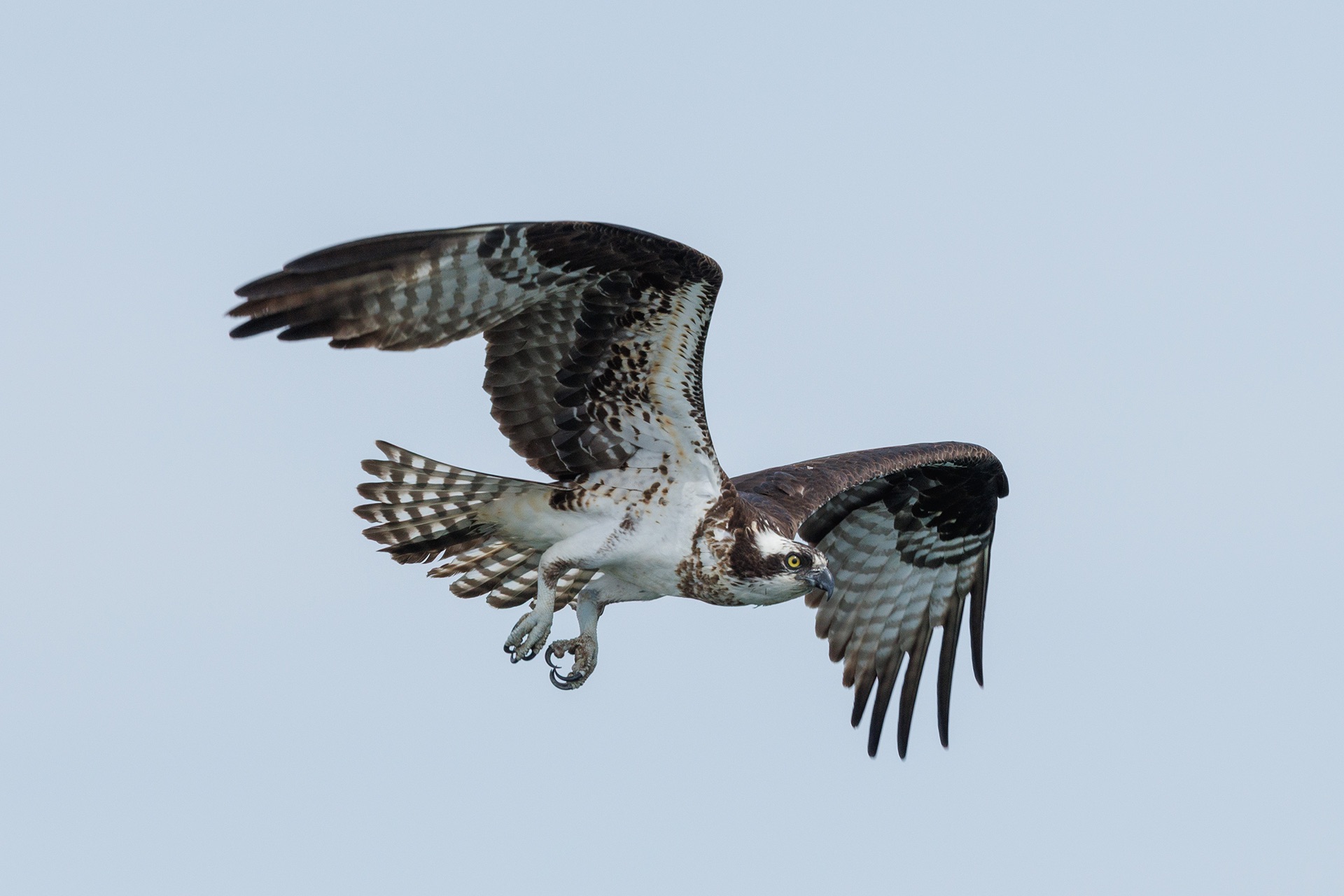
The ospreys breeding along saltwater in New Jersey have historically relied on the easy-to-catch, rich menhaden to feed to their chicks.
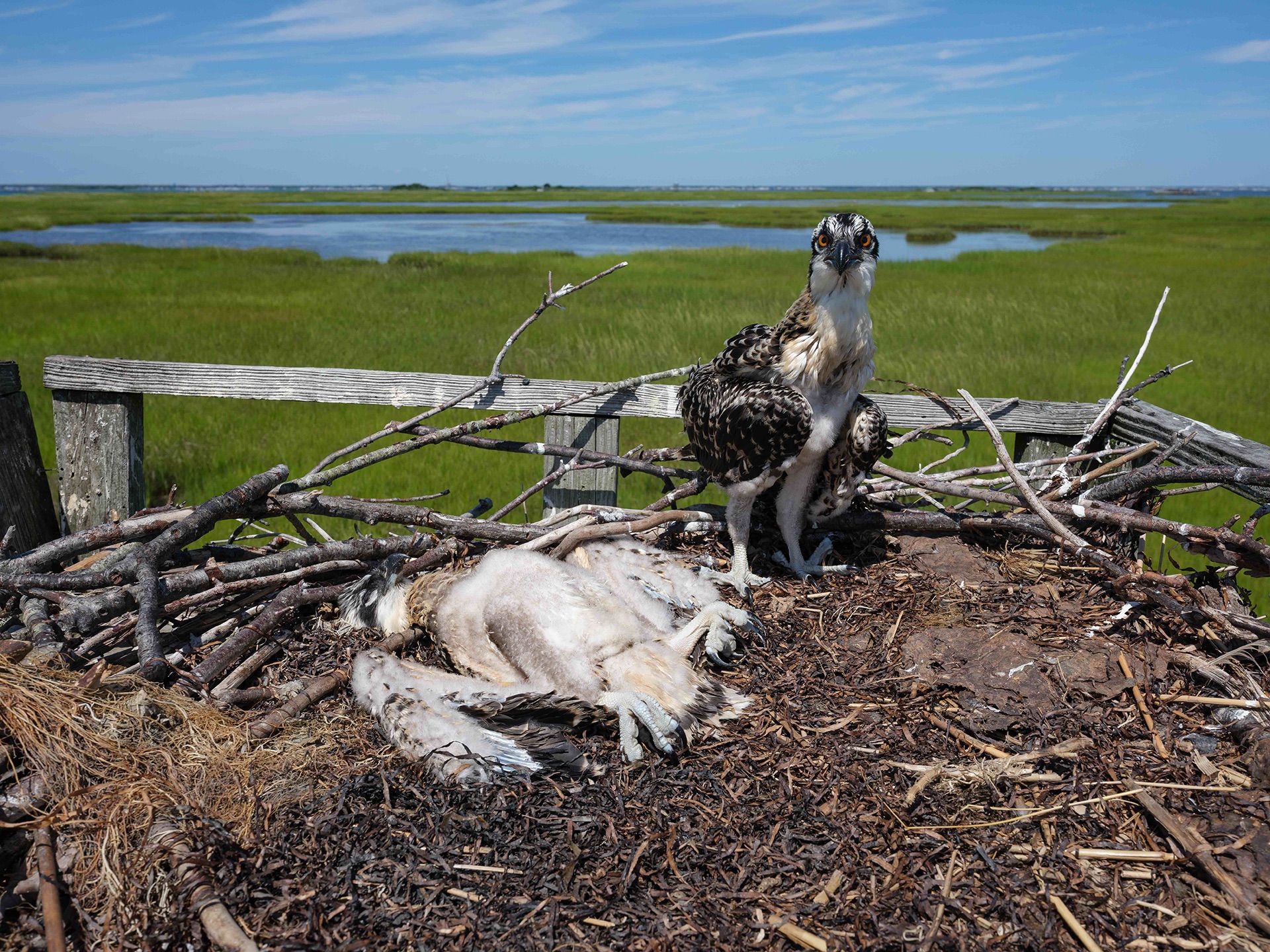
But over the past two years, Jersey Shore ospreys have had a hard time feeding their offspring, and fewer chicks have been making it out of the nest. In 2025, the Conserve Wildlife Foundation of New Jersey found widespread reproductive failure in the nests its researchers monitor. The 507 nests for which scientists could determine outcomes fledged only 352 chicks. Fifty-seven percent of active nests had zero chicks survive, a failure rate three times the average. This year, Stockton University researchers using cameras to monitor nests at the Mullica River and Great Bay found that 27 nests only produced nine chicks.
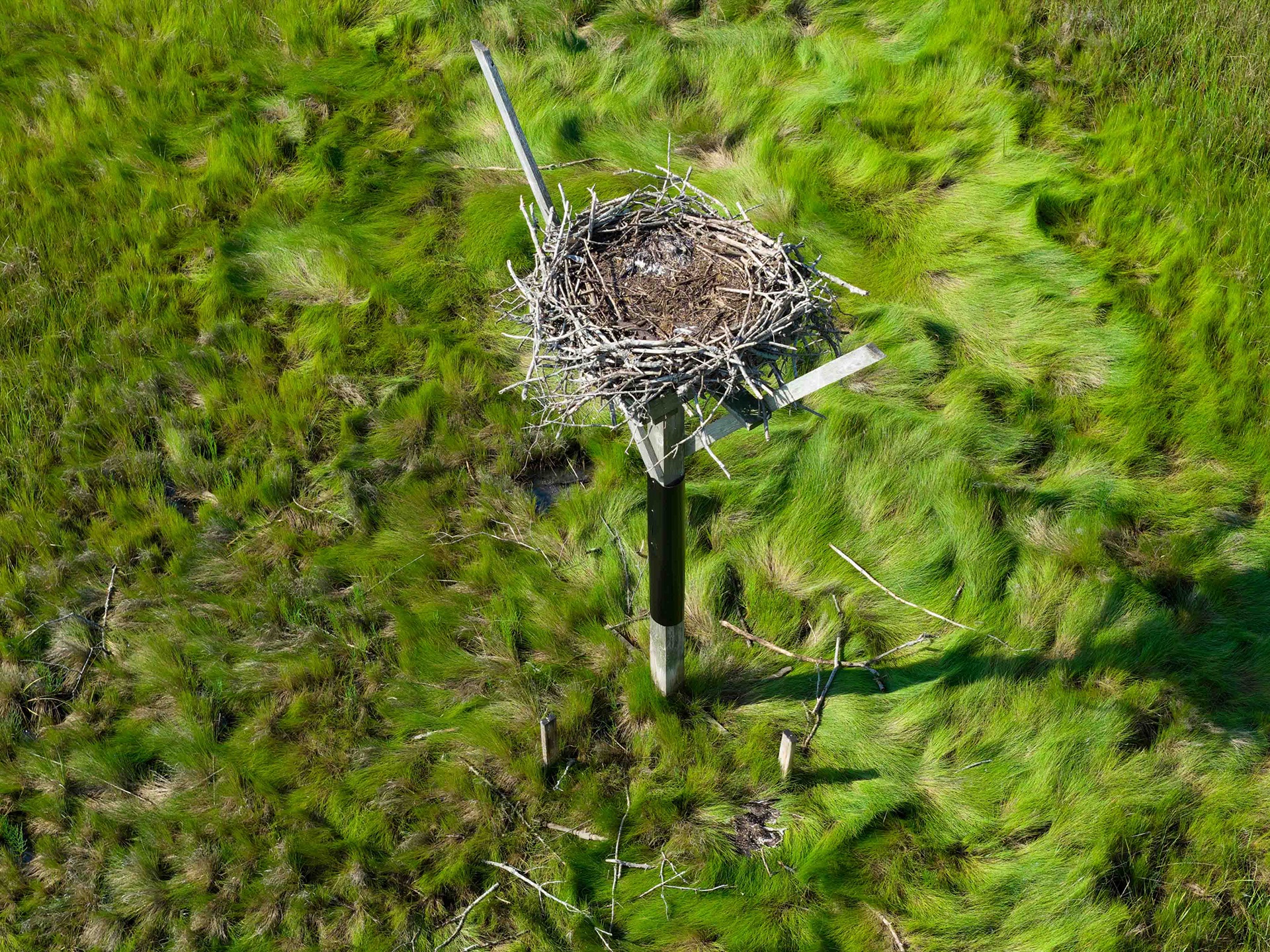
The osprey parents are having a harder time catching menhaden for their babies, says Ben Wurst, senior wildlife biologist with the Conserve Wildlife Foundation. Recent unusual weather conditions, such as strong onshore winds in spring and early summer, may have pushed menhaden to swim farther offshore. The winds also rough up the ocean’s surface, making it harder for osprey to see their prey, he says. “They do have a harder time finding the fish when it’s windy like this, especially with an onshore wind.”
Researchers in the Chesapeake Bay have also seen ospreys struggling to fledge chicks, particularly near saltier water where menhaden have been the primary prey species. Ospreys in freshwater tributaries at the edge of the bay, where they tend to catch other species of fish, haven’t been suffering. In a report on the 2026 nesting season in the Chesapeake, researchers called it the worst year on record for nest productivity. It’s hard to say exactly why. According to the report, “The underlying causes of reduced availability of menhaden to osprey are not clear. Climate change, commercial harvest, changes in distribution or delayed entry into Bay waters may be contributing factors.”
Humans are often happy to dine on stripers, but they don’t often eat menhaden, at least not on their dinner plates. Commercial vessels catch about 50,000 metric tons of the fish to be sold as bait for lobster, blue crab and other species, according to the Atlantic States Marine Fisheries Commission (ASMFC), which monitors fish stocks and sets catch limits. More, about 134,000 metric tons, go to the “reduction fishery” to be processed into fish meal and fish oil. Most fish meal goes into the feed for chickens and farmed seafood such as salmon and shrimp (more than half of seafood is farmed).
Only one company, Omega Protein, operates in the Atlantic reduction fishery. The last one standing after decades of reduction industry decline, it catches fish in Virginia waters as well as federally managed waters (more than 3 miles offshore) up and down the coast.
“You see one big mother ship out there, and about three or four support ships,” says Harvey Jenkinson, a retired New Jersey charter boat captain, describing the Omega Protein operation. “And the support ships catch all the bunker, cram them into the mother ship, and the mother ship will steam back to Virginia.”
Omega and the bait industry are both required to stick to catch limits set by the ASMFC. These are based on stock assessments, the results of computer models that take into account scientific observations of young fish, catch figures from commercial operations, and estimates of natural mortality.
Leading up to the most recent stock assessment, released in 2025, scientists found an error in the natural mortality data (how many menhaden die from causes other than fishing) that had skewed the computer model’s results. Once fixed, “it showed that we were overestimating coastwide menhaden biomass by 40%,” Lunaas says. As a result, the catch limit had been set too high. In order to leave enough menhaden for wild predators, humans would have to take less. Lunaas says, “The science essentially showed that they would have to cut the coastwide quota by about 54%.” But what the ASMFC landed on was a 20% cut. “This upcoming November, they’ll go back and discuss the next two years’ quota, and we’ll hopefully see some more cuts there.”
Jenkinson questions the stock assessment and the menhaden abundance studies that feed into it. “They’re wrong on this one. And it’s a shame, because it’s affecting so many species,” including the striped bass. “I used to be a charter captain, and about half of my trips used to be for stripers. I just retired this year, but prior to that, my striper trips went from 50% to zero.”
Whatever the reason for menhaden being scarce, the ospreys are suffering, Wurst says. “They’re telling us, as an indicator species, that something is going on with these fish.”