Please be sure to check the event organizer’s website for any last-minute changes or cancellations prior to attending.
Have an event that will fit well on our calendar?

- This event has passed.
Winter Ecological Restoration Certification Session 3
3-Day Ecological Restoration Certificate Program: Session 3
Learn the skills, frameworks, and worldview of regenerative land stewardship
January – February 2026 • Schuylkill Center for Environmental Education • In partnership with Reviving Wisdom
The Ecological Restoration Certificate offers deep, practical training for both professionals and committed learners. Whether you steward land for work or want to care for the place you live, this immersive program gives you the tools, frameworks, and hands-on experience to support ecological recovery using non-toxic, human-powered methods. No prerequisites required—just curiosity and a desire to restore the land.
View Session One on January 17 and Sign Up
Partner With Nature to Heal Damaged Ecosystems
Over three winter Saturdays, you’ll learn how to recognize the patterns of healthy ecosystems, read ecological memory on the land, and design + implement real restoration projects. Participants leave with the confidence to assess sites, set restoration goals, design native plant communities, and work with the natural forces of succession, seasonality, and elemental energies.
This is a regenerative, relationship-centered approach to land care suitable for:
Homes and backyards
Woodlands, meadows, and prairies
Farms and riparian zones
Public land, parks, and community spaces
Conservation and restoration projects
Every session includes:
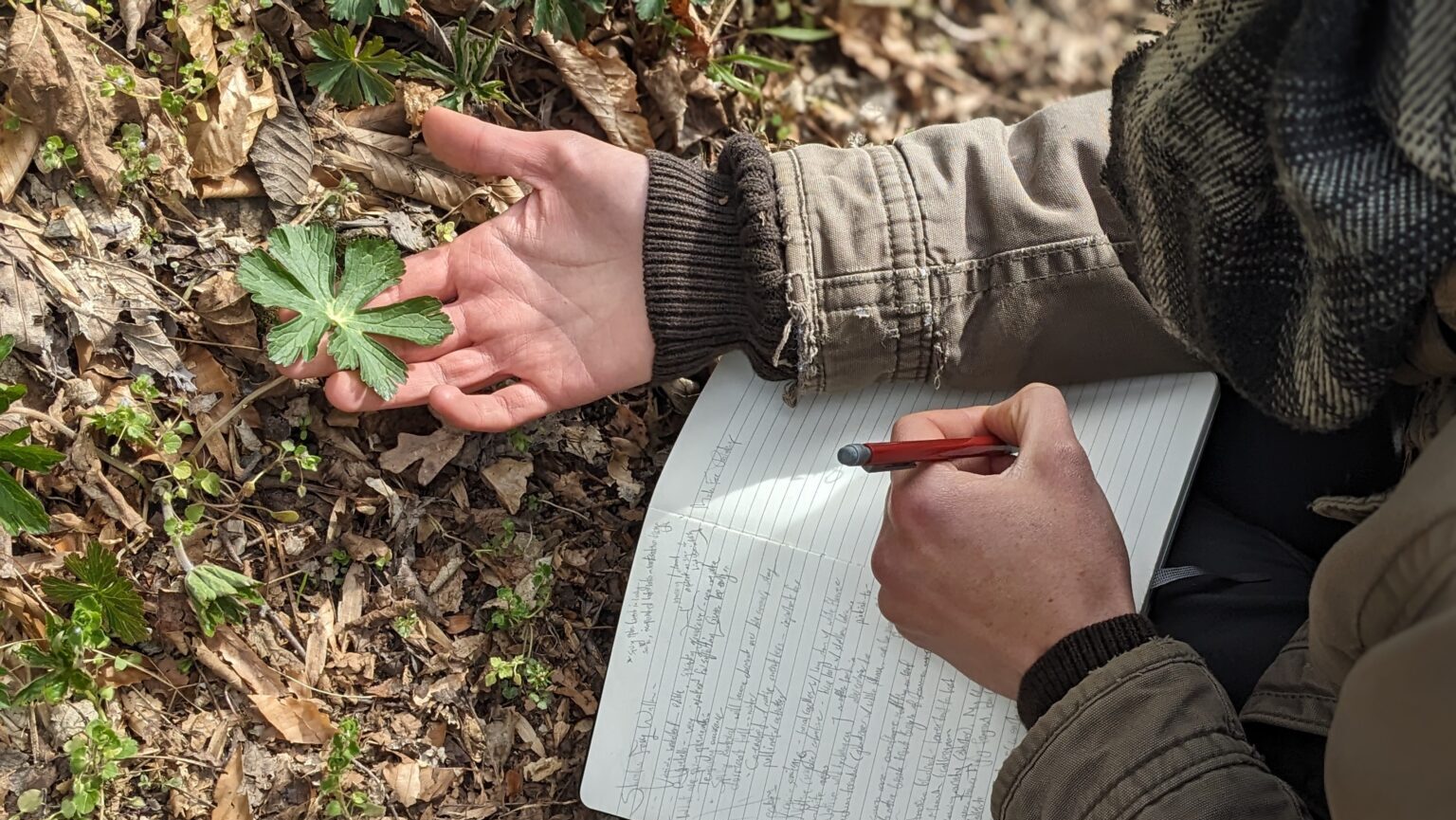
Hands-on fieldwork, plant identification, tool use, ecological observation, mindful movement, and community practice.
A Regenerative Approach to Land Care
Today’s landscapes are stressed—by invasive pressure, soil disturbance, fragmentation, and climate impacts. This program offers a restoration framework rooted in:
Observation and ecological literacy
Compassionate stewardship approaches
Traditional Ecological Knowledge (TEK)
Emergent practices & embodied awareness
Reciprocity and relationship with place
You’ll learn how to work with natural processes rather than against them, and how to read the land deeply enough to know how to help without producing harm.
What You’ll Learn
Assessing Site Conditions
How to conduct a full site analysis (soil, hydrology, microclimates, disturbance history)
Reading ecological indicators, succession, and plant community dynamics
Understanding ecological memory and the cultural/historical forces that shaped the land
Identifying keystone species and their ecological roles
Learning From Nature
Identifying native plant communities, ecotypes, and reference landscapes
Using seasonal rhythms and ecological cues to guide restoration
Integrating Indigenous wisdom and modern ecological science
Nature journaling and embodied observation techniques
Restoration Planning & Design
Designing custom, hyper-local native plant communities
“Succession hacking” and phased restoration planning
Selecting native species to outcompete invasives and restore structure
Timing woodies, herbaceous plantings, and seedcasting for best results
Implementing Restoration Projects
Non-toxic invasive species management: mechanical, cultural, and ecological methods
Efficient tool use, tool care, and injury-preventative body mechanics
Installing native plants with genetic integrity (ecotypes)
Stewarding forests, meadows, prairies, and riparian zones
Building a Sustainable Stewardship Practice
Preventing burnout through mindful movement & efficient body use
Processing ecological grief and developing emotional resilience
Understanding the role of humans as keystone species
Building language to advocate for non-chemical restoration approaches
Culture & Community Building
Shared Stewardship: Making land care a community practice rooted in reciprocity.
Collective Action: Mobilizing neighbors, partners, and local groups to steward shared spaces.
Connection to Place: Strengthening ecological relationship through rhythm, ritual, and community projects.
Who This Program Is For
This program supports people across many backgrounds, including:
Ecological restoration & conservation professionals
Gardeners, landscapers, and land-care practitioners
Volunteers with conservancies, nonprofits, or watershed groups
Landowners wanting to restore woodlands, meadows, or degraded spaces
Herbalists, foragers, educators, and nature-connected practitioners
Anyone wanting to learn ecological restoration with no prerequisites
If you want to build your skillset in ecological restoration and deepen your connection with the land, you will feel right at home!
Program Format
Three winter Saturdays:
January 17 — 10AM–4PM
January 24 — 10AM–4PM
February 7 — 10AM–4PM
Weather backup dates: January 31 & February 14
Expect outdoor conditions, uneven terrain, and hands-on restoration tasks. We work in teams and can accommodate a range of mobility needs.
What to Bring
Warm layers, sturdy boots, gloves
Water, lunch, snacks
Notebook or journal
Curiosity & willingness to engage with the land
Program Cost: $495 per person
Includes 18 hours of instruction, field practice, materials, and guidance.
Payment plans available.
About the Instructor: Tyler K
Herbalist • Land Steward • Educator
Founder of Reviving Wisdom (revivingwisdom.com)
Tyler K is an herbalist, forager, seed keeper, and ecological land steward whose life’s work revolves around restoring relationships between people and the land. Through Reviving Wisdom, he stewards and advises on thousands of acres across the region—transforming degraded lawns into prairies, meadows, shrublands, young forests, and edible native landscapes that support biodiversity and nourish communities.
Tyler partners with landowners, farms, restaurants, community organizations, and nonprofits to heal ecosystems and bring native foods and medicines back into daily life. His teaching integrates traditional ecological knowledge, field ecology, anthropology, and embodied awareness. He also facilitates ceremonies and seasonal gatherings that foster reconnection with land-based traditions.
He has studied ecological sciences, anthropology, and philosophy at Drexel University; worked more than 20 years in ecological research and public education; and apprenticed with herbalists, ethnobotanists, and Indigenous knowledge keepers around the world. Tyler shares accessible, non-toxic, regenerative land-care practices with people of all backgrounds.
Join the 2026 Ecological Restoration Certificate Program
Become part of a growing movement of land stewards committed to restoring ecosystems, rebuilding culture, and tending the Earth with humility and skill—one woodland, meadow, and backyard at a time.
Registration Now Open