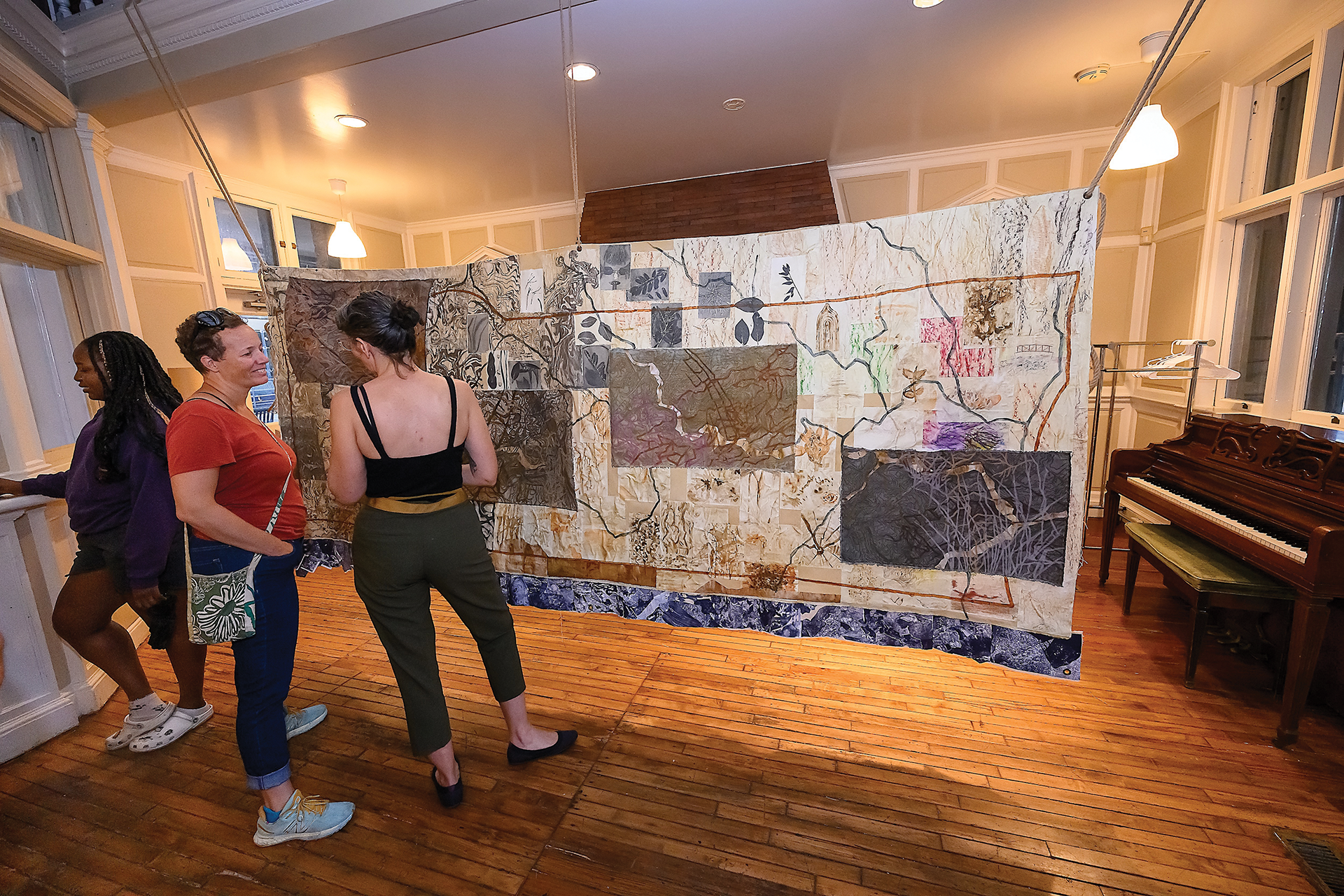
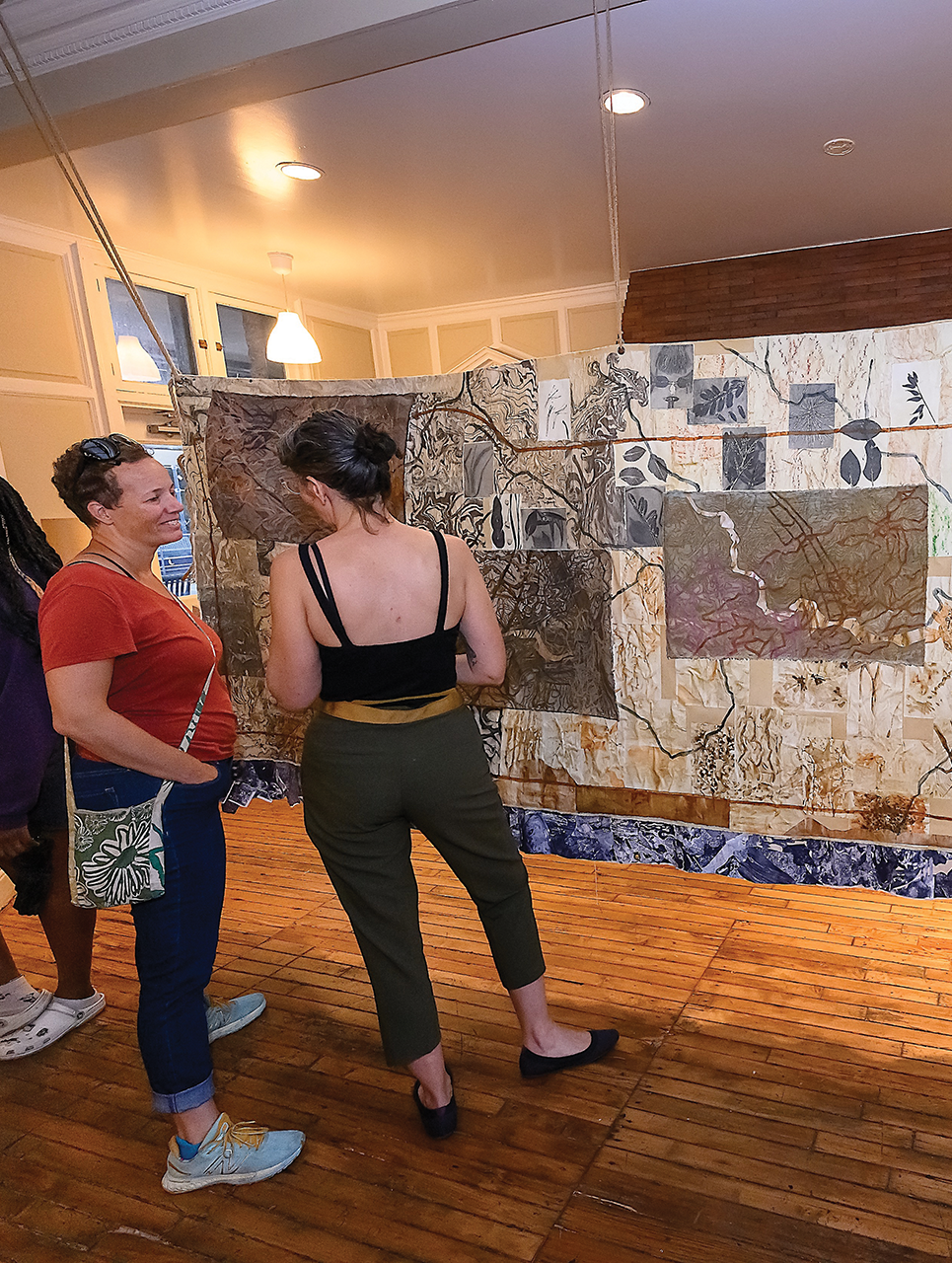
In 2023, Cheltenham-based artist Rebecca Schultz completed a yearslong art project, “Mapping Our Watershed,” by stitching together tree bark rubbings, monotypes, soil-water watercolors, leaf prints, drawings and other media to construct a map of Cheltenham and the Tacony watershed. In total, more than 60 people contributed 90 pieces of artwork to make up this textural, layered collage in what Schultz calls a “participatory art and community science project.”
It began with a series of free, all-ages outdoor workshops held in collaboration with the Tookany/Tacony-Frankford Watershed Partnership, the Cheltenham Center for the Arts and Friends of High School Park. People gathered on the banks of local streams to learn about such watershed-related subjects as riparian buffers and soil health; then they made art together using natural materials.
“Mapping Our Watershed,” which was displayed in the Elkins Park SEPTA station and Fairmount Water Works, captures the essence of Schultz’s art-making philosophy and creative process.
“I explore what keeps ecosystems healthy and why they’re essential to our survival,” Schultz says. “I believe that this idea that we’ve become disconnected from the rest of the living world is at the heart of the [climate] crisis we’re facing.”
Originally from Pittsburgh, Schultz moved to the Bay Area in the mid-1990s and got involved with community-based theater and performance art. A decade ago, she recentered her practice around visual art, winding together her formal background in painting with her theater training and passion for community-engaged art.
“I feel like there are a lot of parallels in the traditions of the scientific method and the creative process.”
— Rebecca Schultz, artist
Her return to visual arts also coincided with her growing awareness of, and anxiety about, the gravity of the climate crisis and environmental issues.
“After hitting a low point, I started looking at resources and engaging with women and queer scientists and thinkers who helped me shift that [mindset]. My artwork became a tool for me to process my ecological grief, to be aware of what is here and what we can save and what we can protect.”
When Schultz moved back to the Philly area in 2016, her personal/public practice grew to include site-specific installations in public parks and waterways, mural-making on the banks of the Schuylkill River and textile work inspired by community-gathered materials from a series of nature walks.
Over the past decade, she has become deeply connected with her Cheltenham community, getting to know her legislators and sitting on the township’s Environmental Advisory Council. She’s also a Streamkeeper, helping to monitor streams in the Tookany/Tacony-Frankford watershed, and an active member of the Cheltenham Center for the Arts.
Her art practice continues to evolve around these relationships and making connections between humans and nature. She is a catalyst assembling scientists, environmental educators and residents of all ages to talk and learn about ecosystems — and then make art together.
“I feel like there are a lot of parallels in the traditions of the scientific method and the creative process,” Schultz says. “They’re both asking: ‘What are you looking for, what are you asking, what kind of meaning are you trying to create?’”