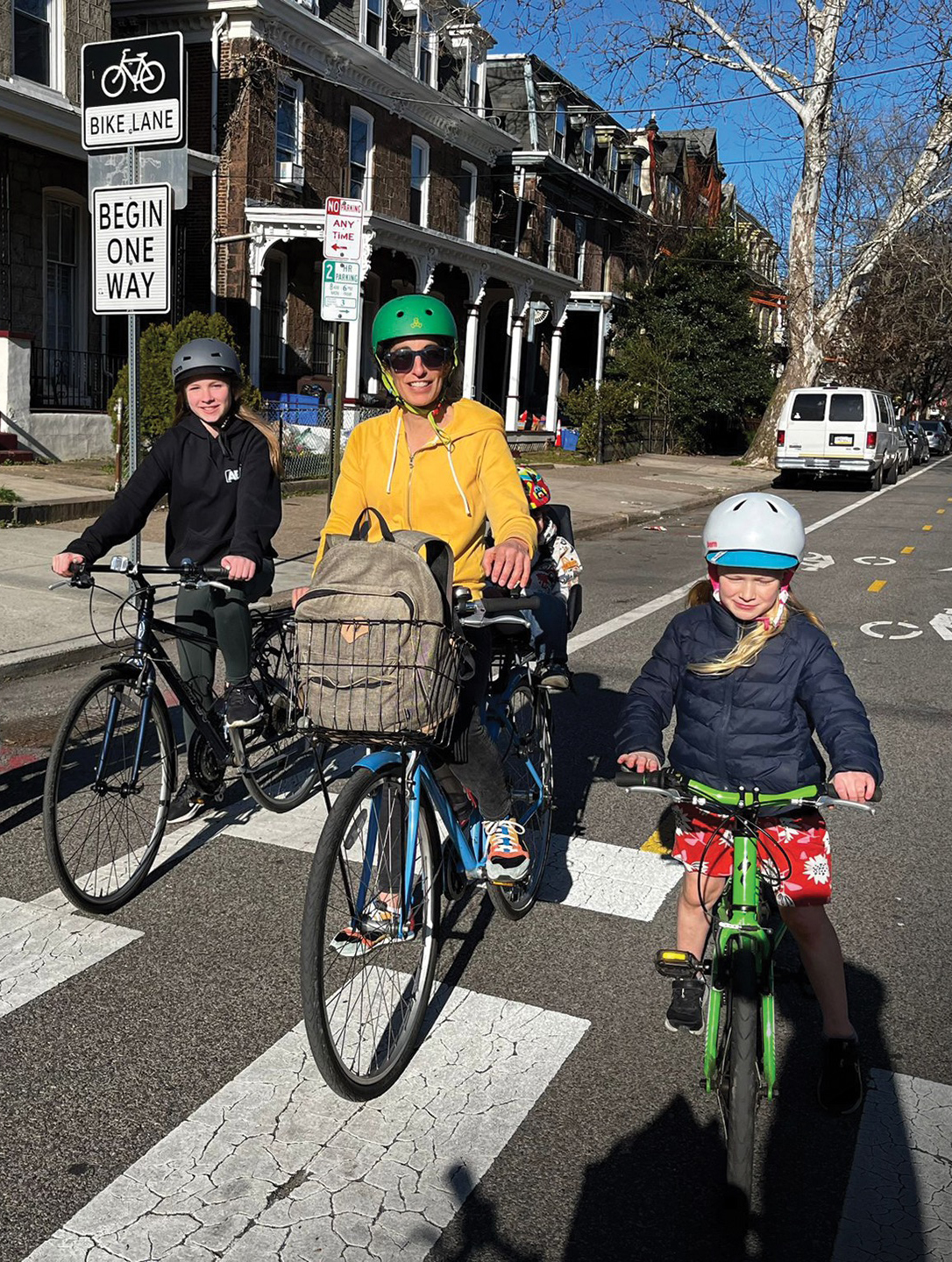
Across the nation, more and more youth are reaching for a bicycle for recreation and as a means of transportation. In fact, the advocacy group PeopleforBikes found in a 2024 survey that ridership for children ages 3 to 17 increased from 46% to 56%, reversing a decline. And on March 14 and 15 at the Pennsylvania Convention Center, the 15th Philadelphia Bike Expo (PBE) is working to instill cycling confidence in young people with its Kids Arena, aiming to build on that upward trend.
The kids riding arena features separated courses with skill and safety stations for a full range of experience levels. The program will be overseen by Sam Pearson, a lifelong cyclist and the Healthy Communities program manager at Pennsylvania Downtown Center. “It’s a skills course,” Pearson says. “We’re trying to get them to show how well they follow the signs and interact with each other as they’re circulating.”
The course “road,” as in years past, is halved by a center line, and riders must navigate cones and each other. There is also a roundabout where riders have to obey traffic signs, take turns and decide when to go straight or proceed around the traffic circle, Pearson says. There will be separate stations for riders to focus on a specific skill, and others where they must combine those skills in practice.
Pearson says there are numerous benefits to these kinds of courses, called traffic gardens. Beyond balance work, she says children can work on gliding, braking, staying in their lane and responding to road signs.
“This all happens in the company of other kids riding and course monitors providing support, so there are also social interactions along with the gross and fine motor skills and balance and proprioception they are working on,” Pearson said in an email. “And while it’s typically pretty sedate, it’s a workout; they are getting real exercise.”
There’s a section “for the really tiny kids just getting up to speed on how you walk with the balance bike. But then we mix them all together on the course. Everyone has to use balance bikes, and that cuts down on the racing,” Pearson says.
Some parents may not know about new techniques for teaching young learners. Instructor Sarah Billington, like many adults, learned to ride with training wheels. However, that approach has largely been replaced by balance bikes, which look like regular kids’ bikes but do not have pedals. “Balance is the most important skill for them to learn,” she says.
Billington doesn’t want to take away parents’ opportunities to teach their own children, she says, but “sometimes parents are a little out of their element, and kids can have more respect for an objective instructor” using a structured curriculum. During her individual lessons, which she offers privately, she likes parents to be close by but not actively watching.
At the expo, Billington will lead a seminar for riders ages 9 to 16, addressing challenges such as fitting the bike properly and supporting young riders’ emotional needs. She says learning differences typically begin to show around age 8, when a new psychological aspect can make learning in front of others difficult. While some early adolescents thrive in group settings, others may give up rather than risk making mistakes in front of their peers.
“Private classes are better when they don’t want to be seen by other kids,” says Billington, who has been certified by the League of American Bicyclists since 2012.
It can be challenging to find gear for tweens or kids in the middle space.”
— Sarah Billington, cycling instructor
During the seminar, she will demonstrate different bike types and accessories that appeal to tweens, noting that “it can be challenging to find gear for tweens or kids in the middle space.” Many kids are on social media and want fun accessories, and Billington hopes personalized gear can strengthen the appeal of riding.
At the expo, families will be able to explore gear options offered by many of the exhibitors and vendors showing everything from bike frames to cycling travel options.
Young riders in Philly
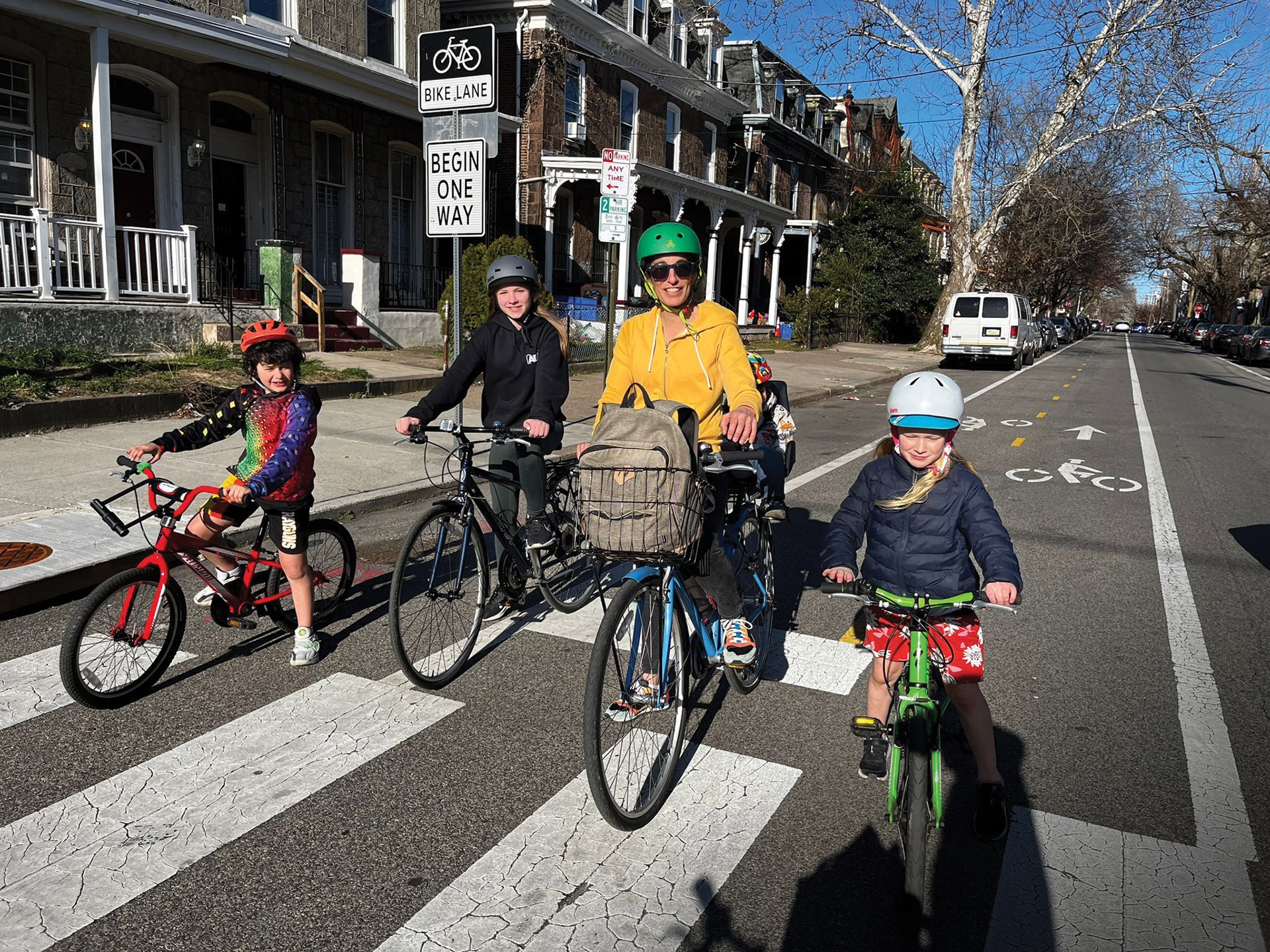
For Diana Steif, a West Philadelphia parent and former operations director at the Bicycle Coalition of Greater Philadelphia, cycling independence is a carefully monitored project. Steif co-parents a 16-year-old, two 12-year-olds and a 5-year-old, all of whom ride, and she is emphatic about safety. “I feel like I must demonstrate … I’ll come to a complete stop at stop signs or red lights and overemphasize my turning signals so that my children see it, but also so that car drivers see it.”
Steif and her partner allow their 12-year-olds to ride independently on a few routes they’ve practiced together as a family, but the kids must check in when they arrive. She feels more comfortable when roads have separated barriers but recognizes that intersections are still dangerous pressure points. She trusts that her children know the rules, but she teaches them to stay alert and never assume car drivers see them. “I constantly remind them to make eye contact,” she says.
Pearson says that for young riders, shared vehicular spaces can work at low speeds or where there are fewer cars, but “the gold standard is fully protected, fully separated.”
“Philly is light-years ahead of where it was 20 years ago. It’s a long game,” she says. “Auto ads promise the freedom that bicycles deliver.”
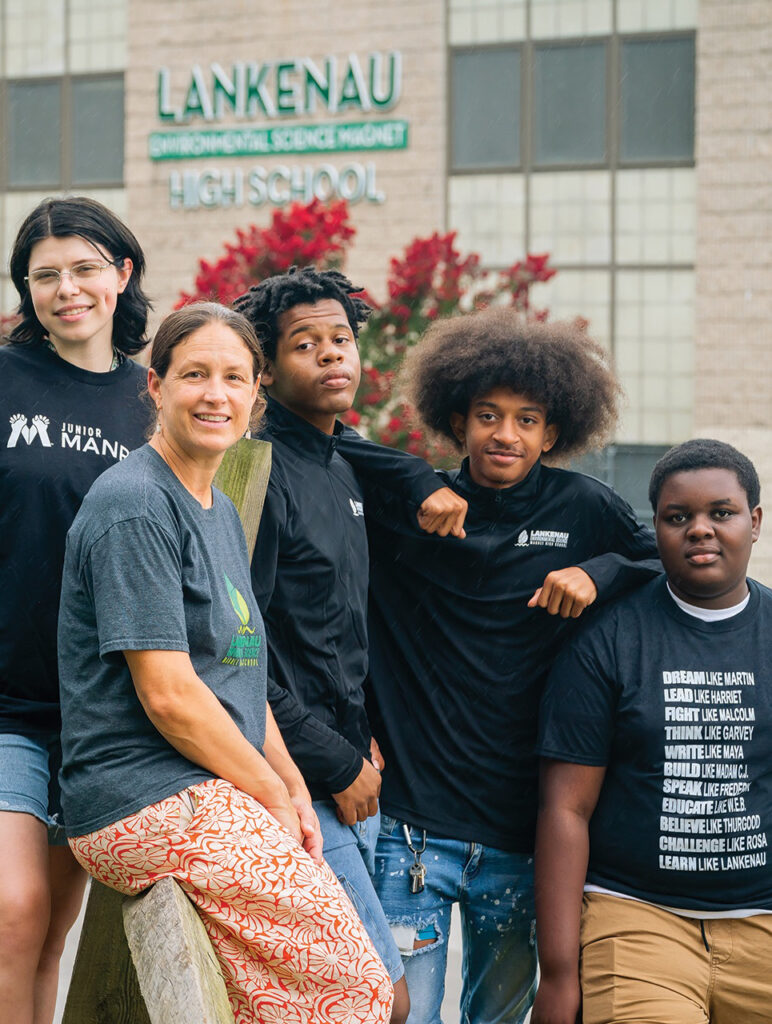
In conjunction with Safe Routes Philly, the Downtown Center collaborates with the state Department of Health on the WalkWorks initiative and has been piloting a bike training program in three public schools in Kensington. Pearson works with PBE to get additional passes for parents who sign up for trainings through their schools, thus enabling the expo to reach a wider audience.
As the weather warms, Pearson says they will do the bike training courses in the Kensington schools for younger kids. “We don’t just train kids in a vacuum; we also try to provide municipalities with lots of knowledge and tools to work towards safe, protective networks that allow people to walk, bike, use a wheelchair or access transit to get to everyday destinations.”
Pearson and other educators have the opportunity to reach the youngest community members and their parents at PBE, and this year, the summit for the City’s Vision Zero program to eradicate traffic fatalities follows the expo in March. Pearson sees that as an opportunity for parents to “agitate for safer streets.”
“Our goal as parents is to raise independent kids who make good choices,” Steif says. “I want them to think bicycling is a good choice.”