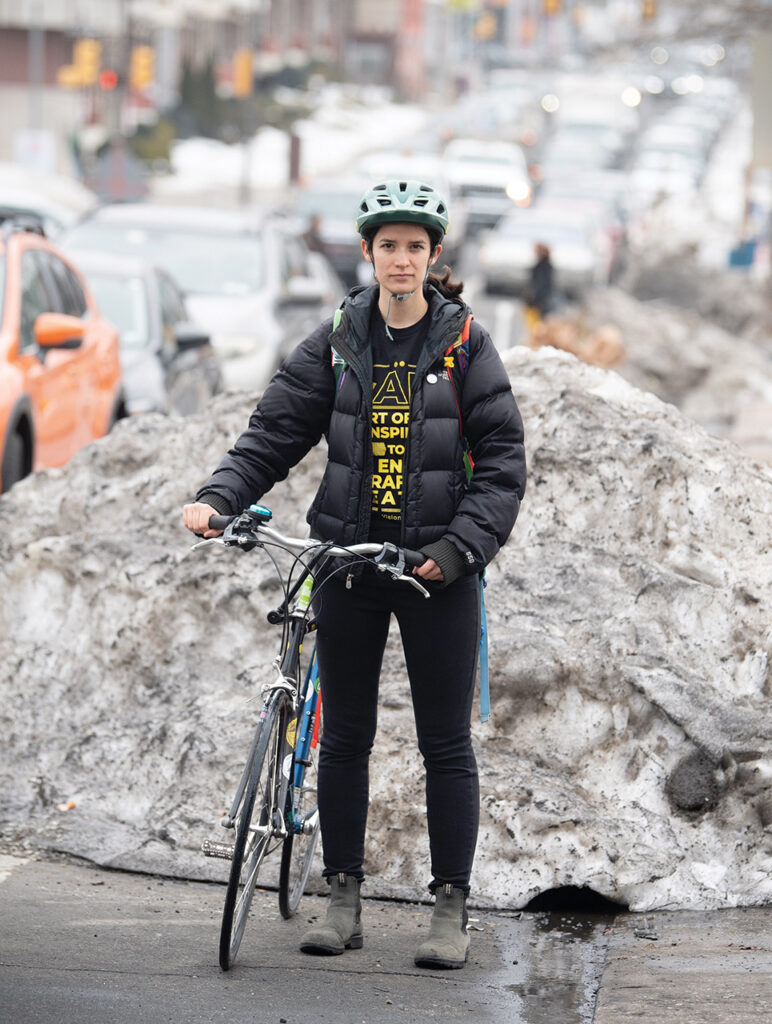
At 11 a.m. on Valentine’s Day, Aspen Simone stood on the corner of 7th and Christian streets in South Philadelphia holding a long dowel with a laminated, cutout pigeon on the end.
That wasn’t just any pigeon on the end of Simone’s walk leader staff. Primrose the pigeon is how the whole pigeon education enterprise began. Simone’s partner Hannah Michelle Brower took Primrose — at that point a weak, malnourished fledgling found by a neighbor on the sidewalk — to a pigeon rescuer who nursed the young bird back to health. Simone says the rescuer told them the recuperating pigeon, whom Brower had taken to calling Primrose, would do better as a pet rather than being released into the wild, and so the couple kept her.
“We just started learning more about her as an individual,” Simone says. “And then we started learning more about pigeon biology and behavior generally. One day, we realized we could predict what pigeons were about to do based on subtle cues that we can read now.” In the summer of 2025, the couple launched their pigeon tours, priced at $25, to share what they had learned.
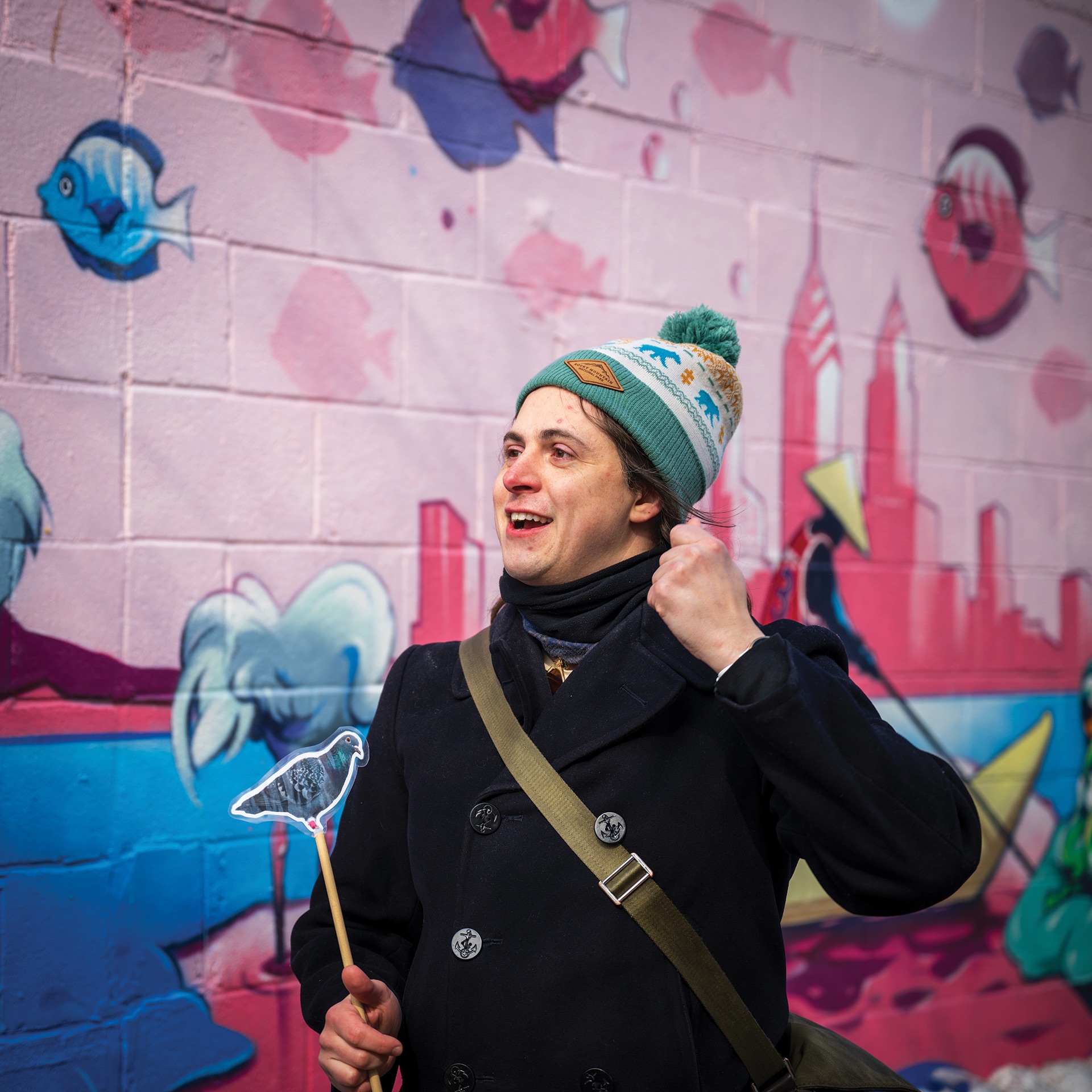
Their flock of humans that morning grew until 10 walkers had assembled, ready to learn about and gain respect for their poorly regarded avian neighbors. Attendees Ben Fensterheim and Sydney Brodo live in the Graduate Hospital neighborhood. Brodo booked the tour on Valentine’s Day as a gift for Fensterheim, who is a “super casual, aspiring birder.”
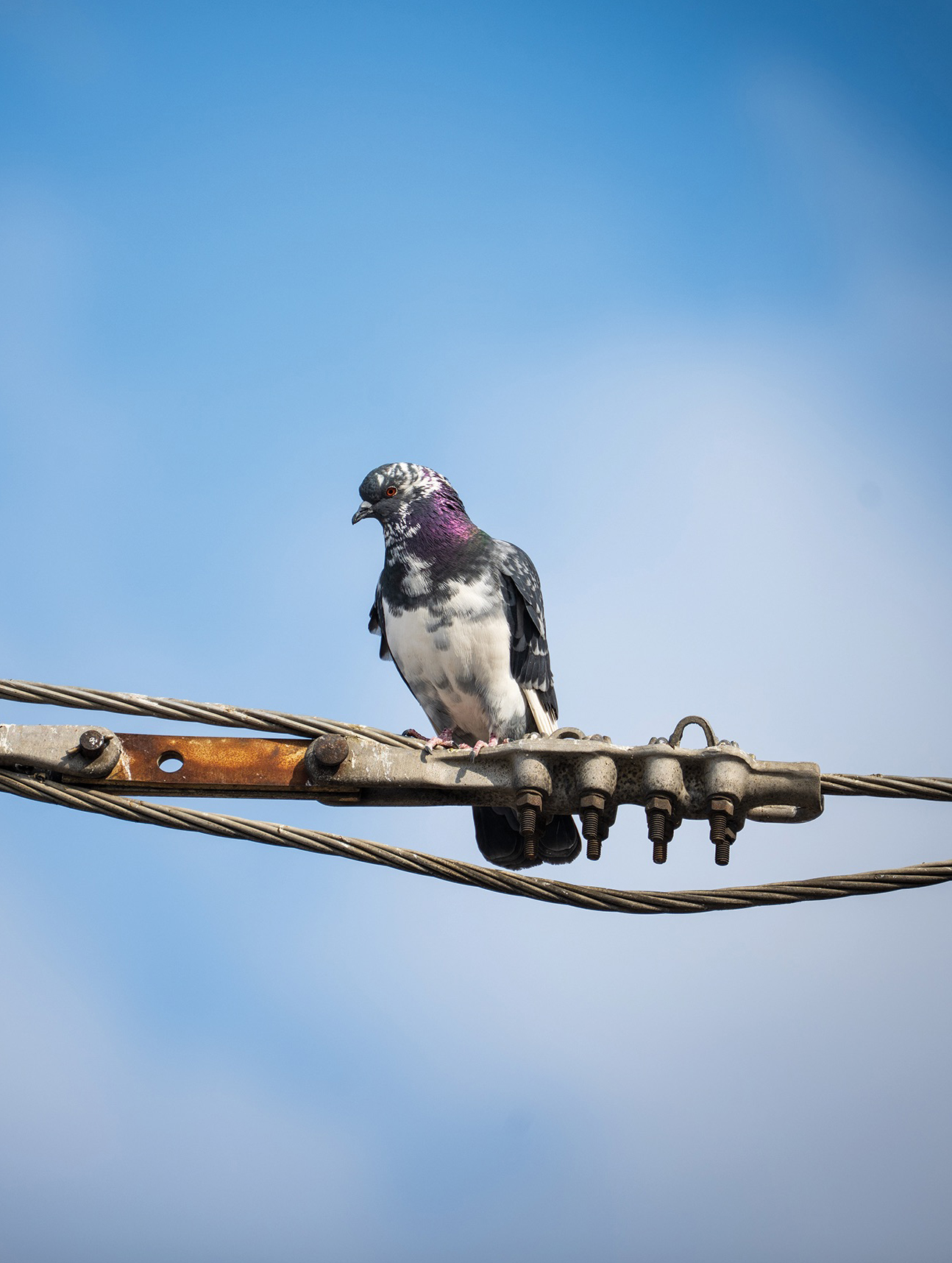
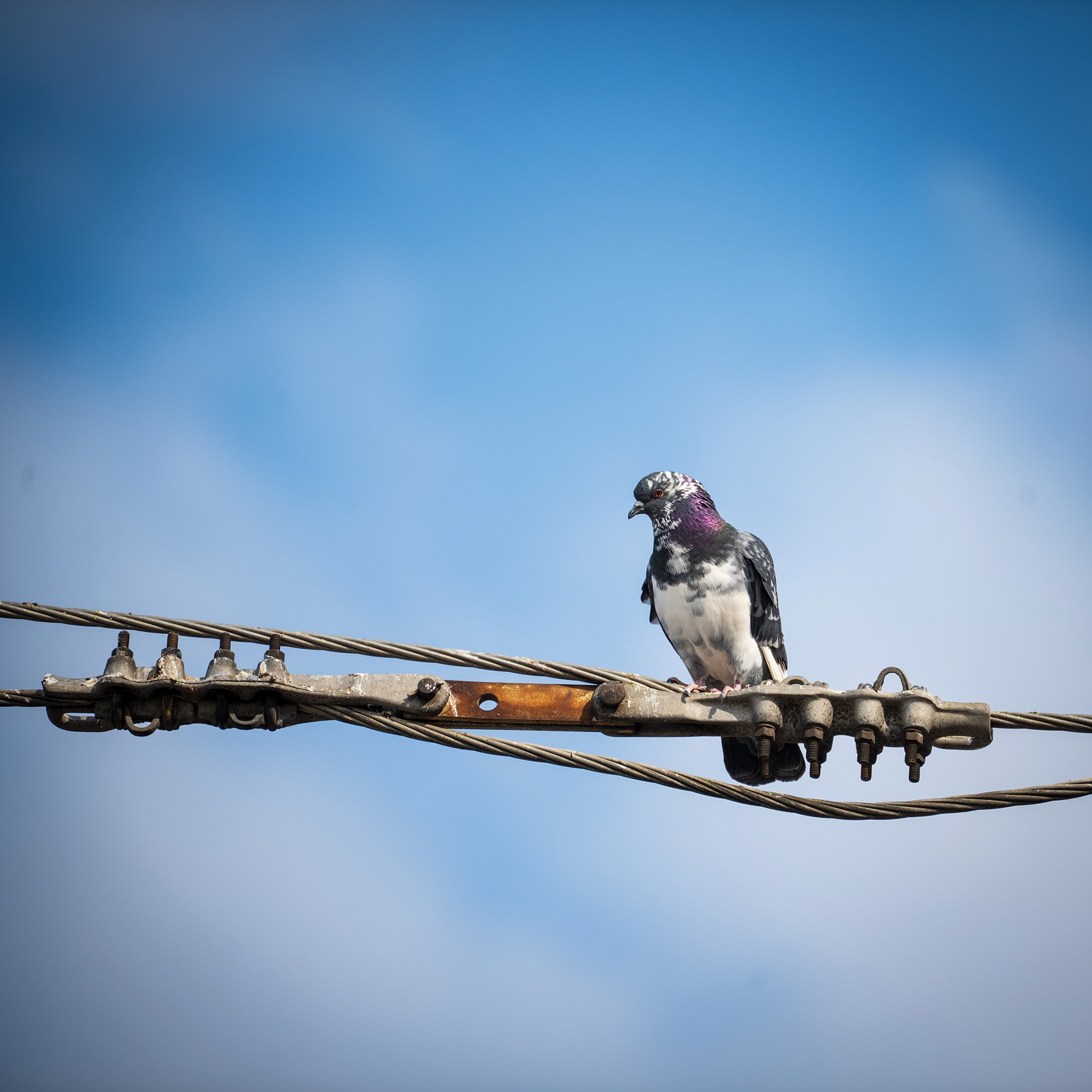
Simone started the tour with a simple exercise, asking attendees about their associations with the terms “pigeon” (mostly negative) and “dove” (mostly positive), though they refer to exactly the same birds in the family Columbidae. The pigeon, also known as the rock dove (Columba livia), began its relationship with humans as livestock, kept for meat. The pigeons flying around Philadelphia descend from farmed birds imported by European colonists, mixed with others kept as messengers or pets bred for interesting plumage or flying speed.
The pigeon watchers followed Simone to the intersection of 6th Street and Washington Avenue, where about 100 of the birds lined the power lines above. Any urban wildlife walk requires attendees to pay attention to where they’re standing to avoid blocking sidewalks or otherwise getting in the way of people going about their business. But the pigeon watchers had to take additional care to arrange themselves outside of the danger zones beneath the power lines, marked by countless yellow and green splatters on the pavement.
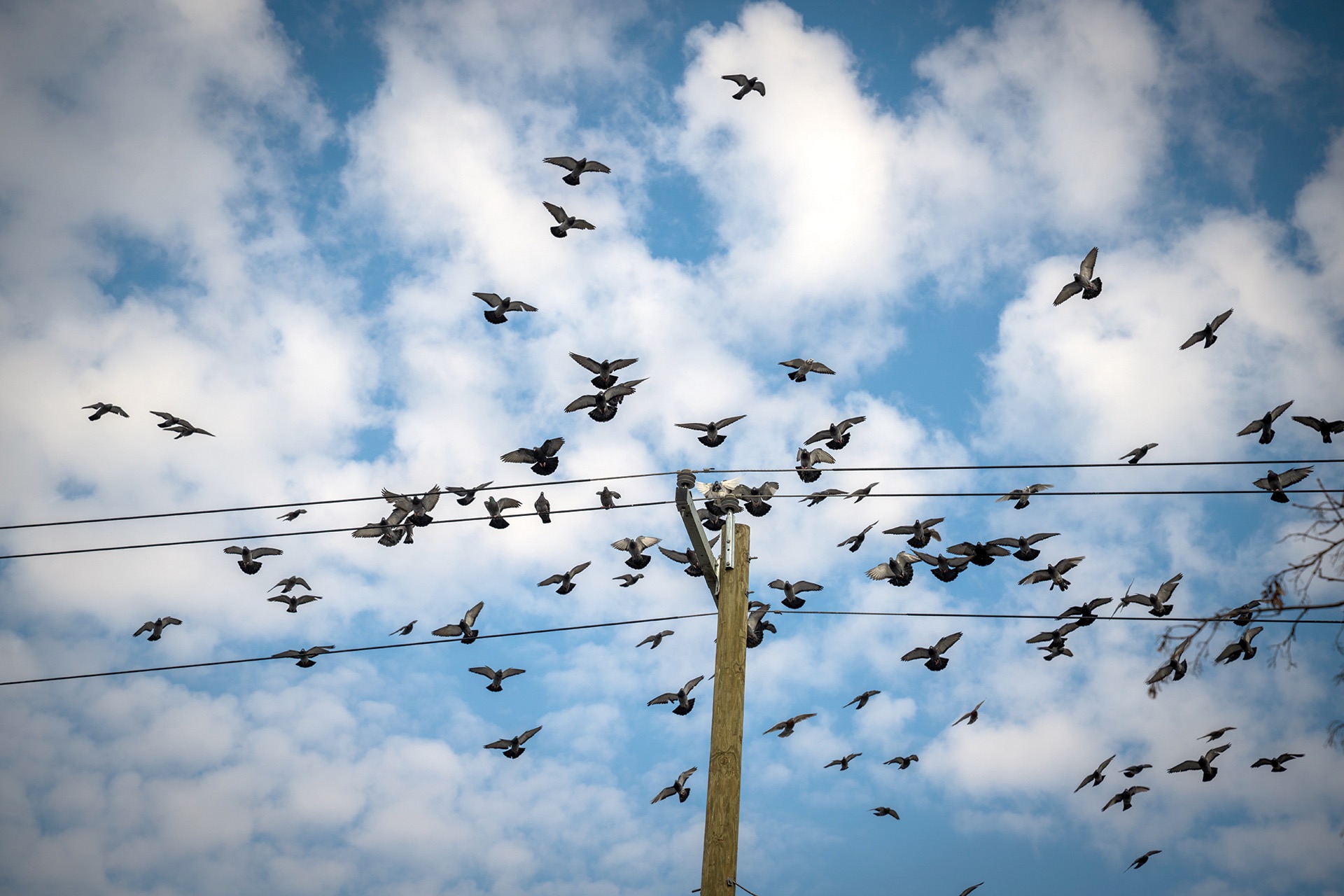
The pigeons did what pigeons do. Mostly, they sat facing the wind. If any pigeon tried to wedge itself in too close to its neighbors, it got pecked until it tried a different spot. Some puffed up and cooed at a neighbor. Then, with a shock of loud warning claps, they would all take off and wheel about over the streets and rooftops before alighting again on the power lines.
A Cooper’s hawk, a raptor that specializes in hunting other birds, reminded the humans below that pigeons have good reason to be skittish. It glided into view and landed on a rooftop antenna half a block away, where it remained a menacing presence until it flew away.
It was hard to imagine any creature settling down to start a family in Philadelphia in mid-February, still encrusted with dingy snow and ice, but the walk continued to 8th and Washington, where an awning with a plastic grate floor formed an artificial cave for pigeons to nest in, one that has allowed observers in the past to watch the birds courting and raising their young. To get their parents’ attention, baby pigeons make a wheezing noise (what it sounds like when doves cry). Only one adult pair was home that morning, and they were apparently just getting started, with no eggs yet.
The last stop featured yards of plastic mesh and formidable-looking spikes mounted on horizontal surfaces above an Italian Market storefront, all devoted to keeping pigeons out — an effort and an attitude worth reconsidering, according to Simone. “Hating pigeons is a choice,” they say.
Simone says that they and Brower do not feed pigeons, though: “There are a lot of ethics to consider.” Among other considerations, pigeons could become used to a feeder who might then move away, leaving the birds hungry. Feeding pigeons might encourage birds to reproduce more than would be locally sustainable, not to mention that it is against the law in Philadelphia. “What we’ve landed on for now is that we don’t feed pigeons in public places, but we might choose differently if we’re in a different environment,” perhaps in a place where it is legal and if they encountered severely undernourished pigeons.
The tour guide hit their mark with Brodo and Fensterheim. “It was amazing,” Fensterheim says. “I didn’t know that they had homes, that they lived in certain spots and then we could just go visit them at different destinations where they always come back.”
“We spend a lot of time in the Italian Market,” Brodo says. “It’s fun to see our perspective change.”