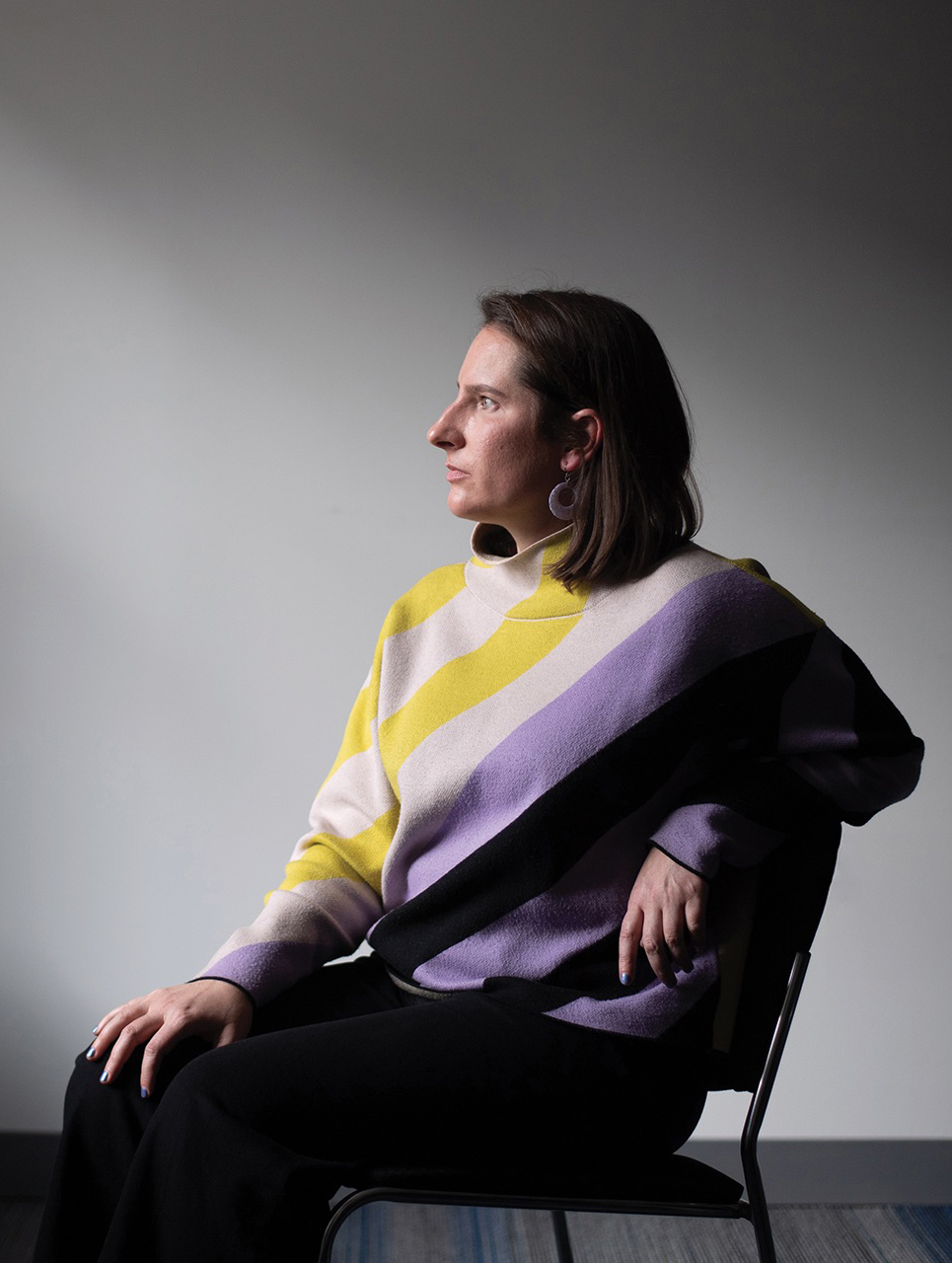
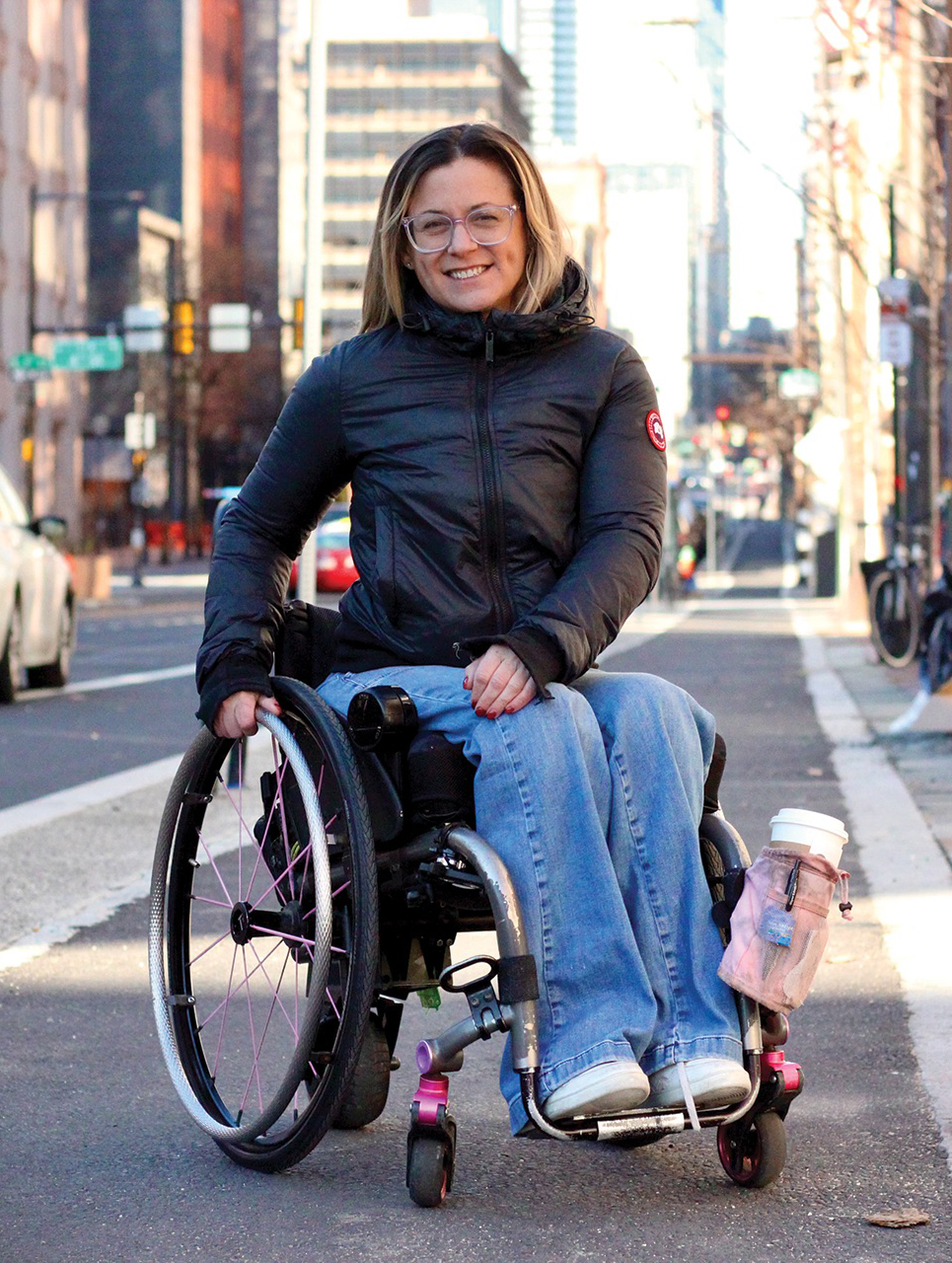
Amanda Parezo isn’t your typical bike lane advocate. For one thing, she doesn’t ride a bike.
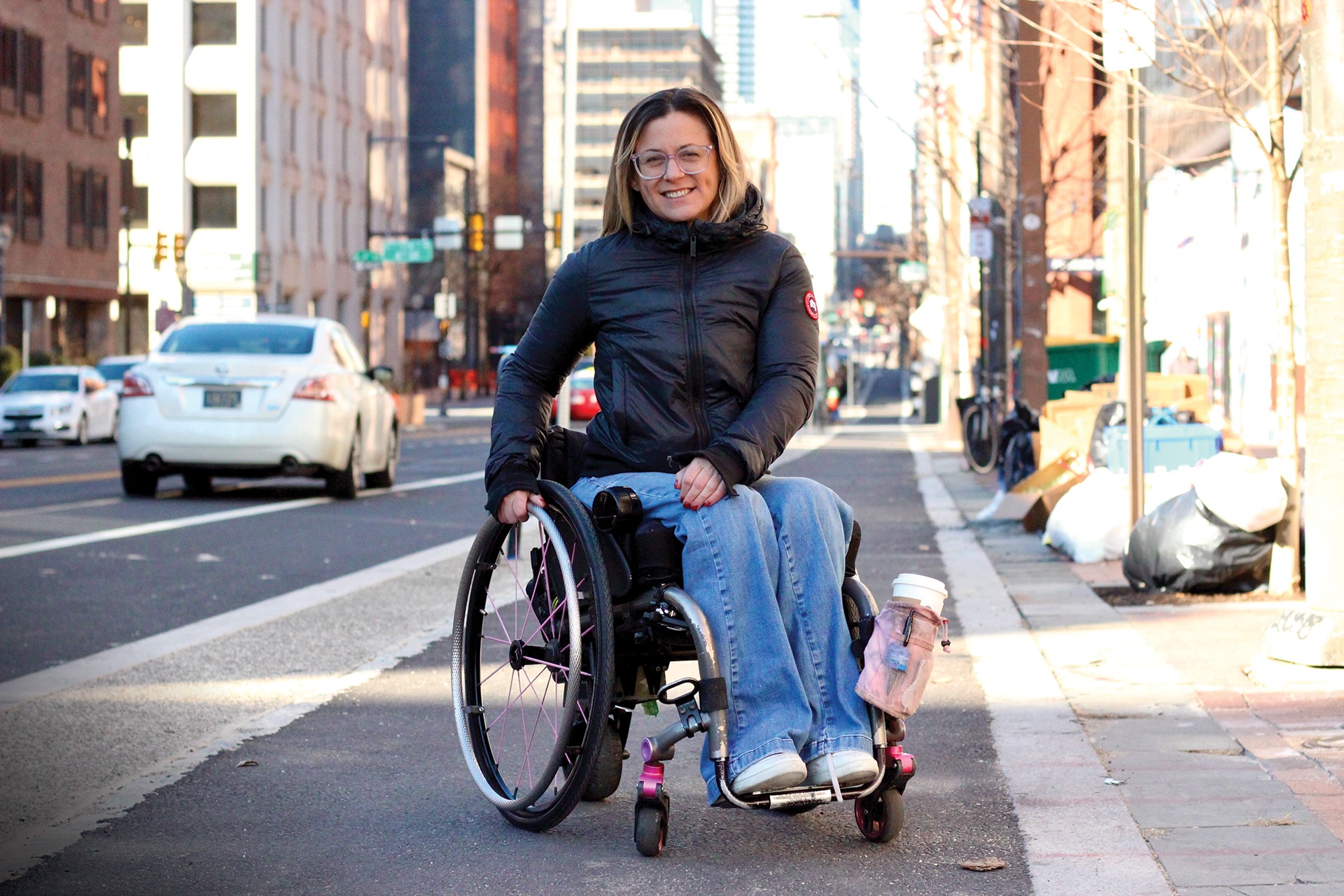
Parezo once loved cycling around Philadelphia. But in 2021, after a game of kickball at Hancock Playground in East Kensington, she was struck in the back by a stray bullet and paralyzed from the waist down. Now, she gets around town using a wheelchair. She rolls from her condo in Old City to her job at Thomas Jefferson University, where she teaches occupational therapy. In a city where sidewalks are often damaged or blocked, Parezo often ends up rolling into a bike lane.
But bike lanes, she says, often aren’t free of barriers either. When a vehicle is stopped or parked in the lane, Parezo has to roll into the street, greatly increasing her risk of injury. “I feel like something’s going to happen as soon as I get into the street,” she says. “If it’s nighttime, that makes it exponentially worse, and then I just won’t go out because I’m scared. I’ll just stay home.”
In fall 2024, Parezo heard that a “Get Out the Bike Lane” bill, which would increase the penalties for parking or temporarily stopping in bike lanes, was up for a vote in City Council. So she showed up to testify in support of it.
“I have personally experienced numerous instances where vehicles blocking bike lanes have put me in dangerous situations,” Parezo told City Council. “The current law, which only prohibits parking on bike lanes, is insufficient to protect vulnerable road users like myself.”
The bill passed, and the City subsequently installed loading zones on Spruce and Pine streets to give residents and visitors a legal place to pull over and unload without blocking the bicycle lane or halting the flow of traffic. Last March, Mayor Cherelle Parker’s administration released a proposed budget that included $5 million for concrete barriers to the Spruce and Pine bike lanes, which would further separate cars and bikes on the streets.
But some residents pushed back. In August, a judge ordered the City to remove the loading zones after the group Friends of Pine and Spruce (FOPS) filed a lawsuit against the City. The group’s argument, in part, is that the loading zones, the no-stopping law that prompted them and the eventual concrete barriers would harm people with disabilities: that is, people like Parezo.
I just won’t go out because I’m scared. I’ll just stay home.”
— Amanda Parezo, advocate
“When vehicles are unable to stop temporarily at curbside locations, passengers with mobility impairments may struggle to enter or exit vehicles safely, particularly in areas without alternative accessible drop-off points. This can be especially problematic for those using wheelchairs, walkers, or other assistive devices, as they may be forced to navigate unsafe distances or uneven surfaces to reach their destination,” the group states on its website.
“Furthermore, caregivers, paratransit services, and medical transport providers face logistical difficulties when trying to assist passengers in areas where stopping is restricted.”
The members of Friends of Pine and Spruce aren’t alone in making the case that bicycle infrastructure can disadvantage people with disabilities who need access to cars to get around. It’s a common refrain at sometimes heated community meetings about changes to the city’s streets. But experts and advocates attest that the reality is more nuanced.
“The disability community is complex,” says Anna Zivarts, a disability advocate and the author of “When Driving Is Not an Option: Steering Away from Car Dependency.” “Sure, there are people who can’t bike for transportation in the disability community. But there’s also many, many folks who can’t drive for transportation in the disability community.”
In fact, according to the Natural Resources Defense Council, 73% of Americans with disabilities don’t drive for the majority of their trips. Many people with disabilities can, however, ride a bike. According to research by Transport for London, 78% of disabled people can cycle, while 15% sometimes use a bike to get around. A survey of disabled cyclists by the U.K. group Wheels for Wellbeing found that 52% own a standard two-wheeled bicycle; another 18% said they own a cycle with electric assist.
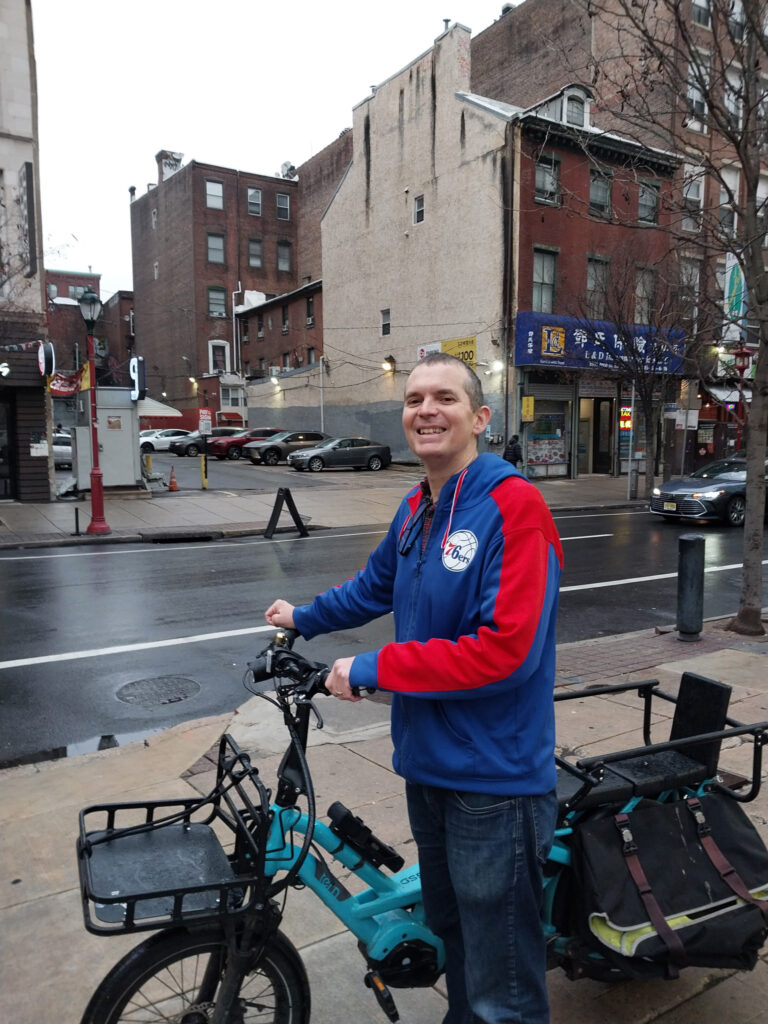
There’s no comparable data available for Philadelphia. But cyclists with disabilities are certainly to be found on the city’s streets. Stephanie Wein is one of them. In 2020, she suffered a brain injury that impacted her fine motor skills, short-term memory and balance. For the next three years, she walked with a cane. Afterward, she tried driving a car, but says she found that she no longer had the “cognitive processing speed” to do so safely. She didn’t have the necessary balance to ride a two-wheeled bicycle either. For years, she relied primarily on public transportation to get around.
But on a trip to Montreal in 2023, she tried out an electric tricycle, and it changed her life. “It was the first time in years that I was able to go from point A to point B on my own schedule,” she says. “I started riding down the street, and I just started crying.” A few months later, she bought an e-trike of her own. “It has fully given me back my mobility and my life,” she says.
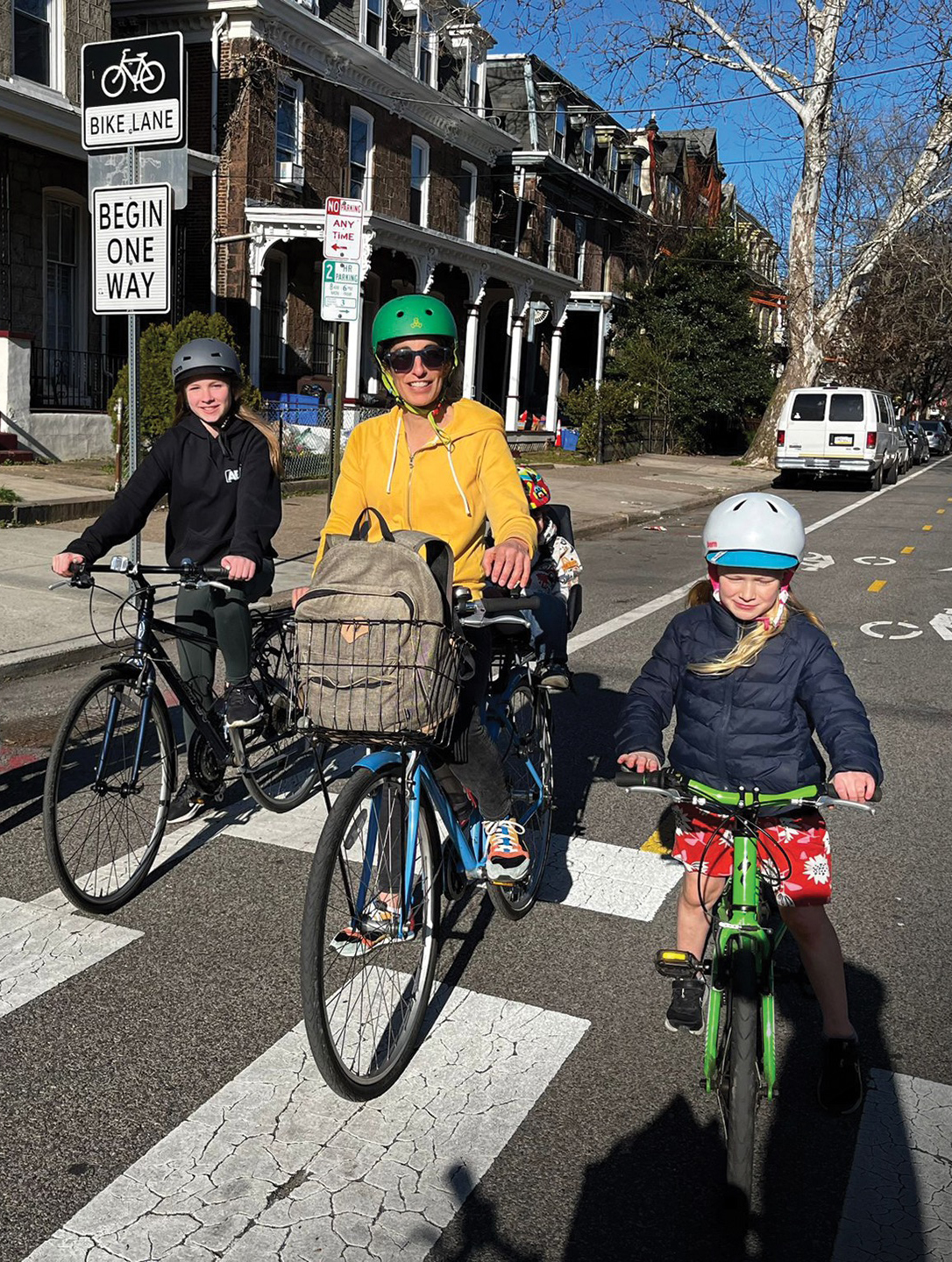
Wein has ridden it almost every day since, often with her young daughter buckled in up front. And she’s made a point of showing up to advocate for protected bike lanes in her own West Philly neighborhood and beyond, to make her trips as safe as possible. “With the Chestnut Street protected bike lane and the Walnut Street protected bike lane, I can get across the river and back, basically fully in protected bike lanes,” she says.
While protected bike lanes undoubtedly improve safety and access for disabled cyclists like Wein, they can make life harder for people with disabilities if they aren’t thoughtfully designed, says Vicki Landers, the founder and executive director of Disability Pride PA. Landers is a walker user who, like Parezo, sometimes uses bike lanes when sidewalks are inaccessible and supports the changes on Spruce and Pine. “I support the loading zones because they create clear, reliable places to load and unload without putting me — or cyclists — in danger,” she says. “When access is planned, marked and enforced, it reduces conflict and makes [Americans with Disabilities Act] access intentional instead of an afterthought.”
In a world where people with disabilities are underrepresented on staff at transportation agencies and consulting firms, however, accessibility isn’t always fully considered in the design of protected bike infrastructure, says Zivarts. But some cities are making efforts to remedy this. In San Francisco, she points out, the nonprofit Walk S.F. partnered with the city’s Office on Disability and Accessibility and other organizations to create a design manual for protected bike lanes that also work for pedestrians and people with disabilities.
Philadelphia has not yet seen that kind of formal partnership, but people with disabilities are participating in the City’s efforts to make streets safer, according to Sharon Gallagher, the senior director of communications for the Managing Director’s Office. As part of the City’s Vision Zero roundtables, 30 out of 247 registered attendees reported that they identified as having a disability. Of the respondents to the City’s Vision Zero Action Plan 2030 survey, 14% reported that they identified as having a disability.
More collaborations, Zivarts says, could bring cyclists and people with disabilities — communities that often overlap and share an interest in street design — closer together.
“If we are pitted against each other, what we get is just the status quo, which doesn’t serve cycling communities well, and it doesn’t serve disabled communities,” Zivarts says.